How to Clean and Care for Mens Cross Earrings: Expert Guide
Learn how to properly clean, maintain, and store your mens cross earrings. Expert tips for sterling silver, gold, and titanium to prevent tarnish.


The Hidden Enemies of Your Daily Jewelry
Mens cross earrings are a definitive staple in modern men's jewelry, bridging the gap between subtle minimalism and bold expression. However, because they sit directly against the skin and are exposed to the elements daily, they face a constant barrage of environmental hazards. Sebum (skin oils), acidic sweat, sulfur in the air, and even the chemicals in your daily styling products can rapidly degrade the finish of your jewelry. Understanding the metallurgical and chemical realities of your earrings is the first step toward preserving their structural integrity and aesthetic appeal.
Whether you are wearing a heavy 925 sterling silver gothic cross, a sleek 14k gold minimalist design, or an ASTM F136 implant-grade titanium stud, a tailored maintenance routine is non-negotiable. This comprehensive guide breaks down the exact protocols, tools, and storage solutions required to keep your mens cross earrings looking pristine for decades.
Material-Specific Cleaning Protocols
Not all metals react to cleaning agents in the same way. Using the wrong chemical compound can strip finishes, accelerate oxidation, or permanently damage surface treatments. According to the Gemological Institute of America (GIA), matching your cleaning solvent to the specific metal alloy is critical for preventing micro-abrasions and chemical corrosion.
925 Sterling Silver and Oxidation
Sterling silver contains 92.5% pure silver and 7.5% copper. It is the copper that reacts with sulfur and moisture in the air to form silver sulfide—the black tarnish you see on neglected jewelry. For standard polished silver crosses, use a treated jeweler's polishing cloth impregnated with micro-abrasives and anti-tarnish agents. Never use liquid silver dips on intentionally oxidized or 'blackened' cross earrings, as these harsh thiourea-based chemicals will strip the dark patina from the crevices, ruining the contrast and depth of the design.
Solid Gold vs. Gold Vermeil
Solid 14k or 18k gold is highly resistant to tarnish and can be safely cleaned with a mild dish soap and warm water solution. Gold vermeil, however, is a thick layer of gold (usually 2.5 microns) plated over a sterling silver base. Aggressive polishing or ultrasonic cleaning will eventually wear through the gold layer, exposing the silver beneath. Treat vermeil with extreme gentleness, using only a soft microfiber cloth and avoiding any abrasive pastes.
Titanium and Surgical Steel
Implant-grade titanium (ASTM F136) and 316L surgical steel are incredibly durable, hypoallergenic, and virtually impervious to water damage. These metals can withstand isopropyl alcohol (70% or higher) for rapid sanitization, making them ideal for freshly pierced lobes or active individuals who sweat heavily.
| Material | Safe Cleaning Agents | Agents to Avoid | Recommended Frequency |
|---|---|---|---|
| 925 Sterling Silver | Jeweler's cloth, mild soap, baking soda paste | Liquid dips (on oxidized pieces), bleach | Weekly polish, monthly deep clean |
| 14k / 18k Solid Gold | Mild dish soap, warm water, soft brush | Chlorine, harsh abrasive toothpaste | Bi-weekly wash |
| Gold Vermeil | Dry microfiber cloth, mild soapy water (brief) | Polishing cloths, ultrasonic cleaners | As needed, gentle wipe down |
| Titanium / Steel | Isopropyl alcohol, soap, ultrasonic cleaners | None (highly resistant) | Weekly or post-workout |

The 5-Step Deep Cleaning Routine
For a thorough restoration of your mens cross earrings, follow this professional-grade cleaning sequence. This method is particularly effective for intricate designs where skin cells and lotion build up in the grooves of the cross.
- The Soak: Fill a small glass bowl with warm (not hot) water and add three drops of phosphate-free, mild dish soap (like Dawn). Submerge the earrings for 5 to 10 minutes to loosen sebum and dead skin cells.
- The Agitation: Using an ultra-soft baby toothbrush or a dedicated jewelry brush with nylon bristles, gently scrub the front and back of the cross. Pay special attention to the intersection of the crossbars and the area immediately surrounding the post.
- The Post and Backing: Do not neglect the hardware. Men's earrings frequently utilize 18-gauge (1.0mm) or 20-gauge (0.8mm) posts. If your cross earring uses a screw-back for security, use a wooden toothpick to gently dislodge any compacted debris from the threading. Metal-on-metal threading can easily cross-thread or jam if dirt is present.
- The Rinse: Rinse the earrings under a gentle stream of lukewarm water. Pro Tip: Always place a mesh strainer or a towel over the drain before rinsing to prevent catastrophic loss.
- The Dry: Pat dry with a lint-free microfiber cloth. Avoid paper towels or tissues, as the wood pulp fibers can cause micro-scratches on high-polish gold or silver surfaces.
Handling Gemstone and Enamel Inlays
Many mens cross earrings feature inlays of black onyx, cubic zirconia (CZ), or black enamel for a high-contrast, masculine aesthetic. The jewelry care experts at Blue Nile emphasize that porous stones and glass-based enamels require entirely different care protocols than bare metal.
- Black Onyx & Agate: These stones are relatively hard but can be dulled by prolonged exposure to harsh chemicals like ammonia or chlorine. Stick to the mild soap and water method.
- Cubic Zirconia: CZ stones attract grease and oil rapidly, which clouds their brilliance. A quick wipe with a dedicated gemstone cleaning pen or a drop of rubbing alcohol on a cotton swab will restore their light refraction.
- Enamel Inlays: Never place enameled cross earrings in an ultrasonic cleaner. The high-frequency vibrations can cause the glass enamel to micro-fracture or chip away from the metal setting. Clean these strictly by hand with a damp cloth.
Post-Care, Storage, and Humidity Control
How you store your mens cross earrings when they are off your ear is just as important as how you clean them. The most common mistake men make is leaving their jewelry on the bathroom sink or in a medicine cabinet. The constant fluctuations in heat and high humidity from showers create a perfect incubator for silver tarnish and metal degradation.
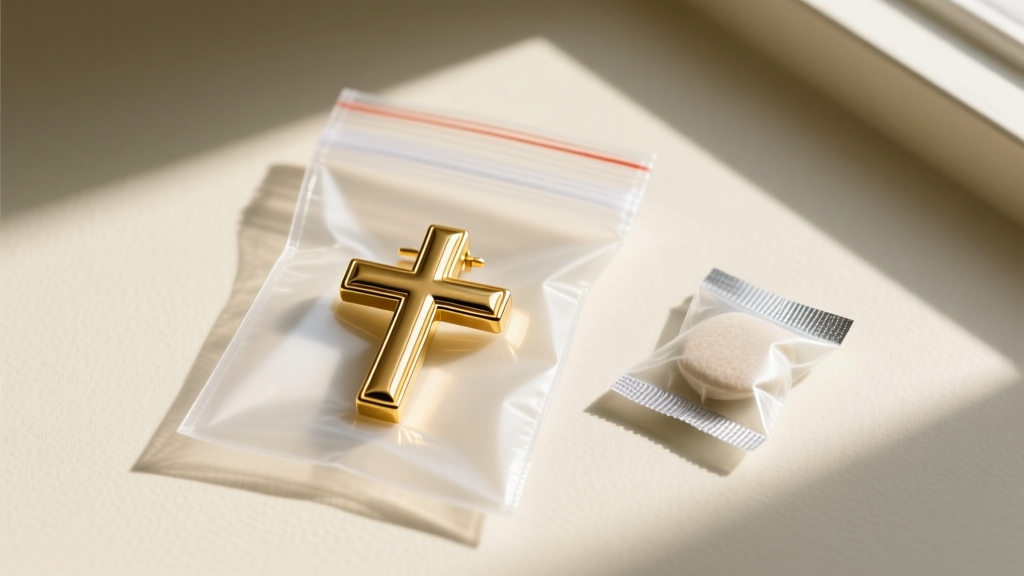
Invest in a dedicated jewelry box lined with anti-tarnish treated flannel. For travel or long-term storage, place each earring in an individual ziplock bag equipped with a small silica gel desiccant packet to absorb ambient moisture. If you own multiple sterling silver crosses, consider adding 3M anti-tarnish strips to your storage drawer; these strips absorb airborne sulfur compounds before they can react with your silver.
Troubleshooting Common Hardware Issues
Even with meticulous care, mechanical issues can arise with daily-wear earrings. Here is how to handle the most common hardware failures:
- Stuck Screw-Backs: If a screw-back becomes seized due to dried sweat or cross-threading, do not use pliers, which will mar the metal. Apply a microscopic drop of mineral oil to the threading, let it sit for an hour, and use a rubber grip pad to gently twist it free.
- Bent Posts: 20-gauge (0.8mm) posts are relatively thin and can bend if you sleep in your earrings or catch them on a towel. You can carefully straighten a slightly bent post using nylon-jaw jewelry pliers, but if the metal shows signs of stress whitening or kinking, take it to a jeweler for a post replacement to avoid the post snapping inside your earlobe.
- Dull Matte Finishes: If your brushed or matte-finish titanium cross begins to look shiny from friction against your skin, a jeweler can easily re-apply the satin finish using a specialized Scotch-Brite finishing pad.
Final Thoughts on Longevity
Maintaining mens cross earrings doesn't require a massive time investment, but it does demand consistency and the right techniques. By understanding the specific material properties of your jewelry, avoiding destructive cleaning shortcuts, and controlling your storage environment, you ensure that your pieces remain sharp, hygienic, and structurally sound for years to come.


