Which Side Is the Gay Earring? Debunking the Outdated Myth
Wondering which side is the gay earring? Discover the history of this outdated myth and explore 2026 men's earring trends, styling tips, and gauge guides.

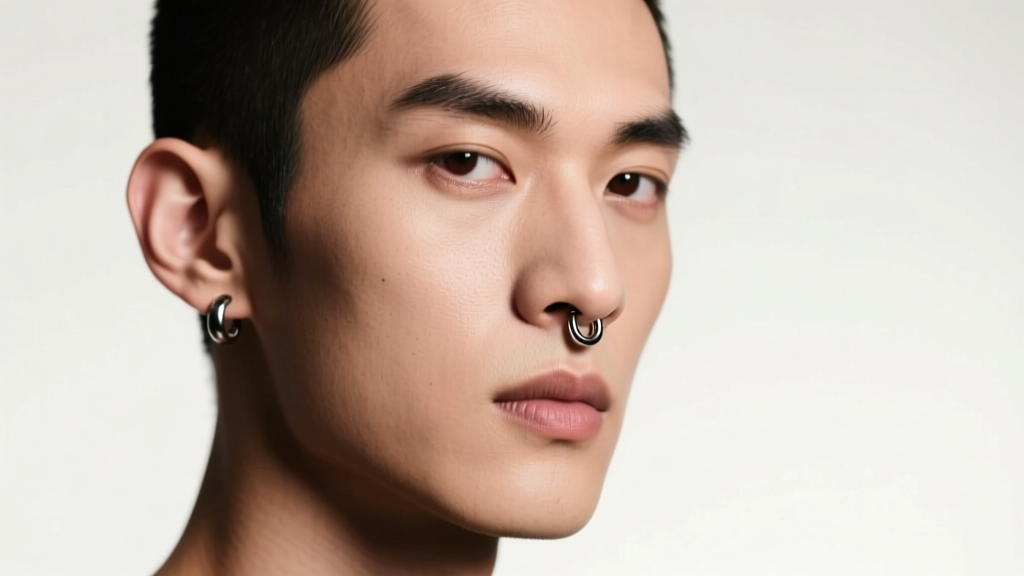
If you have ever found yourself typing which side is the gay earring into a search engine, you are stumbling upon a fascinating piece of 20th-century cultural trivia. For decades, a persistent playground myth and covert societal code dictated that a man wearing an earring in his right ear was signaling his homosexuality, while the left ear was strictly for heterosexual men. But as we navigate the fashion landscape of 2026, this outdated binary has been entirely dismantled. Today, men's ear curation is driven by facial symmetry, streetwear aesthetics, and high-fashion trends, completely divorced from sexual orientation.
In this comprehensive style and trend analysis, we will unpack the origins of the 'gay earring' myth, explain why it is entirely obsolete today, and provide a modern, expert-level guide to styling men's earrings based on face shape, material science, and piercing mechanics.
The Origin of the 'Right Ear' Code
To understand the myth, we have to look back at the sociological climate of the 1970s and 1980s. During an era when LGBTQ+ individuals faced severe discrimination and lacked mainstream representation, covert signaling systems were essential for community building and safety. Much like the hanky code or the subtle placement of accessories, the 'right ear' piercing emerged as a quiet identifier among gay men in certain Western subcultures.
This was further cemented by the controversial and deeply problematic schoolyard rhyme of the 1990s: 'Left is right, and right is wrong.' This phrase perpetuated a homophobic stigma that policed men's fashion choices for a generation. However, as queer culture moved into the mainstream and societal acceptance grew, the need for covert jewelry signaling vanished. By the late 2000s, the code was effectively dead, though the internet's tendency to archive outdated trivia keeps the search query alive today.
The 2026 Reality: Aesthetics Over Signaling
In 2026, the concept of a 'gay earring' is viewed by fashion historians and stylists as a complete anachronism. The modern men's jewelry market is booming, driven by global pop culture icons, K-pop idols, and high-fashion runways that champion gender-fluid styling. Men are now wearing asymmetrical ear curation, stacked helix hoops, and statement drop earrings purely as an extension of their personal brand.
The current trend focuses on the 'curated ear'—a deliberate, artistic arrangement of multiple piercings that complement the individual's anatomy. Whether you choose to pierce your left lobe, right lobe, or both, the decision is now based entirely on which side you part your hair, your dominant profile angle, and your overall aesthetic balance.
The 2026 Men's Ear Curation Matrix
Rather than worrying about outdated societal codes, modern styling requires an understanding of facial geometry. Use the table below to determine the most flattering earring placements and styles for your specific face shape.
| Face Shape | Ideal Placement Strategy | Recommended Jewelry Style | Optimal Gauge |
|---|---|---|---|
| Square | Single lobe or upper helix to soften strong jawlines | Round huggies, small bezel-set studs | 18g (1.0mm) or 16g (1.2mm) |
| Round | Asymmetrical lobes + vertical upper cartilage to elongate | Linear drop earrings, vertical clickers | 16g (1.2mm) for cartilage |
| Oval | Highly versatile; balanced dual-lobe or curated multi-pierce | Statement hoops, geometric ear cuffs | 20g (0.81mm) to 14g (1.6mm) |
| Heart | Lower lobe focus to add visual weight to the lower face | Teardrop dangles, wider lobe hoops | 18g (1.0mm) standard lobe |
Technical Specs: Metallurgy and Mechanics
A true style enthusiast in 2026 knows that the material and mechanics of the jewelry are just as important as the visual design. Cheap, mass-produced fashion jewelry can lead to contact dermatitis, piercing rejection, and unsightly scarring.
Material Grades You Must Know
According to the Association of Professional Piercers (APP), the gold standard for both fresh and healed piercings is implant-grade titanium. Specifically, you should look for ASTM F-136 or ISO 5832-3 compliant titanium. This material is entirely nickel-free, lightweight, and MRI-safe.
- Solid Gold: 14k or 18k solid gold is excellent for healed piercings, provided it is alloyed for biocompatibility (avoid white gold if you have a nickel allergy, as it often contains nickel).
- Niobium: A highly reactive metal that can be anodized to create vibrant colors without the use of toxic dyes or platings.
- Surgical Steel: Avoid this for fresh piercings. Despite the name, 'surgical steel' is a broad, unregulated term that often contains high levels of nickel, leading to allergic reactions and delayed healing.
Threading and Mechanics
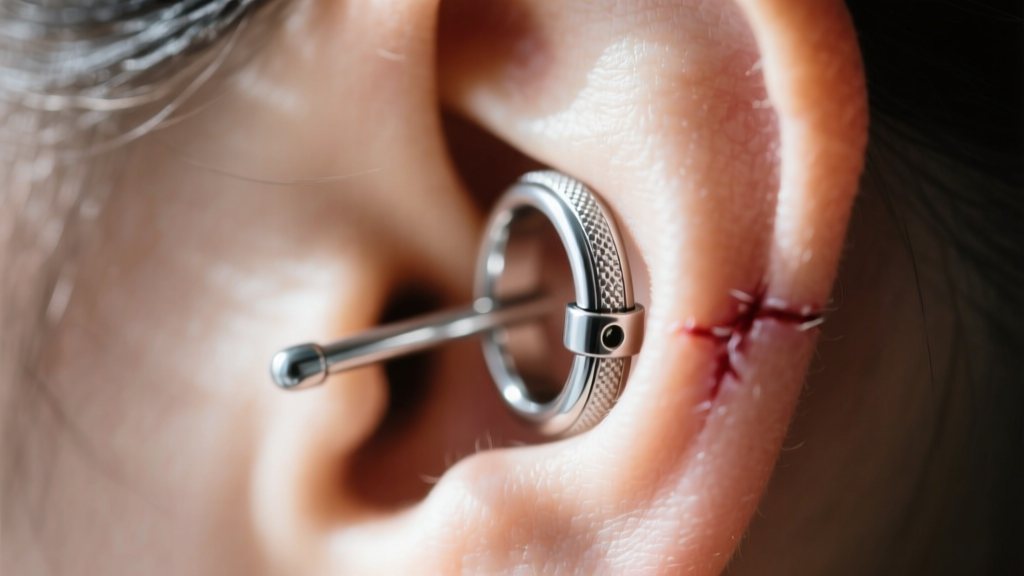
The way the jewelry fastens is critical for the longevity of your piercing. The APP strongly recommends avoiding externally threaded jewelry (where the screw is on the post that passes through the skin), as the sharp threads can tear the delicate fistula tissue during insertion.
Instead, invest in internally threaded or threadless (press-fit) jewelry. Threadless jewelry, which uses a slight bend in the pin to create tension against the inside of the post, is currently the dominant standard in high-end body jewelry for its security and seamless aesthetic.
Building Your Asymmetrical Stack
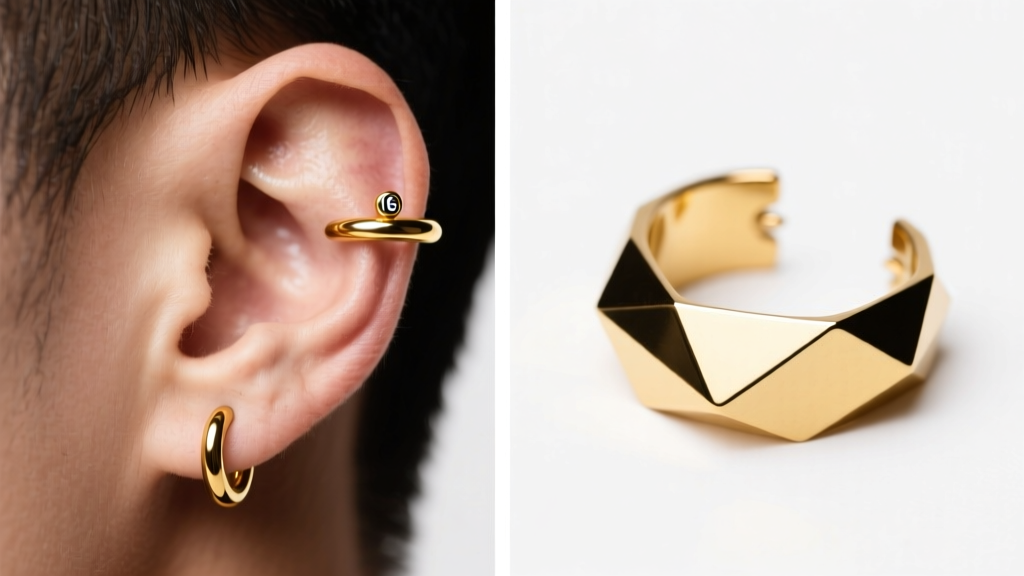
If you are moving beyond the standard single lobe piercing, the asymmetrical stack is the defining men's earring trend of 2026. This involves heavily curating one ear while leaving the other bare or minimally pierced, creating a striking visual imbalance that draws the eye.
The Lobe-to-Helix Progression
When planning a multi-piercing stack, always start with the lobe and work your way up the cartilage. Healing times dictate your strategy: a standard lobe piercing takes 6 to 8 weeks to heal, while cartilage piercings (like the helix or conch) can take 6 to 12 months. Attempting to pierce an entire ear in one sitting will overwhelm your body's immune system and lead to severe swelling and migration.
Stylist Tip: Maintain a consistent metal color and design motif across your stack. Mixing a yellow gold helix hoop with a silver industrial barbell in the same ear creates visual clutter. Stick to a unified palette—like all brushed titanium or all polished yellow gold—for a sophisticated, intentional look.
Final Verdict: Wear What You Want
So, which side is the gay earring? The definitive answer is that there is no such thing. The historical right-ear code is a relic of a bygone era, replaced by a modern fashion landscape that values individual expression, anatomical styling, and high-quality metallurgy. Whether you opt for a minimalist 18-gauge titanium stud in your left lobe, a bold 14k gold huggie in your right, or a fully curated asymmetrical cartilage stack, the only rule in 2026 is to prioritize implant-grade materials and wear your jewelry with absolute confidence.


