Mens Earring Sizes: How Material Properties Dictate Gauge & Fit
Discover how metal density and stiffness impact mens earring sizes. Learn the ideal gauge, material, and weight for lobes and cartilage.

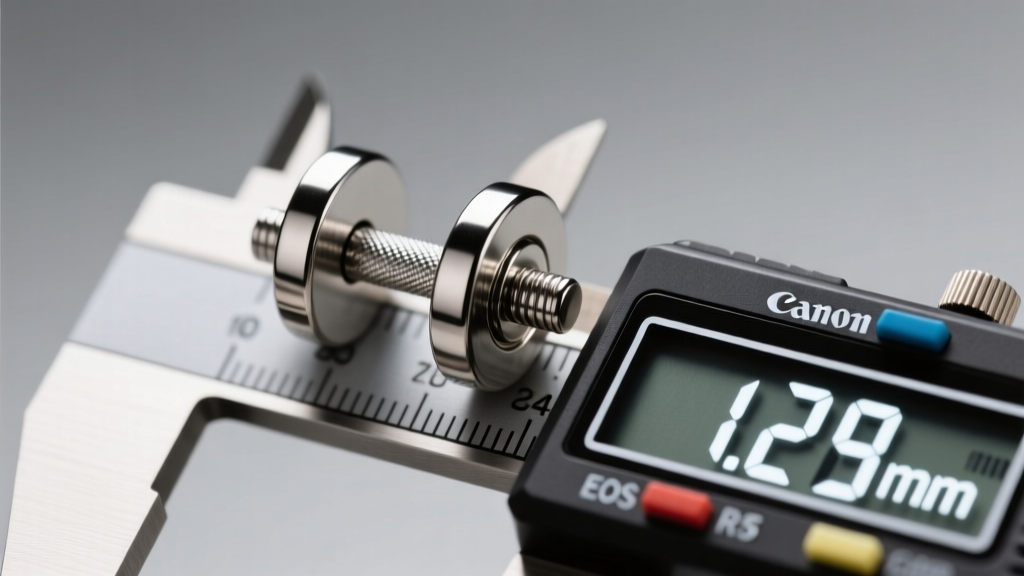
The Hidden Link Between Metal Density and Earring Sizing
When shopping for men's jewelry, most buyers focus exclusively on the visual diameter or the length of the post. However, discussing mens earring sizes without factoring in material physics is a critical mistake that leads to discomfort, migration, and tissue damage. The true fit of an earring is dictated by the intersection of its physical dimensions (gauge and diameter) and its material density (mass per unit volume). A 10mm hoop crafted from lightweight titanium interacts with the earlobe entirely differently than a 10mm hoop forged from dense tungsten carbide.
For men, who often prefer slightly thicker, more substantial jewelry profiles, understanding this relationship is paramount. The ear's tissue has a specific load-bearing capacity. When the density of the metal exceeds what the tissue can support at a given gauge thickness, the jewelry will slowly migrate downward. This guide breaks down exactly how material properties dictate the safe, comfortable, and aesthetically pleasing sizing for men's earrings across all piercing types.
Standard Mens Earring Sizes Across Different Piercing Types
Before diving into metallurgy, we must establish the baseline anatomical measurements. The jewelry industry uses the American Wire Gauge (AWG) system, where a lower number indicates a thicker piece of metal. Below is the standard sizing matrix for men, adjusted for typical male ear anatomy which often features slightly thicker cartilage ridges and denser lobe tissue.
| Piercing Type | Standard Gauge (AWG / mm) | Standard Length / Diameter | Recommended Material Weight Class |
|---|---|---|---|
| Standard Lobe | 18G (1.02mm) - 16G (1.29mm) | 6mm - 8mm post / 8mm - 10mm hoop | Medium to Heavy (Steel, Gold) |
| Upper Cartilage (Helix) | 16G (1.29mm) - 14G (1.63mm) | 6mm - 8mm post / 10mm - 12mm hoop | Light to Medium (Titanium, Steel) |
| Tragus / Conch | 16G (1.29mm) | 6mm - 8mm post | Light (Titanium, Niobium) |
| Stretched Lobe (Plugs) | 8G (3.26mm) - 00G (10mm) | Variable (Flare dependent) | Ultra-Light (Wood, Silicone, Titanium) |
Lobe vs. Cartilage: Why Material Stiffness Matters
Cartilage is rigid, avascular tissue that is highly susceptible to pressure necrosis and warping if subjected to uneven tension. When selecting mens earring sizes for the helix or conch, the tensile strength and stiffness (Young's modulus) of the metal are just as important as the gauge. A highly malleable metal like pure 24k gold or low-grade silver can warp inside a cartilage piercing, creating pressure points that lead to hypertrophic scarring. Conversely, the earlobe is highly vascular and elastic, capable of accommodating heavier, denser metals provided the gauge is thick enough to distribute the weight.

Material Breakdown: Density, Biocompatibility, and Size Limits
To truly master the sizing of men's earrings, we must evaluate the specific gravity (density) and biocompatibility of the most common jewelry metals. According to guidelines published by the Association of Professional Piercers (APP), the material's surface finish and alloy composition directly impact how the body tolerates the jewelry's physical footprint.
Implant-Grade Titanium (ASTM F136)
Titanium is the undisputed king of lightweight durability. With a density of roughly 4.5 g/cm³, it is nearly half the weight of surgical steel. Because it is so light, titanium allows men to wear larger diameter hoops (12mm+) or longer dangle earrings in standard 16G or 14G sizes without experiencing lobe fatigue. Furthermore, its exceptional strength-to-weight ratio means a 16G titanium barbell will not bend or warp under pressure, making it the ultimate choice for initial cartilage piercings where swelling requires precise, stable sizing.
316L Surgical Stainless Steel
Boasting a density of 8.0 g/cm³, 316L steel provides the satisfying, substantial "heft" that many men prefer in their jewelry. It is highly rigid and takes a mirror polish beautifully. However, its weight dictates strict sizing limits. A steel earring should rarely be worn in gauges thinner than 18G for prolonged periods, as the increased mass concentrated on a 1.02mm surface area will slowly drag the piercing downward. For men with active lifestyles, steel's stiffness ensures that a 14G hoop will maintain its perfect circular geometry even if bumped during sports.
Solid Gold (14k vs 18k) & The Density Trap
Gold is exceptionally dense. 14k gold has a density of approximately 13 g/cm³, while 18k gold pushes closer to 15 g/cm³. This extreme mass means that mens earring sizes in solid gold must be carefully calibrated. A large, heavy 14k gold signet earring crafted in a thin 20G wire is a recipe for tissue tearing. If you are investing in solid gold, you must size up the gauge. Opting for a 14G (1.63mm) or 12G (2.05mm) post increases the surface area bearing the load, safely distributing the heavy metal's weight across the lobe.
Tungsten Carbide and Niobium Alternatives
Tungsten carbide is incredibly scratch-resistant but staggeringly dense (19.3 g/cm³). It should be strictly reserved for fully healed, standard lobe piercings in thicker gauges (14G or above), or used in small, compact stud designs. On the opposite end of the spectrum is Niobium (8.5 g/cm³), which, while similar in weight to steel, is highly malleable and hypoallergenic. Niobium is frequently anodized to create dark, masculine colors (like gunmetal or black) without the use of toxic platings, making it a favorite for stretched ear sizes where heavy metals would cause irreversible lobe thinning.
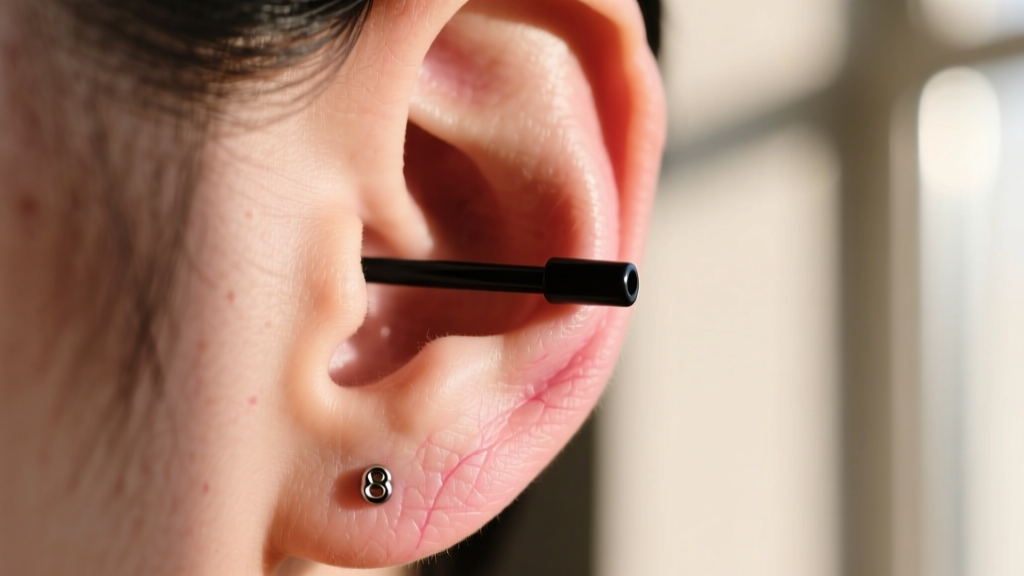
The "Cheese-Cutter" Syndrome: Troubleshooting Material-Induced Migration
The most common failure mode in men's earring sizing is the "cheese-cutter effect." This occurs when a high-density material (like 18k gold or tungsten) is fashioned into a thin gauge (20G or 18G) and worn in the earlobe. Gravity pulls the dense metal downward, and because the surface area of the wire is so small, it acts like a wire cheese slicer, slowly migrating through the tissue.
To troubleshoot and prevent this, apply the Mass-to-Gauge Ratio Rule:
- Under 2 Grams: Safe for 20G (0.81mm) and 18G (1.02mm).
- 2 to 5 Grams: Requires a minimum of 16G (1.29mm) to distribute weight safely.
- Over 5 Grams: Demands 14G (1.63mm) or thicker, or a transition to a lightweight material like titanium or acrylic.
For men who prefer the look of thin, delicate wires but want to avoid migration, the solution is not to change the visual design, but to change the material. Swapping a heavy steel wire for a hollow-tube titanium or carbon fiber core dramatically reduces the mass while maintaining the exact same external dimensions.
Quick-Reference Matrix: Matching Material to Mens Earring Sizes
Use this decision framework when selecting or custom-ordering men's earrings to ensure the material properties align with the physical dimensions of the jewelry.
- Large Diameter Hoops (15mm+): Must use Titanium or Niobium. Steel and Gold will cause immediate lobe fatigue and stretching at these diameters.
- Heavy Dangles / Chains: Require 14G or 12G lobes. Never hang heavy kinetic jewelry from a standard 20G piercing hole.
- Tight Cartilage Snug / Rook: Require rigid materials like 16G Steel or Titanium to prevent the jewelry from bending and pressing into the piercing channel.
- Stretched Lobes (00G and above): Prioritize ultra-light materials (wood, bone, silicone, or hollow titanium). Solid steel or stone plugs at these sizes will rapidly elongate the piercing hole due to gravity.
Final Fitting Recommendations and Industry Standards
Ultimately, mastering mens earring sizes requires looking past the numbers on a sizing chart and understanding the physical reality of the metal against human tissue. The ASTM International standards for implant-grade metals (such as F136 for titanium and F138 for steel) ensure that the material won't corrode or leach nickel into the body, but they do not negate the laws of physics.
When purchasing your next pair of earrings, check the material composition, estimate the weight based on its density, and ensure the gauge is thick enough to support that mass. By aligning material properties with precise anatomical sizing, you guarantee a comfortable, secure, and long-lasting fit that elevates your personal style without compromising your ear health.


