Troubleshooting Wire Wrapped Pearl Earrings: Expert Fixes
Fix broken wire wrapped pearl earrings with our expert troubleshooting guide. Learn to prevent wire snapping, pearl spinning, and nacre damage.

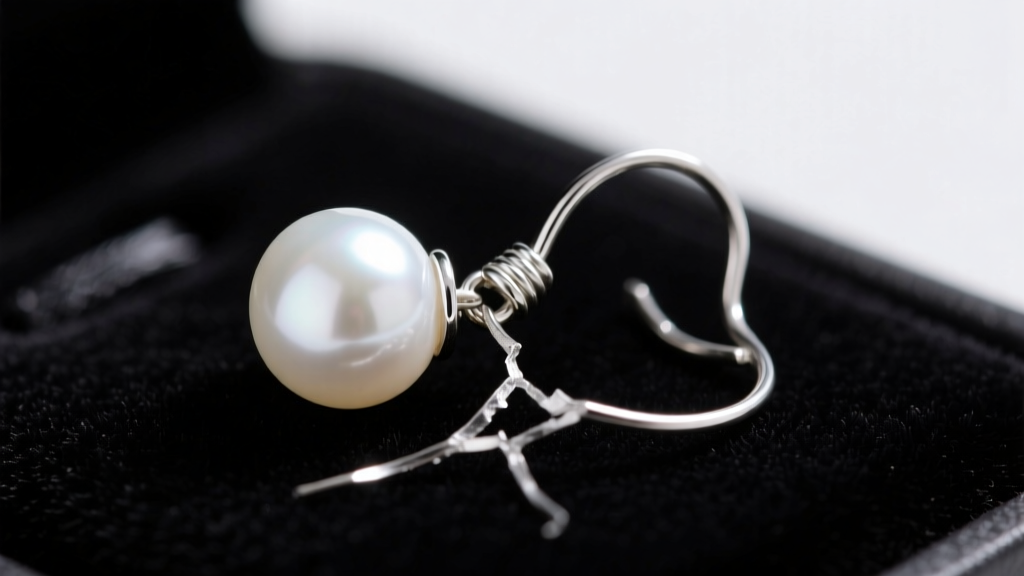
Wire wrapped pearl earrings represent a beautiful intersection of organic gemology and metallurgical craftsmanship. As we navigate the artisanal jewelry landscape in 2026, the demand for bespoke, hand-wrapped designs continues to surge. However, the delicate nature of nacre combined with the structural limits of jewelry wire creates a unique set of vulnerabilities. Whether you are a jewelry maker repairing a client's heirloom or a collector trying to salvage a favorite pair, understanding the mechanics of wire failure is crucial. This comprehensive troubleshooting guide dives deep into the material science and practical repair techniques required to fix and prevent common issues with wire wrapped pearl earrings.
The Anatomy of a Wire Wrap Failure
Before attempting any repair, it is essential to diagnose why the original wrap failed. Wire wrapped pearl earrings typically fail at three specific stress points: the top wrapped loop (where the earring hook attaches), the base of the pearl (where the wire is anchored), or along the decorative coils wrapping the nacre. When a wrap fails, it is rarely due to a single event; rather, it is the culmination of metal fatigue, improper wire temper selection, or microscopic damage inflicted during the initial wrapping process. According to Rio Grande jewelry supply guidelines, metal fatigue occurs when wire is repeatedly bent back and forth, causing the crystalline structure of the alloy to work-harden and eventually snap. Understanding this metallurgical reality is the first step toward a permanent repair.
Troubleshooting Wire Snapping and Breakage
Wire snapping during the wrapping process—or shortly after the earrings are worn—is the most frustrating issue for jewelers. This is almost always a problem of wire temper and gauge mismatch. Pearls require a gentle touch, but the wire must possess enough tensile strength to hold its shape against the tension of the earring hook pulling against the earlobe.
Wire Gauge and Temper Selection Guide
| Wire Gauge | Diameter (mm) | Best Temper | Application in Pearl Wrapping |
|---|---|---|---|
| 28-Gauge | 0.32 mm | Dead Soft | Decorative weaving, micro-coils (prone to snapping if used structurally) |
| 26-Gauge | 0.40 mm | Dead Soft / Half-Hard | Standard decorative wraps, securing top-drilled pearl drops |
| 24-Gauge | 0.51 mm | Half-Hard | Structural loops, ear wires, and primary pearl cages (Industry Standard) |
| 22-Gauge | 0.64 mm | Half-Hard | Heavy-duty ear wires, base pins for large South Sea pearls |
The Fix: If your 26-gauge dead soft wire keeps snapping at the top loop, you are experiencing work hardening. Switch to a 24-gauge half-hard wire for the structural framework. Half-hard wire has been partially work-hardened at the mill, giving it the spring and strength needed to hold a wrapped loop without becoming brittle during the bending process.
Solving the 'Spinning Pearl' Dilemma
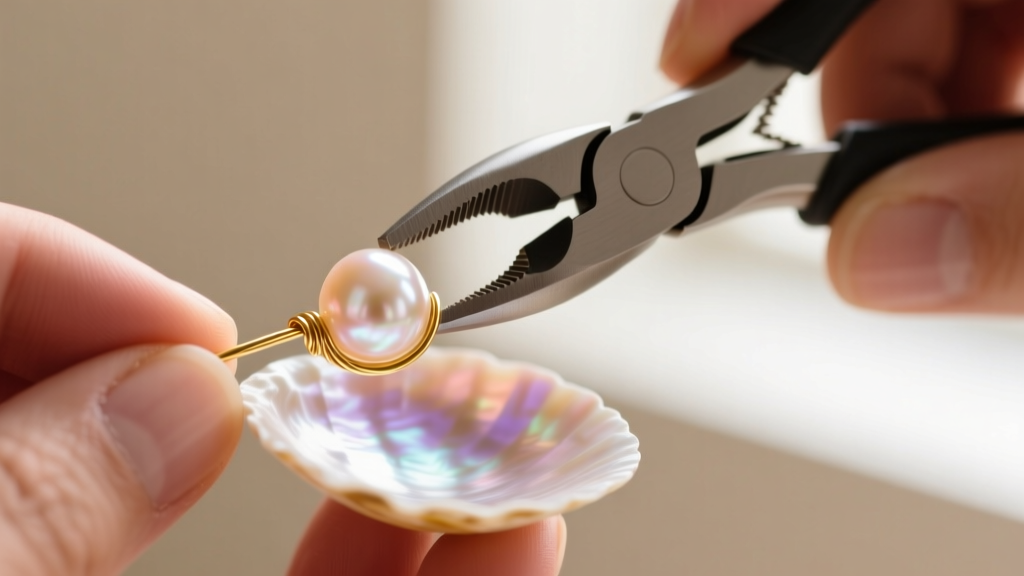
A common structural flaw in wire wrapped pearl earrings is the 'spinning pearl.' This occurs when the pearl rotates freely on the wire axis, causing the decorative wrap to face backward or sideways. This happens because standard pearl drill holes range from 0.6 mm to 0.8 mm, while a 24-gauge wire is only 0.51 mm thick. The 0.1 mm to 0.3 mm gap allows the pearl to wobble and spin.
The Fix: Never use glue to secure a pearl to a wire, as cyanoacrylate adhesives can degrade the nacre over time and create a cloudy residue inside the drill hole. Instead, use mechanical stops. Create a tight, flush wrapped loop directly beneath the pearl using a 28-gauge binding wire, or incorporate a small, snug-fitting metal bead cap (with a 0.5 mm hole) at the base. The bead cap acts as a physical shoulder, eliminating the gap and locking the pearl perfectly in place while adding a professional, finished look to the earring.
Preventing Nacre Damage and Tool Marks
Pearls are organic gemstones, ranking a mere 2.5 to 4.5 on the Mohs scale of hardness, as noted by the Gemological Institute of America (GIA). In contrast, standard steel jewelry pliers rank around 7 to 8. When steel jaws grip a wire tightly against a pearl, the steel will easily gouge, scratch, or chip the delicate nacre layers. Once nacre is chipped, it cannot be polished out; the damage is permanent.
The Fix: Banish bare steel pliers from your pearl wrapping toolkit. Invest in high-quality nylon-jaw pliers or wrap the tips of your chain-nose pliers in specialized tool tape. When tightening the final wrap against the pearl, always use a nylon-jaw block to press the wire flush. Furthermore, ensure your wire is cut perfectly flush with micro-flush cutters before pressing it down; a sharp, angled wire end will act like a scalpel against the pearl's surface when tension is applied.
Tarnish and Chemical Degradation Fixes
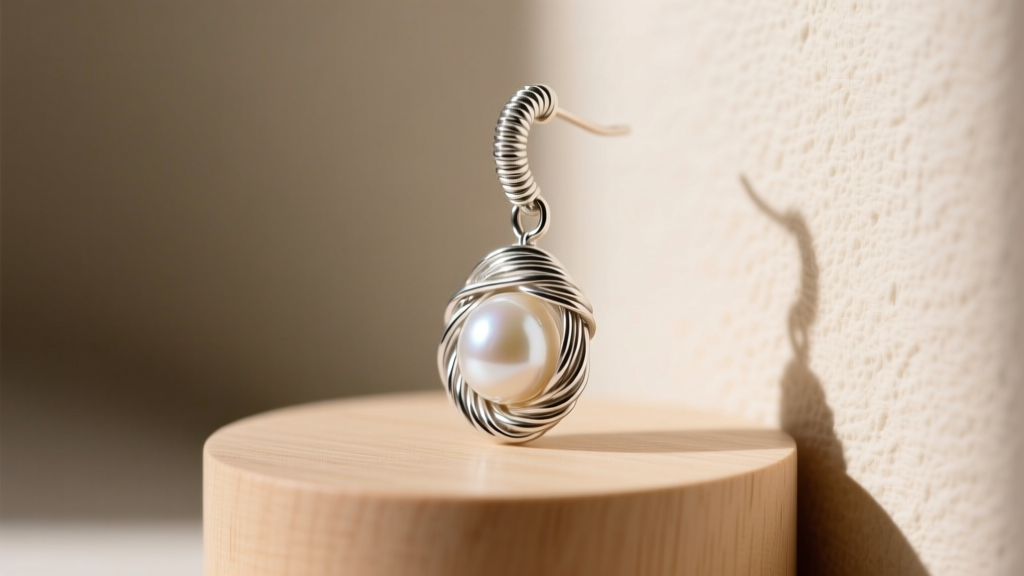
Sterling silver (925) is the most popular alloy for wire wrapping, but it contains 7.5% copper, which reacts with sulfur in the air to create black silver sulfide tarnish. When tarnish builds up in the tight crevices of a wire wrap, it can transfer to the porous surface of the pearl, causing a dull, grayish stain on the nacre that is incredibly difficult to remove.
The Fix: Never use commercial silver dip solutions, ultrasonic cleaners, or baking soda pastes on wire wrapped pearl earrings. The harsh chemicals in dips will instantly strip the pearl's luster, and ultrasonic vibrations can shatter the gemstone along its drill hole. To clean tarnished wraps safely, use a dry, treated silver polishing cloth (like a Sunshine cloth) to carefully buff the wire, keeping the cloth away from the pearl. For heavy buildup, use a soft-bristled baby toothbrush dipped in a solution of distilled water and a single drop of pH-neutral castile soap, gently brushing the wire while avoiding prolonged moisture contact with the pearl.
Pro Tip: If you frequently work with pearls and hate tarnish, upgrade your wire to Argentium silver (935 or 960). Argentium replaces some of the copper with germanium, making it highly tarnish-resistant and significantly reducing the risk of chemical transfer to the pearl's nacre.
Step-by-Step Repair Protocol for Snapped Wraps
When a client brings in a wire wrapped pearl earring with a snapped top loop, follow this precise protocol to ensure a seamless, durable repair without risking the gemstone:
- Isolate the Pearl: Wrap the pearl loosely in a soft microfiber cloth, leaving only the damaged wire exposed. This protects the nacre from accidental tool slips.
- Remove the Damaged Wire: Using flush cutters, snip the broken wire as close to the base of the pearl as possible. Carefully unwind the remaining coils using chain-nose pliers, pulling the wire away from the pearl, never across it.
- Assess the Core: Inspect the pearl's drill hole for micro-fractures. If the hole is compromised, the pearl cannot be safely re-wrapped and must be replaced.
- Prepare the New Wire: Cut a fresh 6-inch length of 24-gauge half-hard wire. Create a small, tight loop at one end to act as the new base stopper.
- Execute the Wrap: Thread the pearl onto the new wire. Using nylon-jaw pliers, bend the wire at a 90-degree angle directly above the pearl's top hole. Wrap the tail wire tightly around the stem three times, ensuring each coil sits perfectly flush against the last.
- Finish and Trim: Form your top hanging loop, wrap the remaining tail down the stem, and trim flush. Press the tail flat with nylon jaws.
By respecting the material limits of both the metal and the organic gemstone, you can troubleshoot, repair, and preserve wire wrapped pearl earrings for decades of wear. Mastery in jewelry repair is not just about fixing what is broken; it is about engineering a solution that prevents the failure from ever happening again.


