Hoop Earrings Men Silver Styles: A Technical & Sizing Guide
Explore the technical specs of silver hoop earrings men wear. Deep dive into 925 vs Argentium metallurgy, gauge sizing, and clasp engineering.

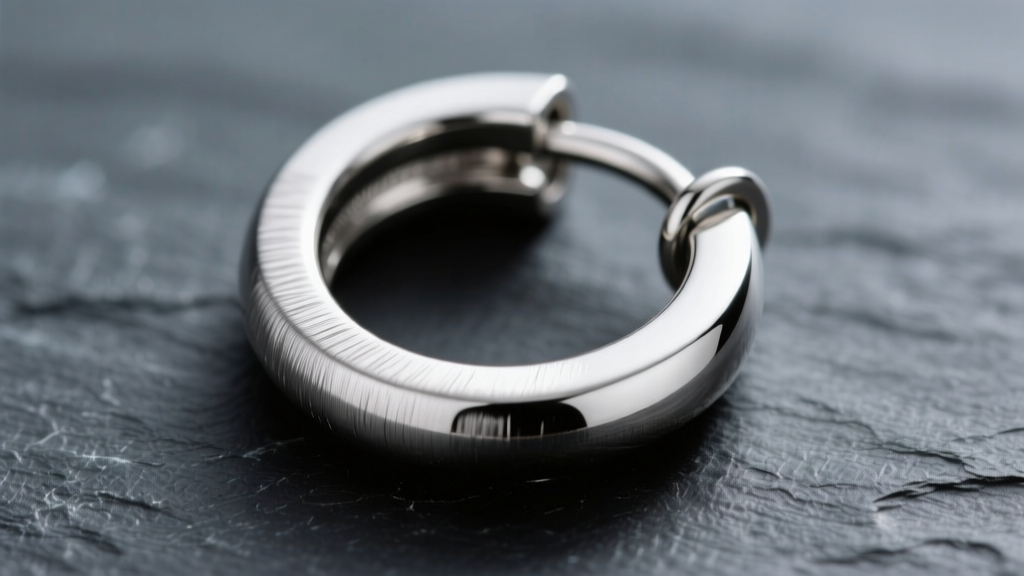
The evolution of men's jewelry has shifted dramatically from purely aesthetic choices to a deep appreciation for horological and metallurgical precision. When evaluating hoop earrings men silver options, the untrained eye might only notice the shine. However, a domain expert looks at the Vickers hardness of the alloy, the structural integrity of the clasp mechanism, and the biomechanical compatibility of the wire gauge with specific cartilage or lobe placements. This technical deep dive strips away the marketing fluff to examine the exact engineering, material science, and sizing mechanics that define high-performance silver hoops for men.
The Metallurgy of Men's Silver Hoops: 925 vs. Argentium
Fine silver (999) is rarely used for hoop earrings due to its extreme malleability. On the Vickers Hardness (HV) scale, fine silver sits at a mere 25 HV, meaning it will easily bend out of shape under the minor stress of sleeping or catching on clothing. Therefore, alloying is mandatory for structural integrity.
Standard Sterling (925) vs. Argentium (935/960)
Traditional sterling silver consists of 92.5% silver and 7.5% copper. While the copper increases the hardness to approximately 65 HV, it introduces a significant vulnerability: copper is highly reactive to sulfur and moisture, leading to rapid tarnishing (silver sulfide formation). For men who prefer low-maintenance jewelry or live in high-humidity environments, this is a functional failure point.
Argentium silver replaces a portion of the copper with germanium. This seemingly minor metallurgical adjustment drastically alters the performance profile of the metal. According to the Gemological Institute of America (GIA), the germanium creates a transparent oxide layer on the surface that actively prevents tarnish. Furthermore, when heat-treated, Argentium can reach a hardness of 85 HV, making it vastly superior for the tension points found in hoop clasps.
| Alloy Type | Composition | Hardness (HV) | Tarnish Resistance | Best Use Case |
|---|---|---|---|---|
| Fine Silver (999) | 99.9% Ag | ~25 HV | High | Not recommended for hoops |
| Sterling (925) | 92.5% Ag, 7.5% Cu | ~65 HV | Low (Requires polishing) | Standard lobe hoops, heavy cast designs |
| Argentium (935) | 93.5% Ag, Ge, Cu | ~85 HV (Treated) | Very High | Clickers, cartilage hoops, low-maintenance |
Gauge Thickness and Piercing Placement Mechanics
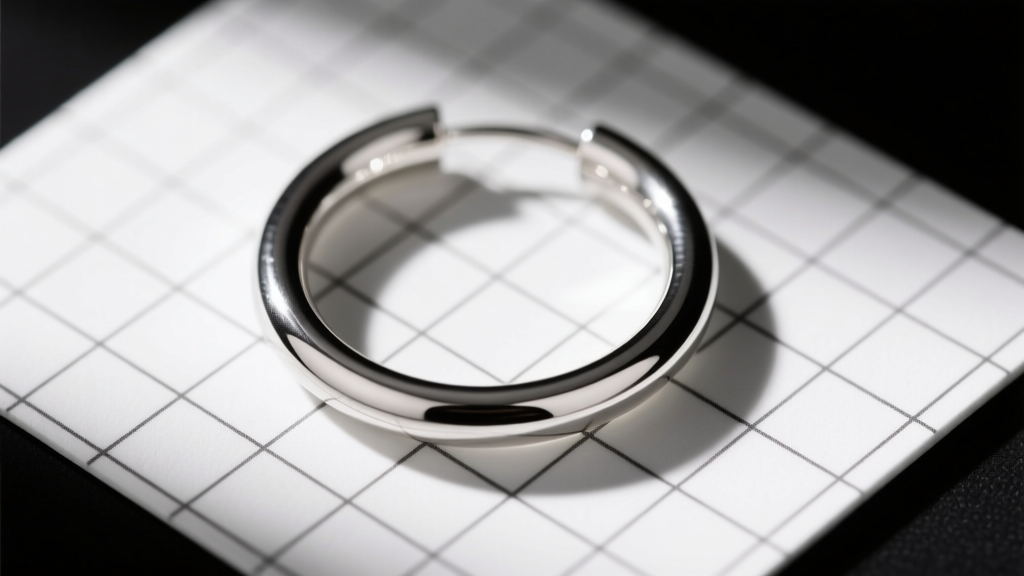
The most common sizing error men make when purchasing silver hoops is misunderstanding the inverse gauge system and its biomechanical implications. In body jewelry, the higher the gauge number, the thinner the wire. A standard 20-gauge wire is 0.81mm thick, while a 14-gauge wire is 1.63mm thick.
The "Cheese-Cutter Effect" in Cartilage
For standard earlobe piercings, an 18-gauge (1.02mm) or 20-gauge hoop is generally sufficient because the lobe tissue is soft, vascular, and forgiving. However, placing an 18-gauge silver hoop in a helix or cartilage piercing is a critical error. Cartilage is dense and lacks the same elasticity. The thin wire concentrates the weight and kinetic force of the hoop into a microscopic surface area. Over time, this causes the "cheese-cutter effect," where the wire slowly migrates through the cartilage, leading to rejection, tearing, and permanent tissue damage.
The Association of Professional Piercers (APP) strongly recommends a minimum of 16-gauge (1.29mm) or 14-gauge (1.63mm) for any cartilage placement. When buying silver hoops for the upper ear, always verify the exact millimeter thickness, as cheap manufacturers often mislabel 18g wire as 16g to save on silver weight costs.
- 20G (0.81mm): Only for secondary, healed lobe piercings. High risk of bending.
- 18G (1.02mm): Standard for primary lobe piercings. Too thin for cartilage.
- 16G (1.29mm): The ideal baseline for cartilage, helix, and tragus hoops.
- 14G (1.63mm): Heavy-duty, masculine aesthetic. Excellent for stretched lobes or thick cartilage.
Clasp Engineering: Failure Modes and Durability
The clasp is the primary point of mechanical failure in any hoop earring. Men's jewelry often endures more kinetic stress from active lifestyles, making clasp engineering a vital consideration.
Continuous (Endless) Hoops vs. Hinged Clickers
Continuous hoops rely on a thin wire pin that inserts into a hollow tubing receptor. While they offer a seamless aesthetic, they suffer from metal fatigue. Repeated bending of the silver pin to open and close the hoop work-hardens the metal, eventually causing it to snap at the base. Furthermore, the thin pin can easily bend out of alignment, rendering the hoop useless.
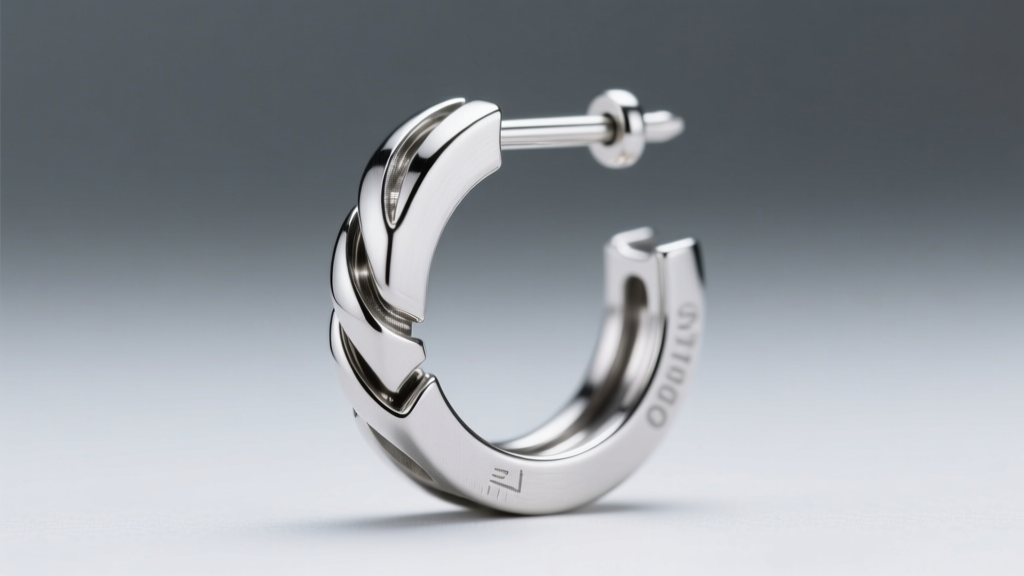
Conversely, hinged segment rings and clickers utilize a machined hinge and a snap-lock mechanism. High-quality clickers feature a precision-milled interlocking groove that produces an audible "click" when closed. This design distributes mechanical stress across the entire hinge joint rather than concentrating it on a single bending wire. For men seeking durability, a die-struck 14-gauge Argentium silver clicker will outlast a cast continuous hoop by several years.
"When assessing a hinged silver hoop, apply lateral pressure to the joint while it is closed. If there is any side-to-side play or wiggling, the hinge pin is undersized and will eventually fail under the torque of daily wear."
Manufacturing Methods: Cast vs. Die-Struck
The manufacturing process fundamentally dictates the density and durability of the silver hoop. Lost-wax casting is the most common method for mass-produced jewelry. Molten silver is poured into a mold, but this process can introduce microscopic porosity (air bubbles) within the metal. These pores create weak points, making cast hoops more prone to snapping if dropped or bent.
Die-striking, on the other hand, involves subjecting a sheet of silver to immense pressure between two hardened steel dies. This compresses the grain structure of the metal, eliminating porosity and increasing the overall density and tensile strength. Die-struck silver hoops are noticeably heavier, more resistant to deformation, and hold a mirror polish far longer than their cast counterparts. When shopping, look for manufacturers that explicitly state their hoops are die-struck or machined from solid bar stock.
Pricing Tiers and Value Assessment
Understanding the technical specifications allows you to accurately assess the pricing of men's silver hoops. The market is generally segmented into three tiers based on material purity, manufacturing method, and clasp complexity.
Market Breakdown
- Entry-Level ($20 - $45): Typically 925 sterling silver, cast manufacturing, and basic continuous wire closures. Expect higher porosity, faster tarnishing, and a lifespan of 1-2 years before clasp failure or metal fatigue.
- Mid-Tier / Artisan ($60 - $140): Features 935 Argentium or heavily rhodium-plated 925 silver. Manufacturing shifts to die-striking or CNC machining. Clasps are usually hinged clickers with secure locking grooves. This is the sweet spot for daily wear and cartilage safety.
- Luxury / Precision ($150 - $300+): Hand-machined from solid silver bar stock, often featuring internal threading, O-ring seals for waterproofing, and proprietary hinge mechanisms. These pieces are engineered for lifetime durability and are often backed by structural warranties.
Maintenance and Tarnish Mitigation
Even with Argentium silver, environmental factors like chlorinated water, sweat, and sulfur-rich environments will eventually dull the finish. Avoid using abrasive silver dips, which strip the germanium oxide layer and leave the metal microscopically rough, accelerating future tarnish. Instead, use a high-quality microfiber polishing cloth impregnated with mild jeweler's rouge. For oxidized silver hoops—where liver of sulfur is intentionally applied to create dark, recessed contrasts—clean only with mild soap and water to preserve the darkened patina in the grooves.
Ultimately, selecting the right silver hoop requires looking past the surface shine. By prioritizing Argentium alloys, respecting the biomechanics of gauge thickness, and demanding precision-machined clicker clasps, you can secure a piece of men's jewelry that is as structurally sound as it is stylistically sharp.


