The Best Metal Settings for Tiny Diamond Earrings: A Material Guide
Compare platinum, white gold, and rose gold settings for tiny diamond earrings. Learn which metal and diamond grade offers the best durability and sparkle.

The Anatomy of Tiny Diamond Earrings: Why Metal Choice Matters
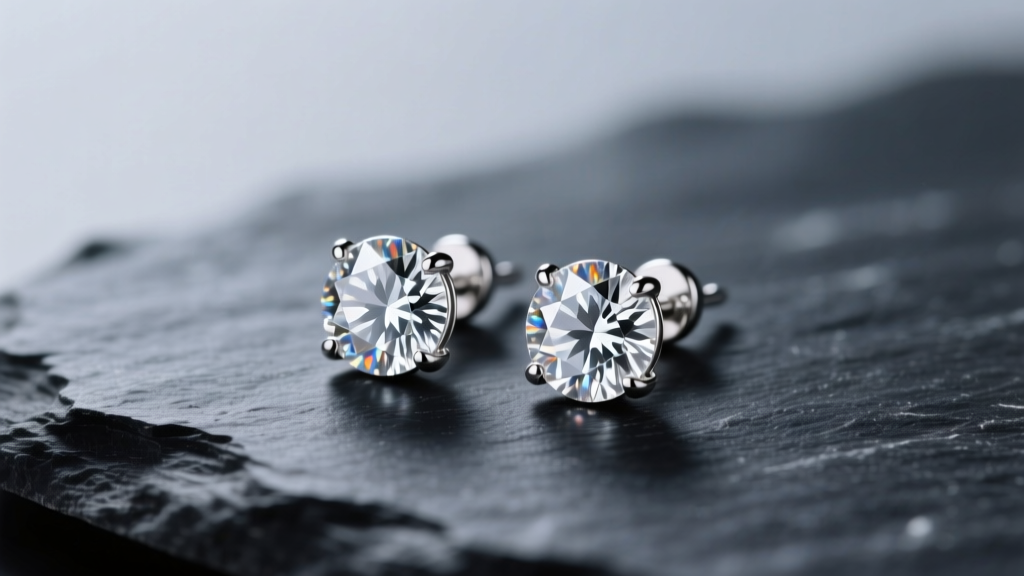
When curating a minimalist ear stack or selecting an everyday staple, tiny diamond earrings are the undisputed champions of subtle elegance. Typically ranging from 0.05 to 0.15 carats in total weight (CTW) and featuring stones between 1.5mm and 3mm in diameter, these earrings rely entirely on the precision of their metalwork. Because the diamonds themselves offer such a small surface area, the structural integrity, color, and alloy composition of the metal setting dictate not only the aesthetic contrast but the literal survival of the prongs holding your stones.
Unlike larger solitaire studs, where the diamond is the focal point and the metal merely a supportive scaffold, the metal in tiny diamond earrings occupies a significant percentage of the visual footprint. A poorly chosen alloy can result in bent posts, snapped prongs, or allergic reactions. In this comprehensive material guide, we dissect the metallurgical properties and diamond grades that define high-quality tiny diamond earrings in 2026.
Post Gauge and Structural Integrity
Before evaluating the alloy, we must address the post gauge. The industry standard for earring posts ranges from 0.8mm to 1.0mm. For tiny diamond earrings, many mass-market jewelers default to 0.7mm or 0.8mm posts to save on precious metal costs. However, a 0.8mm post is highly susceptible to bending when inserted into the ear or when snagged on clothing.
"For everyday wear, a 0.9mm or 1.0mm post is essential for structural longevity. While it requires slightly more force to pierce the lobe initially, it prevents the earring from drooping and reduces metal fatigue at the base of the setting."
Furthermore, the backing mechanism must match the weight of the earring. Tiny diamond earrings are exceptionally light. Heavy screw-backs can cause the earring to tilt forward awkwardly, while standard friction backs with shallow notches may slip off. Opt for La Pousette (butterfly) backs with deep grooves or secure silicone stoppers for lightweight settings.
Platinum vs. White Gold: The Durability Showdown
White metals are the most popular choice for tiny diamond earrings because they blend seamlessly with the colorless sparkle of the stones. However, their material properties are vastly different.
Platinum (Pt950)
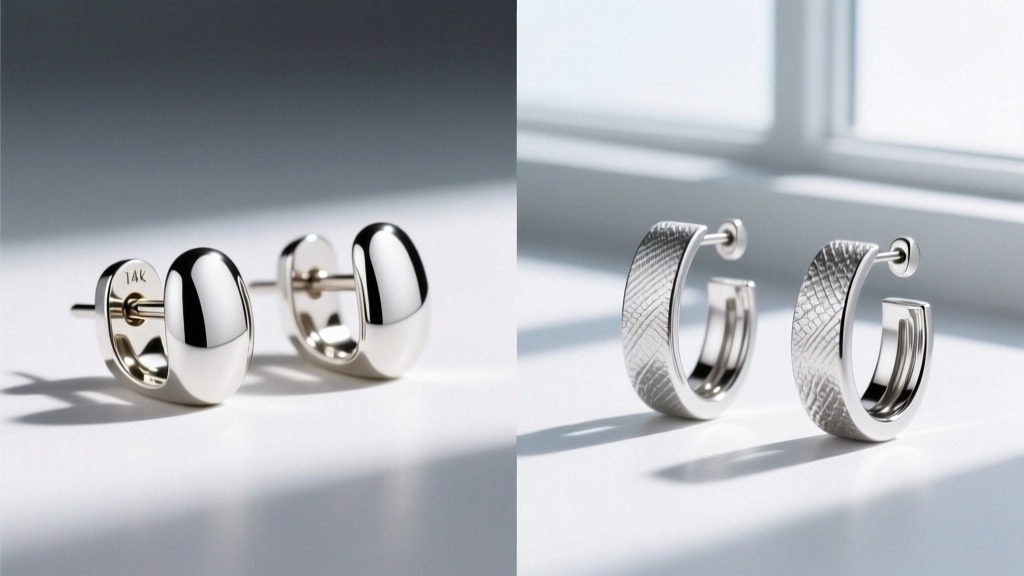
Platinum used in fine jewelry is typically 95% pure platinum, alloyed with 5% ruthenium or iridium (Pt950/Ru). According to the Gemological Institute of America (GIA), platinum is exceptionally dense and durable. Its most critical property for tiny settings is its malleability over brittleness. When a platinum prong is scratched or impacted, the metal is displaced, not lost. This means platinum prongs can be easily repolished and tightened by a jeweler decades down the line without needing to be re-tipped.
14k and 18k White Gold
White gold is an alloy of yellow gold mixed with white metals like nickel, palladium, or zinc, and then plated with rhodium to achieve a bright white finish. 14k white gold (58.5% pure gold) is harder than 18k white gold (75% pure gold), making it slightly more resistant to scratching. However, white gold suffers from metal loss. When a white gold prong wears down, the metal is gone forever. For tiny diamond earrings, where prongs are already microscopic, white gold requires rhodium replating every 12 to 18 months and eventual prong re-tipping to prevent stone loss.
Material Hardness and Prong Security Matrix
To understand how different alloys perform in micro-settings, we must look at their Vickers Hardness (HV) and tensile strength. Below is a comparative matrix of the most common alloys used for tiny diamond earrings.
| Metal Alloy | Vickers Hardness (HV) | Prong Security | Maintenance Level | Best For |
|---|---|---|---|---|
| Platinum (Pt950/Ru) | ~135 HV | Exceptional | Low (Polishing only) | Lifetime wear, heirloom pieces |
| 14k White Gold (Ni-Free) | ~145 HV | Good | High (Rhodium plating) | Budget-conscious buyers |
| 18k White Gold (Pd Alloy) | ~125 HV | Moderate | High (Rhodium plating) | Hypoallergenic needs |
| 14k Rose Gold | ~140 HV | Good | Low | Warm skin tones, vintage styles |
Rose and Yellow Gold: Warmth and Alloy Composition
While white metals dominate the market, rose and yellow gold offer striking contrast, making the tiny diamonds pop. The color of these golds is dictated by their copper and silver content. 14k rose gold contains roughly 58.5% gold, 30% copper, and 11.5% silver. The high copper content not only provides the pink hue but also increases the alloy's overall tensile strength compared to yellow gold.
For tiny diamond earrings, 14k rose or yellow gold is often preferred over 18k variants purely for structural reasons. The higher presence of alloy metals in 14k gold results in a stiffer post and more rigid prongs, which is vital when securing sub-2mm melee diamonds. However, buyers with copper or nickel sensitivities must verify the exact alloy breakdown, as mandated by the EU Nickel Directive, before purchasing.
Diamond Properties: Navigating Melee Stones
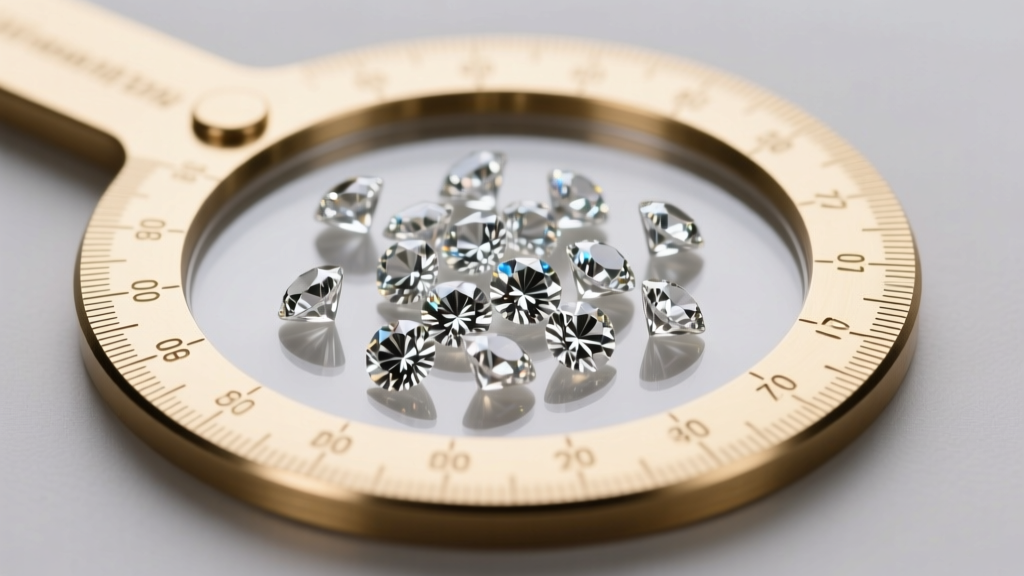
The diamonds used in tiny diamond earrings are classified as "melee" (pronounced meh-lay), a term used by the Jewelers of America to describe diamonds weighing less than 0.15 carats. Because of their minute size, the optical physics of melee diamonds differ from larger solitaires.
Single Cut vs. Full Cut Melee
This is the most critical, yet least discussed, factor in buying tiny diamond earrings.
- Single Cut: Features only 17 or 18 facets. These are typically used for stones smaller than 1.5mm because cutting 58 facets on such a tiny surface is nearly impossible and results in a muddy appearance.
- Full Cut: Features the standard 57 or 58 facets of a round brilliant. For tiny diamond earrings ranging from 2mm to 3mm, always insist on full-cut melee. The increased facet density maximizes light return and fire, preventing the stones from looking like flat glass.
Clarity and Color: Where to Save Money
Do not overpay for premium grades in tiny diamond earrings. The human eye cannot resolve inclusions or subtle color nuances in a 2mm stone.
- Color: G-H (Near Colorless) is the sweet spot. D-F (Colorless) commands a massive premium but offers zero visible benefit at this scale.
- Clarity: SI1-SI2 (Slightly Included) is perfectly acceptable. As long as the inclusions are not black carbon spots located directly under the table facet, they will be entirely invisible to the naked eye.
Pricing Realities and Lab-Grown Melee
The market for tiny diamond earrings has shifted dramatically with the maturation of lab-grown diamond (LGD) technology. In 2026, lab-grown melee diamonds are predominantly created via Chemical Vapor Deposition (CVD), which allows for high-purity, near-colorless stones at a fraction of the cost of natural mined melee.
A pair of high-quality 0.10 CTW natural tiny diamond earrings in 14k white gold typically retails between $350 and $550. The exact same specifications featuring lab-grown melee diamonds can be found in the $150 to $250 range. Because melee diamonds hold virtually no resale value regardless of their origin, opting for lab-grown stones allows you to reallocate your budget toward a more durable platinum setting or a larger carat weight.
Expert Verdict: Matching Your Lifestyle to the Right Alloy
Choosing the perfect tiny diamond earrings requires balancing your budget, skin chemistry, and maintenance tolerance. If you want a "buy it for life" piece that requires zero chemical replating and offers the highest prong security, Platinum (Pt950) is the undisputed champion, despite the 30-40% metal premium. If you are budget-conscious and do not mind annual maintenance, 14k White Gold provides a brilliant, hard-wearing canvas. Finally, for those seeking a low-maintenance, warm-toned aesthetic with excellent structural rigidity, 14k Rose Gold offers a beautiful, durable contrast that makes even the tiniest melee diamonds visually command attention.


