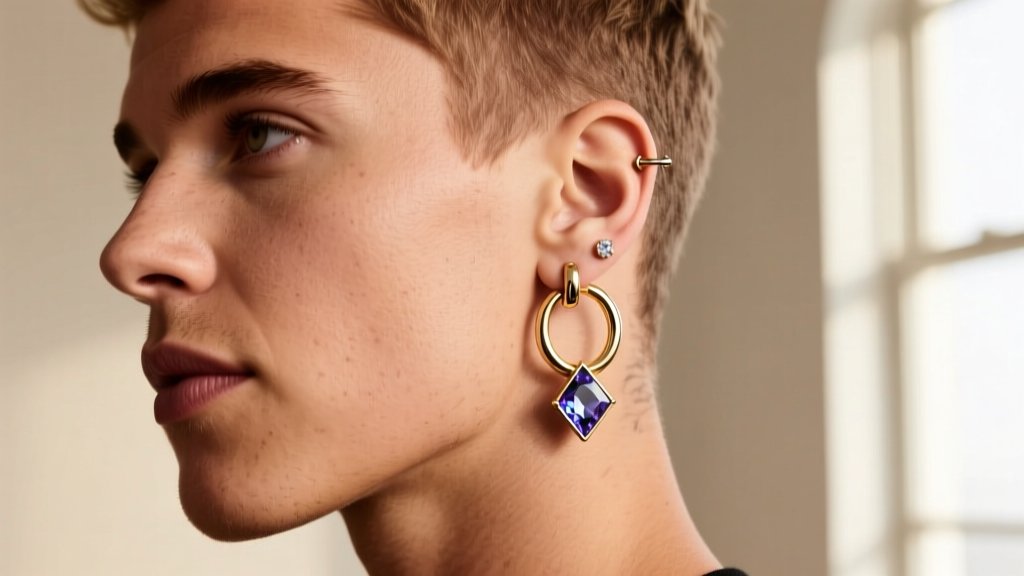
Mirror Earrings Trend 2026: Styling & Face Shape Guide
Discover the 2026 mirror earrings trend. Learn how to style liquid-metal and high-polish reflective drops for your face shape and piercing type.

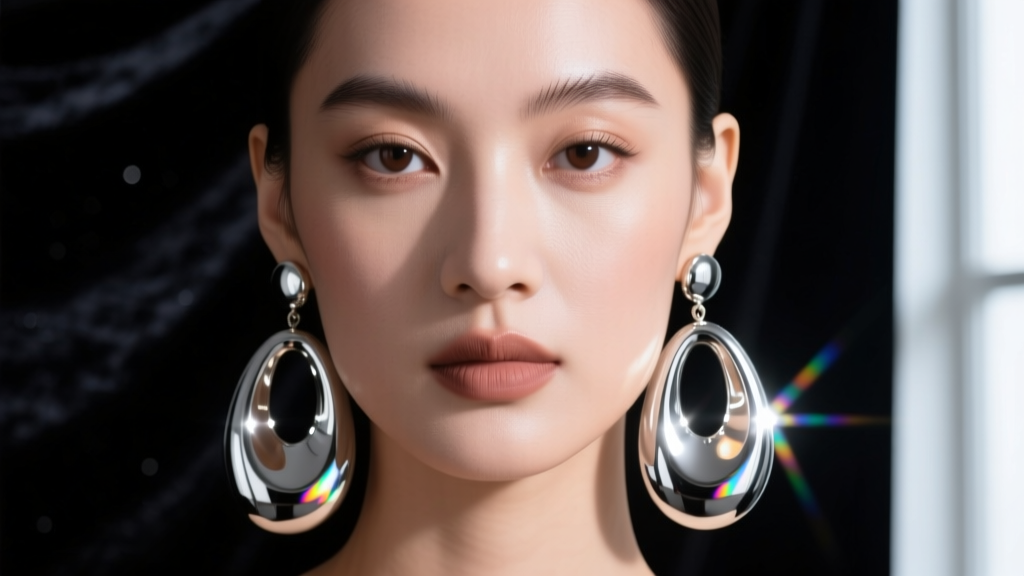
The jewelry landscape in 2026 has decisively pivoted toward cyber-minimalism and futuristic fluidity, placing mirror earrings at the absolute epicenter of the trend. Moving far beyond the novelty glass clips of the early 2000s, today's mirror-finish earrings are architectural marvels. They utilize advanced metallurgical polishing, high-grade rhodium plating, and precision-cut reflective acrylics to create a 'liquid metal' effect that catches and manipulates ambient light. As highlighted in Vogue's recent jewelry trend forecasts, the modern mirror earring is less about literal reflection and more about creating a dynamic, shifting silhouette that interacts with the wearer's environment.
However, styling highly reflective ear jewelry requires a nuanced understanding of light refraction, facial proportions, and the physical limitations of earlobe anatomy. This comprehensive guide breaks down the material science, face-shape dynamics, and structural safety of the 2026 mirror earring movement.
The Anatomy of a Mirror Finish: Materials and Reflectivity
Not all mirror earrings are created equal. The term 'mirror' in contemporary jewelry design refers to two distinct categories: true mirrored surfaces (glass/acrylic) and high-polish metallic finishes. Understanding the difference is critical for assessing weight, durability, and skin safety.
Metallic Mirror Finishes
Achieving a flawless mirror finish on metal requires intensive buffing and, in many cases, electroplating. For base metals like brass or copper, a layer of rhodium (a platinum-group metal) is applied. According to gemological standards outlined by the Gemological Institute of America (GIA), a rhodium plating thickness of at least 0.75 to 1.0 microns is required for long-term wearability on high-friction items like earrings. Thinner platings (0.1 to 0.3 microns) will wear through to the base metal within months, destroying the mirror effect and potentially causing contact dermatitis.
True Mirrored Surfaces
Acrylic and polycarbonate sheets with vapor-deposited silver or aluminum backings offer a true mirror reflection at a fraction of the weight of solid steel. These are heavily favored in 2026 for oversized, avant-garde ear cuffs and dramatic drop styles where metal would be prohibitively heavy.
| Material | Reflectivity Index | Relative Weight | Avg. Price Range | Tarnish / Scratch Risk |
|---|---|---|---|---|
| Solid 18k White Gold (Rhodium Dipped) | Very High (95%) | Heavy | $800 - $2,500+ | Low (requires re-dipping every 2-3 years) |
| 316L Surgical Stainless Steel | High (85%) | Very Heavy | $40 - $120 | Low (highly scratch-resistant) |
| Rhodium-Plated Brass (1.0 micron) | Very High (95%) | Medium | $60 - $180 | Medium (plating eventually wears) |
| Mirrored Optical Acrylic | True Mirror (99%) | Ultra-Light | $25 - $85 | High (prone to micro-scratches) |
Face Shape Dynamics: Manipulating Light and Proportion
Because mirror earrings actively bounce light back at the observer, they act as visual magnifiers. They draw the eye immediately and can alter the perceived proportions of your face. Styling them requires a strategic approach to geometry and light refraction.
Round and Oval Face Shapes
For round faces, the goal is to introduce structure and verticality. Angular, geometric mirror drops—such as elongated hexagons or sharp, liquid-metal teardrops—create harsh shadow lines that contrast with and slim the natural curves of the face. The reflective surface will catch light at the bottom of the earring, drawing the eye downward and visually lengthening the jawline.
Square and Heart Face Shapes
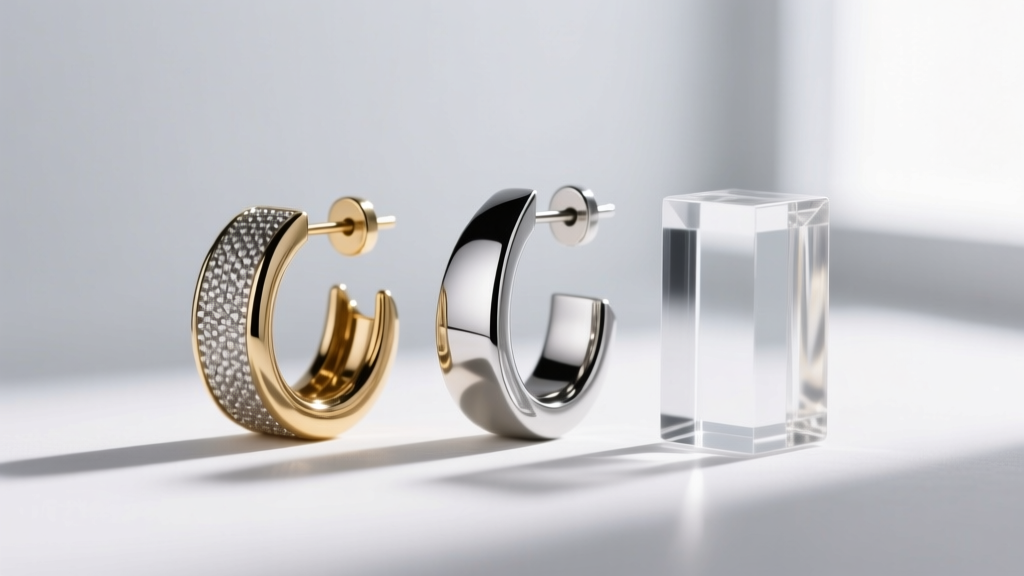
Square and heart-shaped faces benefit from the softening effect of curved mirror surfaces. High-polish, oversized mirror hoops or fluid, asymmetrical 'melted' metal huggies reflect light in a continuous, sweeping arc. This diffuses harsh angles along the jaw and cheekbones. Avoid sharp, triangular mirror drops, as the concentrated light reflection at the bottom point will over-emphasize a strong jaw or a narrow chin.
Pro Tip: If you wear your hair down, the mirror finish of your earrings will catch the light filtering through your hair, creating a 'halo' effect. Pulling your hair back into a sleek, tight bun maximizes the stark, futuristic contrast of the liquid-metal finish against the skin.
Piercing Placement, Gauge, and the 'Cheese Cutter' Effect
The most common failure mode with heavy, high-polish metallic earrings is the 'cheese cutter' effect. This occurs when a heavy earring rests on a thin wire, gradually slicing through the earlobe tissue over time. The Association of Professional Piercers (APP) strongly advises matching the wire gauge to the physical weight of the jewelry, not just the size of the piercing hole.
- Standard Lobe Piercings (20G / 0.81mm): Only suitable for lightweight mirrored acrylic drops or small, high-polish titanium studs. Never hang heavy steel or solid gold mirror drops on a 20G wire.
- Reinforced Lobes (18G / 1.0mm): The ideal standard for most medium-weight mirror hoops and rhodium-plated brass drops. The 1.0mm thickness provides enough surface area to distribute weight comfortably.
- Heavy Statement Drops (16G / 1.2mm or 14G / 1.6mm): If you are wearing oversized, solid 316L steel mirror earrings, the ear wire must be at least 16G. If your piercing was done at 20G, you must gradually stretch the lobe using tapered glass or steel inserts before wearing heavy mirror jewelry.
Cartilage and Helix Considerations
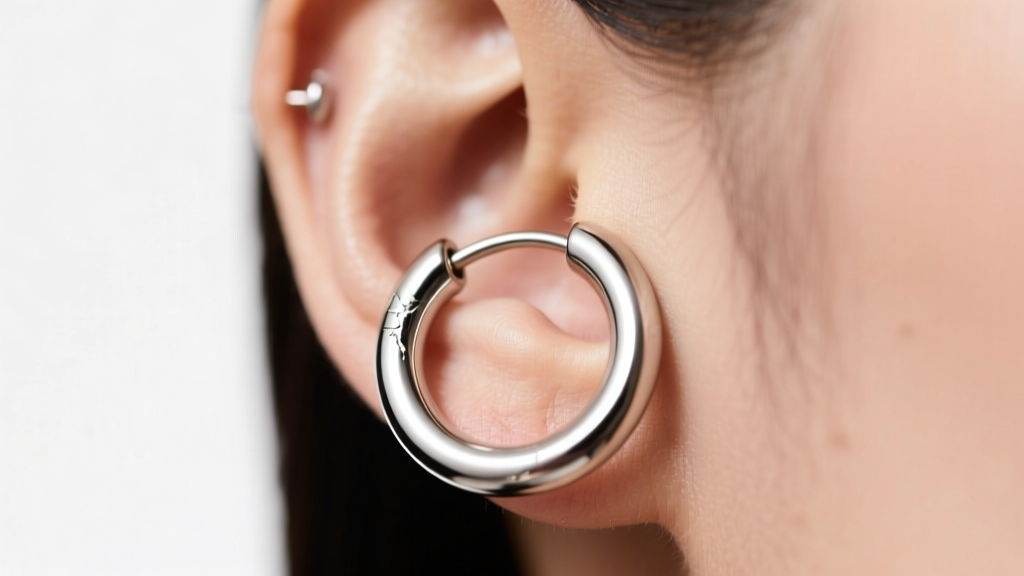
Mirror-finish huggies and clickers are incredibly popular for helix and forward helix piercings in 2026. Because cartilage is more sensitive to pressure and angle than the lobe, ensure your mirror clicker is made from Grade 23 Titanium (Ti-6Al-4V) with a high-polish anodized or PVD (Physical Vapor Deposition) coating. PVD coatings offer a mirror-like shine that is significantly more scratch-resistant than traditional electroplating, which is vital for cartilage jewelry that frequently snags on hair and clothing.
Maintenance: Preventing the 'Cloudy Mirror' Effect
A mirror earring loses its entire aesthetic value if the surface becomes cloudy or micro-scratched. The maintenance protocol depends entirely on the material matrix.
Cleaning High-Polish Metals
Never use ultrasonic cleaners on rhodium-plated mirror earrings. The high-frequency cavitation bubbles can strip the plating at the microscopic level, leaving a dull, patchy finish. Instead, use a dedicated, non-abrasive jeweler's polishing cloth (impregnated with mild anti-tarnish agents) and gently wipe the surface in one direction. For 316L surgical steel and solid gold, mild dish soap and a microfiber cloth are sufficient to remove skin oils that cloud the reflection.
Caring for Mirrored Acrylics
Acrylic mirror earrings are highly susceptible to 'crazing' (micro-cracking) if exposed to alcohol-based cleaners, perfumes, or hairsprays. Always apply your styling products and fragrances before putting on acrylic mirror earrings. To clean them, use only a specialized lens cleaner and a clean microfiber optic cloth, treating the surface with the same care you would give to a high-end camera lens.
Final Verdict on the 2026 Mirror Movement
Mirror earrings in 2026 represent a sophisticated intersection of material science and wearable art. Whether you opt for the ultra-lightweight, true-reflection of mirrored acrylics or the heavy, luxurious gleam of rhodium-plated brass, the key to mastering this trend lies in respecting the physical properties of the materials. By matching the correct wire gauge to the weight of the drop, and selecting geometric shapes that manipulate light to flatter your specific facial architecture, you can seamlessly integrate this futuristic trend into your everyday rotation.