Expert mm size chart for earrings: Budget and Fit Guide
Master your jewelry budget with our expert mm size chart for earrings. Compare carat weights, millimeter sizes, and 2026 pricing for maximum value.

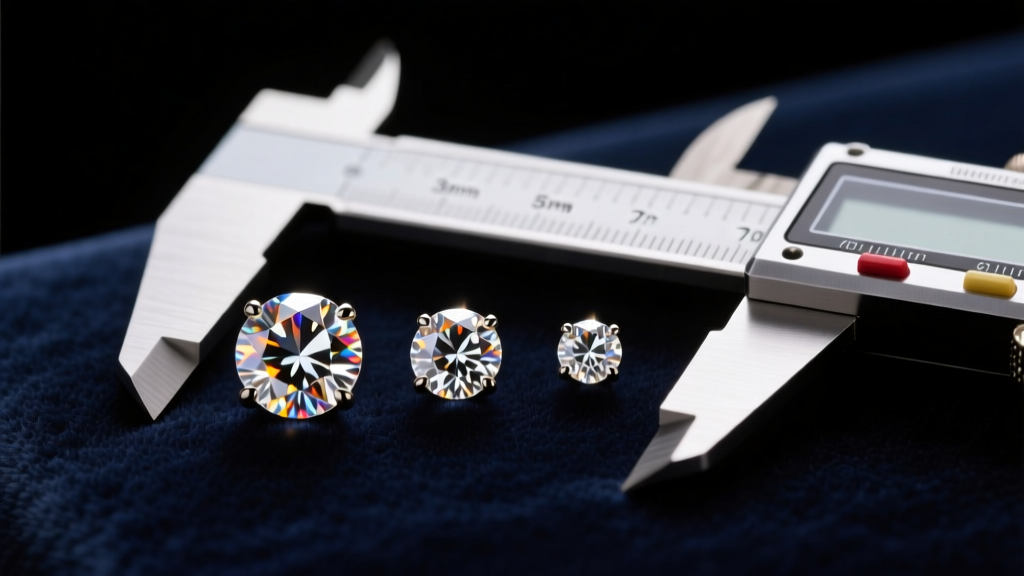
Buying earrings online in 2026 offers unparalleled access to global artisans and competitive pricing, but it also introduces a massive variable: visual scale. Without holding the piece in your hand, relying solely on carat weights or generic descriptions like "medium hoops" is a fast track to buyer's remorse. Whether you are investing in diamond studs, everyday gold huggies, or cartilage clickers, understanding physical dimensions is the cornerstone of smart jewelry shopping. This comprehensive guide and mm size chart for earrings will help you align your budget, aesthetic expectations, and anatomical fit with pinpoint accuracy.
Why Millimeters Trump Carats for Budget Buyers
The most common mistake budget-conscious buyers make is prioritizing carat weight over millimeter spread. Carat is a measure of weight, not visual size. A deeply cut 0.50-carat diamond might measure only 4.8mm across, while an ideally cut 0.45-carat stone can face up at a full 5.0mm. According to the Gemological Institute of America (GIA), the cut quality directly dictates how large a stone appears from the top down. By focusing on the millimeter diameter, you can find slightly lower carat weights with superior cuts that deliver the exact visual presence you want, often saving 15% to 25% on the final price.
This principle extends beyond diamonds. When purchasing gemstone studs or cubic zirconia alternatives, retailers often list carat equivalents that can be wildly misleading. Always demand the exact millimeter dimensions to accurately visualize the earring on your earlobe.
The Definitive mm Size Chart for Earrings
Use the table below to translate millimeter sizes into real-world visual references and understand the current 2026 market pricing for round brilliant cut stones. This chart assumes standard 14k solid gold settings.
| MM Size | Approx. Carat (Round) | Visual Reference | 2026 Lab-Grown Pair | 2026 Natural Pair |
|---|---|---|---|---|
| 3.0mm | 0.10 ct | Small, subtle; ideal for second piercings | $150 - $250 | $600 - $900 |
| 4.0mm | 0.25 ct | Classic everyday size; noticeable but understated | $300 - $450 | $1,200 - $1,800 |
| 5.0mm | 0.50 ct | The sweet spot for balance and presence | $500 - $800 | $2,500 - $4,000 |
| 6.5mm | 1.00 ct | Bold, luxurious; high visual impact | $900 - $1,500 | $6,000 - $10,000 |
| 8.0mm | 2.00 ct | Statement size; requires secure screw-backs | $1,800 - $3,000 | $15,000+ |
Pro Tip: If you are buying studs for a younger recipient or someone with very petite earlobes, cap the size at 4.0mm to 5.0mm. Anything larger than 6.5mm can overwhelm a small lobe and cause the earring to droop forward, regardless of the backing used.
Material Grades and the 2026 Pricing Landscape
Size is only half the value equation; the metal composition dictates longevity, skin compatibility, and baseline cost. In 2026, the gap between plated jewelry and solid gold has widened in terms of quality, making it vital to read the fine print.
Solid Gold: 14k vs. 18k
- 14k Gold (58.5% pure): The undisputed champion for everyday earring value. It offers excellent durability, resists scratching, and is significantly more affordable than higher karats. A pair of 5mm 14k gold ball studs will typically cost between $120 and $180.
- 18k Gold (75% pure): Prized for its rich, buttery yellow hue and hypoallergenic properties (due to fewer alloyed metals). However, it is softer and more prone to micro-scratches on earring posts. Expect to pay a 30% to 40% premium over 14k equivalents.
The Plated Pitfalls: Vermeil vs. Gold-Filled
If your budget restricts you from solid gold, you must understand the hierarchy of alternatives. Gold vermeil is a thick layer of gold (minimum 2.5 microns) over sterling silver. It is a solid budget choice but will eventually wear down to the silver base, which can tarnish. Gold-filled jewelry, by contrast, contains a much thicker layer of gold (at least 5% of the total weight) mechanically bonded to a brass core. For hoop earrings and huggies that experience high friction against the neck and hair, gold-filled offers vastly superior longevity compared to vermeil or standard electroplated brass.
Gauge and Post Dimensions: Avoiding Costly Returns
An earring can be the perfect millimeter width, but if the post gauge and length are incorrect, it will be unwearable. The Association of Professional Piercers (APP) outlines standard body jewelry sizes, yet commercial jewelry brands frequently deviate from these norms, leading to widespread fit issues.
Understanding Gauge (Thickness)
Gauge measures the thickness of the wire or post that passes through your ear. The higher the number, the thinner the wire.
- 20G (0.81mm): Standard for mall-kiosk piercings and most commercial fashion earrings. Very thin.
- 18G (1.02mm): The standard for professional studio lobe piercings and high-quality fine jewelry.
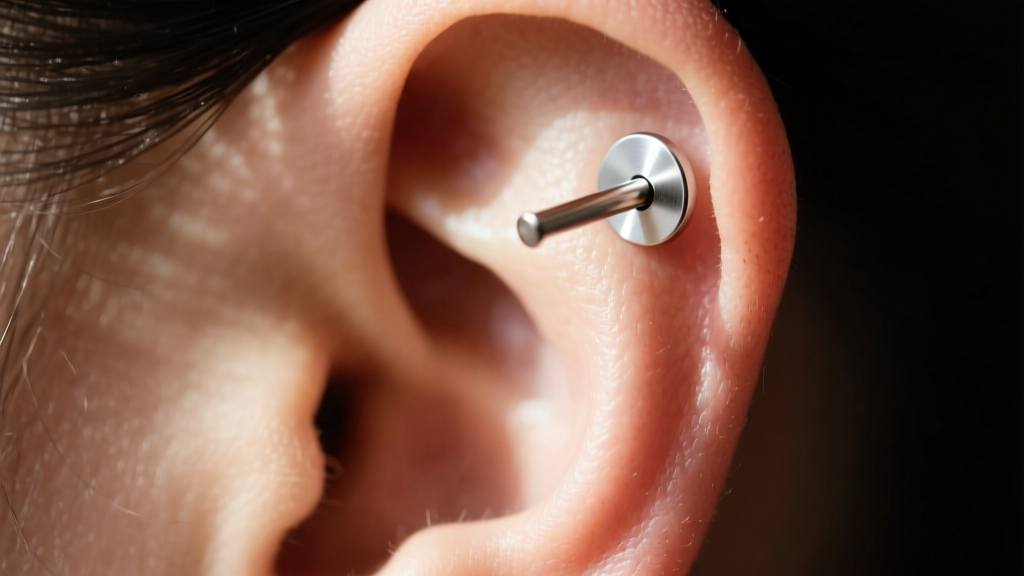
- 16G (1.29mm): The standard for cartilage piercings (helix, tragus, conch). Attempting to force a 16G earring into an 18G lobe piercing will cause pain and potential tearing.
Post Length and the Embedding Risk
Post length is just as critical as gauge. A standard earring post is 6mm long. However, if you have thicker earlobes, a 6mm post combined with a heavy butterfly backing can dig into the skin, causing swelling, embedding, and infection. For thicker lobes, you must seek out brands that offer 8mm or 10mm post lengths, or opt for flat-back labret studs which distribute pressure evenly across the back of the ear.
Hoops, Huggies, and the Inner Diameter Trap
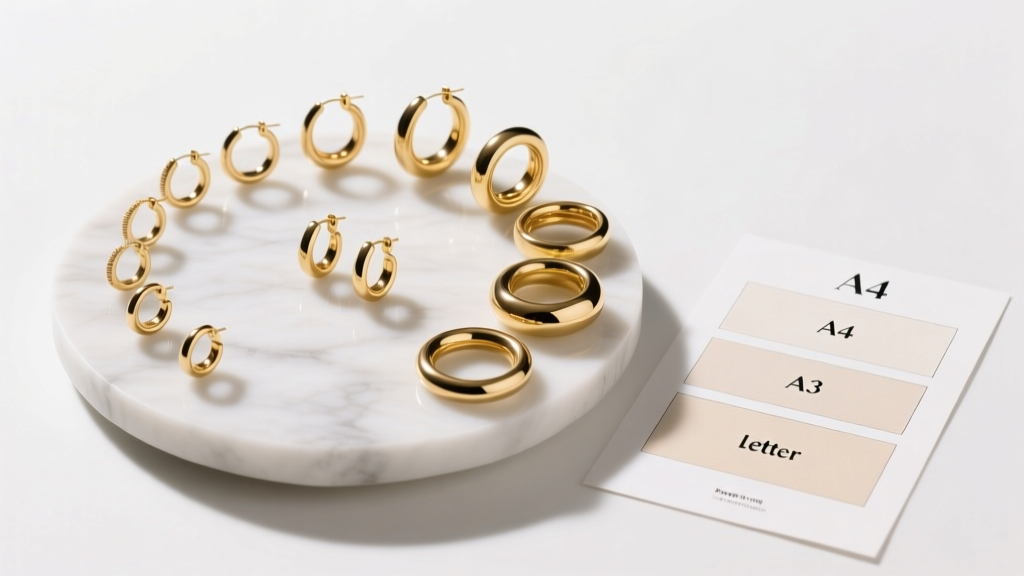
When shopping for hoops, the millimeter measurement can be highly deceptive if you do not know whether the retailer is listing the outer diameter or the inner diameter.
For classic lobe hoops, the outer diameter is usually the metric provided. A 15mm hoop is a small, classic lobe ring. However, for huggies and cartilage clickers, the inner diameter is the only measurement that matters for fit. A huggie with a 10mm outer diameter might only have a 7mm inner diameter, which will be far too tight to click shut over a standard earlobe or a swollen helix piercing. Always verify which metric the brand uses. If you are buying a seamless hoop for a forward helix, measure the thickness of the cartilage fold and add 2mm to ensure the hoop sits flush without pinching the tissue.
Actionable Framework: Maximizing Your Earring Budget
To ensure you extract maximum value from your next earring purchase, follow this three-step framework:
- Measure Your Anatomy: Use a digital caliper or a printable ruler to measure your lobe thickness and the distance from your piercing hole to the edge of your ear. This dictates your maximum hoop inner diameter and required post length.
- Target the Visual Spread: Use the mm size chart for earrings provided above to select your target millimeter size. If buying diamonds or moissanite, filter your search by millimeter dimensions rather than carat weight to uncover better-cut, better-priced stones.
- Audit the Metallurgy: Verify the exact metal composition. Reject any item that simply says "gold plated" without specifying the base metal. Insist on ASTM F-136 titanium for fresh or sensitive piercings, and solid 14k gold for heirloom-value everyday wear.
Final Verdict on Earring Sizing and Value
Mastering the physical dimensions of jewelry transforms you from a passive consumer into an informed investor. By prioritizing millimeters over carats, understanding the nuances of gauge and post lengths, and demanding transparency in metal grades, you can build a curated, comfortable, and highly valuable earring collection that perfectly suits your anatomy and your budget.


