Styling Turquoise Earrings Gold: 2026 Trend Report
Discover the 2026 style forecast for turquoise earrings in gold. We analyze matrix types, karat pairings, and modern silhouettes for elevated styling.

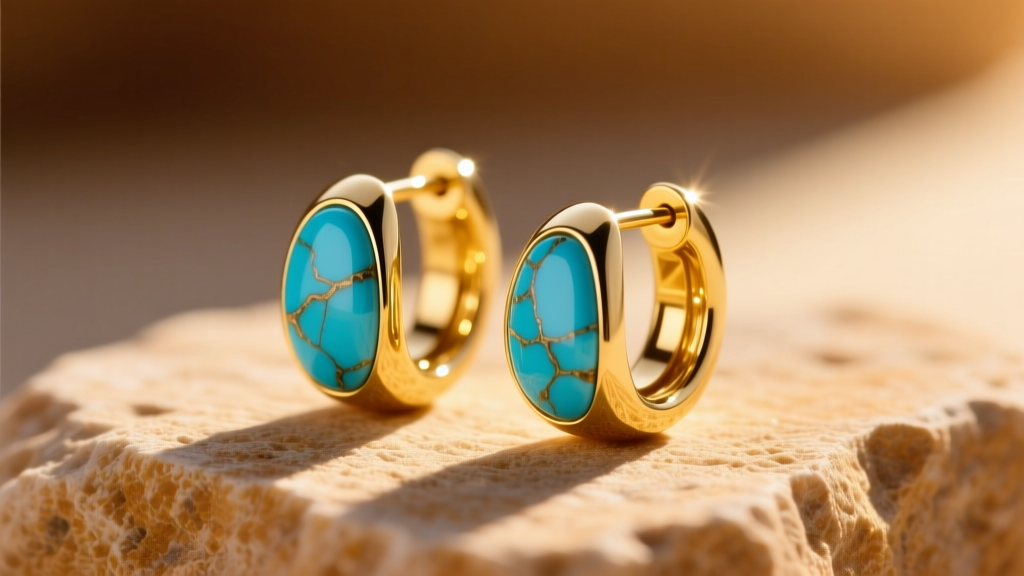
The intersection of organic gemstones and precious metals has long been a staple of jewelry design, but the 2026 landscape has fundamentally rewritten the rules of engagement. Moving away from the heavy, boho-maximalist aesthetics that dominated the early 2020s, today's style forecast for turquoise earrings gold settings favors architectural precision, micro-inlay techniques, and a deep appreciation for gemological authenticity. As collectors and everyday wearers alike demand traceability and structural integrity, understanding the nuanced relationship between porous copper-aluminum phosphates and gold alloys has never been more critical.
The 2026 Shift: Refined Earth-Tones Over Boho-Maximalism
Historically, turquoise and gold were relegated to festival wear or heavy Southwestern statement pieces. In 2026, the trend has pivoted toward 'refined earth-tones.' Designers are utilizing high-karat gold not as a heavy, ornate frame, but as a sleek, structural conduit for the stone. According to recent JCK Industry Reports, consumer demand has shifted heavily toward asymmetrical silhouettes and minimalist huggies that allow the natural matrix of the turquoise to serve as the primary visual anchor. The focus is on the juxtaposition of the warm, reflective luster of yellow gold against the matte, waxy finish of an unpolished or lightly honed turquoise cabochon.
Decoding the Stone: Matrix, Mines, and Color Profiles
Not all turquoise is created equal, and the specific mine origin dictates both the aesthetic profile and the structural stability of the earring. The presence of 'matrix'—the host rock remnants visible as webbing or flecks within the stone—is highly prized in 2026 for its unique fingerprinting. The Gemological Institute of America (GIA) notes that untreated, natural turquoise is exceptionally rare, making the type of stabilization a key factor in high-end jewelry.
| Turquoise Variety | Color Profile & Matrix | Ideal Gold Pairing | Stability (Mohs) |
|---|---|---|---|
| Sleeping Beauty (AZ) | Uniform sky blue, zero matrix | 18k Yellow Gold (High Polish) | 5.0 - 6.0 |
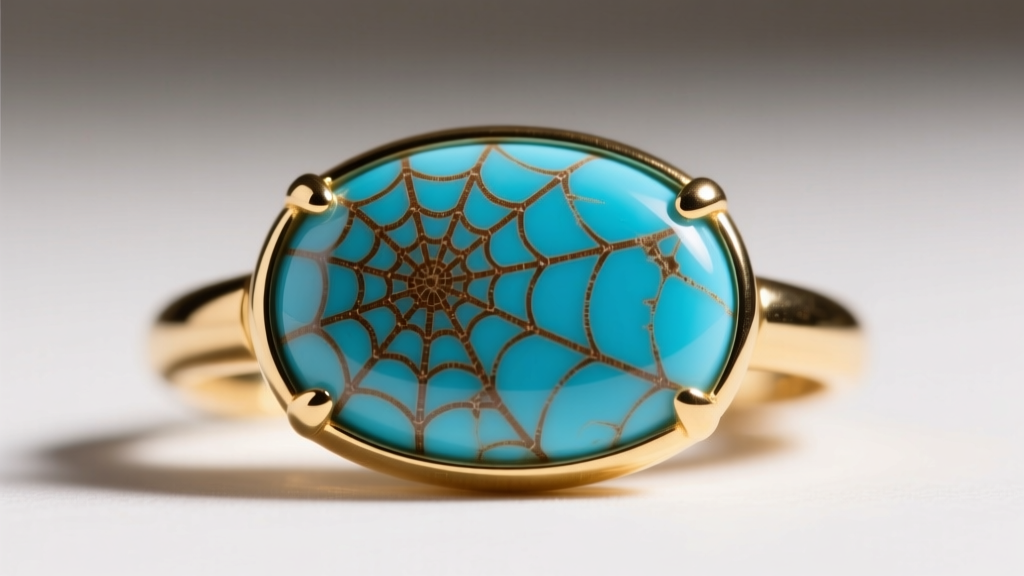
| Kingman (AZ) | Deep blue with brown/black spiderweb | 14k Rose or Yellow Gold | 4.5 - 5.5 |
| Royston (NV) | Emerald green to light blue, heavy matrix | 14k Yellow Gold (Brushed) | 5.0 - 6.0 |
| Persian (Neyshabur) | Intense robin's egg blue, minimal matrix | 22k or 18k Gold (Matte) | 5.5 - 6.0 |
Metallurgy & Gemology: Why 14k Gold Dominates the Bezel
Setting turquoise requires a profound understanding of metallurgy. Turquoise is a porous, relatively soft gemstone (ranging from 5 to 6 on the Mohs scale). Prong settings are largely abandoned in high-end 2026 designs because they concentrate stress on small surface areas, leading to chipping. Instead, the bezel setting is the industry standard.
The Alloy Advantage in Bezel Burnishing
While 18k and 22k gold offer a richer, deeper yellow hue, they are inherently softer due to their higher pure gold content (75% and 91.6%, respectively). When a jeweler burnishes a bezel wall over an uneven turquoise cabochon, pure gold can work-harden and snap, or fail to provide enough tension to hold a heavy drop earring securely. 14k yellow gold (58.5% pure gold, alloyed with copper and silver/zinc) provides the optimal Vickers hardness required to push and fold the metal tightly against the stone's girdle without risking structural failure. For earrings subject to daily kinetic movement, 14k gold is the undisputed champion of longevity.
Stabilization vs. The Zachery Treatment
Over 90% of turquoise on the market is stabilized with epoxy resin to prevent it from absorbing oils and turning green or brown over time. However, elite 2026 collections are increasingly utilizing the Zachery treatment—an electrochemical process that enhances the stone's hardness and color without introducing polymers or resins, allowing the stone to retain its natural porosity and value.
Silhouette Breakdown: The Top 3 Turquoise Earring Styles
The physical architecture of the earring must balance the visual weight of the stone with the anatomical realities of the ear. Here is the technical breakdown of the leading silhouettes for the year.
- The Micro-Inlay Huggie (16g / 1.29mm): Designed for both standard lobes and helix cartilage piercings, these feature a channel of 14k gold flush-set with precision-cut Sleeping Beauty turquoise rectangles. The 16-gauge wire ensures the clicker mechanism remains rigid and secure in cartilage tissue.
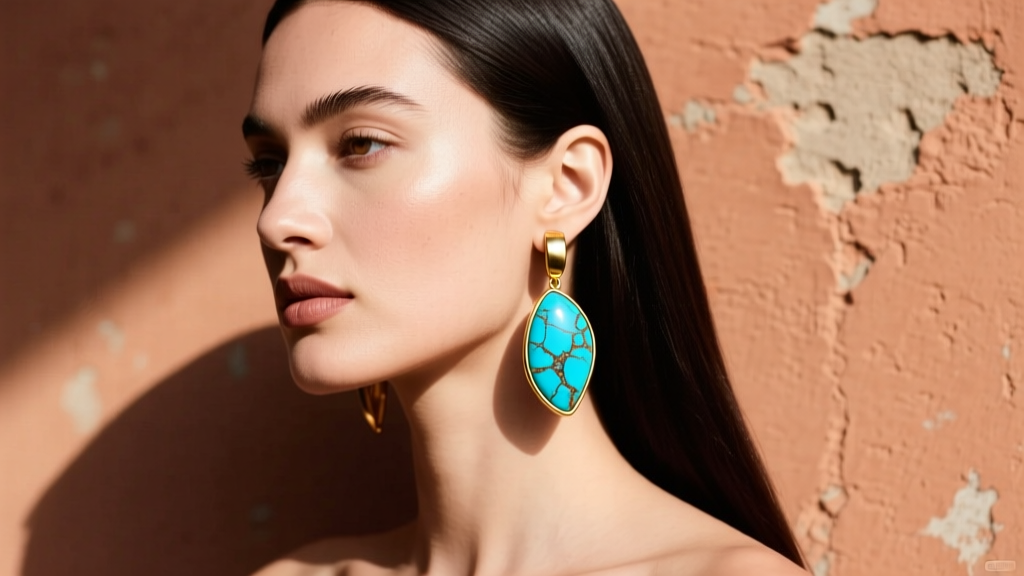
- The Asymmetric Architectural Drop (18g / 1.02mm): Featuring a brushed gold geometric frame suspending a raw, unstabilized Royston turquoise nugget. The 18-gauge wire is thick enough to prevent the earring from bending forward under the 12-to-15-carat weight of the stone, a common failure point in cheaper 20g alternatives.
- The Tension-Set Threader (20g / 0.81mm): A minimalist 14k gold chain that threads through the lobe, terminating in a single, perfectly spherical Kingman turquoise bead. The friction of the chain holds the piece in place, offering a modern, kinetic movement that highlights the stone's spiderweb matrix from multiple angles.
"The modern consumer doesn't want a costume piece; they want an artifact. The pairing of ethically sourced 14k recycled gold with traceable, single-mine turquoise represents the pinnacle of conscious luxury in 2026." — Contemporary Gemological Design Review
Investment & Pricing Matrix: What to Expect in 2026
Navigating the pricing landscape requires an understanding of the variables at play: gold weight, turquoise origin, and treatment status. Below is a benchmark guide for authentic, high-quality turquoise earrings in gold.
| Earring Style | Gold Purity & Weight | Turquoise Grade | Estimated Price Range (USD) |
|---|---|---|---|
| Flush-Set Huggies | 14k Solid (2.5g) | Stabilized Sleeping Beauty | $450 - $650 |
| Bezel Cabochon Studs | 18k Solid (3.0g) | Natural, Untreated Persian | $800 - $1,400 |
| Heavy Nugget Drops | 14k Solid (5.5g) | Zachery Treated Kingman | $600 - $950 |
| Gold Vermeil Inlay | Vermeil over Silver (4.0g) | Standard Stabilized | $120 - $180 |
Preservation: Protecting Porous Gems from Cosmetic Degradation
Turquoise is highly susceptible to chemical alteration. The very oils, lotions, and cosmetics that we apply daily can seep into the microscopic pores of the stone, altering its color profile and degrading the polish. To maintain the pristine condition of your turquoise earrings gold settings, adhere to these strict preservation protocols:
- The 'Last On, First Off' Rule: Always apply perfumes, hairsprays, and skincare products before putting on your earrings. Remove them immediately upon returning home to minimize exposure to environmental pollutants and skin oils.
- Ultrasonic Warning: Never use ultrasonic jewelry cleaners or steamers on turquoise. The high-frequency vibrations can fracture internal inclusions, and the heat can melt or cloud the epoxy used in stabilized stones. Clean only with a dry, untreated microfiber cloth.
- Storage Isolation: Gold is relatively soft, but diamond or sapphire jewelry stored in the same compartment will easily scratch the surface of a turquoise cabochon. Store your turquoise earrings in individual, anti-tarnish flannel pouches to prevent both surface abrasion and moisture deprivation.
By understanding the gemological constraints and the metallurgical requirements of the setting, you can curate a collection of turquoise and gold earrings that not only aligns with the sophisticated 2026 trend forecast but also endures as a structural and aesthetic masterpiece for decades to come.


