Clay Earrings in 2026: Architectural Trends & Styling Guide
Discover the 2026 evolution of clay earrings. Explore architectural polymer trends, hypoallergenic hardware pairings, and face-shape styling tips.

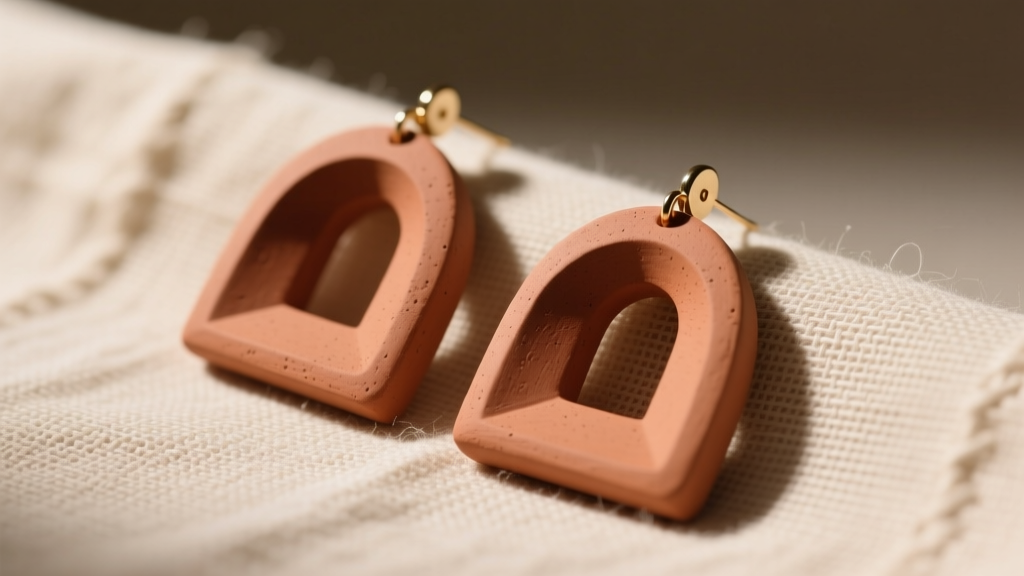
The landscape of handmade jewelry has undergone a radical transformation. Once relegated to bohemian craft fairs and characterized by heavy, chaotic terrazzo patterns, clay earrings have matured into a medium of high-fashion architectural expression. As we navigate the 2026 jewelry market, polymer clay is no longer just a beginner's crafting material; it is a sophisticated medium utilized by independent artisans and avant-garde designers to create structural, lightweight, and hyper-customized ear adornments.
This comprehensive style and trend analysis breaks down the material science, hardware pairings, and aesthetic shifts defining the modern clay earring market, providing you with the actionable insights needed to curate, design, or purchase pieces that align with contemporary luxury standards.
The 2026 Shift: From Boho Craft to Architectural Minimalism
The dominant aesthetic for clay earrings in 2026 has pivoted sharply away from the maximalist, cookie-cutter shapes of the early 2020s. Today's trend analysis reveals a consumer demand for architectural minimalism and negative space. Designers are utilizing techniques like mica-shift and faux-ceramic texturing to make polymer clay mimic the weight and matte finish of carved stone, unglazed porcelain, or brushed concrete.
Instead of loud, contrasting color blocks, the current palette is rooted in liminal, nature-inspired tones: oxidized copper, sage ash, raw umber, and translucent alabaster. The focus is on the silhouette and the interplay of light across geometric planes, making these pieces ideal for both corporate environments and high-end evening wear.
Material Science: Polymer Clay Grades and Weight Dynamics
Not all polymer clays are created equal, and understanding the specific formulation is critical for both comfort and structural integrity. A standard pierced earlobe can comfortably support between 7 and 10 grams before experiencing fatigue or stretching. Because polymer clay averages a density of roughly 1.2g/cm³, material selection dictates the maximum volume of the earring.
Top-Tier Clay Formulations for Jewelry
- Sculpey Soufflé: The undisputed champion for large statement pieces. It cures to a lightweight, velvety matte finish and is significantly less dense than traditional clays, allowing for oversized 60mm geometric drops that weigh under 5 grams.
- Fimo Professional: A firmer clay that holds razor-sharp, crisp edges. It is heavier and denser, making it ideal for smaller, intricate architectural studs or structured huggies where edge retention is paramount.
- Cernit Number One: Known for its incredible translucency and post-bake flexibility. Artisans use Cernit to create ultra-thin, petal-like dangles that can bend under pressure without snapping, solving the historical fragility issues of baked polymer.
"The biggest mistake emerging designers make is ignoring the plasticizer content in cheaper clays, which leads to structural warping and sealant rejection over time." — Studio Jewelry Fabrication Guidelines
The Hardware Matrix: Pairing Clay with Hypoallergenic Posts
The most exquisite clay earring will fail if the hardware causes contact dermatitis. According to the Gemological Institute of America (GIA), nickel allergies affect a significant portion of the population, making the choice of earring posts a critical health and quality metric. Furthermore, the baking process (typically 265°F to 275°F) dictates which metals can be embedded directly into the clay versus glued post-bake.
| Metal Type | Hypoallergenic Rating | Bake Compatibility | Best Application in Clay Earrings |
|---|---|---|---|
| Implant-Grade Titanium (ASTM F136) | Excellent | Poor (Oxidizes/Weakens glue) | Glue-on pads applied post-bake for sensitive ears |
| Niobium | Excellent | Moderate | Anodized ear wires; can be embedded if shielded |
| Surgical Stainless Steel (316L) | Moderate (Contains Nickel) | Excellent | Bake-in posts for mass-market, non-sensitive lines |
| Brass / Copper | Poor (High reactivity) | Excellent | Internal armatures for structural support, hidden from skin |
For premium artisan lines in 2026, the gold standard is baking the clay with a hidden brass loop, then using a two-part jeweler's epoxy to attach a flat-pad titanium post, ensuring zero metal-to-skin reactivity while maintaining structural rigidity.
Face Shape Mapping for Geometric Silhouettes
Because modern clay earrings rely heavily on bold geometry, styling them according to face shape is essential for achieving a balanced, editorial look. The Spruce Crafts notes that understanding proportion is what elevates handmade jewelry from a novelty to a staple accessory.
Styling Framework by Silhouette
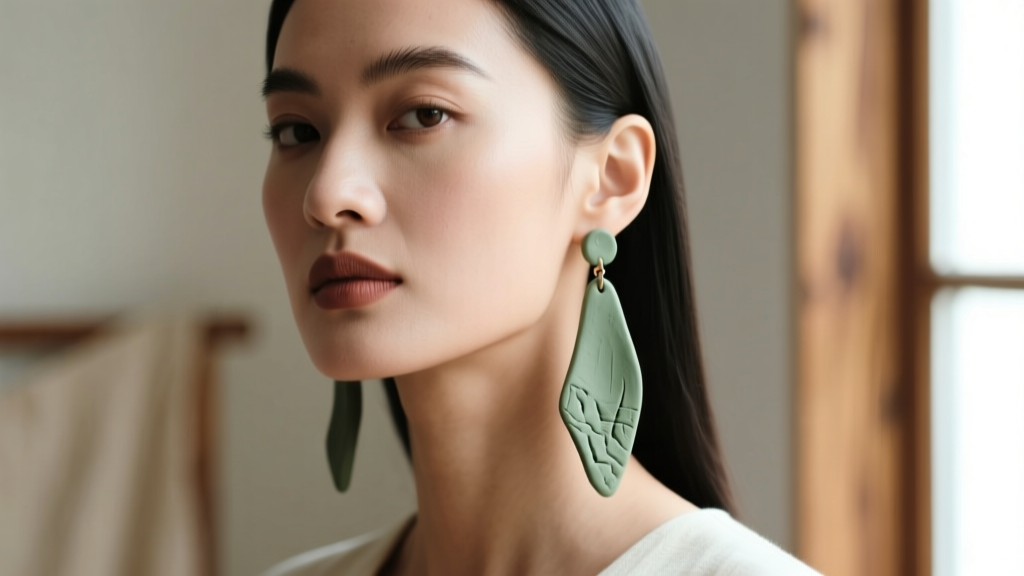
- Round Faces: Opt for elongated, angular clay drops (like sharp rhombuses or vertical fluted columns). The verticality draws the eye downward, creating the illusion of a longer, more sculpted jawline. Avoid circular clay hoops.
- Square Faces: Soften strong jawlines with curved architectural elements. Asymmetrical clay arches, rounded teardrops, and fluid, organic mica-shift waves complement the natural angles without competing with them.
- Heart-Shaped Faces: Balance a wider forehead and narrower chin with bottom-heavy clay dangles or inverted geometric triangles. The visual weight at the bottom of the earring anchors the lower half of the face.
- Oval Faces: The universal canvas. Oval faces can pull off extreme structural trends, including wide, horizontal clay ear cuffs and oversized, blocky geometric studs that sit flush against the lobe.
Sealing and Longevity: Preventing the Tacky Trap
The most notorious failure mode in polymer clay jewelry is the "tacky sealant" phenomenon. Polymer clay contains liquid plasticizers that never fully evaporate; they remain active within the cured plastic matrix. If an artisan seals clay earrings with standard aerosol clear coats (like generic polyurethane sprays), the plasticizers migrate into the finish, preventing it from ever fully curing and leaving a permanently sticky surface that attracts dust and lint.
The 2026 Professional Solution:
Artisans must use either water-based polyurethanes specifically formulated to resist plasticizer migration (such as Varathane Ultimate Water-Based) or UV-curing jewelry resins. UV resin creates a hard, glass-like, impermeable barrier that locks the plasticizers inside the clay while providing a high-gloss or satin finish that mimics glazed ceramic. For matte pieces, a specialized micro-crystalline wax buffed with a denim cloth provides a soft, skin-like luster without the chemical risks of aerosol sprays.
Market Pricing and Artisan Valuation
As clay earrings have elevated in design complexity, the market has stratified into distinct pricing tiers. Understanding these tiers helps consumers recognize true craftsmanship and helps designers price their work accurately.
- Mass-Market / Dropshipped ($8 - $18): Typically stamped from thick, heavy sheets of cheap clay, paired with unsealed brass posts, and finished with reactive aerosol sprays. High risk of lobe fatigue and skin irritation.
- Independent Artisan / Studio ($28 - $75): The sweet spot for quality. Features hand-marbled or mica-shifted premium clays (Soufflé or Cernit), properly sanded edges, sealed with UV resin or water-based poly, and fitted with titanium or niobium hardware.
- Fine-Jewelry Hybrid ($90 - $200+): The bleeding edge of the 2026 trend. These pieces treat polymer clay as an inlay material, encasing it in 14k gold vermeil or solid gold bezels, often combined with pavé-set lab-grown diamonds or raw gemstone accents. Here, the clay is used for its matte textural contrast against high-polish precious metals.
By prioritizing material science, hypoallergenic engineering, and architectural styling, the modern clay earring has firmly secured its place not just as a trend, but as a permanent, respected category in contemporary jewelry design.


