Monarch Butterfly Earrings: A Buyer's Guide to Enamel & Gold
Discover what to look for when buying monarch butterfly earrings. Compare enamel techniques, gold purities, and hardware for lasting quality.

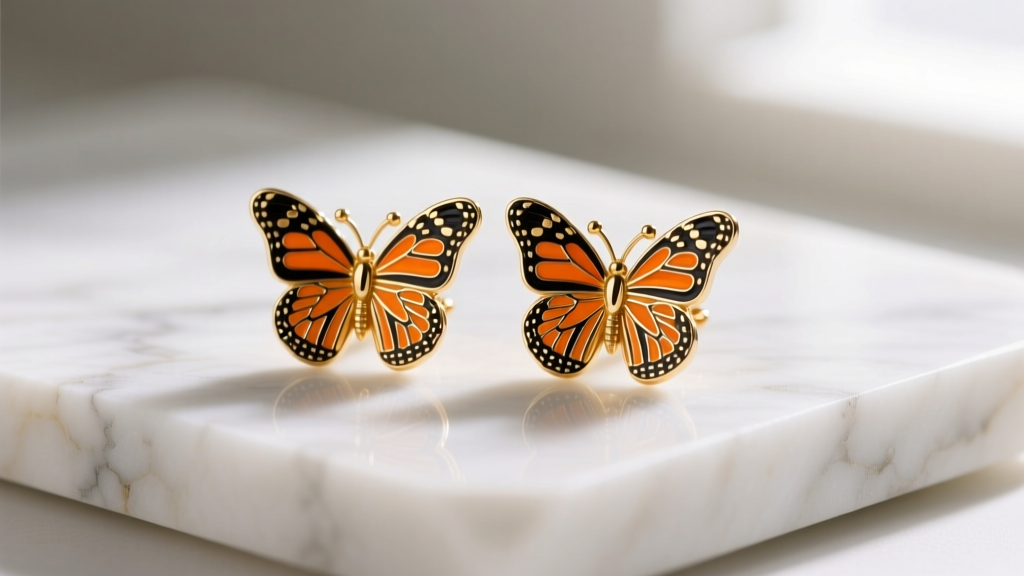
The Allure of the Monarch: Why Material Choice Dictates Longevity
Monarch butterfly earrings remain a perennial favorite in nature-inspired jewelry, celebrated for their striking orange and black contrast and their symbolism of transformation. However, the 2026 jewelry market is heavily saturated with fast-fashion variants that prioritize immediate visual impact over structural integrity. As a buyer, navigating the space between a $20 alloy trinket and a $1,500 heirloom requires a deep understanding of metallurgy, enamel techniques, and weight distribution. This guide breaks down the exact specifications you need to evaluate before investing in a pair of monarch butterfly earrings, ensuring your pieces withstand daily wear without chipping, drooping, or tarnishing.
Decoding Enamel Techniques: Cloisonné vs. Cold Enamel
The defining feature of any monarch butterfly earring is its vibrant wing pattern. Because natural gemstones rarely offer the precise, opaque orange and stark black required for a realistic monarch depiction, high-end jewelers rely on enamel. However, the term "enamel" is frequently misused in e-commerce listings. Understanding the difference between vitreous enamel and cold enamel is the single most important factor in your purchasing decision.
Vitreous (Fired) Enamel
True vitreous enamel is essentially powdered glass fused to a metal backing at temperatures exceeding 1,400°F (760°C). Techniques like cloisonné (where fine gold or silver wires are bent to create cellular walls for the glass) and champlevé (where the metal is carved out to create recessed troughs for the glass) are the hallmarks of luxury monarch earrings. According to the Gemological Institute of America (GIA), properly fired vitreous enamel is highly resistant to UV fading, will not yellow over time, and possesses a Mohs hardness of around 5.5 to 6.5, making it resilient against minor scratches.
Cold Enamel (Epoxy Resin)
Cold enamel is actually a two-part epoxy resin poured into metal recesses and left to cure at room temperature. While it allows for intricate shading and is significantly cheaper to produce, it is fundamentally a plastic. Over 12 to 18 months of regular wear, cold enamel is highly susceptible to UV degradation, causing the bright monarch orange to yellow or turn chalky. Furthermore, resin lacks the structural bond of fired glass, meaning a simple drop onto a bathroom counter will often cause the "enamel" to pop out of its setting entirely.
| Enamel Type | Process | UV Resistance | Impact Durability | Average Price Range |
|---|---|---|---|---|
| Cloisonné | Fired glass in wire cells | Excellent | Moderate (can crack if crushed) | $250 - $1,200+ |
| Champlevé | Fired glass in carved metal | Excellent | High (metal walls protect glass) | $150 - $800 |
| Guilloché | Fired glass over engraved metal | Excellent | Moderate | $400 - $2,000+ |
| Cold Enamel | Cured epoxy resin | Poor (Yellows over time) | Low (Chips and pops out) | $20 - $85 |
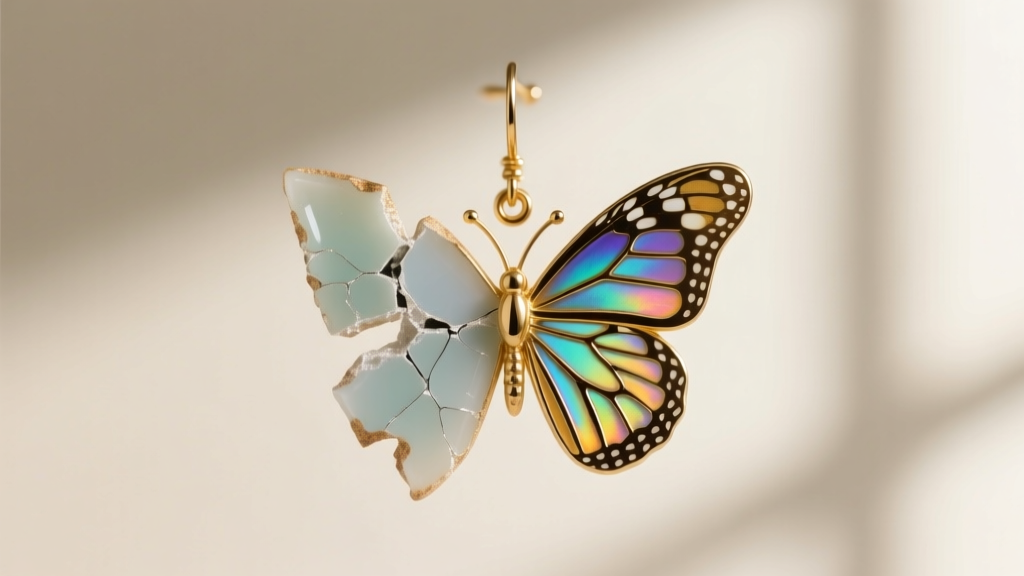
Weight Distribution and Hardware: Preventing the "Droop" Effect
The anatomy of a monarch butterfly—specifically its wide, sweeping wingspan—creates a unique structural challenge when translated into dangle or drop earrings. A wingspan exceeding 20mm creates a lateral center of gravity that pulls the earring forward, causing the dreaded "droop" where the butterfly faces the floor rather than sitting flush against the cheek.
Gauge Sizing and Post Thickness
For stud-style monarchs, the post gauge is critical. Standard fashion earrings use 20-gauge (0.8mm) or even 22-gauge (0.6mm) wire. However, a solid 14k gold monarch stud with a 15mm wingspan can weigh between 2.5 and 4 grams per earring. A 20-gauge post will easily bend under this weight when sleeping or taking off a sweater. Always look for 18-gauge (1.0mm) or 16-gauge (1.2mm) posts for enameled monarch studs to ensure the hardware can support the enamel's mass.
Backing Mechanisms
Standard friction backs (butterfly clutches) are often insufficient for heavier enameled pieces. Look for earrings that include silicone O-ring stoppers or screw-backs. For dangle styles, a French wire (fishhook) without a securing mechanism will frequently slip out due to the pendulum motion of the wings. Opt for leverback closures or French wires equipped with a delicate 14k gold coil spring and silicone stopper to lock the monarch securely in place.
Articulation and Movement: Hinged Wings vs. Solid Casts
When evaluating high-end monarch butterfly dangle earrings, pay close attention to how the wings are constructed. In nature, a monarch's forewings and hindwings move with a degree of independence. Master jewelers replicate this using micro-articulation.
- Solid Cast / Stamped: The entire butterfly is a single, rigid piece of metal and enamel. While durable and less prone to mechanical failure, it lacks kinetic energy and moves as a single, heavy pendulum.
- Jump Ring Articulation: The upper and lower wings are connected by a simple circular jump ring. This offers movement but can cause the wings to twist and overlap awkwardly, potentially scratching the enamel.
- Micro-Hinge / Rivet Articulation: The pinnacle of butterfly earring engineering. A tiny, flush-set rivet or concealed hinge connects the forewing and hindwing. This allows the wings to flutter naturally in a single plane without twisting, catching the light dynamically as the wearer moves.
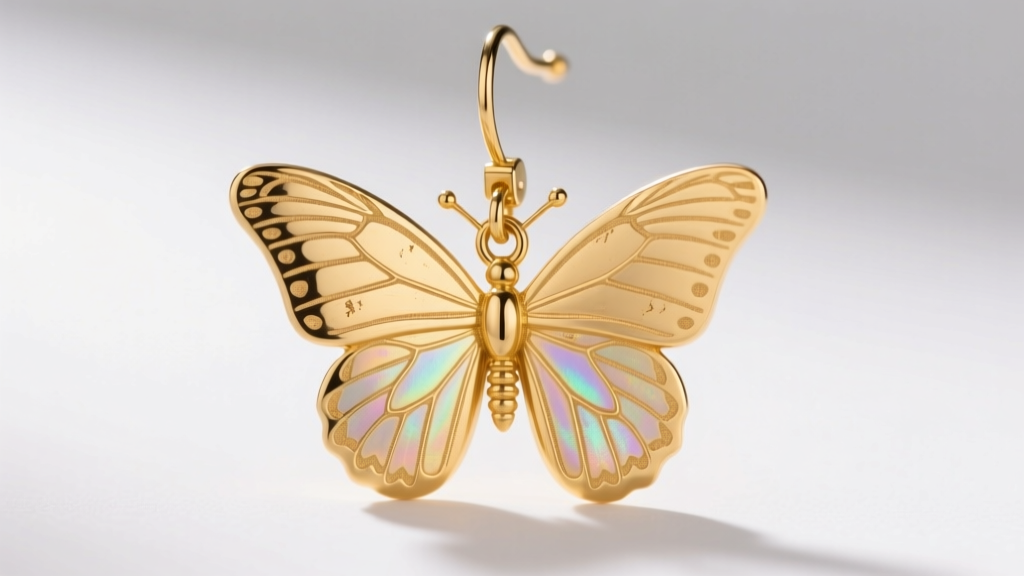
Price Tiers and Authenticity Hallmarks
When shopping for fine jewelry, verifying the metal purity is non-negotiable The London Assay Office notes that hallmarking is the only guaranteed way to verify precious metal content, as visual inspection is impossible with alloyed gold. In the US, look for a stamped "14K" or "18K" alongside a maker's mark.
"If a listing advertises 'gold-plated monarch butterfly earrings' with 'hand-painted enamel' for under $60, you are purchasing brass or pewter coated in a micron-thin layer of gold and filled with epoxy resin. The plating will wear off the high-friction post within months, exposing base metals that can cause contact dermatitis."
What to Expect in 2026 Pricing
Entry-Level ($30 - $90): Sterling silver or gold-plated brass featuring cold enamel (resin). Expect flat, 2D designs with glued-on posts. Suitable for occasional wear, but expect resin yellowing within a year.
Mid-Tier ($150 - $400): Solid 14k gold with champlevé or basic cloisonné vitreous enamel. Usually features 18-gauge posts and standard friction backs. The best value for everyday wearers who want genuine glass enamel.
Heirloom / Artisan ($600 - $2,500+): 18k gold featuring guilloché enamel (where the glass is laid over a hand-engraved sunburst or wave pattern, giving the monarch wings a shimmering, 3D optical illusion). These pieces feature micro-hinged wings, 16-gauge posts, and are often signed by the artisan.
Final Pre-Purchase Checklist
Before adding a pair of monarch butterfly earrings to your cart, run them through this quick diagnostic checklist:
- Enamel Verification: Does the listing explicitly state "vitreous," "fired," "cloisonné," or "champlevé"? If it just says "enamel" or "epoxy," assume it is resin.
- Post Gauge: Is the post thickness at least 18-gauge (1.0mm) to support the weight of the glass?
- Backing Security: Are silicone stoppers, screw-backs, or leverbacks included to prevent the heavy wings from pulling the earring out?
- Metal Hallmark: Is there a clear photo of the "14K", "18K", or "925" stamp on the post or backing?
- Wing Proportions: Does the wingspan exceed 25mm? If so, ensure it is a dangle with a secure closure rather than a heavy stud that will stretch the earlobe over time.
By prioritizing fired glass techniques and structural hardware over superficial aesthetics, you can acquire a pair of monarch butterfly earrings that captures the fragile beauty of the insect while offering the enduring resilience of fine jewelry.


