Music Notes Earrings: Material Comparison & Durability Guide
Compare the best metals for music notes earrings. Learn how titanium, gold, and silver affect the durability, weight, and comfort of musical jewelry.

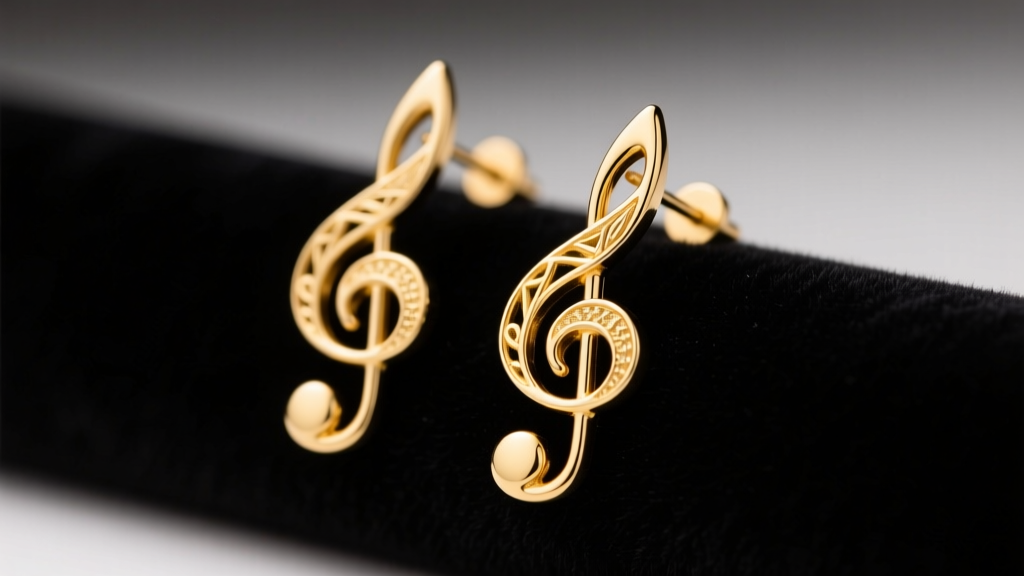
The Structural Paradox of Musical Jewelry
Music notes earrings are a beloved staple for musicians, audiophiles, and fashion enthusiasts alike. However, from a metallurgical and engineering standpoint, musical shapes present a unique structural paradox. Unlike geometric studs or solid hoops, music notes—whether they are treble clefs, bass clefs, eighth notes, or beamed sixteenth notes—are essentially line drawings translated into three-dimensional metal. This means they feature long, thin stems, cantilevered flags, and continuous, sweeping curves that act as levers when subjected to physical stress.
When you wear a pair of music notes earrings, the material dictates not just the aesthetic and hypoallergenic properties, but the sheer survival of the jewelry. A soft metal will bend under the weight of a heavy treble clef dangle, while a brittle alloy might snap at the narrow neck of an eighth note's flag. In this comprehensive guide, we break down the exact material properties, tensile strengths, and gauge requirements to help you choose music note earrings that will last a lifetime without warping, tarnishing, or causing contact dermatitis.
Metallurgical Breakdown: Pros, Cons, and Best Use Cases
Implant-Grade Titanium (ASTM F136)
For large, dangling music notes or intricate ear cuffs that wrap around the cartilage, implant-grade titanium (specifically ASTM F136 or Grade 5 Ti-6Al-4V) is the undisputed champion. Titanium boasts an exceptional strength-to-weight ratio. Its yield strength sits around 830 MPa (megapascals), meaning it can withstand significant bending forces without permanently deforming. Because music notes often have asymmetrical weight distribution—such as the heavy top loop of a bass clef—titanium ensures the earring remains rigid without dragging down the earlobe. Furthermore, it is 100% nickel-free, making it the safest choice for fresh piercings and highly reactive ears.
Solid Gold (14K vs. 18K)
Gold is the traditional standard for fine music notes earrings, but the karat weight drastically alters its structural integrity. Pure 24K gold is far too soft for jewelry. According to the Gemological Institute of America (GIA), 18K gold (75% pure gold) offers a rich, warm luster but is relatively soft, making it prone to bending if used for thin, elongated stems like those on a half note. Conversely, 14K gold (58.5% pure gold) is alloyed with copper, silver, and zinc, which significantly increases its tensile strength and hardness. For delicate, wire-style music notes, 14K gold is vastly superior as it resists warping when snagged on hair or clothing.
Sterling Silver (925)
Sterling silver is an alloy of 92.5% pure silver and 7.5% copper. The copper provides necessary hardness, but sterling silver is still susceptible to 'work hardening'—a phenomenon where repeated bending makes the metal brittle and prone to snapping. If you frequently sleep in your music note studs or accidentally snag them, a thin silver stem can develop micro-fractures over time. Additionally, the copper content reacts with sulfur in the air and sweat, leading to tarnish that can get trapped in the intricate crevices of a treble clef design, requiring meticulous cleaning.
Surgical Stainless Steel (316L)
316L stainless steel is highly affordable, incredibly strong, and resistant to tarnish. However, it is significantly denser and heavier than titanium or gold. For oversized beamed music notes that hang from the lobe, the extra weight can cause earlobe fatigue and stretching over time. More importantly, 316L steel contains trace amounts of nickel. While the nickel release rate is low, individuals with severe nickel allergies may experience contact dermatitis, especially in warm, humid environments where sweat accelerates ion leaching.
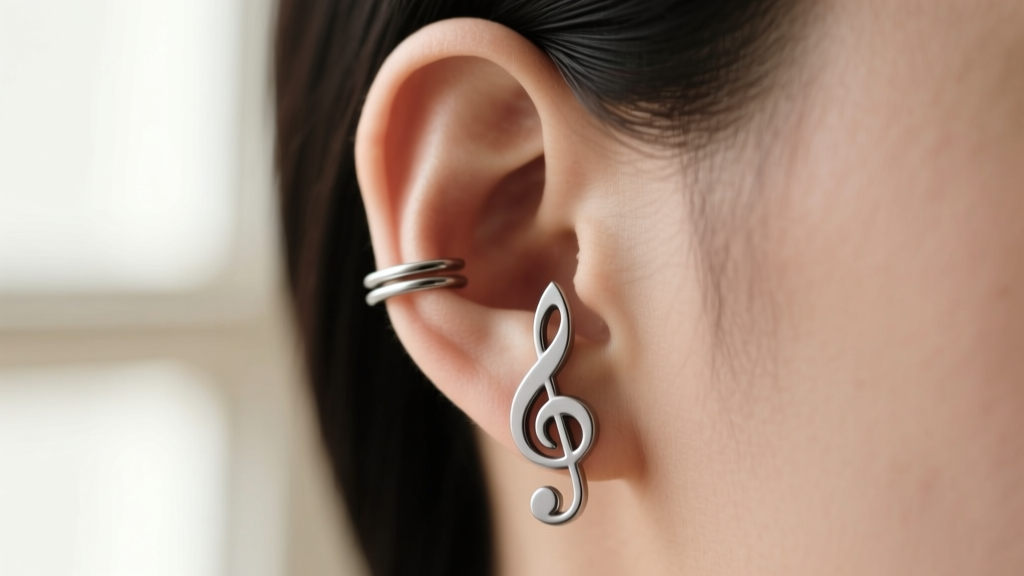
Comparative Data Matrix: Strength, Weight, and Pricing
To visualize how these metals perform specifically for the demanding shapes of musical jewelry, refer to the comparative matrix below. This data assumes standard 18-gauge wire constructions commonly used in music note silhouettes.
| Material | Approx. Yield Strength | Relative Weight | Hypoallergenic? | Avg. Price Range (Studs) |
|---|---|---|---|---|
| ASTM F136 Titanium | 830 MPa | Lightest | Yes (100%) | $35 - $85 |
| 14K Solid Gold | 450 MPa | Heavy | Mostly Yes | $120 - $350 |
| 18K Solid Gold | 250 MPa | Heavy | Mostly Yes | $180 - $500+ |
| Sterling Silver (925) | 300 MPa | Medium | No (Copper alloy) | $25 - $75 |
| 316L Surgical Steel | 500 MPa | Heaviest | No (Nickel trace) | $10 - $30 |
Design-Specific Vulnerabilities in Musical Shapes
Not all music notes are created equal when it comes to structural vulnerability. The specific note you choose dictates the material requirements.
- The Treble Clef: This shape features a continuous, spiraling wire with no structural cross-bracing. If made from 18K gold or silver, the bottom loop can easily warp into an oval shape if pressed against a pillow. Titanium or 14K gold is mandatory for treble clefs larger than 15mm.
- Eighth and Sixteenth Notes: The 'flag' of these notes extends outward from the main stem, creating a cantilever. If the junction where the flag meets the stem is too thin or cast with porosity (common in cheap silver), it will snap under lateral pressure.
- Beamed Notes (Double or Triple): These designs feature a heavy horizontal beam connecting two or more vertical stems. This creates a top-heavy profile. If the post is not adequately reinforced, the entire earring will droop forward on the earlobe, facing the floor rather than sitting flush.
Expert Insight: When purchasing cast music notes earrings, always inspect the 'sprue marks'—the tiny spots where the metal was injected into the mold. If a sprue mark is located at the thin neck of a note's stem, it creates a structural weak point. Look for die-struck or CNC-machined notes for superior grain structure and durability.
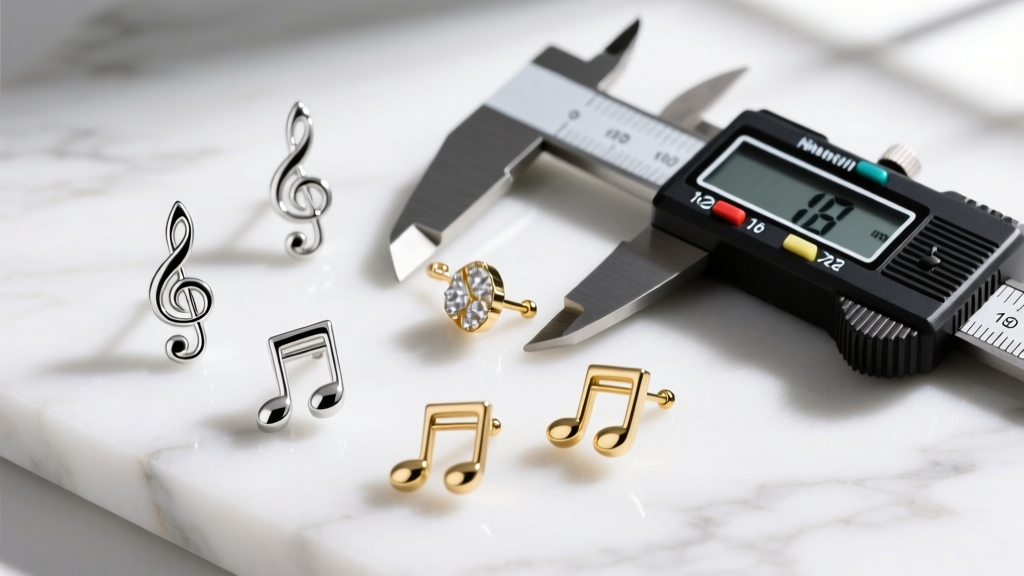
Gauge Sizing and Post Engineering
The thickness of the earring post (the part that actually goes through your piercing) is just as critical as the note itself. Standard fashion earrings often use 20-gauge (0.81mm) or even 22-gauge (0.64mm) posts to save on precious metal costs. However, for music notes earrings, a 20-gauge post acts like a hinge, allowing the asymmetrical note to spin and tilt wildly.
For optimal stability, demand 18-gauge (1.02mm) posts for standard lobe piercings. If you are wearing music notes in a cartilage, helix, or tragus piercing, you must size up to 16-gauge (1.29mm) or even 14-gauge (1.63mm) to match the standard piercing channel and prevent the 'cheese-cutter effect,' where a thin post slowly migrates through the dense cartilage tissue under the weight of the musical design.
Long-Term Care and Maintenance
Maintaining the crisp lines of music notes earrings requires specific care protocols based on the material:
- Ultrasonic Cleaning Risks: While ultrasonic cleaners are great for diamond studs, they can be disastrous for music notes. The high-frequency vibrations can loosen micro-welds on the flags of sixteenth notes or shake loose tiny pave stones often set along the curves of a treble clef. Stick to manual soaking in warm water and mild dish soap.
- Polishing Intricate Curves: Standard polishing cloths cannot reach the tight inner loops of a bass clef. Use a soft-bristled baby toothbrush dipped in a specialized silver or gold dip to gently agitate tarnish out of the crevices without bending the wire.
- Storage: Never throw music note dangles into a communal jewelry box. The hooks and flags will inevitably tangle with chains and other rings, leading to bent stems. Store them individually in soft flannel pouches or dedicated compartmentalized slots.
Final Verdict: Choosing Your Perfect Pair
Selecting the right material for your music notes earrings is a balance of budget, lifestyle, and specific design. If you want a lightweight, indestructible pair of large treble clef dangles for daily wear, ASTM F136 Titanium is your best investment. For heirloom-quality, intricate studs that will be passed down through generations, 14K Solid Gold offers the perfect blend of rich color and structural rigidity. Avoid thin sterling silver for any music note design featuring long, unsupported stems, and reserve surgical steel for budget-friendly, compact designs where weight and nickel sensitivity are not primary concerns. By respecting the metallurgy behind the music, your jewelry will sing beautifully for years to come.


