Natural Sapphire Earrings: A 2026 Value & Budget Guide
Discover how to evaluate natural sapphire earrings in 2026. Our budget guide covers pricing matrices, heat treatments, and authentication tips.

Understanding the 2026 Sapphire Market
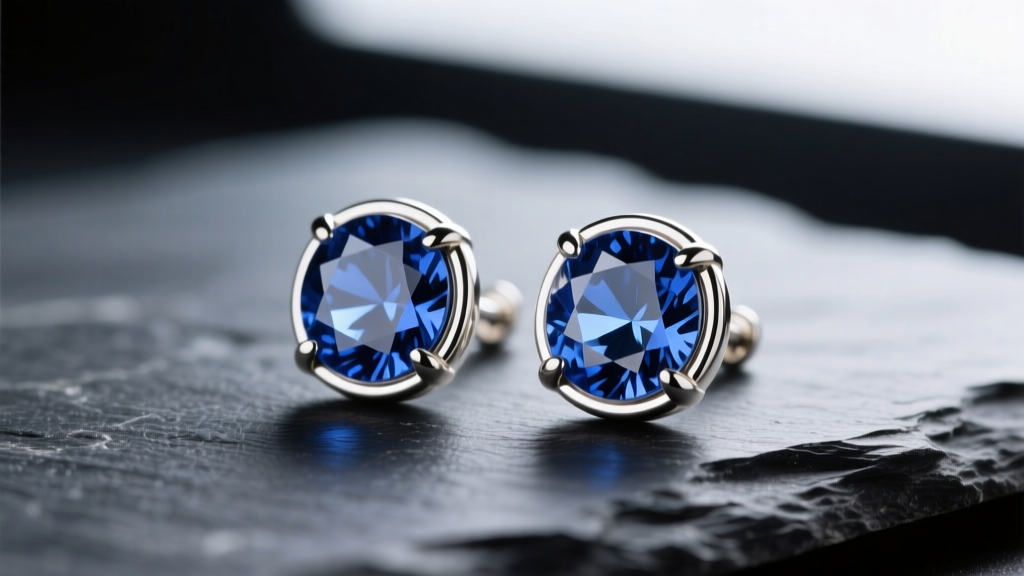
Natural sapphire earrings have long been a symbol of royalty and enduring elegance. In 2026, as lab-grown diamonds and synthetic corundum flood the mass market, the value proposition of natural sapphire earrings has fundamentally shifted. They are no longer just aesthetic choices; they are tangible, geological assets. However, navigating the colored gemstone market requires a highly specific understanding of origin, treatment, and cutting. Unlike diamonds, which are graded on a rigid, universal scale, sapphires demand a nuanced approach to budget and value assessment. Whether you are allocating $1,500 or $15,000, understanding where your money actually goes is the key to making a sound investment.
The Density Factor: Carat Weight vs. Millimeter Size
One of the most common budget mistakes buyers make is shopping strictly by carat weight. Sapphires have a higher specific gravity (approximately 4.00) compared to diamonds (3.52). This means a 1.00-carat natural sapphire is physically smaller than a 1.00-carat diamond. When budgeting for natural sapphire earrings, always prioritize millimeter dimensions over carat weight. A well-cut 6x4mm oval sapphire might weigh 0.80 carats but will face up beautifully in a standard stud setting, saving you the steep per-carat premium that kicks in once a stone crosses the 1.00-carat threshold per ear.
The Pricing Matrix: Origin, Color, and Value
The origin of a sapphire drastically alters its price, even if the visual color is identical to the naked eye. Below is a 2026 market assessment for natural blue sapphire earrings, assuming a matched pair totaling 2.00 to 3.00 carats, set in standard 14k or 18k gold.
| Origin | Color Grade | Treatment | Est. Price Per Carat (Pair) | Value Retention |
|---|---|---|---|---|
| Kashmir | Cornflower Blue | Unheated | $15,000 - $50,000+ | Exceptional (Museum Grade) |
| Burma (Mogok) | Royal Blue | Unheated | $8,000 - $20,000 | High |
| Ceylon (Sri Lanka) | Cornflower / Vivid | Unheated | $2,500 - $6,000 | High |
| Ceylon (Sri Lanka) | Medium Blue | Traditional Heat | $800 - $2,000 | Moderate |
| Madagascar (Ilakaka) | Vivid Blue | Traditional Heat | $600 - $1,500 | Moderate |
| Australia / Thailand | Inky / Dark Blue | Traditional Heat | $150 - $400 | Low (Commercial Grade) |
For buyers seeking the best balance of visual impact and budget, heated Madagascar sapphires offer incredible value. Geologically similar to Ceylon sapphires, they provide brilliant saturation at a fraction of the cost, provided they have only undergone traditional thermal heating.
The Heat Treatment Factor: Where Budgets Are Made or Broken
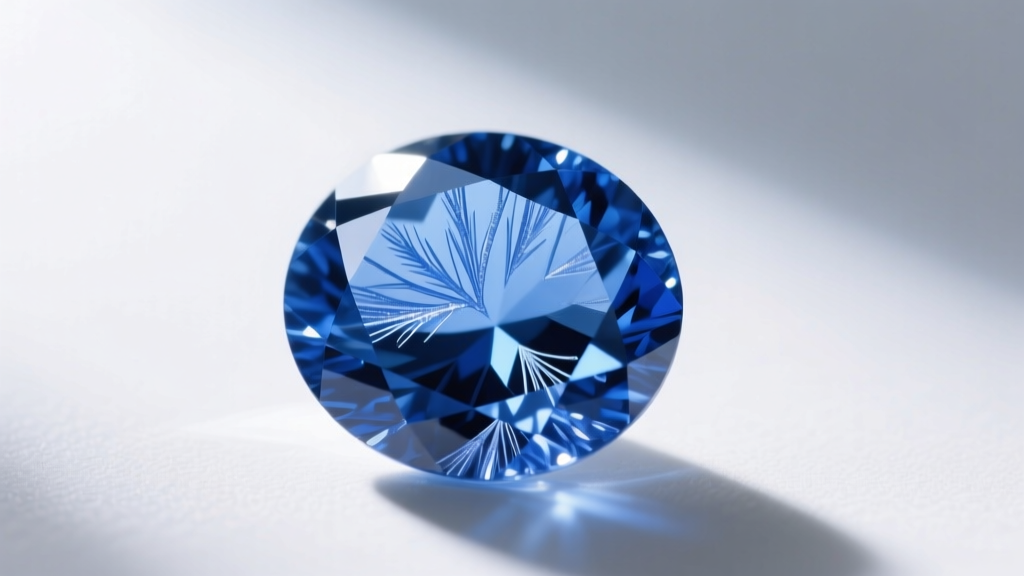
According to the GIA Sapphire Quality Factors guide, approximately 90% of the sapphires on the market have been subjected to some form of heat treatment. Traditional heat treatment (using only temperature to dissolve rutile silk and improve clarity/color) is universally accepted in the fine jewelry trade and does not destroy the gem's investment value.
Beryllium Diffusion: The Budget Trap
Where buyers lose money is by accidentally purchasing beryllium-diffused sapphires at natural, unheated prices. Beryllium diffusion involves introducing beryllium into the crystal lattice during heating to artificially enhance or change the stone's color. While visually stunning, lattice-diffused sapphires are worth a tiny fraction of their traditionally heated counterparts—often dropping from $2,000 per carat to under $100 per carat. Always demand a gemological report that explicitly states "No indications of heating" or "Heated" without mentioning lattice diffusion or foreign elements.
Strategic Setting Choices for Maximum Value
Sapphires rank a 9 on the Mohs hardness scale, making them exceptionally durable for daily wear. However, the way you set them impacts both your budget and the longevity of the earrings.
- Stud Earrings: Allocate 80% of your budget to the stones and 20% to the setting. A simple 4-prong 14k white gold basket setting maximizes light return and keeps the metal cost low. Because sapphires are dense, ensure the earring posts are slightly thicker (e.g., 0.9mm instead of the standard 0.8mm) to prevent bending under the gem's weight.
- Drop and Dangle Earrings: To create the illusion of massive size without the exponential per-carat cost, utilize a "diamond halo" or "diamond jacket" setting. Surrounding a 0.75-carat natural sapphire with 0.25 carats of melee diamonds adds visual footprint and brilliance, keeping the total pair price under $3,500 while achieving the look of a $10,000 piece.
- Huggies and Hoops: Channel-set sapphire hoops require perfectly calibrated stones (matched to the exact millimeter). This color-matching process commands a 15-20% premium over loose, unmatched stones. If you are on a strict budget, opt for bezel-set station drops rather than continuous channel hoops.
Lab-Grown vs. Natural: The 2026 Resale Reality
It is vital to address the elephant in the room: lab-created sapphires. Synthetics produced via the Verneuil flame-fusion or Czochralski pulled methods are chemically identical to natural corundum but cost between $20 and $100 per carat. While they are an excellent choice for fashion jewelry or travel-safe accessories, they possess zero rarity value. As of 2026, the secondary market for lab-grown colored gemstones is virtually non-existent. If your goal is heirloom creation or long-term value retention, natural, earth-mined sapphires with verifiable origins remain the only viable option.
Authentication and Avoiding Counterfeits
Never purchase natural sapphire earrings over the $2,000 total threshold without an independent laboratory report. The two most respected authorities for colored gemstones are the Gemological Institute of America (GIA) and American Gemological Laboratories (AGL). As noted in the GIA Sapphire Overview, these reports not only confirm natural origin but also identify the geographic source and any chemical treatments applied to the stone.
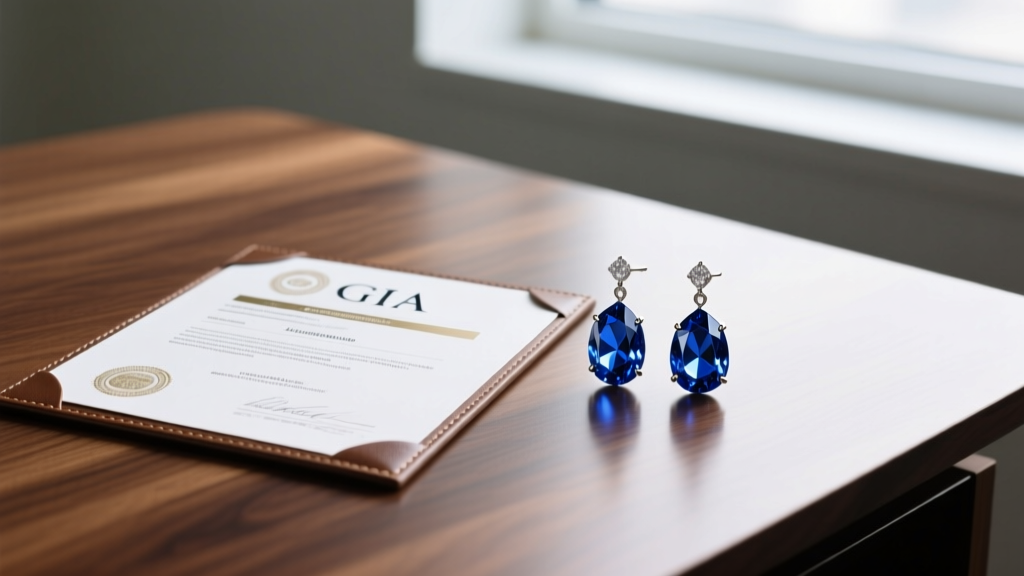
Pro-Tip for Buyers: If a vendor provides an in-house "certificate of authenticity" instead of a GIA or AGL report for a high-priced pair of unheated Ceylon sapphires, walk away. In-house appraisals are frequently inflated for insurance purposes and do not hold up to rigorous gemological scrutiny regarding origin and treatment.
Final Verdict: Are They Worth the Premium?
Natural sapphire earrings are absolutely worth the investment, provided you buy smart. To maximize your budget in 2026, prioritize traditional heated sapphires from Madagascar or Sri Lanka, focus on millimeter face-up size rather than strict carat weight, and insist on a reputable laboratory report for any premium purchases. By avoiding lattice-diffused stones and understanding the density of corundum, you can acquire a breathtaking, geologically rare pair of earrings that will retain both its beauty and its financial value for generations.


