Navajo Beaded Earrings: Material Properties Guide
Discover the material properties of authentic Navajo beaded earrings. Compare bead types, silver findings, and structural durability for lasting wear.

The Intersection of Diné Craftsmanship and Material Science
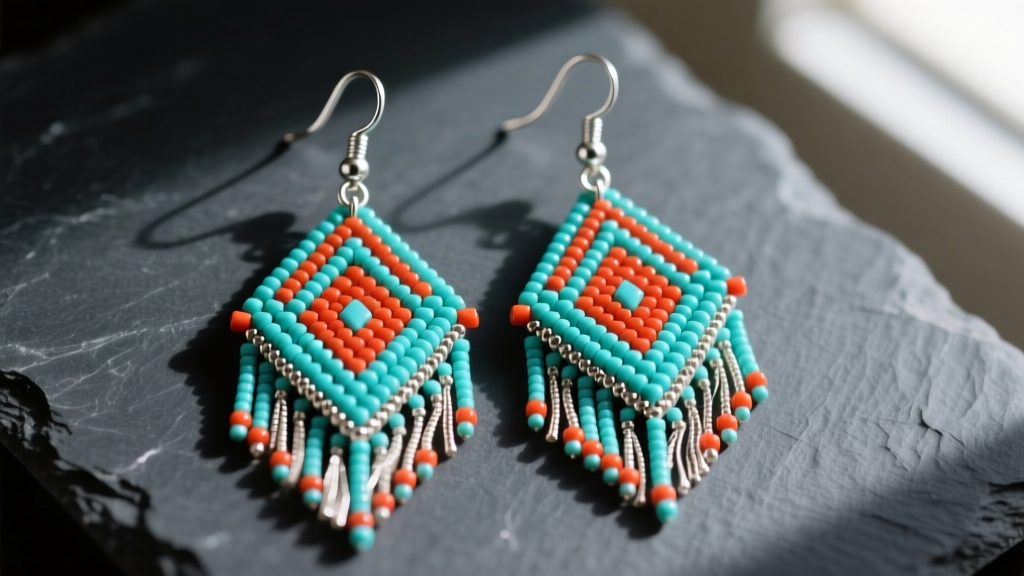
When evaluating authentic Navajo (Diné) beaded earrings, collectors and daily wearers alike must look beyond the vibrant geometric patterns and examine the underlying material science. In 2026, the market is saturated with mass-produced imitations that mimic traditional aesthetics but fail catastrophically due to inferior structural components. Genuine Navajo beadwork is an exercise in applied physics and chemistry, balancing the tensile strength of threading, the metallurgy of ear wires, and the Mohs hardness of natural stones. This guide deconstructs the specific material properties that dictate the longevity, comfort, and authenticity of these wearable art pieces.
The Metallurgy of Navajo Findings and Ear Wires
The foundation of any high-quality earring is its finding—the metal component that interfaces directly with the ear. Authentic Navajo artisans predominantly utilize .925 sterling silver for French wire hooks and lever-backs. Sterling silver consists of 92.5% pure silver and 7.5% alloy, usually copper. This copper addition is critical; pure silver (99.9%) is too malleable and would deform under the weight of heavy stone bead clusters.
Wire Gauge and Structural Integrity
Wire thickness, measured in gauges, determines the earring's load-bearing capacity and comfort. Most traditional Navajo beaded dangles employ 20-gauge (0.81mm) sterling silver wire. This gauge offers the optimal compromise between slipping comfortably through a standard 18-gauge earlobe piercing and resisting bending. For heavier, multi-tiered turquoise and shell fringe earrings, artisans will upgrade to 18-gauge (1.02mm) wire. However, 18-gauge wires can cause discomfort in older, tighter piercings and require careful insertion.
A common failure mode in counterfeit pieces is the use of base metals plated with a microscopic layer of silver. Over time, the friction of insertion wears away the plating, exposing nickel or brass alloys that trigger contact dermatitis. Always verify that the ear wire is stamped '.925' or hallmarked by a recognized Diné silversmith.
Bead Material Matrix: Glass, Stone, and Shell
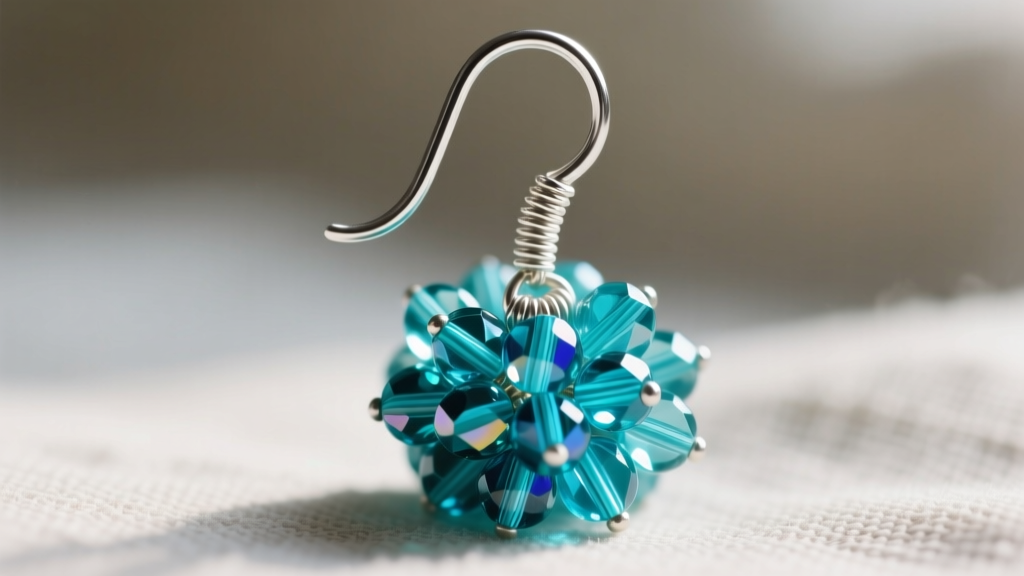
The visual impact of Navajo earrings relies on the interplay of color and light refraction through various bead materials. Understanding the physical properties of these materials is essential for predicting how the earrings will age when exposed to UV light, skin oils, and environmental humidity.
| Material Type | Common Varieties | Mohs Hardness | UV & Fade Resistance | Moisture & Acid Vulnerability |
|---|---|---|---|---|
| Czech Glass | Charlotte 1-cut, Seed 11/0 | 5.5 - 7.0 | Excellent (Metallic finishes may oxidize) | Low (Highly stable) |
| Japanese Glass | Miyuki Delica (Cylinder) | 5.5 - 7.0 | Excellent | Low (Highly stable) |
| Natural Stone | Sleeping Beauty Turquoise | 5.0 - 6.0 | Good (Can darken with oils) | High (Porous; absorbs lotions) |
| Organic Shell | Spiny Oyster (Spondylus) | 3.0 - 4.0 | Moderate (Can bleach in direct sun) | Very High (Calcium carbonate dissolves in acid) |
The Nuance of Turquoise Porosity
Turquoise is a hydrous phosphate of copper and aluminum. Its porous nature means it acts as a sponge for environmental contaminants. According to the Gemological Institute of America (GIA), untreated, natural turquoise will slowly change color as it absorbs sebum (skin oils) and cosmetics. While many collectors prize this 'patina' as a record of the earring's history, those seeking color stability must look for stones that have been lightly stabilized with opticon resin—a common and accepted practice in modern Native American lapidary work that prevents moisture ingress without altering the stone's fundamental appearance.
Spiny Oyster Shell: Beauty and Fragility
The vibrant orange and purple hues of Spiny Oyster shell are derived from carotenoids and porphyrins. Because the shell is primarily calcium carbonate, it is highly susceptible to acidic degradation. Spraying perfume directly onto the earrings or wearing them during heavy perspiration will cause the shell's surface to etch, dulling its natural luster over time.
The Science of Beading Thread and Tensile Strength
The invisible hero of Navajo beaded earrings is the threading material. The structural failure of beaded fringe is almost never due to the beads breaking; it is caused by thread snapping or fraying at the bead hole's edge.
- Nymo (Nylon Monofilament): Historically popular, Nymo is a flat, extruded nylon thread. It is highly flexible and drapes beautifully, allowing fringe to move like liquid. However, nylon is susceptible to UV degradation and loses tensile strength when exposed to prolonged moisture. A size 'D' Nymo thread has a breaking strength of roughly 12 pounds, which is sufficient for glass seed beads but risky for heavy stone clusters.
- Fireline (Gel-Spun Polyethylene): The modern standard for high-end, heavy-load beadwork. Fireline is a braided polyethylene that is thermally fused. A 6 lb test Fireline thread boasts a breaking strength far exceeding its rating due to its high abrasion resistance. It will not stretch, ensuring that the geometric tension of the beadwork remains perfectly aligned over decades of wear.
Artisans working with sharp-edged natural stone beads often double-back their thread or use a micro-drop of cyanoacrylate adhesive at the stress points (where the thread loops through the silver finding) to prevent abrasive cutting.

Biomechanics: Weight Distribution and Lobe Health
Navajo beaded earrings range from delicate 2-gram studs to massive 25-gram ceremonial dangles. Understanding the biomechanics of the earlobe is crucial for preventing permanent tissue stretching (ptosis).
The human earlobe consists of fibro-fatty tissue with no cartilage. Prolonged exposure to weights exceeding 10 to 12 grams per earlobe will cause the piercing hole to slowly migrate downward, thinning the tissue at the base. When wearing heavy, multi-strand turquoise and coral dangles, it is highly recommended to utilize an earring support patch (a small, clear silicone disc that adheres to the back of the earlobe) or to switch to lever-back findings that distribute the fulcrum point across a wider surface area of the ear's cartilage ridge rather than resting solely on the soft lobe.
Verifying Authenticity and Ethical Sourcing
The material composition of an earring is often the fastest way to verify its authenticity. Mass-produced knockoffs frequently use dyed howlite or magnesite in place of genuine turquoise, and plastic or resin in place of spiny oyster shell. Under magnification, dyed howlite reveals a web-like matrix that is too uniform, and the dye concentrates in the micro-fissures of the stone.
Furthermore, the Indian Arts and Crafts Board (IARTB) strictly enforces the Indian Arts and Crafts Act, which mandates that any jewelry marketed as 'Navajo' or 'Native American' must be created by an enrolled member of a federally recognized tribe. When purchasing high-value pieces featuring rare materials like Bisbee turquoise or Mediterranean coral, always request a certificate of authenticity that includes the artisan's tribal enrollment number and the specific origin of the raw materials. In 2026, ethical sourcing and traceability are not just moral imperatives; they are the defining markers of investment-grade Native American jewelry.
"The true value of Navajo beadwork lies not just in the visual geometry, but in the masterful manipulation of diverse material properties—balancing the fragility of shell with the permanence of silver, and the flexibility of thread with the rigid weight of stone."


