Nickel Free Children's Earrings: 2026 Trends & Safety Guide
Discover 2026 trends in nickel free children's earrings. Expert guide on ASTM titanium, 14k gold, screw-backs, and hypoallergenic styles for sensitive ears.

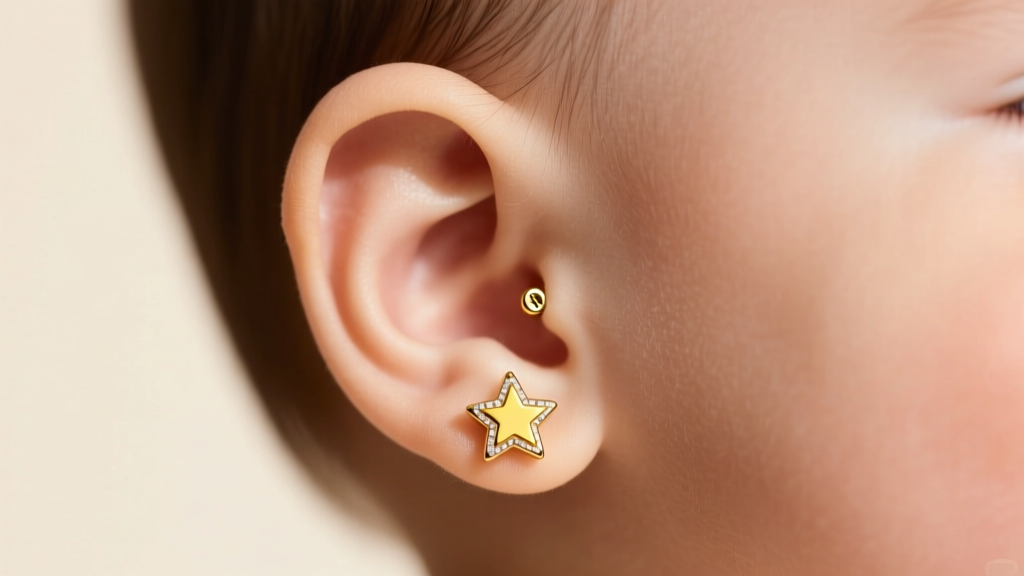
The 2026 Shift: Why "Surgical Steel" is Out
When shopping for nickel free children's earrings, parents are increasingly abandoning the outdated label of "surgical steel." In the jewelry industry, the term surgical steel is largely unregulated and most commonly refers to 316L stainless steel. While 316L is highly durable, it contains between 8% and 12% nickel. According to the American Academy of Dermatology, nickel allergy is the most common contact allergy in children, affecting roughly 11% of the pediatric population. Once a child develops contact dermatitis from a 316L earring post, their immune system is permanently sensitized, leading to chronic weeping, crusting, and hyperpigmentation of the earlobe.
In 2026, the standard for pediatric ear piercing and daily wear has shifted decisively toward verifiable, implant-grade materials. The focus is no longer just on avoiding active flare-ups, but on preemptive sensitization avoidance. This means understanding exact metallurgical grades and moving away from ambiguous marketing terms like "hypoallergenic," which has no legal or medical definition in jewelry manufacturing.
Material Grades Decoded: What Actually Works
To guarantee a truly nickel-free experience, you must look for specific material certifications. Below is a breakdown of the only materials recommended for children's sensitive ears.
| Material | Nickel Content | Price Range (Per Pair) | Best Use Case |
|---|---|---|---|
| ASTM F136 Titanium (Ti-6Al-4V ELI) | 0.00% (Certified) | $18 - $35 | Initial piercings, severe allergies, 24/7 wear |
| 14k or 18k Solid Gold (Yellow/Rose) | 0.00% (Alloyed with Ag/Cu) | $65 - $150+ | Healed lobes, aesthetic upgrades, long-term wear |
| Niobium (Unalloyed) | 0.00% | $20 - $40 | Color-anodized charms, cartilage, sensitive skin |
| 316L "Surgical" Steel | 8% - 12% | $5 - $15 | Avoid for children entirely |
Note: Beware of 14k White Gold. It is frequently alloyed with nickel to achieve its silvery color and then plated with rhodium. Once the rhodium wears off (usually within 6-12 months of friction), the nickel is exposed directly to the child's skin.
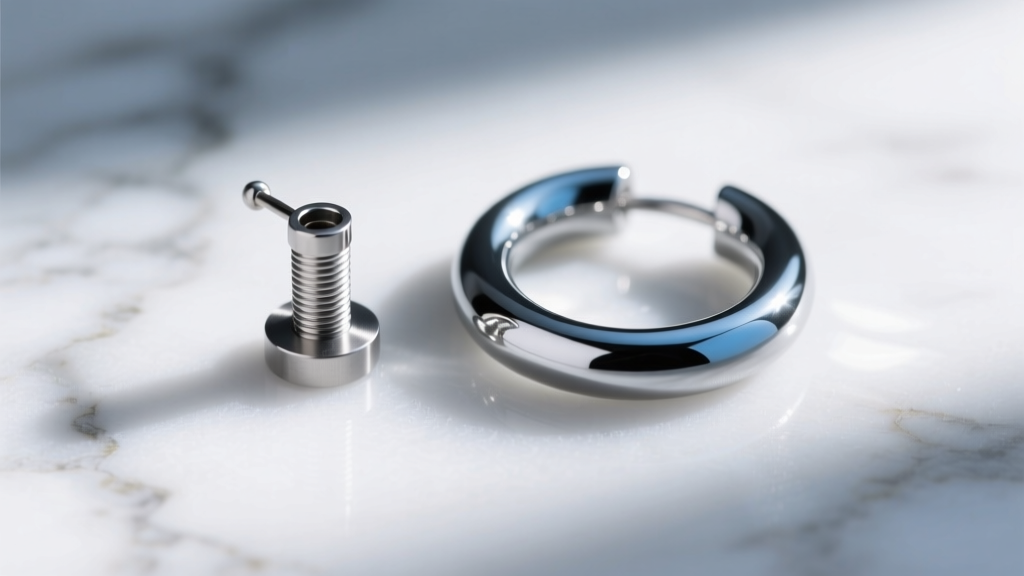
Trending Styles for Kids: Aesthetic Meets Anatomy
The 2026 aesthetic for children's jewelry leans heavily into "quiet luxury" and minimalist functionality. Bulky, heavy charms that drag on the earlobe and cause migration are out. Instead, the market is dominated by lightweight, anatomically correct designs that sit flush against the skin.
- Micro-Enamel Bezels: Tiny 3mm to 4mm bezel-set discs featuring high-fired vitreous enamel. Unlike painted resins that chip and harbor bacteria, vitreous enamel is glass-based, inert, and completely nickel-free.
- Lab-Grown Diamond Solitaires: 10-point (0.10 carat) lab-grown diamonds set in 14k yellow gold. These offer the brilliance of traditional diamonds but at a 40% lower price point, making them practical for active children who might lose a stud.
- Flat-Back Huggies: For older children with multiple lobe piercings, flat-back titanium huggies (hoops that hug the lobe tightly) are trending. They eliminate the catch-point of traditional hoop clasps, preventing accidental tearing during sports or sleep.
Gauge Sizing and Post Length Specifics
A critical failure point in children's earrings is improper sizing, which leads to the "cheese-cutter effect." This occurs when a post is too thin and heavy, causing it to slowly slice downward through the earlobe tissue.
Standard commercial earrings are often 20-gauge (0.81mm). However, pediatric piercers in 2026 strongly recommend 18-gauge (1.02mm) or even 16-gauge (1.29mm) posts for children. The thicker metal distributes the weight of the earring face over a wider surface area inside the fistula (the piercing channel), drastically reducing the risk of lobe splitting and migration.
Post length is equally vital. A standard adult post is 10mm to 12mm. On a toddler, this leaves excess metal protruding behind the ear, which can scratch the neck or catch on clothing. Look for brands offering 6mm posts for toddlers and 8mm posts for older children to ensure a flush, safe fit.
The Hardware: Backing Mechanisms & Failure Modes
The safest, most nickel-free post in the world is useless if the backing mechanism fails, creating a choking hazard or allowing the earring to fall out and get lost. The American Academy of Pediatrics emphasizes the importance of secure backings to prevent accidental ingestion by toddlers.
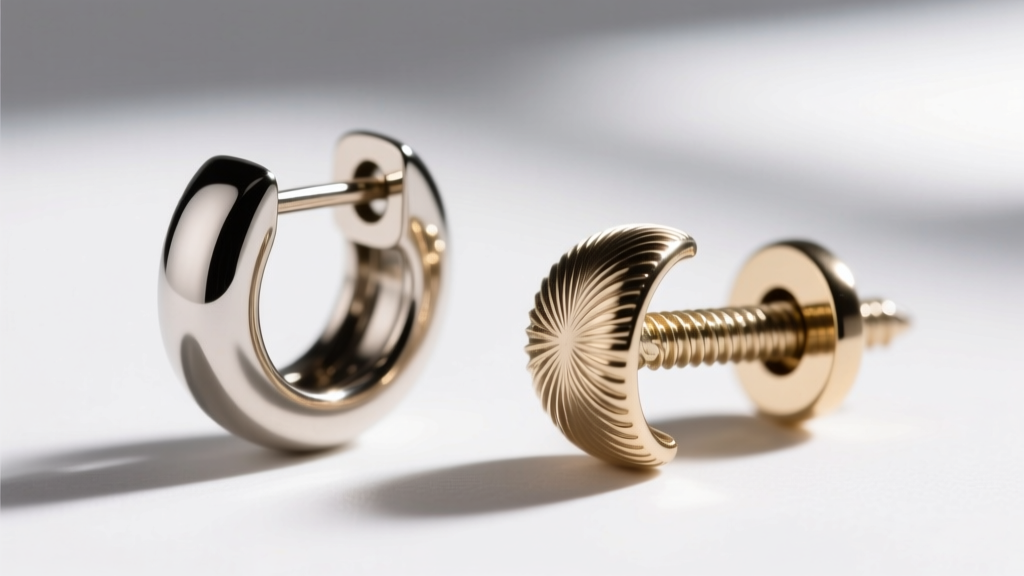
Screw-Back vs. Friction: A Troubleshooting Guide
Here is a breakdown of the mechanical realities of children's earring backings:
- Threaded Screw-Backs: The gold standard for children under 8. The post is threaded, and the backing screws onto it. Failure Mode: Cross-threading. If a parent forces the backing on at an angle, it strips the microscopic threads, rendering the earring useless. Solution: Always turn the backing counter-clockwise until you feel a tiny "click" (the threads aligning), then screw clockwise.
- Friction / Push-Backs (Butterfly Clutches): Common and inexpensive, but rely on tension. Failure Mode: The metal loops lose tension over time, or hair gets caught in the loops, pulling the backing off during sleep. Not recommended for toddlers or children with sensory processing sensitivities who might pick at their ears.
- Internally Threaded Flat-Backs (Labrets): The post has a flat disc on the front, and the decorative end screws into the back of the post. This is the safest option for sleeping, as there is no sharp point protruding behind the ear. Highly recommended for 24/7 wear.
Real-World Troubleshooting: Stuck Screw-Backs
A common parent nightmare is a screw-back earring that won't budge, usually due to dried soap, dead skin cells, or minor crust buildup in the threads. Do not use pliers. Pliers will crush the soft gold or titanium post, trapping the backing permanently and requiring a trip to the ER or a professional piercer for removal. Instead, apply a drop of sterile saline solution or pure jojoba oil to the threading joint. Let it sit for 10 minutes to dissolve the biological debris, then use a textured rubber glove to grip the backing and twist counter-clockwise.
Curated Brand & Pricing Benchmarks
When sourcing authentic nickel free children's earrings, expect to pay a premium for verified materials. Mass-market mall kiosks rarely carry certified ASTM F136 titanium. Instead, look for specialized pediatric piercing studios and dedicated online jewelers. Brands like Rowan (specializing in safe pediatric piercing and 14k gold/titanium studs) and Inverness (known for medical-grade encapsulated safety earrings) set the benchmark for the industry. For custom or niche designs, independent jewelers on platforms like Etsy who explicitly state "implant-grade ASTM F136" and provide mill certificates are excellent, budget-friendly alternatives, typically pricing 18k gold micro-studs between $45 and $80.
Final Verdict: Building a Safe Starter Collection
Curating a collection of nickel free children's earrings in 2026 requires abandoning legacy materials and embracing biomechanical safety. Start with an 18-gauge ASTM F136 titanium flat-back stud for the initial piercing and early childhood years. As the child grows and the fistula matures, transition to 14k yellow or rose gold bezel-set studs with secure threaded screw-backs. By prioritizing exact material grades, correct post lengths, and fail-safe hardware, you protect your child's skin from permanent sensitization while providing them with beautiful, durable jewelry that withstands the rigors of active play.


