Normal Earring Gauge Size Guide: Budget and Value Tips
Discover the true cost of your jewelry. Learn how choosing the correct normal earring gauge size prevents tissue damage and maximizes your budget.

When building a fine jewelry collection, most buyers obsess over gemstone clarity or gold purity. Yet, one of the most critical factors in both the longevity of your jewelry and the health of your piercings is frequently overlooked: the normal earring gauge size. Understanding gauge thickness is not just a matter of anatomical correctness; it is a fundamental budget and value assessment. Purchasing jewelry that is too thin or poorly scaled for your piercing can lead to catastrophic structural failures, tissue damage, and expensive medical corrections.
In this guide, we evaluate the true financial and physical value of standard earring gauges, helping you make informed purchasing decisions that protect both your wallet and your piercings.
The Hidden Financial Risks of the Wrong Gauge
The jewelry industry often uses the term "standard" loosely, but in the professional piercing community, precision is paramount. The gauge system is inverse: the higher the number, the thinner the wire. A normal earring gauge size for a standard earlobe piercing is typically 20-gauge (0.81mm) or 18-gauge (1.02mm). Cartilage piercings, like the helix or tragus, usually default to 16-gauge (1.29mm).
Many mass-market jewelers sell 22-gauge (0.64mm) or even 24-gauge posts to save on precious metal costs. While these pieces are cheaper upfront, they introduce severe long-term financial risks:
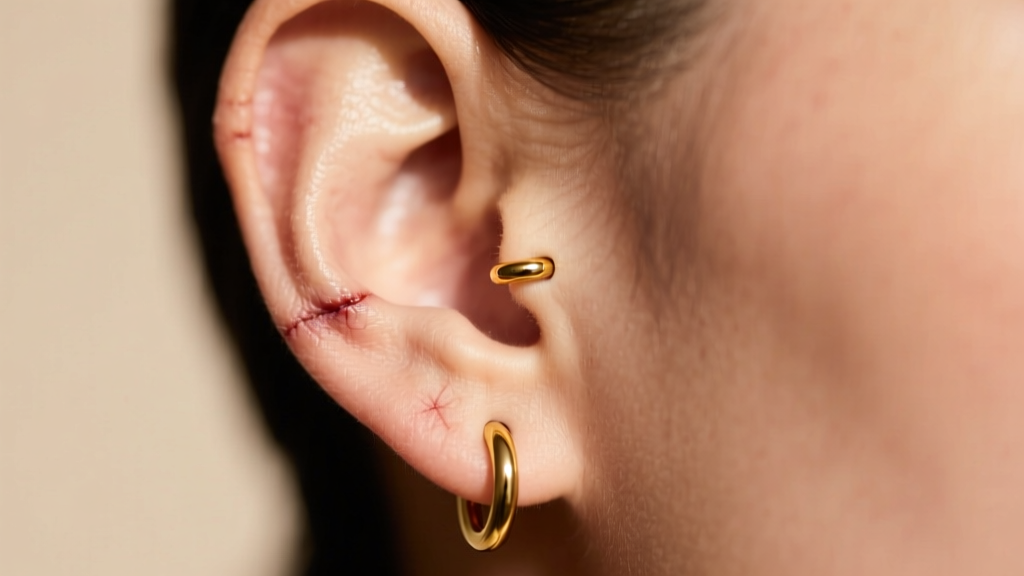
- The Cheese-Cutter Effect: A heavy gold or gemstone drop earring suspended on a 22-gauge wire acts exactly like a cheese slicer. The immense pressure on a microscopic surface area will slowly migrate through the earlobe tissue.
- Lobuloplasty Costs: If a thin-gauge earring tears through the lobe, the surgical repair procedure (lobuloplasty) typically costs between $500 and $1,500 per ear, entirely negating any savings from buying cheaper, thinner jewelry.
- Structural Warping: Thin-gauge hoops easily bend out of shape during sleep or when changing clothes, requiring constant professional reshaping or total replacement.
According to the Association of Professional Piercers (APP), appropriate jewelry thickness is vital for minimizing migration and rejection, emphasizing that value should be measured in wearability and tissue preservation, not just initial retail price.
Decoding the Gauge Chart: Budget vs. Value
To assess the true value of your purchases, you must map the gauge size to its intended use case. Below is a budget and value assessment framework for common earring sizes.
| Gauge Size | Millimeter | Typical Use | Avg. Price (14k Gold) | Long-Term Value Score |
|---|---|---|---|---|
| 22g | 0.64mm | Ultra-lightweight studs only | $40 - $90 | Low (High bend/tear risk) |
| 20g | 0.81mm | Standard Lobe (Normal earring gauge size) | $60 - $150 | Medium (Good for light drops) |
| 18g | 1.02mm | Lobe & Light Cartilage | $80 - $220 | High (Versatile & durable) |
| 16g | 1.29mm | Cartilage & Heavy Statement Lobes | $120 - $350+ | Highest (Maximum structural integrity) |
As the table illustrates, stepping up from a 20-gauge to an 18-gauge post might increase the initial gold cost by 15% to 20% due to the extra material weight. However, the structural durability increases exponentially, making 18-gauge the true "sweet spot" for value-conscious fine jewelry buyers.
Material Grade vs. Gauge Thickness: Where to Spend
When evaluating your budget, gauge thickness must be weighed against material metallurgy. A thick gauge in a soft metal can be just as problematic as a thin gauge in a hard metal.
The Problem with High-Karat Gold in Thin Gauges
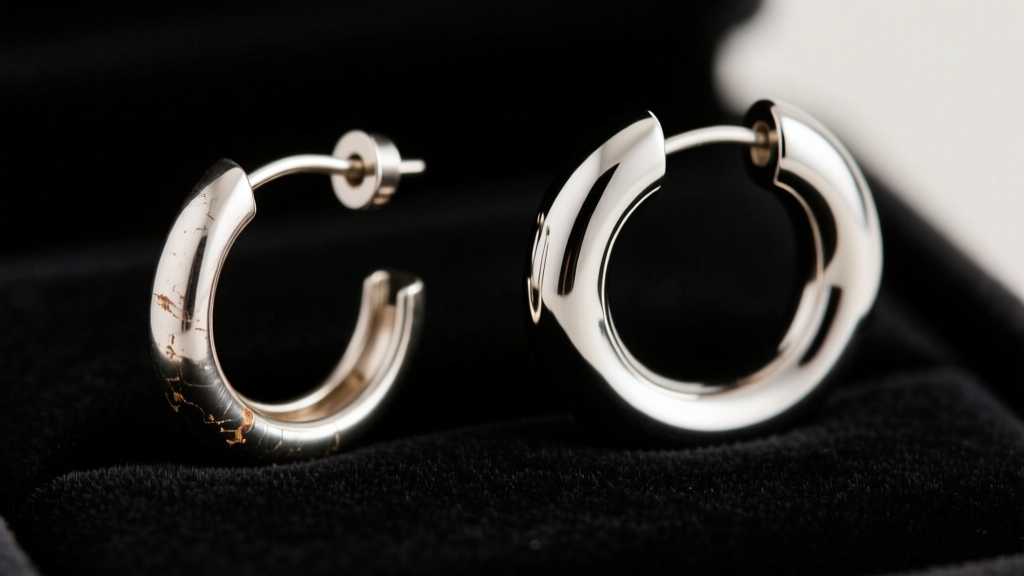
24-karat and 18-karat gold are exceptionally soft metals. If you purchase an 18k gold hoop in a 20-gauge thickness, the metal lacks the tensile strength to hold its shape. It will warp easily, compromising the clicker mechanism or bending the post. For thin, "normal" sizes (20g or 18g), 14-karat gold offers superior value because the alloyed metals (like zinc and copper) provide necessary rigidity. If you insist on 18k gold for its richer color and higher purity, you must increase your budget to accommodate a 16-gauge thickness to ensure structural viability.
Titanium: The Ultimate Budget-to-Value Ratio
For those prioritizing budget without sacrificing safety, Implant-Grade Titanium (ASTM F136) is the undisputed champion. A 16-gauge titanium clicker hoop offers the structural integrity of thick steel at a fraction of the cost of gold, typically ranging from $30 to $85. Furthermore, titanium is entirely nickel-free and biocompatible, eliminating the hidden costs of treating contact dermatitis or allergic reactions caused by cheap "surgical steel" alternatives.
The 16-Gauge Upgrade: A Long-Term Value Investment
A growing trend among fine jewelry collectors is requesting that new lobe piercings be done at 16-gauge rather than the traditional 20-gauge. While finding the normal earring gauge size of 20g is easy at any mall kiosk, a 16-gauge piercing requires a professional studio.
Why is this a sound financial investment?
- Expanded Jewelry Market: High-end artisan jewelers and professional body jewelry brands predominantly craft their intricate, gemstone-heavy designs in 16-gauge to ensure the pieces do not damage the wearer's tissue.
- Migration Prevention: Thicker posts distribute the weight of heavy gold and diamond drops evenly across the fistula (the piercing channel), preventing the slow downward migration that, as noted in professional piercing aftercare guidelines, can lead to irreversible rejection and scarring.
- Future-Proofing: It is much easier and cheaper to wear a 16-gauge earring in a 16-gauge hole than to attempt to stretch a 20-gauge hole later to accommodate luxury statement pieces, which risks blowouts and tissue scarring.
DIY Measurement: Saving Money with Digital Calipers
One of the most common budget drains in jewelry shopping is buying pieces that simply do not fit your existing piercings. Guessing your gauge based on how a post "looks" leads to costly returns, restocking fees, and shipping losses.
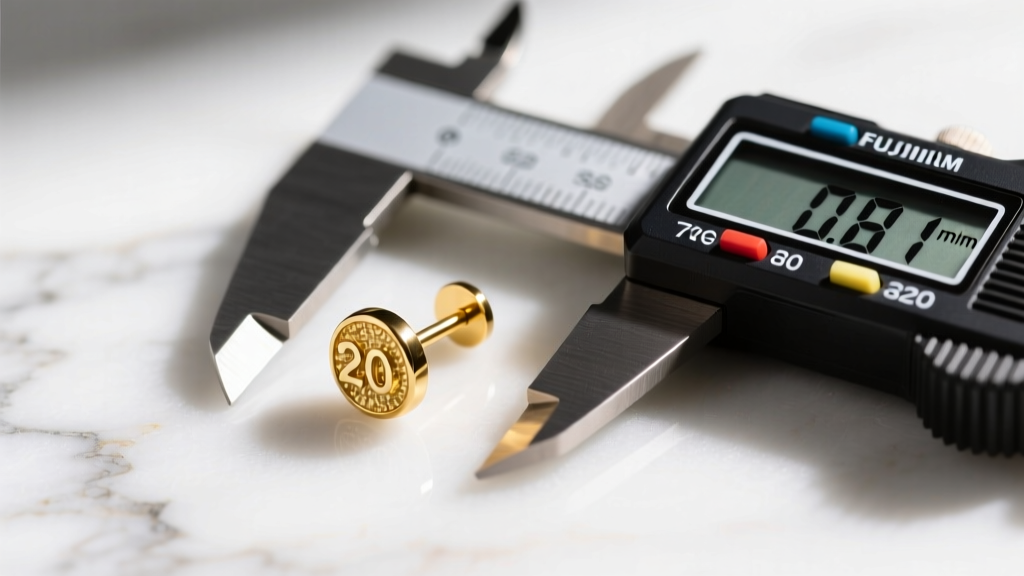
The Actionable Fix: Invest $15 to $25 in a basic digital caliper. By measuring the posts of your most comfortable, well-fitting earrings, you can establish your exact baseline. If your standard stud post measures 0.81mm, you know definitively that your normal earring gauge size is 20-gauge. If it measures 1.02mm, you are an 18-gauge. Keeping this exact millimeter data in your phone's notes app ensures you never waste money on ill-fitting luxury jewelry again.
Final Verdict: Redefining Jewelry Value
True value in fine jewelry is not achieved by finding the lowest price per gram of gold; it is achieved by matching the correct metallurgical strength to the correct anatomical gauge. While 20-gauge remains the standard for basic earlobe studs, upgrading to 18-gauge or 16-gauge for drops, hoops, and cartilage pieces is a vital investment. By understanding the physical limits of your jewelry and prioritizing structural thickness over superficial design, you protect your body from irreversible damage and your wallet from unnecessary medical and replacement costs.


