Olivine Earrings Value Guide: Pricing, Quality & Budget Tips
Discover the true value of olivine earrings. We break down pricing tiers, natural vs. lab peridot, metal grades, and how to spot overpriced gems.

The Gemological Reality: Olivine vs. Peridot Pricing
When shopping for green gemstone jewelry, the term 'olivine' is frequently thrown around, but understanding its gemological definition is the first step in assessing true value. According to mineralogical databases like Mindat, olivine is not a single gemstone but an isomorphic solid solution series between forsterite (magnesium-rich) and fayalite (iron-rich). The transparent, gem-quality variety of this mineral is universally known as peridot.
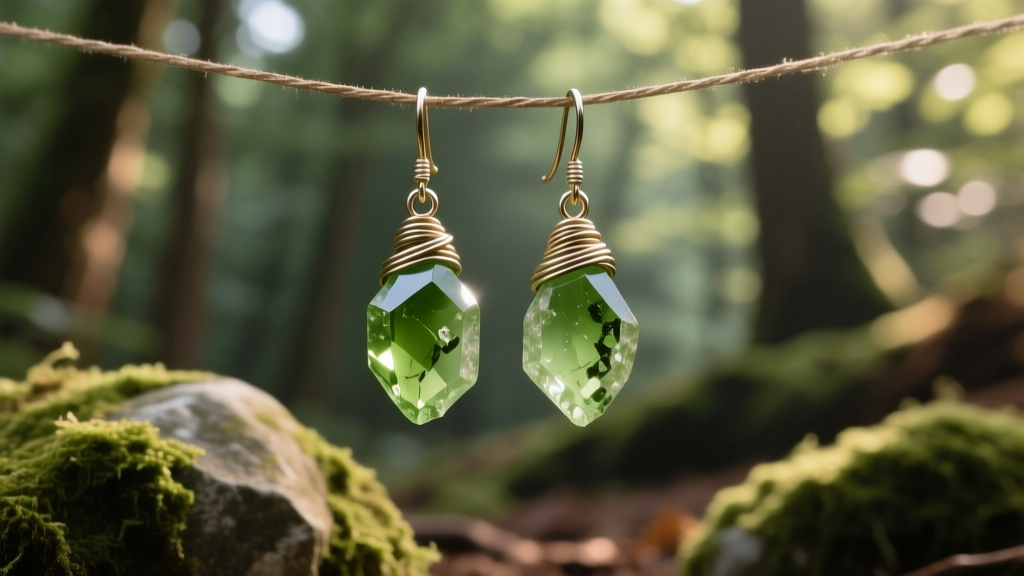
As of 2026, the jewelry market has seen a surge in niche marketing where sellers label raw, uncut mineral specimens or lower-grade commercial peridot as 'olivine' to create an aura of earthy exclusivity. If you are evaluating olivine earrings, you must first determine if you are looking at faceted peridot (valued by the 4Cs) or raw olivine crystals (valued by mineral specimen rarity and wire-wrapping craftsmanship). Faceted peridot is priced per carat based on color saturation and clarity, while raw olivine is priced by overall specimen aesthetics and the labor involved in the setting.
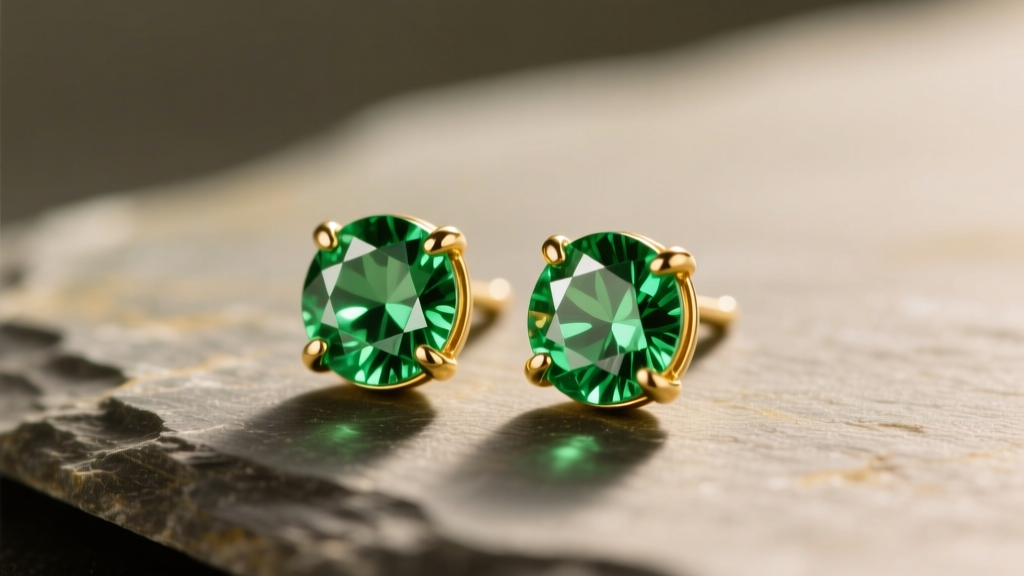
Because olivine sits at a 6.5 to 7 on the Mohs hardness scale, it is significantly softer than sapphires or diamonds. This inherent brittleness means that the setting style drastically impacts the earring's long-term value and wearability. Prong-set olivine earrings are highly susceptible to girdle chipping, making bezel settings the superior choice for preserving your investment.
Budget Tiers: What You Should Actually Pay
Assessing the budget for olivine and peridot earrings requires looking at the intersection of stone quality, carat weight, and metal purity. Below is a comprehensive breakdown of the current market tiers for a standard pair of stud or drop earrings (assuming a total gem weight of 2 to 3 carats for faceted stones).
| Value Tier | Stone Type & Quality | Metal Pairing | Estimated Price Range (Pair) | Value Verdict |
|---|---|---|---|---|
| Budget | Raw/Uncut Olivine or Pale Commercial Peridot | Copper, Brass, or Plated Silver | $15 - $45 | High aesthetic appeal, low long-term durability. Prone to metal tarnish. |
| Mid-Range | Faceted Peridot (Moderate Green, Eye-Clean) | 925 Sterling Silver (Rhodium Plated) | $60 - $120 | Excellent for daily lobe wear. Best value for money in fine jewelry. |
| Premium | Fine Peridot (Vivid Grass-Green, >2ct each) | 14k Yellow or Rose Gold | $180 - $450 | Heirloom quality. High color saturation justifies the premium. |
| Collector | Rare Gemmy Forsterite (Mantle-derived) | 18k Gold with Diamond Halos | $600 - $1,500+ | Investment grade. Sourced from niche locations like Zabargad Island. |
The Hidden Costs of Metal Alloys
When evaluating mid-range olivine earrings set in 925 sterling silver, you must factor in the lifespan of the rhodium plating. Silver naturally tarnishes when exposed to sulfur in the air and skin oils. To prevent this, manufacturers apply a rhodium flash. However, standard commercial plating is only 0.1 to 0.3 microns thick. With daily wear, this plating will wear off in 6 to 12 months, requiring a $25 to $40 replating service. If you plan to wear your olivine earrings daily, upgrading to solid 14k gold (which does not require plating) offers a better lifetime value, even if the upfront cost is $80 to $150 higher.
Natural vs. Lab-Created: Assessing the Value Proposition
The Gemological Institute of America (GIA) notes that while synthetic peridot can be created in a laboratory using the Czochralski pulling method or flux-melt techniques, it is rarely produced on a commercial scale. Why? Because natural peridot is relatively abundant and inexpensive compared to emeralds or rubies. The cost to synthesize high-quality forsterite in a lab often exceeds the market price of mining it naturally.
Buyer Beware: If a vendor is selling 'lab-created olivine' or 'synthetic peridot' earrings at a steep discount, there is a very high probability that the stones are actually green Cubic Zirconia (CZ) or dichroic glass. True lab-grown peridot is a niche scientific curiosity, not a mass-market jewelry staple.
To verify natural origin without a gem lab, look for the signature 'lily pad' inclusions under a 10x jeweler's loupe. These are stress fractures that radiate from small chromite crystals trapped inside the olivine during its formation deep within the Earth's mantle. Glass and CZ will be completely flawless or contain perfectly spherical gas bubbles, which are immediate red flags for natural olivine.
Red Flags: How to Spot Overpriced Olivine Jewelry
Not all green stones marketed as olivine or peridot are worth the asking price. Here are the specific failure modes and marketing traps to avoid when assessing value:
- The 'Lime Green' Markup: The most valuable olivine/peridot exhibits a rich, saturated grass-green or olive-green hue (driven by optimal iron content). Pale, yellowish-lime stones are heavily discounted in wholesale markets (often under $5 per carat). If a retailer is charging premium prices for pale stones, you are overpaying.
- Ultrasonic Cleaning Warnings: Olivine has poor toughness due to its internal stress fractures. A high-end olivine earring should come with strict care instructions. If a jeweler recommends ultrasonic cleaning, they lack gemological expertise, as the high-frequency vibrations will shatter the stone along its cleavage planes.
- Cartilage Placement Risks: While olivine looks stunning in helix or tragus piercings, the 6.5 Mohs hardness makes it vulnerable. Cartilage piercings are prone to snagging on hair, towels, and clothing. A snagged prong on a softer stone like olivine will likely result in a chipped girdle. For cartilage, prioritize bezel-set olivine or save the prong-set stones for protected lobe piercings.
Final Verdict on Olivine Investments
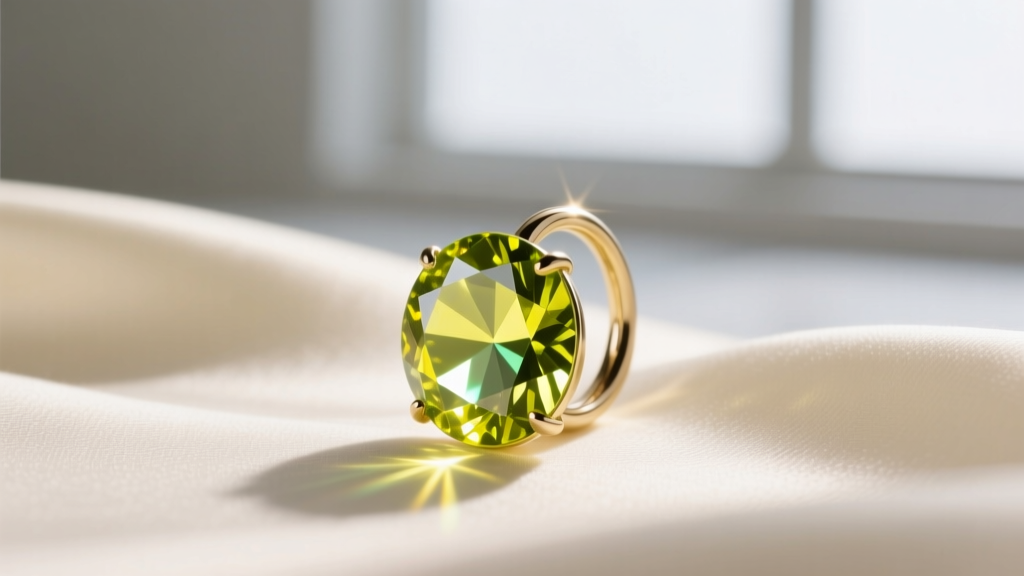
Evaluating the budget and value of olivine earrings ultimately comes down to transparency in marketing and structural integrity in design. Raw, wire-wrapped olivine offers an affordable, bohemian aesthetic but lacks the durability for heirloom status. Faceted peridot set in 14k gold bezels remains the sweet spot for fine jewelry buyers, offering vibrant, birefringent green hues that rival much more expensive emeralds, without the need for oil treatments.
As you navigate the 2026 jewelry market, demand a clear breakdown of the stone's origin, exact carat weight, and metal purity. By prioritizing protective settings and understanding the mineralogical reality of the forsterite-fayalite spectrum, you can confidently acquire olivine earrings that deliver both striking beauty and genuine long-term value.


