How Much Are 1 Carat Diamond Earrings? 2026 Pricing Guide
Discover how much 1 carat diamond earrings cost in 2026. We break down natural vs. lab-grown prices, the 4Cs, and setting styles for beginners.


The Short Answer: What to Expect to Pay in 2026
If you are asking yourself, "how much are 1 carat diamond earrings?" the answer depends heavily on whether you choose natural mined diamonds or lab-grown alternatives. As of 2026, the diamond market has stabilized, but the price gap between natural and lab-grown stones remains significant. For a beginner, navigating these price points can feel overwhelming, but understanding the baseline costs is your first step toward making a smart purchase.
Below is a quick-reference pricing table for 1.00 Carat Total Weight (CTW) round brilliant diamond stud earrings (meaning each earring contains a 0.50-carat diamond). These ranges reflect well-cut, eye-clean stones set in 14k gold.
| Diamond Origin | Budget Tier (I Color, SI1) | Mid Tier (G Color, VS2) | Premium Tier (D Color, VVS1) |
|---|---|---|---|
| Natural Mined | $2,200 - $2,800 | $3,200 - $4,500 | $5,500 - $7,500+ |
| Lab-Grown | $450 - $650 | $700 - $1,100 | $1,200 - $1,800 |
As you can see, you can acquire a stunning pair of lab-grown 1 carat diamond earrings for under $1,000, while natural equivalents will require a budget of at least $3,000 for comparable quality. But before you commit to a budget, there is a crucial industry secret you need to understand about carat weight.
The "CTW" Trap: Total Weight vs. Per-Ear Weight
One of the most common beginner mistakes when shopping for earrings is misunderstanding how carat weight is advertised. When a jeweler sells "1 carat diamond earrings," they are almost always referring to the Carat Total Weight (CTW). This means the pair of earrings weighs 1.00 carat combined, with each individual earring weighing 0.50 carats.
If you specifically want a single 1.00-carat diamond in each ear (a 2.00 CTW pair), you will need to double the prices listed in the table above. A 2.00 CTW natural diamond pair will easily push past the $8,000 mark. Always verify whether the listing specifies "CTW" or "per ear" before adding the item to your cart. According to the Blue Nile diamond carat guide, understanding this distinction is vital for comparing apples to apples across different jewelers.
Natural vs. Lab-Grown: The Biggest Price Factor
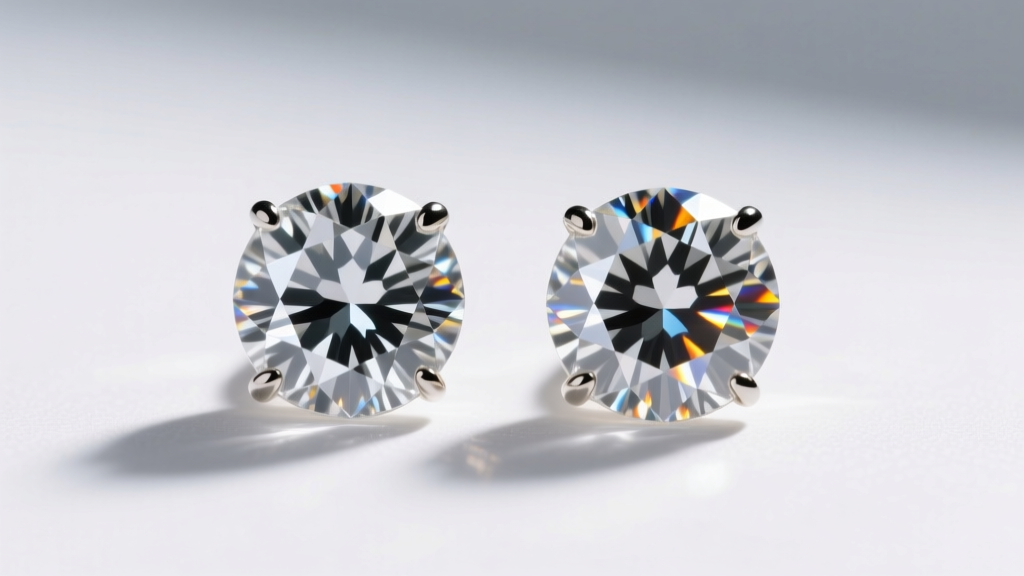
The origin of your diamond is the single largest variable affecting your budget. Chemically, physically, and optically, lab-grown diamonds are identical to mined diamonds. The Gemological Institute of America (GIA) grades both using the exact same 4Cs scale. However, their market prices are vastly different.
Why Choose Lab-Grown?
- Massive Savings: You can save 70% to 85% compared to natural diamonds, allowing you to upgrade to higher color and clarity grades without breaking the bank.
- Ethical Certainty: Lab diamonds are guaranteed conflict-free and have a significantly lower environmental impact than large-scale mining operations.
- Visual Perfection: Because they are grown in controlled environments, it is easier to find lab diamonds with flawless clarity and top-tier D color.
Why Choose Natural?
- Rarity and Romance: Natural diamonds are billions of years old and carry an emotional weight and geological history that lab stones cannot replicate.
- Resale Value: While all diamonds depreciate the moment you buy them, natural diamonds retain a higher percentage of their initial purchase price compared to lab-grown stones, which currently have a steep resale drop-off.
Beginner Tip: If your primary goal is visual impact and maximizing your budget, lab-grown is the undisputed winner in 2026. If you are buying an heirloom piece or value geological rarity, natural is the way to go.
How the 4Cs Impact Your Earring Budget
The 4Cs (Cut, Color, Clarity, and Carat) dictate diamond pricing, but you should not grade earrings the same way you grade an engagement ring. Earrings are viewed from a distance of two to three feet, whereas a ring is viewed from twelve inches away. This difference in viewing distance allows you to save money by compromising on specific grades without any visible loss in beauty.
1. Cut (Never Compromise)
Cut is the only C that determines a diamond's sparkle. Because you cannot control the angle of a person's head when they wear earrings, you need the diamond to reflect light brilliantly from every direction. Always insist on an Excellent or Ideal cut grade. A poorly cut 1 carat diamond will look dull and lifeless, regardless of its price.
2. Color (Match Your Metal)
You can save significant money by matching your diamond color grade to your chosen metal setting.
- White Gold or Platinum: Stick to D, E, or F color grades. White metals reflect their color into the diamond, making any yellow tints (G, H, or I) highly visible.
- Yellow or Rose Gold: You can comfortably drop down to H or I color grades. The warm reflections of the gold will mask the faint yellow tint of the diamond, saving you 15% to 25% on the stone's price.
3. Clarity (The "Eye-Clean" Sweet Spot)
Flawless (FL) and Internally Flawless (IF) diamonds command massive premiums. For earrings, this is a waste of money. Inclusions in a VS2 or SI1 clarity diamond are completely invisible to the naked eye, especially from a few feet away. Always buy SI1 or VS2 clarity for earrings and reallocate those savings toward a better cut or a larger carat size.
The "Magic Size" Hack: How to Save 20% Instantly
Diamond prices do not scale linearly; they jump exponentially at "magic sizes" like 0.25ct, 0.50ct, 0.75ct, and 1.00ct. A 0.50-carat diamond costs significantly more per carat than a 0.45-carat diamond, simply because it crosses that psychological threshold.
If you want the look of 1 carat diamond earrings without the 1 carat price tag, look for a 0.90 CTW pair (0.45ct per ear). The physical diameter difference between a 0.50ct and a 0.45ct round diamond is roughly 0.3 millimeters. This difference is entirely imperceptible to the human eye, yet it can shave 15% to 20% off your total bill. This is one of the most effective insider strategies for first-time buyers.
Setting Styles and Hidden Metal Costs
The setting you choose affects both the security of your diamonds and the final price tag. Here is a breakdown of the most common 1 carat earring settings:
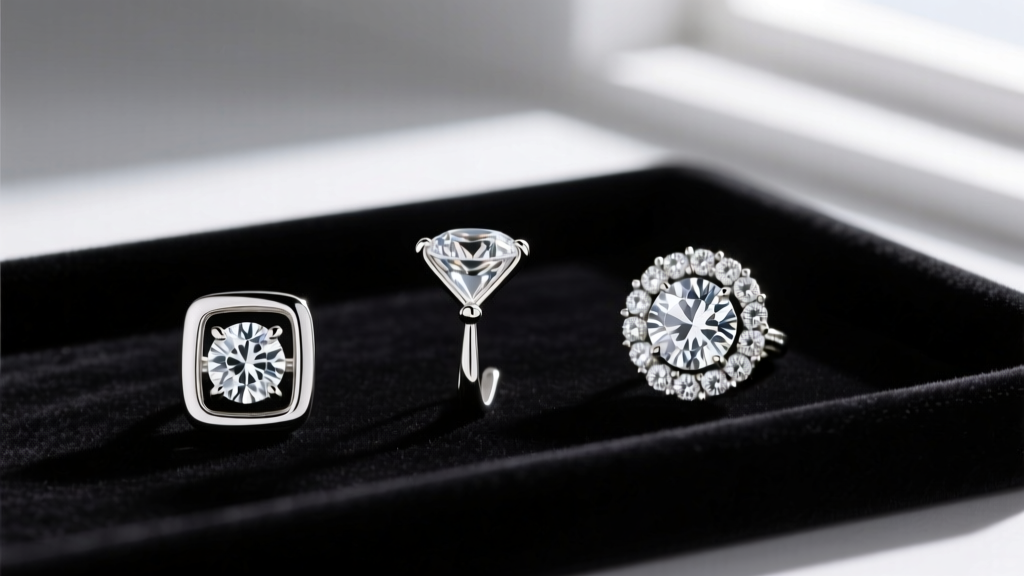
- Martini Prong (3-Prong): The classic, minimalist choice. It uses the least amount of metal, allowing maximum light to enter the diamond. It is usually the most affordable setting.
- Crown / 4-Prong Setting: Offers a slightly more geometric look and excellent security. It requires slightly more gold or platinum, adding a marginal cost.
- Bezel Setting: A rim of metal completely surrounds the diamond. This is the most secure option for active lifestyles, but the metal hides some of the diamond's edge, making a 1 CTW pair look slightly smaller than a prong-set pair.
- Halo Setting: A center stone surrounded by a ring of micro-pavé diamonds. While it adds massive visual size and sparkle, the extra labor and accent diamonds will increase the price by $300 to $800 depending on the jeweler.
Furthermore, the metal purity impacts the cost. 14k gold is the standard for durability and affordability. Upgrading to 18k gold will add roughly $100 to $200 to the pair, while Platinum will add $300 to $500 due to the density and market price of the metal.
Final Verdict: Certifications and Smart Shopping
Never buy 1 carat diamond earrings without a grading report from a reputable, independent laboratory. For natural diamonds, insist on a GIA or AGS report. For lab-grown diamonds, IGI and GCAL are the industry gold standards. These reports guarantee that the color, clarity, and cut grades you are paying for are accurate.
Ultimately, how much you spend on 1 carat diamond earrings comes down to your personal values. If you prioritize maximum sparkle and budget efficiency, a $900 pair of 1.00 CTW lab-grown diamonds in a 14k white gold martini setting is the smartest buy in 2026. If you are seeking a rare, earth-mined heirloom, expect to invest around $3,500 for a high-quality, GIA-certified natural pair. By understanding the CTW metrics, leveraging the magic size hack, and prioritizing cut over clarity, you can confidently navigate the market and secure a beautiful pair of earrings that punch far above their weight class.


