How to Choose and Style Onyx Hoop Earrings: A Guide
Discover everything you need to know about onyx hoop earrings, from stone grading and metal pairings to hoop mechanics and everyday styling tips.

The Allure of Black Onyx in Modern Jewelry
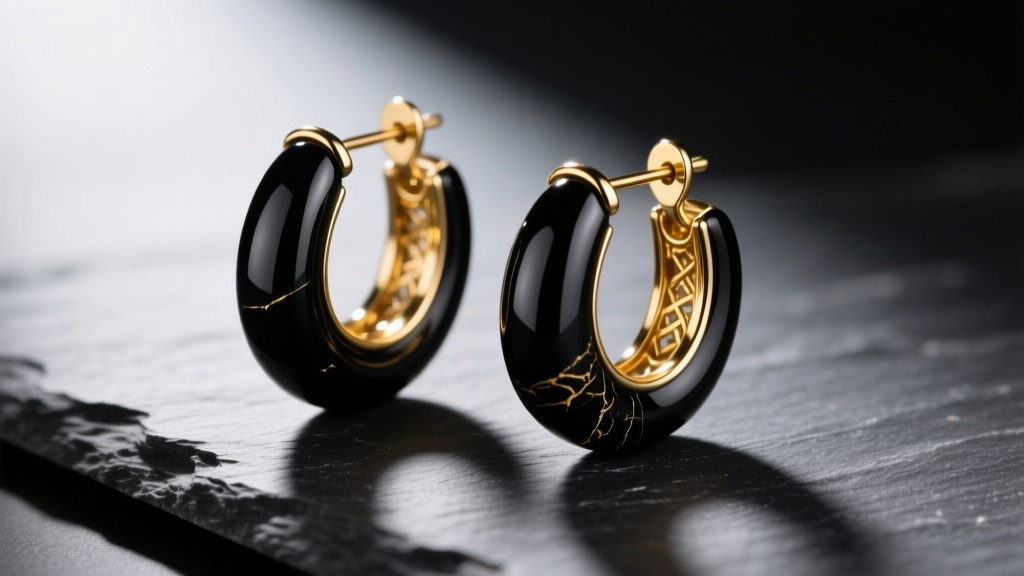
When it comes to building a versatile, timeless jewelry collection, few pieces offer the same level of sartorial flexibility as onyx hoop earrings. The deep, light-absorbing black of onyx provides a striking contrast against the skin and pairs effortlessly with everything from casual denim to formal evening wear. However, for beginners stepping into the world of fine and semi-fine jewelry, navigating the nuances of stone quality, metal pairings, and hoop mechanics can be overwhelming. This comprehensive guide will break down everything you need to know to confidently select, style, and care for your onyx hoops.
Decoding the Stone: Natural vs. Treated Onyx
One of the most closely guarded secrets in the gemstone industry is that the vast majority of solid black onyx on the market is not naturally black. According to the Gemological Institute of America (GIA), natural onyx is actually a banded variety of chalcedony, typically featuring alternating layers of black and white. The solid, uniform black stones you see in most jewelry stores are usually gray or white agates that have been treated with a sugar solution and sulfuric acid to achieve that coveted pitch-black hue.
Does this mean treated onyx is inferior? Not necessarily. This dyeing process has been used for centuries and is widely accepted in the gemological community because it is permanent and stable. However, as an informed buyer, you should know that you are likely purchasing dyed chalcedony. If you specifically want natural, untreated banded onyx, you will need to seek out specialized lapidaries and expect to pay a significant premium.
The Mohs Hardness Factor
Onyx ranks between 6.5 and 7 on the Mohs scale of mineral hardness. This makes it reasonably durable for everyday wear in earrings, as they are less prone to impact than rings or bracelets. However, it is still softer than diamonds, sapphires, and topaz, meaning it can be scratched if stored improperly alongside harder gemstones.
Hoop Mechanics and Wire Gauges Explained
The comfort and security of your onyx hoop earrings depend heavily on the closure mechanism and the wire gauge (thickness). Choosing the wrong gauge can lead to irritation, especially in cartilage piercings, while the wrong closure can result in lost jewelry.
| Closure Type | Best For | Pros & Cons |
|---|---|---|
| Hinged Snap | Standard Earlobes | Secure click closure; easy to put on. Can pinch if the hinge is poorly calibrated. |
| Latch-Back | Larger, Heavier Hoops | Classic look; supports the weight of large stone inlays. Wire can bend over time. |
| Continuous (Seamless) | Cartilage & Helix | No pressure points; sleeps comfortably. Requires practice to open and close securely. |
| Captive Bead Ring | Industrial & Daith | Highly secure; tension-held bead. Difficult to insert without specialized pliers. |
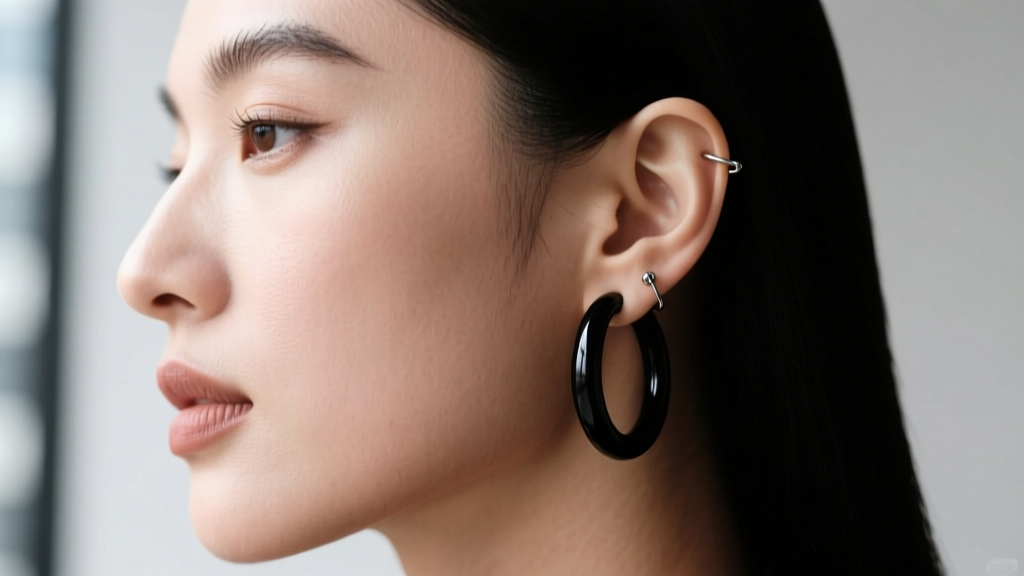
Wire gauge is equally critical. Standard lobe piercings are typically done at 20-gauge (0.81mm) or 18-gauge (1.02mm). If you are wearing your onyx hoops in a cartilage or helix piercing, you will likely need a thicker 16-gauge (1.29mm) or 14-gauge (1.63mm) wire to prevent the 'cheese-cutter effect,' where a thin wire slowly migrates through the tissue due to the weight of the stone.
Metal Pairings: What Works Best with Black Onyx?
Because black is a neutral, achromatic color, onyx pairs beautifully with almost any metal. However, the choice of metal drastically affects the overall aesthetic, durability, and price point of the earrings.
- 14k or 18k Yellow Gold: The warm, rich tones of yellow gold create a luxurious, vintage-inspired contrast against the cool, dark onyx. This is the most popular pairing for high-end statement hoops.
- White Gold or Platinum: For a sleek, monochromatic, and ultra-modern look, white metals blend seamlessly with the darkness of the stone. Platinum is highly recommended for those with severe metal allergies, as it is naturally hypoallergenic and will not require rhodium plating like white gold.
- Sterling Silver (925): The most budget-friendly option. While beautiful, silver is prone to tarnishing when exposed to moisture and sulfur in the air. If you choose silver onyx hoops, ensure they feature a high-quality rhodium flash to delay tarnishing.
Pricing Tiers: What Should You Expect to Pay?
The price of onyx hoop earrings varies wildly based on the metal used, the brand, and the complexity of the stone setting. Here is a realistic breakdown of what you can expect to spend in the current market.
| Tier | Material Profile | Estimated Price Range |
|---|---|---|
| Fashion / Entry-Level | Sterling silver, gold vermeil, glued stone settings | $35 - $85 |
| Semi-Fine / Everyday | Solid 10k or 14k gold, bezel-set stones, hinged closures | $120 - $350 |
| Fine / Designer | 18k gold, platinum, precision-cut inlays, branded craftsmanship | $450 - $1,500+ |
When shopping in the semi-fine tier, always look for bezel settings rather than prong settings. A bezel setting wraps a thin rim of metal entirely around the edge of the onyx, protecting the stone from chipping if the earring is dropped on a hard surface.
Lobe vs. Cartilage: Placement and Sizing
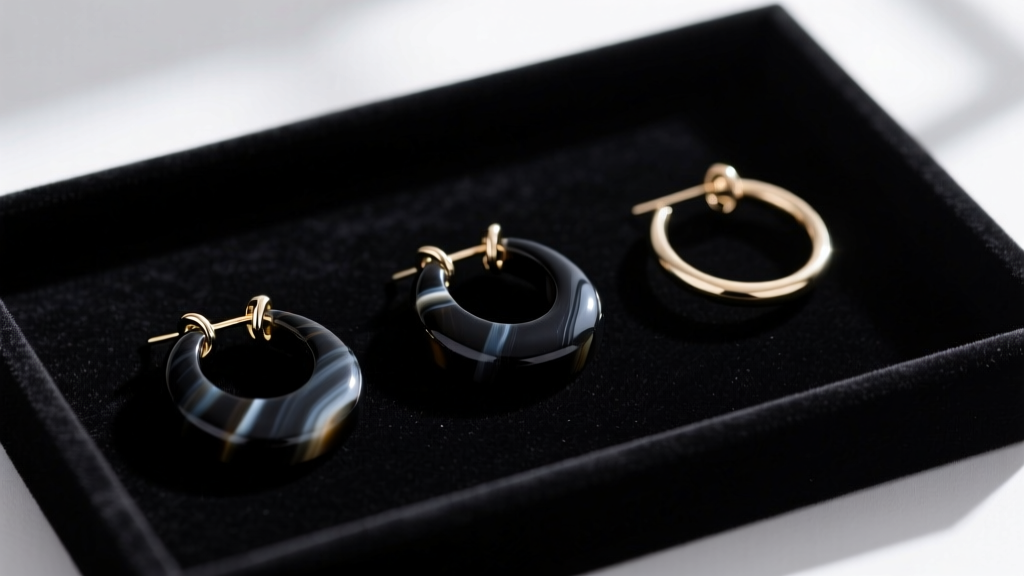
The diameter of your hoop dictates where it can comfortably sit on your ear. For standard earlobe piercings, a diameter between 20mm and 40mm is ideal for a classic, face-framing look. If you prefer a subtle, minimalist aesthetic, 'huggie' style hoops (10mm to 15mm) that hug the earlobe tightly are incredibly popular and allow the onyx to catch the light without dangling.
For cartilage piercings (such as the helix or tragus), sizing requires more precision. A hoop that is too small will put upward pressure on the piercing channel, leading to swelling and irritation bumps. A hoop that is too large will catch on hair and clothing. For most standard cartilage placements, an inner diameter of 8mm to 10mm is the sweet spot. Always measure your specific piercing placement with a digital caliper before purchasing cartilage hoops.
Care and Maintenance: Protecting Your Onyx
Despite its glassy luster, onyx requires specific care to maintain its deep black color and structural integrity. Because most black onyx is dyed, exposing the stones to harsh chemicals, extreme heat, or prolonged direct sunlight can cause the color to fade or the stone to become brittle.
Never place dyed onyx jewelry in an ultrasonic cleaner. The high-frequency vibrations and heated chemical baths can cause micro-fractures in the chalcedony and leach the dye, leaving you with a dull, grayish stone.
Instead, follow the GIA guidelines for gemstone care by using a mild, phosphate-free dish soap mixed with lukewarm water. Gently scrub the earrings with a soft-bristled baby toothbrush to remove sebum and skincare residue from the back of the stone and the hoop hinge. Rinse thoroughly and dry immediately with a microfiber cloth. Always store your onyx hoops in a soft pouch or a separate compartment in your jewelry box to prevent the metal from scratching the stone.
Final Thoughts
Onyx hoop earrings are a masterclass in understated elegance. By understanding the difference between natural and treated stones, selecting the correct wire gauge for your specific piercing, and pairing the stone with a high-quality metal, you can invest in a piece of jewelry that will last a lifetime. Whether you opt for a chunky 14k gold hinged hoop for your lobes or a delicate continuous wire for your helix, onyx remains a steadfast, sophisticated choice for any jewelry enthusiast.


