How to Organize Earrings: The Ultimate Storage Buying Guide
Discover the best ways to organize earrings. Our buying guide covers anti-tarnish materials, compartment sizing for studs to dangles, and top storage systems.

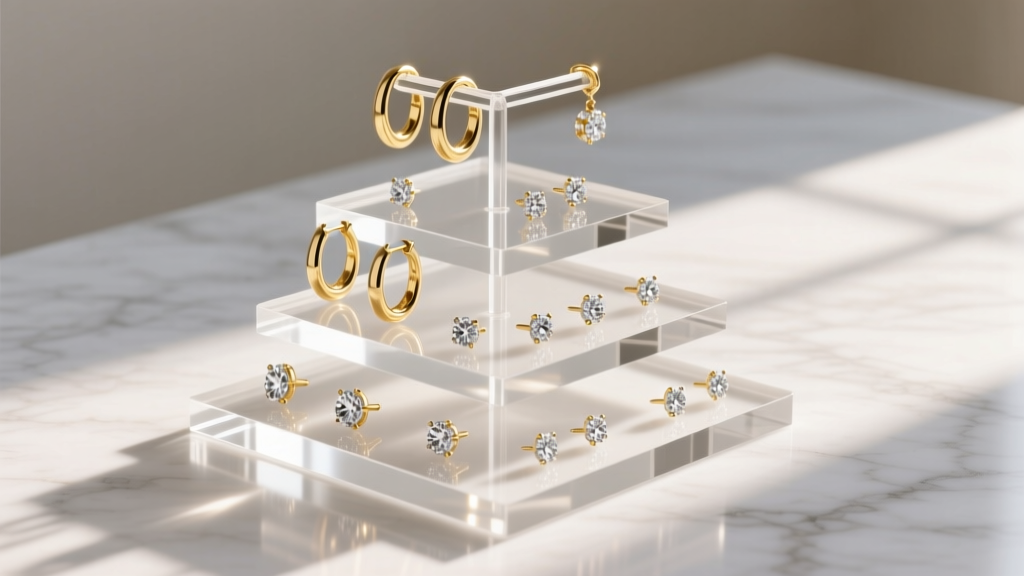
The Hidden Cost of Poor Earring Storage
Learning how to properly organize earrings is not merely an exercise in aesthetic tidiness; it is a critical preservation strategy for your fine jewelry. When earrings are tossed into a communal drawer or left dangling on a bathroom counter, they are exposed to a host of destructive elements. The most immediate casualty is often the earring back. Standard butterfly backs and silicone friction backs easily slip off when jumbled together, turning a prized pair of diamond studs into a frustrating single piece.
Beyond lost components, improper storage accelerates chemical degradation. Sterling silver, for instance, reacts with hydrogen sulfide in the ambient air to form silver sulfide, resulting in stubborn black tarnish. Furthermore, mixing different metals and gemstones in a single compartment can lead to galvanic corrosion in humid environments and severe physical scratching. According to the Gemological Institute of America (GIA), diamonds rank at a 10 on the Mohs hardness scale, meaning a loose diamond stud can easily scratch the polished surface of a 14k gold hoop or a softer gemstone like an opal or pearl if they are stored without individual barriers.
Material Matters: What Your Organizer is Made Of
When shopping for a system to organize earrings, the exterior material dictates the longevity of your collection. Not all organizers are created equal, and some materials can actually harm your jewelry over time.
Acrylic and Glass
Clear acrylic stackable trays (popularized by brands like Stackers) are excellent for visibility and maximizing drawer space. However, bare acrylic is unforgiving. If you slide 18k gold posts directly across hard acrylic, you risk micro-scratches. Always look for acrylic organizers that feature a velvet, microfiber, or silicone-lined base. Glass-topped wooden boxes offer similar visibility but are heavier and better suited for vanity tops rather than drawer inserts.
Velvet and Microfiber
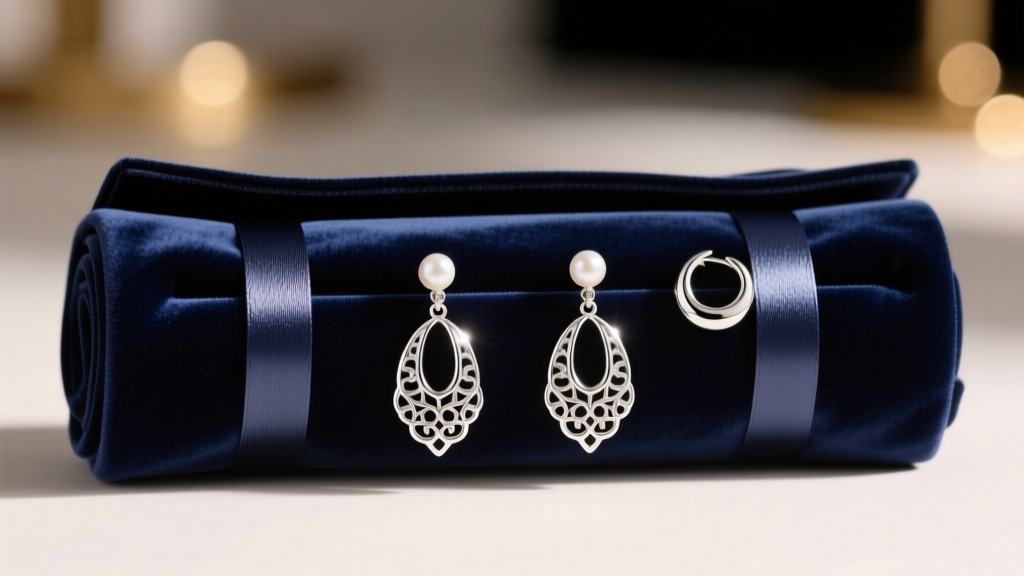
Velvet-lined wooden boxes or suede travel rolls provide the highest friction, ensuring that studs stay exactly where you place them. High-quality microfiber is also excellent for trapping dust and absorbing residual skin oils before they can oxidize on the metal. Ensure the velvet is dyed with non-acidic, jewelry-safe dyes, as cheap synthetic velvets can sometimes off-gas chemicals that accelerate tarnishing.
Treated Woods and Anti-Tarnish Tech
While a beautifully carved cedar or walnut jewelry box looks stunning, raw wood contains natural acids and moisture that can severely tarnish silver and copper alloys. If you prefer wood, ensure the interior is completely sealed with polyurethane or lined with treated anti-tarnish flannel. For ultimate protection, seek out organizers that include dedicated slots for 3M Anti-Tarnish Strips, which absorb airborne sulfur compounds.
Compartment Sizing: Matching Storage to Earring Style
The most common mistake buyers make is purchasing an organizer with uniform grid sizing. Earrings vary wildly in post thickness (gauge) and vertical drop. Standard earring posts are typically 20-gauge (0.81mm) or 18-gauge (1.02mm). However, cartilage earrings, novelty pieces, and some heavy statement studs utilize thicker 16-gauge (1.29mm) or even 14-gauge (1.63mm) posts. If your organizer relies on pre-drilled holes rather than open slots, ensure the holes are at least 1.5mm in diameter to accommodate thicker posts without bending them.
Below is a structural framework to help you match your collection to the right compartment dimensions:
| Earring Style | Min. Compartment Height | Post Hole/Slot Width | Best Organizer Type |
|---|---|---|---|
| Studs & Huggies | 0.5 - 1.0 inches | 1.0mm - 1.5mm | Shallow velvet grid trays with individual dividers |
| Standard Drops | 1.5 - 2.0 inches | Open slot or 1.5mm hole | Acrylic drawer inserts with removable dividers |
| Chandelier / Dangle | 3.0 - 5.0 inches | Open hook rack or wide slot | Hanging jewelry organizers or deep glass-lid boxes |
| Ear Cuffs & Cartilage | 0.5 inches | N/A (No post) | Small ring rolls or shallow pill-style compartments |
Top Storage Configurations for Different Collections
How you organize earrings should scale with the size and diversity of your collection. Here is how to approach the three main collector profiles.
The Minimalist (10-30 Pairs)
If you rotate a curated capsule collection of everyday studs and medium hoops, a single-tier, glass-topped wooden box or a compact leather valet tray is ideal. Look for a box with a removable velvet insert featuring a grid of 20 to 30 squares. This allows you to lay the box flat on your dresser, keeping your daily drivers visible and accessible without taking up excessive square footage.
The Collector (50-100+ Pairs)
For extensive collections, modular, stackable acrylic drawer systems are the gold standard. These allow you to dedicate specific tiers to specific styles: one drawer for 14k gold hoops, another for silver drops, and a deeper bottom drawer for statement dangles. When shopping for modular systems, verify that the stacking lips are at least 3mm deep to prevent the trays from sliding off one another when you pull them out of a drawer.
The Traveler
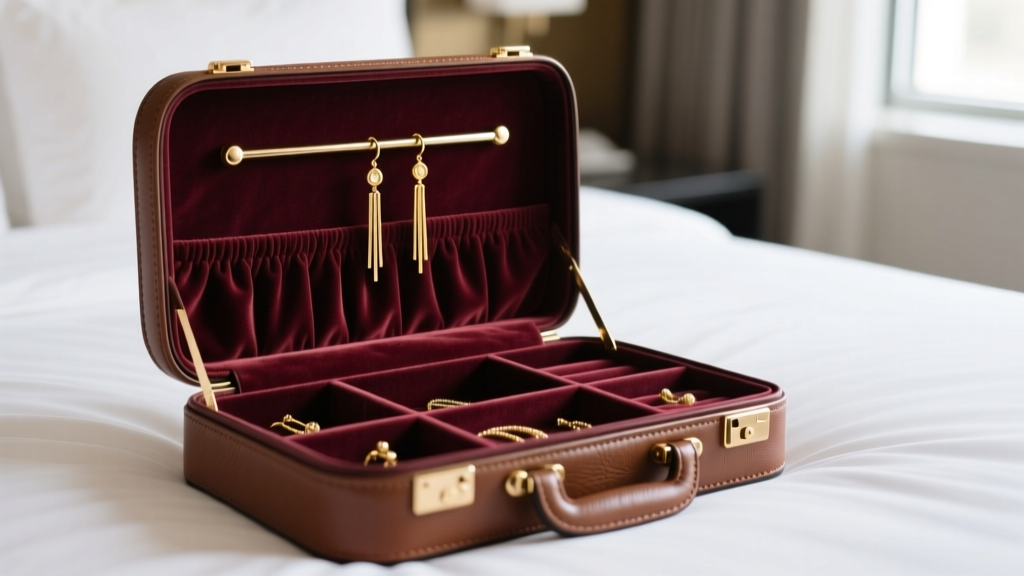
Traveling with earrings requires a completely different approach. Hard-shell jewelry cases or padded suede rolls are mandatory to prevent crushing. The best travel organizers feature a dedicated stud grid with a snap-down velvet flap to keep posts from piercing through the fabric, alongside a separate hanging section with elasticized pockets for dangles. Never pack loose earrings in a plastic zip-top bag, as the trapped humidity and friction will guarantee a tangled, tarnished mess upon arrival.
Pro Tips for Maintaining Your Organized Collection
Buying the right storage system is only half the battle. To maintain a pristine collection, implement these professional maintenance habits:
- Wipe Before Storing: Always wipe your earrings with a clean, lint-free microfiber cloth before putting them away. Removing lotion, perfume, and skin oils prevents the buildup of grime that attracts dust and accelerates tarnish.
- Upgrade Your Backs: Discard cheap metal butterfly backs that lose their tension over time. Invest in high-quality silicone friction backs or screw-backs for valuable studs. Silicone backs grip the post securely and are much easier to see if they fall onto a carpet.
- Rotate Anti-Tarnish Strips: If your organizer utilizes anti-tarnish strips, remember that they have a finite lifespan. Replace them every 6 to 12 months, or when the indicator window changes color, to ensure continuous protection against silver sulfide formation.
- Separate by Metal: Even in a well-organized drawer, try to keep sterling silver separated from yellow gold and copper. Storing dissimilar metals in close proximity, especially in humid climates, can trigger galvanic reactions that degrade the softer alloys.
"Proper jewelry storage is an investment in the longevity of the piece. Airtight environments combined with anti-tarnish materials can extend the time between necessary professional polishes by years, preserving the intricate milgrain and high-polish finishes that define fine craftsmanship." — Jewelers of America Care Guidelines.
Final Verdict: Investing in the Right System
Ultimately, the best way to organize earrings depends on your specific inventory and spatial constraints. For drawer-based organization, modular acrylic systems with velvet-lined inserts offer the best balance of visibility, protection, and scalability. For vanity-top storage, a sealed, glass-lidded wooden box with adjustable compartments provides an elegant, dust-free environment. By prioritizing jewelry-safe materials, correct gauge accommodations, and anti-tarnish technology, you transform your storage from a simple container into a preservation vault, ensuring your earrings remain as brilliant as the day you bought them.


