Oyster Shell Earrings: The Ultimate Buying Guide & Style Tips
Discover how to choose authentic oyster shell earrings. Our expert buying guide covers shell types, hypoallergenic metals, and construction methods.

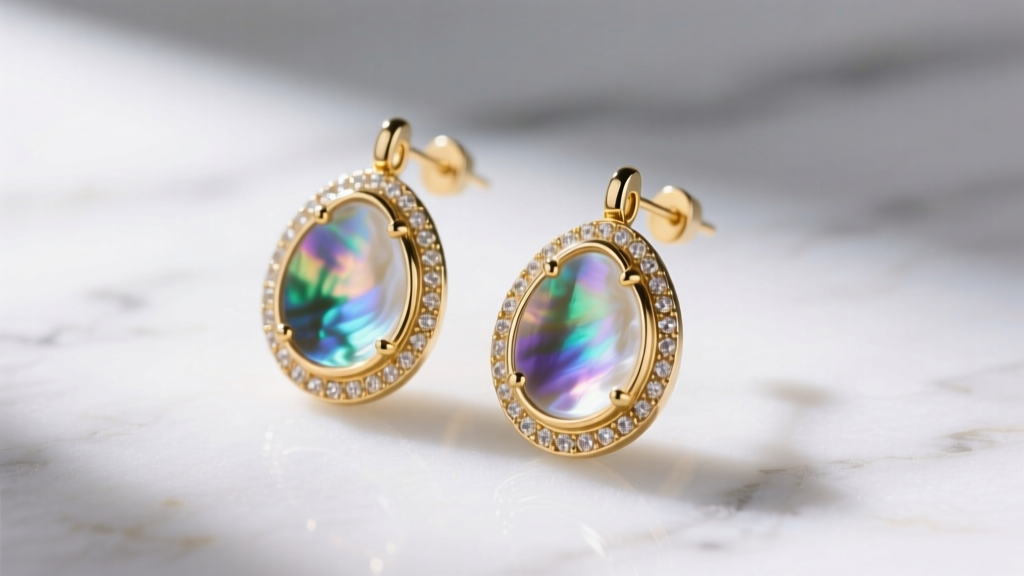
The Allure of Oyster Shell: Beyond Basic Beachwear
In the 2026 jewelry market, organic and sustainably sourced materials have completely eclipsed mass-produced synthetics. Among these, oyster shell earrings have graduated from seaside souvenir shops to the displays of high-end artisanal jewelers. The appeal is undeniable: each piece of shell possesses a unique, unrepeatable pattern of nacre, calcification, and natural iridescence. However, this surge in popularity has also flooded the market with mislabeled materials, poorly constructed hardware, and fragile novelty pieces that degrade within weeks.
If you are investing in oyster shell earrings, you need to look past the aesthetic and examine the metallurgy, the biological origin of the shell, and the structural integrity of the setting. This comprehensive buying guide will equip you with the exact specifications and material grades required to make an informed, investment-grade purchase.
Decoding Shell Varieties: What You Are Actually Buying
The term 'oyster shell' is frequently misused in the jewelry industry to describe any iridescent shell material. True oyster shell and Mother of Pearl (nacre) are related but distinctly different in appearance, durability, and value. According to the Gemological Institute of America (GIA), nacre is the iridescent inner layer of certain mollusk shells, but the exterior and structural composition vary wildly by species.
Pinctada Maxima (South Sea Pearl Oyster)
This is the premium tier. Earrings crafted from the inner shell of the Pinctada maxima exhibit the thick, highly reflective nacre commonly known as Mother of Pearl. The layers of aragonite platelets and conchiolin protein create a deep, mirror-like iridescence. These shells are dense, relatively shock-resistant, and take a high polish. Expect to pay a premium ($80 to $300+) for artisanal pieces using this material.
Crassostrea Gigas (Pacific Oyster)
Often used in rustic, bohemian, or 'raw' jewelry designs, the Pacific oyster shell features a chalky, matte exterior with subtle, localized flashes of iridescence on the interior. It is more porous and brittle than Pinctada. While beautiful for its rugged, organic texture, it requires more careful handling and protective bezel settings to prevent chipping.
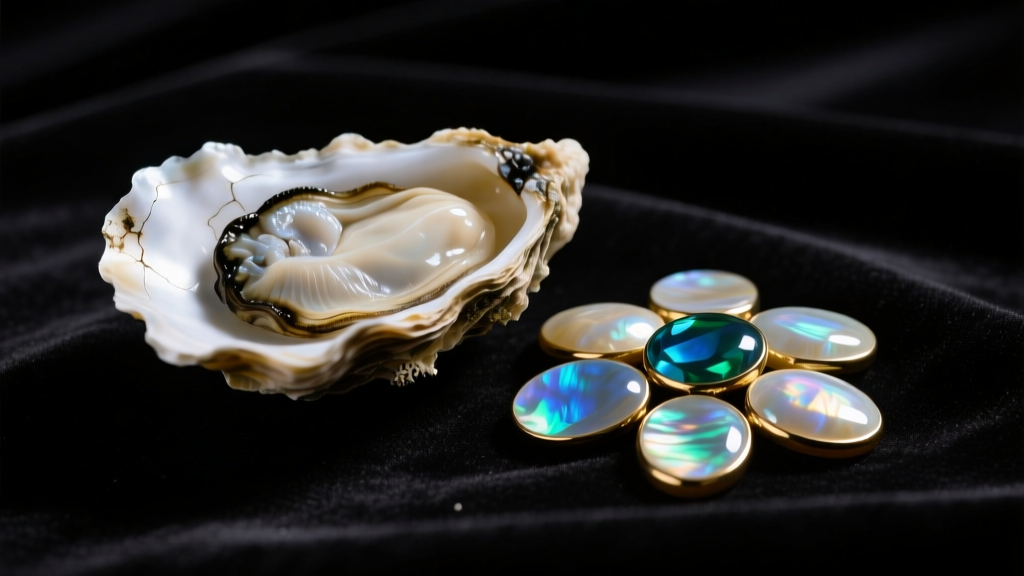
Hardware & Hypoallergenic Standards: The Hidden Dealbreakers
The most common failure point in organic jewelry is not the shell itself, but the metal hardware holding it. Oyster shell is micro-porous. If sweat, sebum, and cosmetics become trapped between the shell and a cheap base-metal backing, it creates a breeding ground for bacteria and accelerates metal oxidation. This not only causes contact dermatitis but can permanently stain the porous edges of the shell.
Mandatory Metal Grades
- ASTM F136 Grade 23 Titanium: The absolute gold standard for sensitive ears. It is entirely nickel-free and biocompatible. If you have a history of metal allergies, ensure the post is specifically stamped or certified as Grade 23 (Ti-6Al-4V ELI).
- 14k or 18k Solid Gold: Excellent for luxury pieces. Ensure it is nickel-free (alloyed with silver, copper, or palladium). Avoid gold-plated brass, as the plating will eventually wear off, exposing the reactive brass underneath.
- 316L Surgical Steel: A budget-friendly alternative, but be aware that it contains trace amounts of nickel. While generally safe for healed lobes, it is not recommended for fresh piercings or severe nickel allergies. For more on metal-induced skin reactions, refer to the American Academy of Dermatology (AAD).
Post Gauge and Length
Standard lobe piercings require an 18-gauge (1.0mm) or 20-gauge (0.8mm) post. Avoid 22-gauge (0.6mm) wire for heavy shell dangles; the thin wire will bend under the weight of the shell and can cause the 'cheese-cutter effect,' slowly migrating through the earlobe tissue over time. For heavier statement pieces, look for 16-gauge (1.2mm) posts or omega-back clip-ons that distribute the weight across the entire earlobe.
Construction Methods: Glue vs. Mechanical Settings
How the shell is attached to the metal dictates the lifespan of the earring. Skin oils, perfumes, and humidity are the natural enemies of chemical adhesives. When evaluating oyster shell earrings, always inspect the junction where the shell meets the metal.
| Construction Method | Durability & Lifespan | Price Range | Best Use Case |
|---|---|---|---|
| Cyanoacrylate (Super Glue) | Poor (Months). Degrades rapidly with moisture and skin oils. Prone to sudden snapping. | $10 - $35 | Occasional wear, fast fashion, dry climates only. |
| Two-Part Epoxy Resin | Moderate (1-3 Years). Flexible and water-resistant, but yellows over time and weakens with perfume exposure. | $30 - $80 | Mid-range artisanal jewelry, moderate daily wear. |
| Bezel / Channel Setting | Excellent (Lifetime). Metal is physically folded over the shell edges. No adhesives used. | $90 - $350+ | Heirloom pieces, daily wear, high-end investment jewelry. |
| Prong Setting | Very Good (Lifetime). Metal claws grip the shell. Allows maximum light entry for iridescence but requires occasional prong tightening. | $75 - $250 | Intricate cabochon cuts, maximizing nacre flash. |
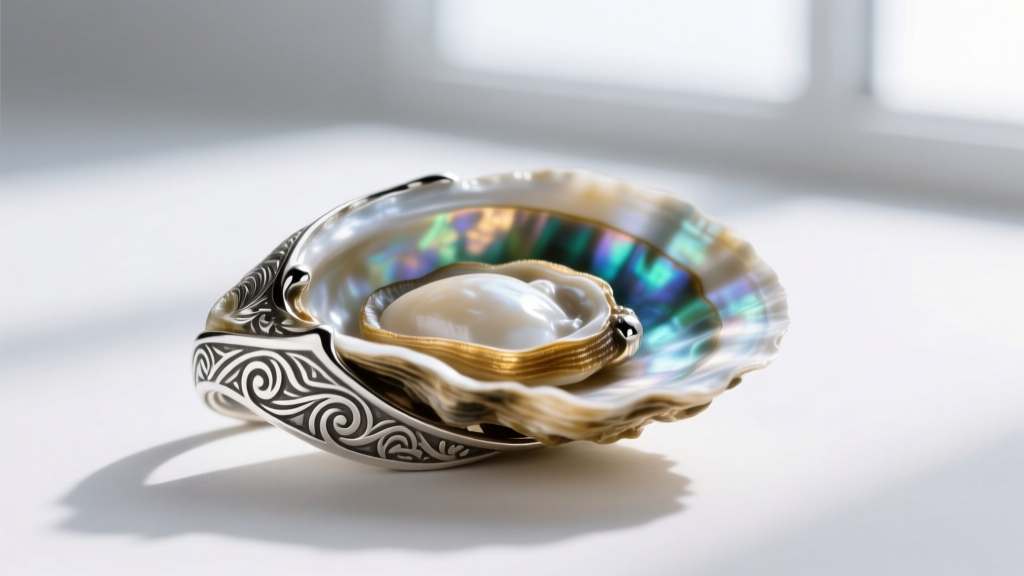
Expert Tip: Turn the earring over and look at the back of the setting. If you see a thick, cloudy glob of adhesive seeping out from the edges of the shell, put it back. High-quality jewelers use mechanical settings or precisely applied, invisible UV-cured resins that leave no residue.
Styling Framework: Matching Shell Cuts to Face Shapes
Oyster shell is uniquely versatile because it can be carved into precise geometric shapes or left in raw, organic fragments. Use the following framework to select the most flattering silhouette for your face shape:
- Round Faces: Opt for angular, geometric shell cuts such as hexagons, marquise, or elongated rectangular drops. The sharp lines of the carved shell provide structural contrast to soft facial curves. Avoid small, round shell studs, which will exaggerate roundness.
- Square Faces: Choose curved, asymmetrical, or raw organic shell drops. The fluid, natural lines of an unpolished Pacific oyster shell fragment will soften a strong jawline. Hoops featuring inlaid Mother of Pearl are also highly complementary.
- Oval Faces: You have the most versatility. Geometric shell studs balance facial length, while dramatic, oversized shell chandeliers can serve as a striking focal point without overwhelming your proportions.
- Heart-Shaped Faces: Teardrop or pear-shaped shell dangles are ideal. They mimic and gently echo the natural taper of the jawline, drawing the eye downward and balancing a wider forehead.
Care, Maintenance, and Preventing Delamination
Oyster shell is an organic composite of calcium carbonate (aragonite) and a protein matrix called conchiolin. This biological makeup requires specific care protocols to prevent delamination (the peeling apart of nacre layers) and permanent discoloration.
What to Avoid
Never place oyster shell earrings in an ultrasonic cleaner. The high-frequency acoustic cavitation creates microscopic shockwaves that shatter the delicate aragonite platelets, causing the shell to look cloudy and fractured internally. Similarly, avoid steam cleaners, which can melt epoxy adhesives and force moisture between the nacre layers.
The Proper Cleaning Routine
- After wearing, gently wipe the shell with a dry, clean microfiber cloth to remove sebum and cosmetic residue.
- For deeper cleaning, use a slightly damp cloth with a drop of mild, pH-neutral castile soap. Do not soak the earrings.
- Buff dry immediately with a soft cotton towel.
- Store in a dark, climate-controlled jewelry box. Prolonged exposure to direct UV radiation will degrade the conchiolin protein, causing the once-iridescent white shell to turn a brittle, permanent yellow.
By prioritizing biological authenticity, hypoallergenic metallurgy, and mechanical construction, you can curate a collection of oyster shell earrings that are not only visually captivating but engineered to last a lifetime.


