Paloma Picasso Earrings: Materials, Auth & Wear Guide
An expert technical deep dive into Paloma Picasso earrings, covering 18k gold vs sterling silver metallurgy, authentication markers, and wear failure modes.

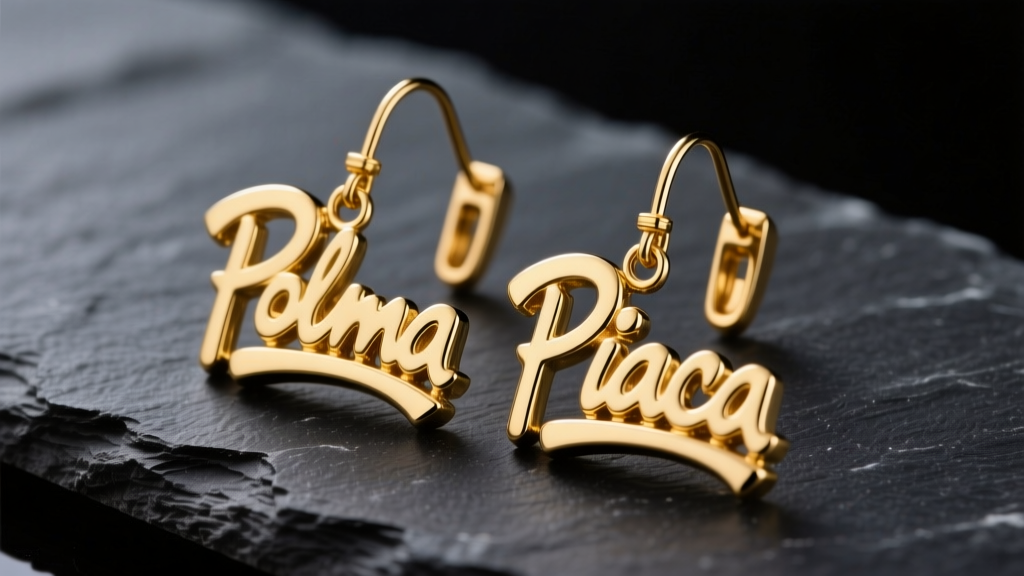
The Engineering Behind Paloma’s Iconic Silhouettes
Paloma Picasso’s tenure at Tiffany & Co., beginning in 1980, fundamentally shifted the trajectory of modern fine jewelry. While her bold, graphic designs—most notably the Graffiti, Loving Heart, and Olive Leaf collections—are celebrated for their aesthetic bravery, they also present unique metallurgical and structural challenges. For the serious collector or the prospective buyer navigating the secondary market, understanding the technical execution of Paloma Picasso earrings is just as critical as appreciating their design. This guide deconstructs the material science, manufacturing techniques, authentication markers, and long-term wearability of her most iconic ear adornments.
Metallurgy: 18k Gold vs. Sterling Silver Integrity
The foundation of any Paloma Picasso earring lies in its base metal. Tiffany & Co. strictly utilizes .925 sterling silver and 18k gold (stamped 750) for her primary collections. However, the structural behavior of these two metals varies drastically under the stress of daily wear.
The Yield Strength of 18k Gold Alloys
Paloma’s 18k yellow and rose gold earrings are alloyed to achieve a specific Vickers hardness, typically ranging between 120 and 150 HV depending on the exact copper-to-silver ratio. This alloying is crucial for the Graffiti collection, where the sharp, sweeping script requires a metal that can hold a crisp edge without deforming. According to the Gemological Institute of America (GIA), 18k gold offers an optimal balance between the malleability of pure gold and the tensile strength required for structural jewelry components. In heavier drop earrings, such as the large Graffiti script hoops, the 18k alloy prevents the post from warping under the lever-back's tension.
Sterling Silver and Oxidation Management
Tiffany’s sterling silver is stamped 925, indicating 92.5% pure silver and 7.5% copper. The copper provides necessary rigidity but introduces a vulnerability: oxidation. In the Olive Leaf collection, the deep, organic crevices of the cast silver are intentionally left unpolished to create contrast, but these same recesses act as traps for sulfur compounds in the environment, accelerating tarnish. Unlike gold, silver earrings from these lines require rigorous maintenance, often necessitating professional ultrasonic cleaning to remove embedded particulates without abrading the high-polish outer surfaces.
Manufacturing Techniques: Die-Struck vs. Lost-Wax Casting
To fully grasp the wear profile of Paloma Picasso earrings, one must understand how they are formed. The manufacturing method dictates the metal's grain structure and, consequently, its durability.
- Die-Striking (The Graffiti Line): Many of the sharp, angular components in the Graffiti collection are die-struck. This process involves forcing a sheet of gold or silver between two hardened steel dies under immense pressure. The resulting compression aligns the metal’s crystalline grain structure, making the earring significantly denser and more resistant to impact damage than cast equivalents.
- Lost-Wax Casting (The Olive Leaf & Dove Lines): Organic, textured designs are typically cast. Molten metal is poured into a plaster mold created from a wax original. While this captures microscopic textural details, cast metal is inherently more porous and slightly softer than die-struck metal. This makes cast earrings more susceptible to micro-fractures if dropped on hard surfaces.
Authentication Markers: Deconstructing the Hallmarks
The secondary market for vintage Tiffany jewelry is saturated with high-quality counterfeits. Authenticating Paloma Picasso earrings requires looking beyond the basic logos and examining the precision of the metalwork and stamping. The Federal Trade Commission’s Guides for the Jewelry Industry mandate strict adherence to purity marking, which counterfeiters often fail to replicate accurately.
The Anatomy of a Genuine Stamp
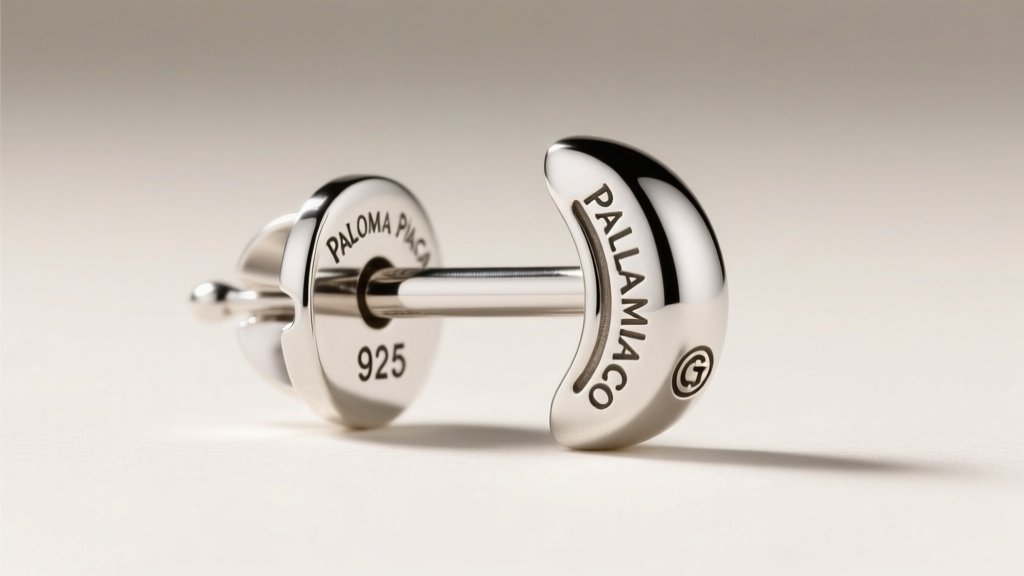
Authentic Paloma Picasso earrings will feature a specific sequence of hallmarks, usually located on the earring post, the butterfly backing, or a discrete flat plane on the earring body. The standard sequence includes:
- Copyright Symbol (©): Present on designs created after 1979.
- Designer Signature: "Paloma Picasso" in her distinct, flowing script. On fakes, the kerning between the 'P' and 'i' is often too tight, and the loop of the 'P' lacks the fluid taper of the genuine engraving.
- Brand Mark: "Tiffany & Co." Counterfeits frequently use laser etching for this mark, which appears shallow and uniformly dark. Genuine marks are deeply die-stamped or hand-engraved, showing crisp, polished walls inside the lettering.
- Purity Mark: "750" for 18k gold or "925" for sterling silver.
Expert Tip: Examine the friction post (the metal pin that goes through the ear). Genuine Tiffany posts are machined to exact tolerances, usually 0.8mm to 0.9mm in diameter, and feature a distinct, clean notch for the butterfly clutch to grip. Counterfeit posts are often extruded wire, lacking the notch and feeling overly smooth or rough.
Common Failure Modes & Restoration Protocols
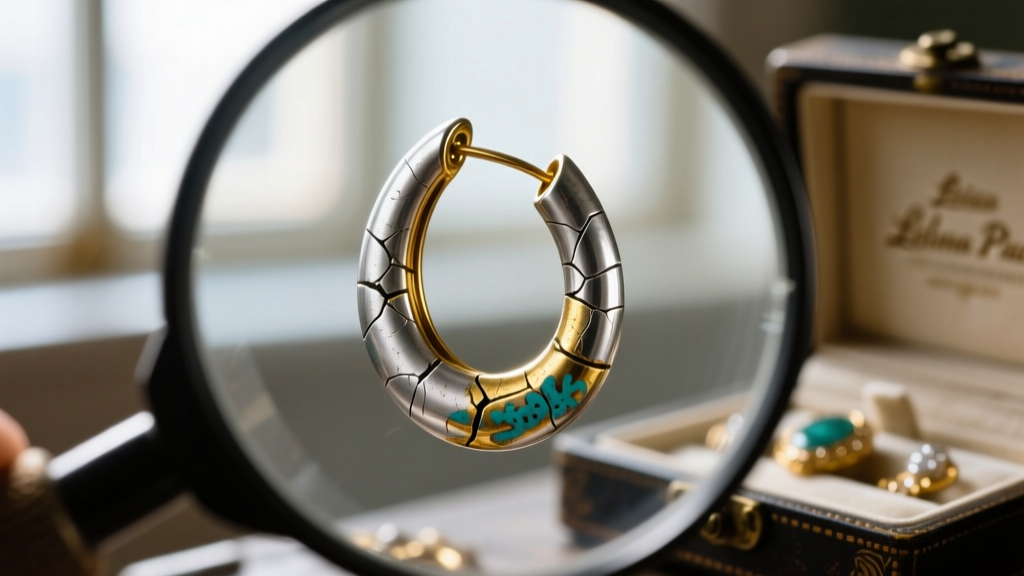
Even masterfully crafted jewelry is subject to the physics of daily wear. Below is a technical breakdown of the most common structural failures specific to Paloma Picasso earrings and their required restoration protocols.
| Collection | Common Failure Mode | Technical Cause | Restoration Protocol & Est. Cost |
|---|---|---|---|
| Graffiti Script | Loop deformation / Snagging | Die-struck wire loops catching on textiles, exceeding the alloy's yield strength. | Laser welding and reshaping on a steel mandrel. ($85 - $150) |
| Olive Leaf | Post shearing | Heavy cast body creating a lever-arm effect, fatiguing the solder joint at the post base. | Re-soldering using high-temperature hard solder; adding a structural gusset. ($120 - $200) |
| Loving Heart | Bezel wall wear / Stone loss | Abrasion against hair and clothing wearing down the soft 18k gold bezel lip over years. | Bezel re-tipping or laser deposition of new gold alloy over the stone edge. ($150 - $250) |
For detailed care instructions and official repair routing, collectors should always consult the Tiffany & Co. Care and Repair portal before attempting third-party restorations, as unauthorized polishing can erase the crisp hallmarks and diminish the piece's archival value.
2026 Market Pricing & Value Retention
As of 2026, the market for Paloma Picasso earrings has bifurcated into two distinct tiers: contemporary retail and archival vintage. The shift toward sustainable luxury has driven up the premium on well-preserved vintage pieces from the 1980s and 1990s, particularly those featuring discontinued gemstone combinations (such as lapis lazuli or black onyx inlays in the Graffiti line).
- Entry-Level Sterling Silver: Small Graffiti studs or simple Loving Heart silver drops typically trade between $250 and $450 on the secondary market, representing a 30-40% discount from retail.
- Mid-Tier 18k Gold: Standard 18k gold Olive Leaf or medium Graffiti hoops command $1,200 to $2,800, holding their value exceptionally well due to the intrinsic gold weight and enduring design appeal.
- Archival / High Jewelry: Rare, large-scale 18k gold earrings featuring pavé diamonds or colored tourmalines from her early 1980s debut collections frequently exceed $15,000 at auction, prized by serious design historians.
Expert Verdict on Long-Term Wearability
Paloma Picasso earrings are not merely decorative objects; they are feats of mid-century modern design translated into precious metals. From a technical standpoint, her 18k gold die-struck pieces offer superior longevity and structural integrity compared to the heavier, cast sterling silver alternatives. However, the true value of these earrings lies in their uncompromising geometry. When purchasing, prioritize pieces with pristine, deeply stamped hallmarks and original friction backings. By understanding the metallurgical realities and respecting the maintenance requirements of her specific collections, collectors can ensure these iconic designs remain structurally sound and visually striking for generations to come.
"The boldness of Paloma's lines demands an equally uncompromising approach to metallurgy. A Graffiti earring is only as strong as the alloy that holds its sharpest angle." — Master Jeweler's Bench Notes.


