Can You Wear Earrings in a Passport Photo? Material Guide
Wondering if you can wear earrings in a passport photo? Discover how metal reflectivity and gemstone refraction impact biometric approval.

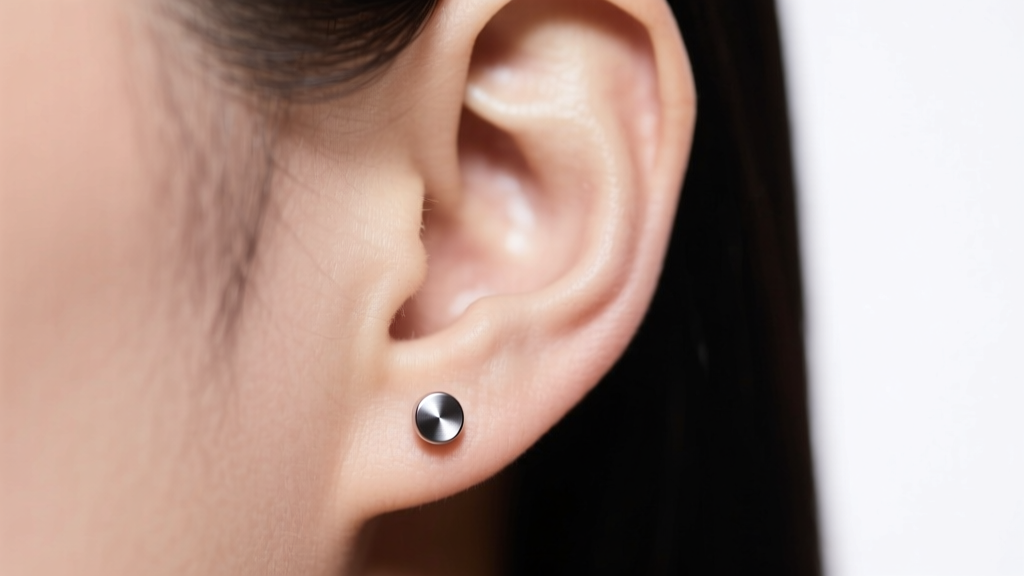
When preparing for a passport renewal or application, a common question arises: can you wear earrings in a passport photo? The short answer is yes, but with critical caveats. While global authorities do not explicitly ban earrings, the material properties of your chosen jewelry can easily cause your photo to be rejected. Flash glare, refractive starbursts, and biometric distortion are all tied directly to the metallurgy and gemology of your earrings.
As a jewelry material specialist, I will break down exactly how metal finishes, gemstone refractive indices, and earring density interact with passport photo booth cameras and biometric scanning software, ensuring your application is approved on the first try.
The Official Rules: State Department & ICAO Guidelines
According to the U.S. Department of State, jewelry is permitted in passport photos as long as it does not obscure your face, hairline, or the natural contour of your ears. Similarly, the International Civil Aviation Organization (ICAO), which sets global standards for machine-readable travel documents (Doc 9303), mandates that facial features and biometric markers must remain entirely unobstructed and free from artificial light reflections.
The rejection of photos due to jewelry usually stems from three material failures: specular reflection (glare), optical refraction (starbursts), and gravitational distortion (lobe drooping). Understanding these material properties is the key to selecting passport-safe earrings.
Why Material Properties Dictate Passport Photo Success
1. Specular Reflection and Metal Finishes
Passport photo booths utilize harsh, direct flash photography. Metals with high specular reflectivity will bounce this light directly back into the lens, creating a white-out glare that can obscure the tragus, anti-helix, or jawline.
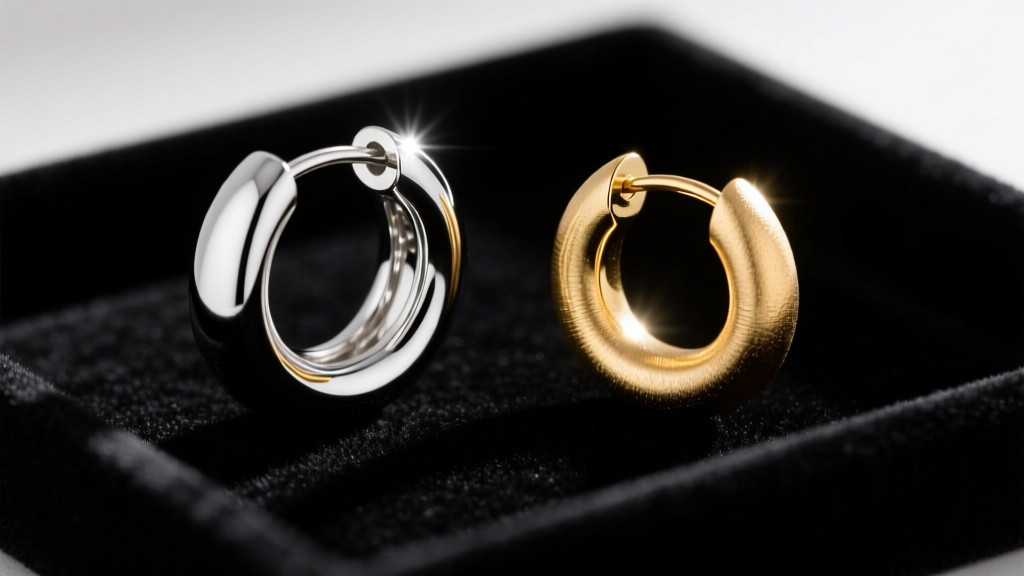
- High-Polish 925 Sterling Silver & Platinum: These metals can reflect up to 95% of incident light. A high-polish silver hoop earring acts like a curved mirror, almost guaranteeing a glare-induced rejection.
- Brushed or Matte Titanium (ASTM F136): Implant-grade titanium with a sandblasted or brushed finish scatters light (diffuse reflection). Its lower albedo and textured surface absorb and disperse flash, making it one of the safest metals for official documentation.
- Satin-Finished 14k/18k Gold: A satin or hammered finish breaks up the surface area, reducing direct flash bounce while maintaining a premium aesthetic.
2. Refractive Index (RI) and Gemstone Starbursts
If you prefer gemstone studs, you must consider the material's Refractive Index (RI). The RI measures how much light bends and bounces inside the stone. High-RI stones catch the camera flash and project a "starburst" effect that can blind the camera sensor or cast sharp shadows across the cheek.
- Moissanite (RI 2.65) & Diamond (RI 2.42): These high-dispersion materials are notorious for creating intense light flares under direct flash. Avoid wearing brilliant-cut diamonds or moissanite studs larger than 3mm.
- Cubic Zirconia (RI 2.15): Still highly reflective, though slightly less dispersive than diamond. Best avoided in faceted cuts.
- Opaque Cabochons (Turquoise, Jade, Onyx): With an RI typically below 1.70 and zero light transmission, opaque stones absorb light rather than refracting it. A 4mm turquoise cabochon stud is virtually invisible to flash glare.
3. Density, Weight, and Biometric Distortion
Advanced border control systems increasingly use ear morphology (the unique shape and folds of your ear) as a secondary biometric identifier. Heavy earrings made from dense materials can physically pull the earlobe downward, altering the geometric distance between the intertragic notch and the earlobe apex.
Materials like solid tungsten or heavy 18k gold drops (exceeding 5-7 grams per earring) can cause temporary lobe distortion. For passport photos, stick to low-density materials or ultra-lightweight hollow constructions that weigh less than 3 grams per ear to maintain your natural biometric contour.
Material Comparison Chart: Passport-Safe vs. High-Risk
| Material / Stone | Finish / Cut | Glare Risk | Biometric Risk | Passport Verdict |
|---|---|---|---|---|
| ASTM F136 Titanium | Matte / Sandblasted | Very Low | None | Highly Recommended |
| 925 Sterling Silver | High Polish | Extreme | Low | Avoid |
| 14k Yellow Gold | Brushed / Satin | Low | None | Safe |
| Diamond / Moissanite | Brilliant Faceted | High (Starburst) | None | Avoid (>3mm) |
| Turquoise / Jade | Opaque Cabochon | None | None | Highly Recommended |
| 316L Stainless Steel | Polished Hoop | Moderate | Moderate (Weight) | Proceed with Caution |
Top 3 Passport-Safe Earring Styles & Materials
If you are wondering what specific pieces to wear to the post office or photo studio, here are the top three material and style combinations that guarantee compliance:
- 3mm Matte Titanium Ball Studs (20g or 18g): The ultimate passport earring. The matte finish eliminates glare, the 3mm size sits flush against the lobe without obscuring the ear canal, and the lightweight nature prevents lobe drooping. This is also the safest option if you are dealing with a fresh piercing and cannot remove your jewelry.
- Flush-Set Bezel Huggies in Satin Gold: If you prefer hoops, choose a small huggie (under 12mm diameter) crafted in 14k gold with a satin finish. The bezel setting ensures no prongs catch the light, and the tight fit prevents the earring from swinging into the frame or casting shadows on the neck.
- Low-Profile Enamel or Resin Studs: High-quality vitreous enamel or matte-finish acrylic resin offers zero light reflection. A simple black or navy enamel stud provides a clean, professional look that will never trigger a flash-glare rejection.

Troubleshooting: Fresh Piercings and Healing Jewelry
A frequent dilemma occurs when applicants have fresh lobe or cartilage piercings and are strictly forbidden from removing their jewelry. In these cases, material selection is a matter of both medical necessity and bureaucratic compliance.
Healing piercings require implant-grade materials to prevent rejection or infection. Fortunately, ASTM F136 Grade 23 Titanium, the gold standard for initial piercings, is naturally conducive to passport photos. Ensure your piercer has fitted you with a flat-back labret with a matte or anodized finish rather than a high-polish mirror finish. Anodizing titanium (which changes its color via an oxide layer) naturally dulls the reflectivity of the metal, making a dark grey or deep blue anodized titanium stud incredibly safe for flash photography.
Avoid healing with glass or high-polish steel if your passport appointment is imminent, as glass can create internal reflections, and polished steel acts as a mirror under studio lights.
Final Verdict & Expert Preparation Tips
So, can you wear earrings in a passport photo? Absolutely. However, treating your jewelry selection as a material science problem rather than a fashion choice will save you from the frustration of a rejected application.
Expert Checklist for Photo Day:
- Swap out high-polish silver or platinum for brushed gold, matte titanium, or opaque stones.
- Remove any dangles, chandeliers, or heavy drop earrings that exceed 4 grams to preserve your natural ear morphology for biometric scanners.
- Ensure no part of the earring extends beyond the natural outline of your ear or casts a shadow on your jawline.
- If using a photo booth, wipe your earrings with a microfiber cloth beforehand to remove skin oils, which can increase surface reflectivity and exacerbate glare.
By respecting the optical and physical properties of your jewelry materials, you can maintain your personal style while ensuring your passport photo meets the strictest international biometric standards.


