Silver Shrimp Earrings: 2026 Surrealist Coastal Trend
Discover why silver shrimp earrings are dominating 2026's surrealist coastal trend. Explore styling, silver grades, and gauge mechanics.

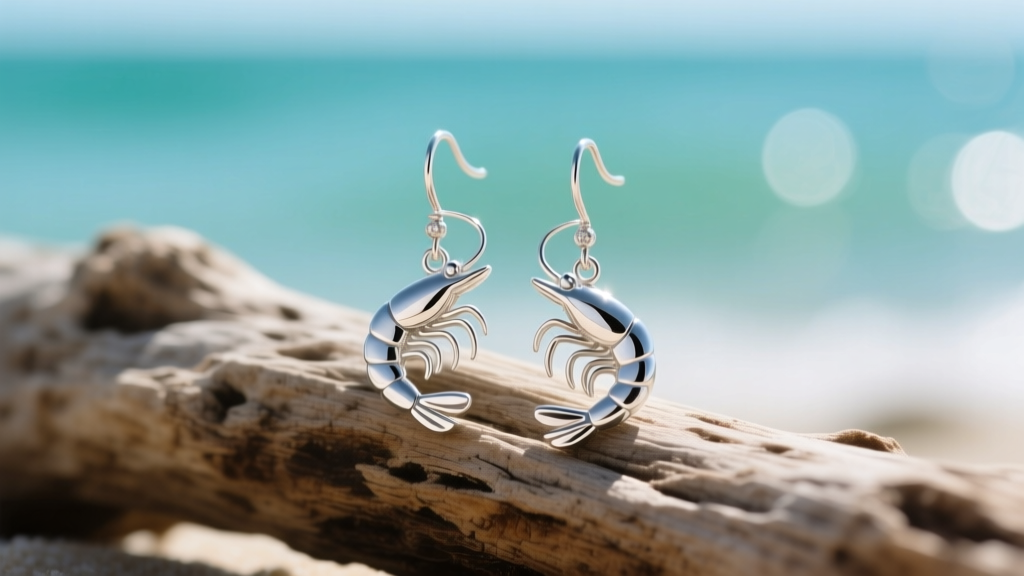
The jewelry landscape of 2026 has taken a decisive turn toward the eccentric, leaving behind the minimalist aesthetics of the early 2020s in favor of bold, narrative-driven pieces. At the forefront of this movement is the "Coastal Eccentric" trend, a sophisticated evolution of mermaidcore that embraces surrealism and marine biology. The undisputed breakout star of this aesthetic? Silver shrimp earrings. Once relegated to quirky novelty shops, the shrimp motif has been elevated by independent jewelers and high-end designers alike, transforming into a symbol of surrealist luxury. This comprehensive style and trend analysis breaks down why this crustacean is dominating ear curation, the metallurgical realities of wearing silver in coastal environments, and the precise mechanics required to make these intricate pieces function flawlessly.
The Rise of Surrealist Seafood in 2026
The transition from generic shell and starfish motifs to highly specific marine life like the shrimp reflects a broader consumer demand for hyper-niche personalization. According to trend forecasters, the modern jewelry consumer is seeking conversation starters that blend organic forms with high-end metallurgy. The shrimp, with its segmented exoskeleton, sweeping antennae, and delicate swimmerets, offers a masterclass in natural articulation. Designers are leaning into the surrealist legacy of Elsa Schiaparelli, applying hyper-realistic, almost scientific illustration techniques to precious metals. Wearing silver shrimp earrings is no longer a kitschy statement; it is an appreciation for biological geometry and avant-garde styling.
Material Breakdown: Choosing the Right Silver
When investing in marine-themed jewelry, the choice of silver alloy is critical. Coastal environments, high humidity, and exposure to salt air accelerate the oxidation process. Not all silver is created equal, and understanding the grading is essential for longevity.
| Silver Type | Composition | Tarnish Resistance | Best Use Case |
|---|---|---|---|
| 925 Sterling Silver | 92.5% Silver, 7.5% Copper | Low (Prone to sulfide tarnish) | Occasional wear, climate-controlled environments |
| Argentium Silver | 93.5%+ Silver, Germanium | High (Highly tarnish-resistant) | Daily wear, coastal climates, low-maintenance buyers |
| Silver-Plated Brass | Brass core, microscopic Ag layer | Very Low (Wears off quickly) | Fast fashion, short-term trend chasing |
| Rhodium-Plated 925 | 925 Silver coated in Rhodium | Medium (Until plating wears) | High-shine finishes, formal coastal events |
For authentic, long-lasting silver shrimp earrings, The Silver Institute recommends seeking out Argentium silver or heavily rhodium-plated 925 sterling. The germanium in Argentium forms a protective oxide layer that dramatically slows down the blackening effect caused by sulfur and salt, making it the superior choice for a motif inspired by the sea.
Manufacturing Depth: Lost-Wax Casting vs. CAD
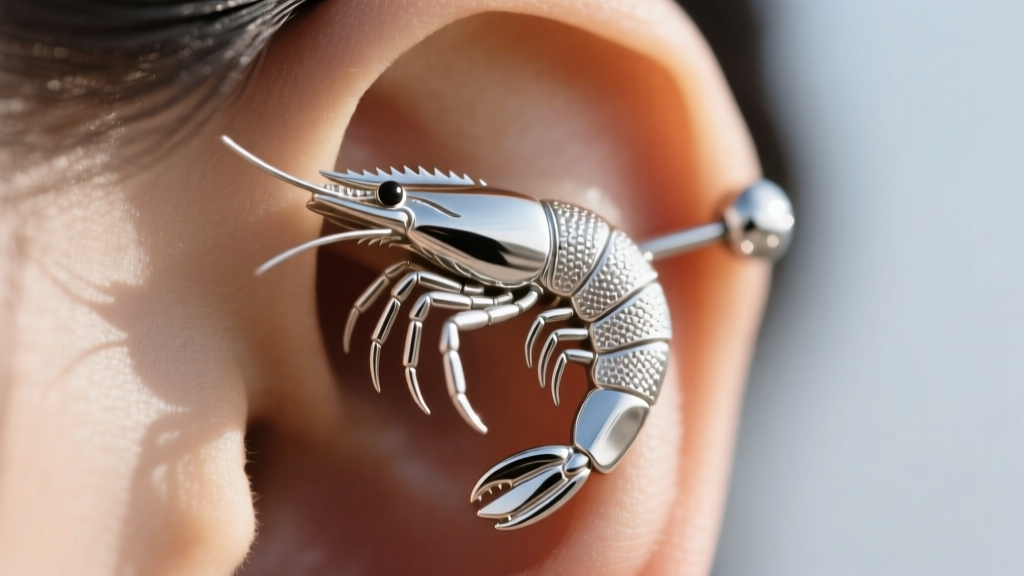
The intricate anatomy of a shrimp—specifically the overlapping carapace and the fragile walking legs—requires advanced manufacturing techniques. Mass-market producers often use basic CAD (Computer-Aided Design) milling, which can result in stiff, blocky segments that lack organic flow. Conversely, artisan jewelers utilize the traditional lost-wax casting method. By hand-carving or 3D-printing a high-resolution wax model, the jeweler captures the microscopic ridges of the shrimp's shell. When the wax is burned out in a kiln and replaced with molten silver, the resulting casting retains a lifelike flexibility and visual weight that flat, stamped alternatives simply cannot achieve. According to the Gemological Institute of America (GIA), the quality of the final polish and the precision of the casting dictate the light return and overall brilliance of the silver piece.
Gauge Sizing and Clasp Mechanics
A beautifully sculpted shrimp earring will fail if the structural engineering is ignored. The unique shape of a shrimp presents a specific challenge regarding the center of gravity.
The Dangle Dilemma: Fishhook vs. Leverback
Because a shrimp's body naturally curves, a heavy silver shrimp dangle will often flip upside down if hung on a standard 20-gauge fishhook wire. The center of gravity pulls the curved tail forward, causing the earring to invert. To combat this, expert jewelers utilize leverback clasps or weighted French wires. A leverback provides a rigid, fixed point of connection that keeps the shrimp oriented correctly, while a weighted wire adds a small silver bead at the back of the earlobe to counterbalance the heavy crustacean head.
Cartilage and Helix Placements
For cartilage piercings, such as the helix or tragus, the shrimp motif is typically adapted into a flat-back stud or a cuff. These require a thicker post to prevent the "cheese-cutter effect" (where thin wire slowly migrates through the cartilage). Always opt for a 16-gauge (1.2mm) or 14-gauge (1.6mm) titanium or implant-grade silver post for cartilage, even if the decorative shrimp face is soldered from standard sterling silver.
Face Shape & Styling Matrix
Styling silver shrimp earrings requires an understanding of facial proportions and visual weight. The highly textured, segmented nature of the shrimp draws the eye, making placement crucial.
- Round Faces: Opt for elongated, linear shrimp dangles where the crustacean is stretched vertically. The sweeping lines of the antennae and the vertical drop will elongate the jawline and neck.
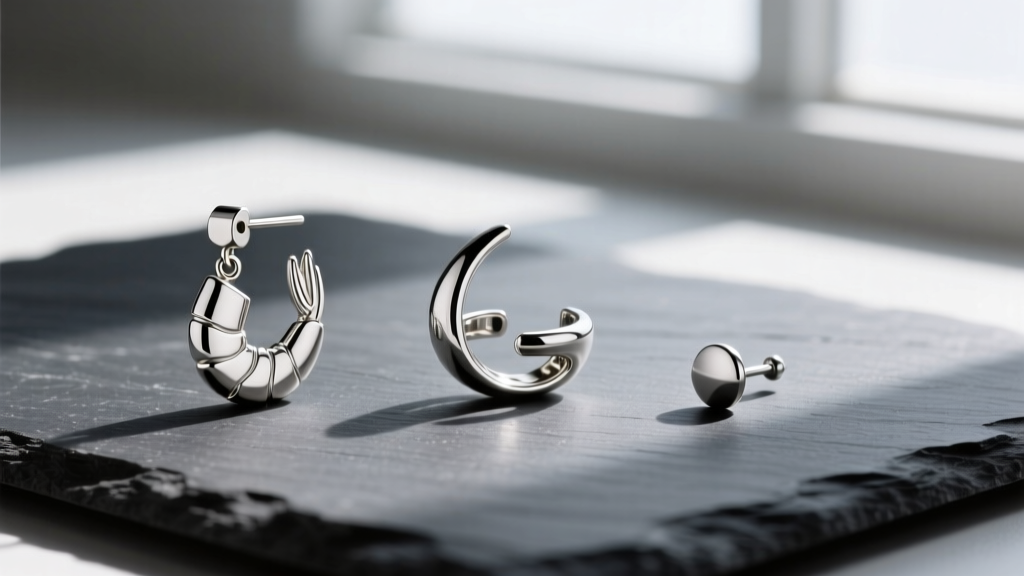
- Square Faces: Choose C-shaped shrimp huggies or curved studs that wrap around the earlobe. The organic curve of the shrimp's body softens strong, angular jawlines.
- Oval Faces: You have the versatility to pull off the avant-garde "mismatched" look. Pair a large, detailed shrimp dangle on one lobe with a minimalist silver stud on the other.
- Heart Faces: Teardrop-shaped designs work best. Look for earrings where the shrimp is curled tightly into a ball or teardrop shape, adding visual width to the lower half of the face to balance a wider forehead.
Price Tiers: What Should You Pay?
The market for silver shrimp earrings is segmented by manufacturing quality and brand prestige. Understanding these tiers prevents overpaying for mass-produced items.
Tier 1: Mass Market ($25 - $45)
Typically cast from low-resolution molds, often silver-plated brass or thin 925 sterling. Details like the swimmerets and antennae are often blurred or omitted. Clasps are usually standard fishhooks that may invert.
Tier 2: Indie Artisan & Small Batch ($60 - $140)
The sweet spot for quality. These are usually lost-wax cast in solid 925 or Argentium silver. You will see hand-set gemstone eyes (like black spinel or tsavorite), articulated joints, and secure leverback clasps.
Tier 3: High-End Designer ($250 - $600+)
Avant-garde pieces from established surrealist jewelry houses. These feature mixed metals (e.g., oxidized silver with 18k gold accents), pavé diamond detailing along the carapace, and bespoke, engineered clasps.
Care and Tarnish Prevention
It is a cruel irony that jewelry inspired by the ocean is easily destroyed by it. Saltwater and silver are not friends. The chloride ions in sea salt accelerate the corrosion of the copper alloyed within sterling silver. If you wear your silver shrimp earrings to the beach, they must be immediately rinsed in fresh, distilled water and dried with a microfiber cloth upon returning home.
"The key to preserving high-detail silver jewelry is minimizing friction and chemical exposure. Store intricate pieces like shrimp motifs in individual anti-tarnish flannel pouches to prevent the delicate antennae from snagging and bending."
For routine maintenance, avoid harsh liquid silver dips, which can strip the oxidized patina that artisans use to highlight the deep grooves of the shrimp's shell. Instead, use a soft-bristled horsehair brush and a mild, phosphate-free dish soap to gently lift oils and lotions from the intricate segments, preserving the three-dimensional contrast of the metal.


