Pearl Grape Cluster Earrings: The 2026 Botanical Jewelry Trend
Discover the 2026 trend of pearl grape cluster earrings. Expert analysis on wire-wrapping, pearl grading, weight distribution, and styling.

The Renaissance of Botanical Motifs in 2026
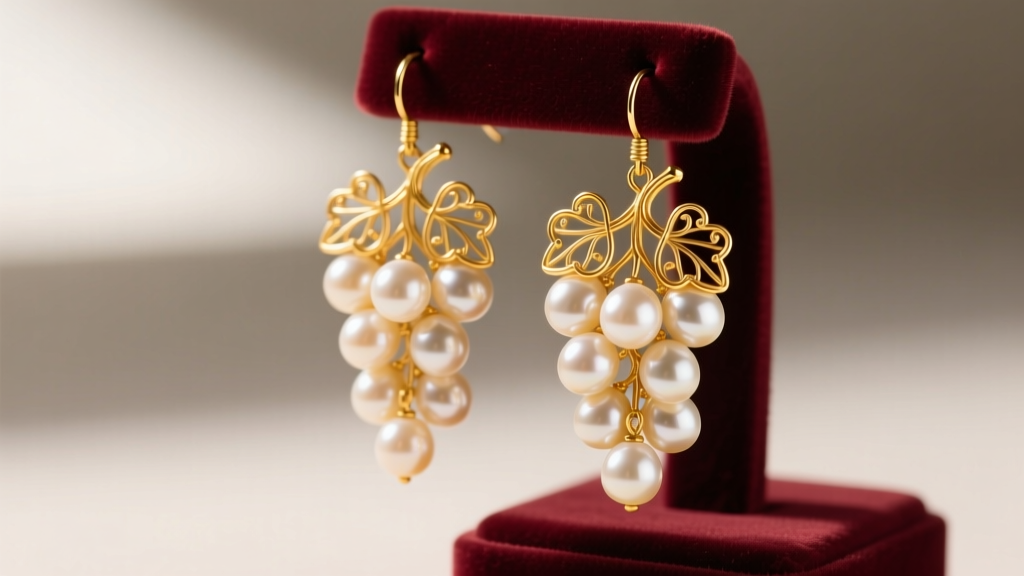
As we navigate the jewelry landscape of 2026, the industry is witnessing a massive resurgence in botanical and Dionysian motifs, with pearl grape cluster earrings emerging as a definitive statement piece. Moving away from the ultra-minimalist, single-pearl studs that dominated the early 2020s, designers are now embracing texture, volume, and organic asymmetry. The grape cluster design—featuring cascading bunches of small pearls bound by intricate metalwork—bridges the gap between vintage Art Nouveau revivalism and modern organic luxury.
This trend is not merely aesthetic; it represents a shift in consumer demand toward artisanal craftsmanship. Buyers are increasingly looking for pieces that demonstrate visible structural artistry, such as hand-wrapped wire stems and mixed-metal accents. However, the complex architecture of clustered pearl earrings introduces unique challenges regarding weight distribution, lobe health, and material longevity. In this comprehensive style and trend analysis, we deconstruct the anatomy, market pricing, and structural engineering behind the pearl grape cluster phenomenon.
Anatomy of Pearl Grape Cluster Earrings
The visual success of a grape cluster earring relies entirely on the interplay between the pearl grading and the metal framework. Unlike traditional drop earrings that rely on a single focal gemstone, cluster earrings require uniformity in luster and color across dozens of individual pearls.
Pearl Grading and Sizing in Cluster Designs
Authentic grape cluster designs typically utilize seed pearls or small round freshwater pearls ranging from 3.0mm to 5.5mm in diameter. According to the Gemological Institute of America (GIA), evaluating these smaller pearls requires strict attention to luster and surface quality. Because the pearls are tightly packed, surface blemishes are magnified by the shadows cast by neighboring stones.
- AAA Grade Freshwater: The industry standard for high-end 2026 clusters. These 4.0mm pearls exhibit sharp, mirror-like luster and are 95% blemish-free, ensuring the cluster catches light uniformly.
- Baroque Clusters: A rising sub-trend utilizing 3.5mm to 5.0mm baroque (irregularly shaped) freshwater pearls. This creates a more rugged, hyper-realistic "wild vine" aesthetic, highly favored by avant-garde designers.
- Akoya Seed Pearls: Rarely used in large clusters due to cost, but 3.0mm Akoya pearls are occasionally deployed in luxury tiers for their unmatched, deep-mirror luster.
Metal Frameworks: Wire-Wrapped vs. Cast Settings
The structural integrity of the "stem" holding the pearls is where mass-market and artisanal pieces diverge. Based on engineering guidelines from Rio Grande Jewelry Supplies, the choice of wire gauge dictates the earring's lifespan.
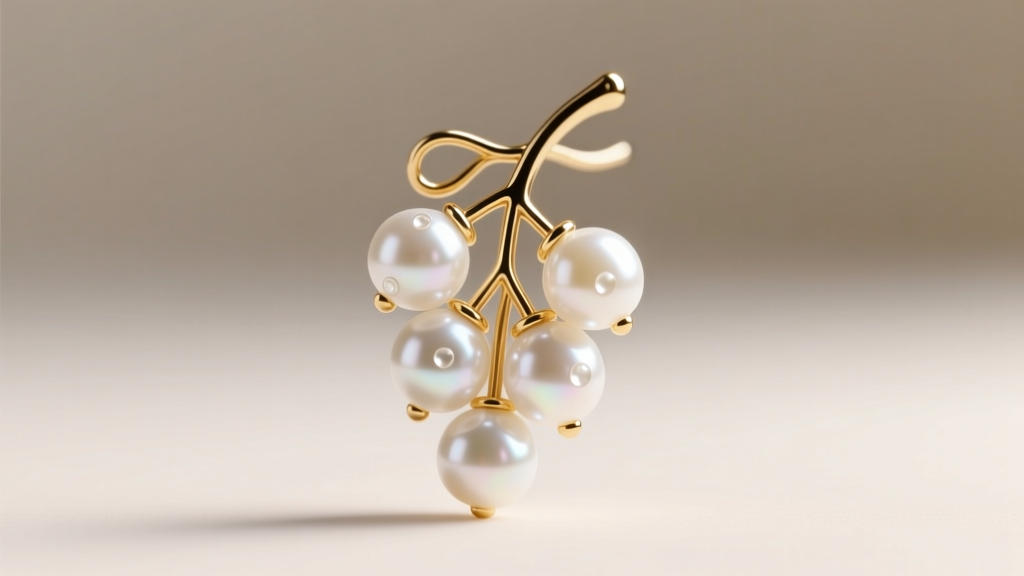
Artisanal wire-wrapped clusters utilize a dual-gauge system. The main structural stem is forged from 20-gauge half-hard wire (typically 14k gold-filled or solid 14k gold), providing the tensile strength needed to support the cluster without bending. The individual pearls are then secured using 24-gauge dead-soft wire, which is pliable enough to wrap tightly around the 3.0mm pearls without cracking their nacre. Conversely, mass-produced cast settings often suffer from porosity and excessive weight, leading to a high failure rate at the post joint.
Weight, Gauge, and Ear Lobe Health
The most common point of failure for pearl grape cluster earrings is not the metalwork, but the wearer's earlobe. A fully realized, 2.5-inch cascading cluster earring featuring forty 4.0mm freshwater pearls and a 14k gold wire framework can easily weigh between 9 to 14 grams per earring. Standard earring posts and flimsy butterfly backs are structurally incapable of supporting this mass, resulting in the "droop effect" where the earring pulls forward, obscuring the design and stretching the piercing.
Expert Fitting Tip: Never pair a heavy grape cluster earring with a standard 22-gauge post and friction back. The thin post will eventually warp under the pendulum stress of daily movement.
Engineering the Perfect Support System
To counteract the gravitational pull of a multi-pearl cluster, the earring must be engineered with specific support mechanisms:
- Post Gauge: The main post piercing the ear should be a minimum of 18-gauge (1.0mm thick), or ideally 16-gauge (1.2mm thick) for clusters exceeding 12 grams.
- La Pousette Backs: Also known as butterfly locking clutches, these feature a mechanical locking system that grips the post's groove, preventing the heavy cluster from slipping off and distributing weight across a wider surface area on the back of the lobe.
- Silicone O-Ring Stabilizers: For wire-wrapped designs that utilize a hook rather than a post, adding a 3mm silicone stopper behind the lobe prevents the hook from sliding forward, keeping the grape cluster oriented correctly.
Market Pricing and Authenticity Matrix
The 2026 market is flooded with varying tiers of pearl grape cluster earrings, from fast-fashion imitations to heirloom-quality bespoke pieces. Understanding the material composition is critical for accurate valuation.
| Material Tier | Pearl Type | Metal Framework | Price Range (USD) | Longevity & Risk Factors |
|---|---|---|---|---|
| Fast Fashion | Glass or Shell Pearl (Coated) | Brass with thin gold plating | $25 - $60 | High risk of coating peeling; wire stems snap easily. |
| Mid-Tier Artisan | AA+ Round Freshwater (3-4mm) | 14k Gold-Filled (20g/24g wire) | $120 - $280 | Excellent daily wear; gold-filled wire resists tarnish. |
| Heirloom / Luxury | AAA Akoya or Gem-Grade Freshwater | Solid 14k/18k Gold, Cast & Hand-Set | $850 - $2,500+ | Generational lifespan; requires professional prong/wire maintenance. |
Styling Framework: Face Shapes and Occasions
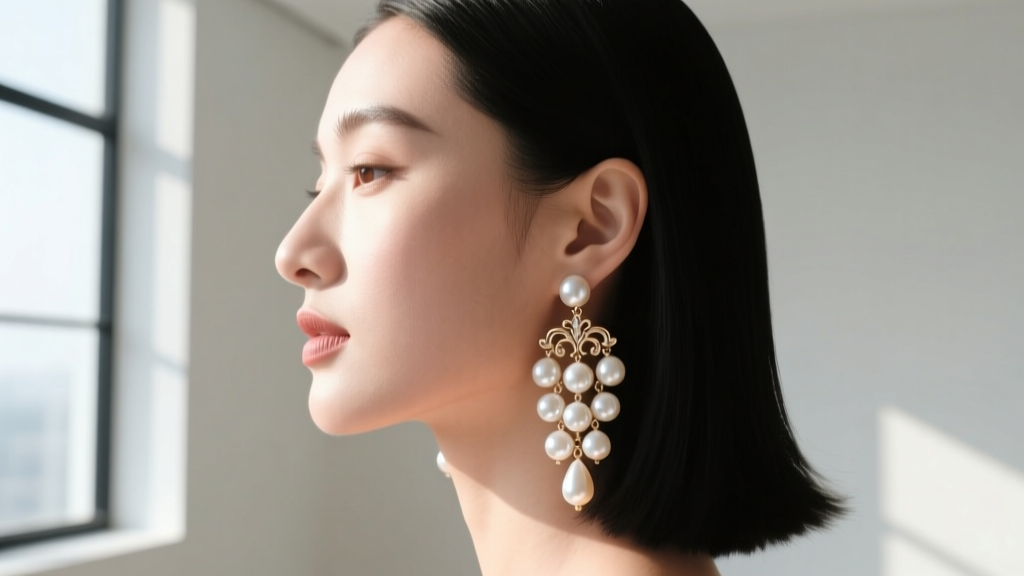
Because pearl grape cluster earrings possess significant visual volume and physical weight, they must be styled with intentionality. The cascading nature of the grape motif creates a strong vertical line, which can be used to manipulate facial proportions.
Matching Clusters to Face Shapes
- Round Faces: Opt for elongated, narrow grape clusters that drop 2 to 3 inches below the lobe. The verticality draws the eye downward, creating a slimming, lengthening effect. Avoid wide, circular bunching near the cheekbone.
- Square Faces: Choose clusters that feature softer, rounded baroque pearls with a wider, more voluminous "bunch" at the bottom. The organic curves of the baroque pearls soften sharp jawlines and angular features.
- Heart-Shaped Faces: Select inverted or teardrop-shaped clusters that are wider at the top (near the lobe) and taper down to a single pearl. This balances a wider forehead and narrower chin.
Occasion and Wardrobe Pairing
In 2026, the styling paradigm for botanical jewelry has shifted from strictly formal to high-low versatility. Pearl grape clusters are no longer reserved for evening galas. Pairing a mid-tier 14k gold-filled cluster with a crisp, oversized white button-down and tailored denim creates a striking juxtaposition between organic romanticism and modern utility. For evening wear, clusters featuring diamond-accented "leaves" or vine accents elevate the design into black-tie territory.
Care and Maintenance for Multi-Pearl Clusters
The intricate topography of a grape cluster earring makes it a magnet for cosmetic buildup. Pearls are organic gemstones with a Mohs hardness of just 2.5 to 4.5, making them highly susceptible to chemical damage from perfumes, hairsprays, and acidic skin oils.
The Crevices Problem
The primary failure mode in cluster maintenance is the accumulation of lotions and dead skin cells in the tight interstitial spaces between the 4.0mm pearls. Over time, this buildup creates an acidic micro-environment that degrades the wire wrapping and dulls the pearl's nacre.
Step-by-Step Cleaning Protocol
- Dry Dusting: After every wear, use a clean, dry makeup brush to gently sweep out the crevices between the pearls, removing loose dust and skin cells.
- Targeted Washing: Once a month, use a soft-bristled baby toothbrush dipped in a solution of distilled water and a single drop of pH-neutral castile soap. Gently agitate the spaces between the pearls.
- Rinsing and Drying: Rinse briefly under lukewarm distilled water. Crucially, use a hair dryer on the cool, low-air setting to completely dry the wire stems. Trapped moisture on gold-filled or silver wire will cause rapid oxidation and verdigris.
Warning: Never place pearl grape cluster earrings in an ultrasonic cleaner. The high-frequency vibrations will shatter the delicate 24-gauge wire wraps and strip the orient from the pearl nacre.
Final Verdict on the Grape Cluster Trend
The pearl grape cluster earring is far more than a fleeting seasonal fad; it is a masterclass in structural jewelry design that demands both artisanal skill and wearer awareness. As 2026 solidifies the return to maximalist, nature-inspired aesthetics, investing in a structurally sound, properly gauged cluster piece offers a unique blend of historical romance and contemporary edge. By prioritizing AAA-grade pearls, 20-gauge structural stems, and appropriate lobe support mechanisms, collectors can ensure their botanical treasures remain as vibrant and secure as the day they were crafted.


