Best Earrings Pink Flower Styles: A Comprehensive Buying Guide
Discover our expert buying guide for earrings pink flower designs. Learn about hypoallergenic metals, enamel vs. gemstone options, and sizing tips.

The Allure of Floral Ear Jewelry
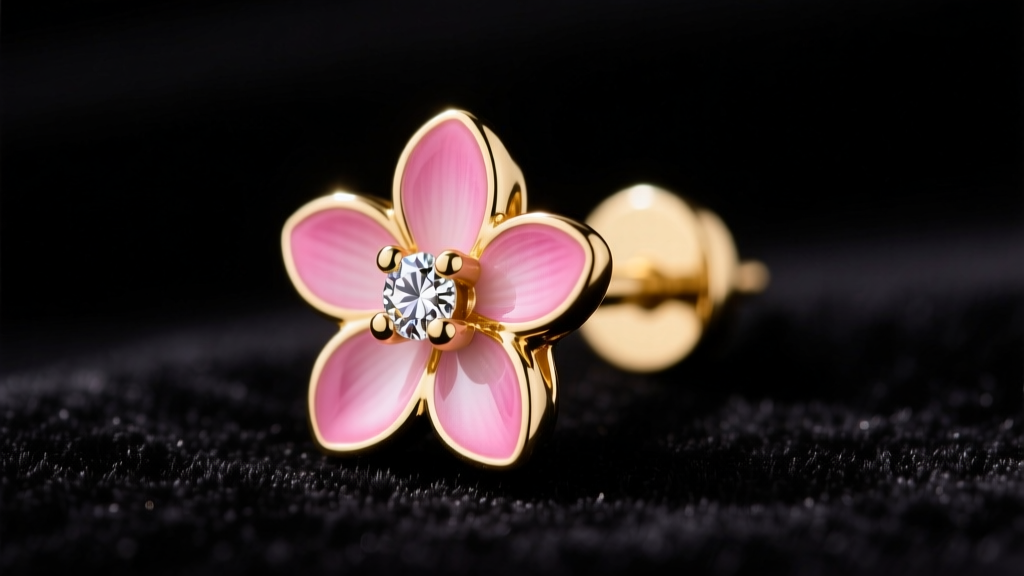
When curating a romantic or nature-inspired jewelry collection, the search for the perfect earrings pink flower design is a common pursuit. Floral motifs have remained a staple in jewelry design for centuries, but pink variations offer a unique blend of softness, versatility, and femininity. Whether you are looking for a subtle stud for everyday wear or a dramatic dangle for evening events, understanding the material composition, structural integrity, and sizing of floral ear jewelry is critical. This comprehensive buying guide will walk you through the exact specifications, material grades, and ergonomic considerations you need to make an informed purchase in 2026 and beyond.
Material Breakdown: How Pink Petals Are Crafted
The visual impact of a floral earring relies heavily on how the pink coloration is achieved. The three primary methods are vitreous enamel, cold enamel (resin), and gemstone inlay, each with vastly different durability profiles and price points.
Vitreous Enamel vs. Cold Enamel
Vitreous enamel is created by fusing powdered glass to a metal substrate at extreme temperatures (typically over 1,380°F). The result is a brilliant, scratch-resistant pink finish that will not yellow or fade over time. However, it has a Mohs hardness of around 5 to 6, meaning it can chip or crack if dropped on a hard surface. Cold enamel, conversely, is an epoxy resin poured into metal recesses. While it is more shatter-resistant and significantly cheaper, it is prone to micro-scratches and UV-induced yellowing after 3 to 5 years of regular wear.
Gemstone Alternatives
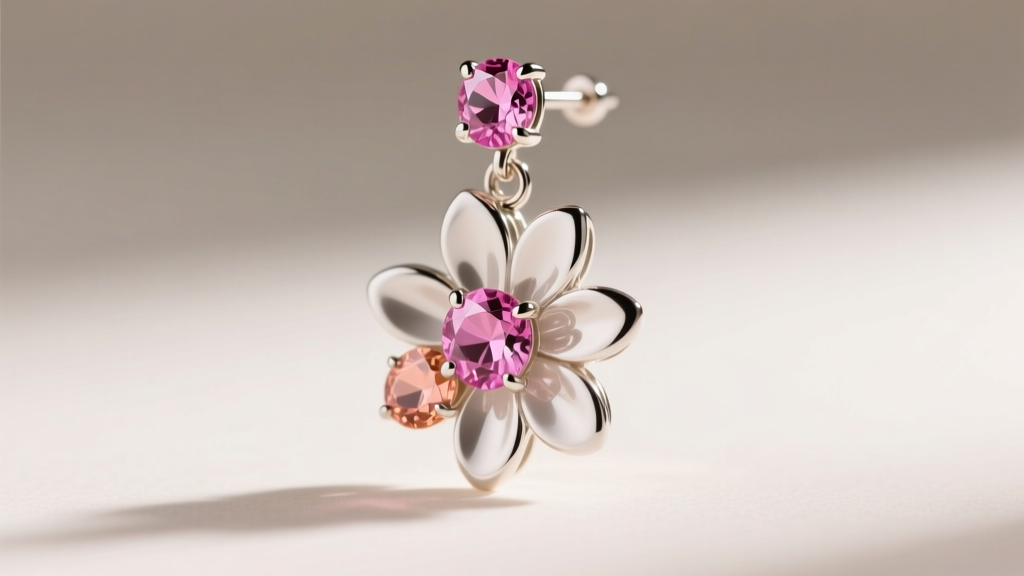
For heirloom-quality floral earrings, jewelers rely on precision-cut gemstones to form petals. Pink sapphires (Mohs 9) offer exceptional scratch resistance and brilliant light return, making them ideal for intricate, multi-petal floral clusters. Morganite (Mohs 7.5 to 8) provides a softer, peach-pink hue and is often cut into larger, singular petal shapes. According to the Gemological Institute of America (GIA), while both stones are suitable for daily wear, morganite's distinct cleavage planes make it slightly more susceptible to chipping from hard impacts than sapphire.
Metal Bases and Hypoallergenic Requirements
The post and backing of your floral earrings are just as important as the decorative front. Because floral designs often feature wider surface areas, the post must be robust enough to support the weight without bending. Standard 20-gauge (0.81mm) posts are common for lightweight studs, but for larger enamel or gemstone flowers, an 18-gauge (1.02mm) or even 16-gauge (1.29mm) post provides necessary structural rigidity.
Furthermore, metal allergies are a primary cause of earring rejection and contact dermatitis. The Mayo Clinic notes that nickel is the most common culprit in jewelry allergies. When buying pink flower earrings, insist on ASTM F136 implant-grade titanium for the post, or solid 14k/18k gold that is guaranteed nickel-free. Avoid 'gold-plated' or 'gold-filled' floral earrings if you have sensitive skin, as the thin outer layer will eventually wear through to the base metal, which often contains nickel or brass.
Sizing, Gauge, and Weight Specifications
One of the most frequent mistakes buyers make with floral earrings is ignoring the weight-to-size ratio. A wide, 25mm floral dangle might look stunning on a display card, but if it exceeds 12 grams, it will cause earlobe fatigue, stretching, and eventually ptosis (drooping) over time. Below is a structural guideline for selecting floral earrings based on their dimensions and intended wear time.
| Earring Style | Ideal Width/Drop | Max Weight (Per Ear) | Recommended Backing |
|---|---|---|---|
| Micro Floral Stud | 6mm - 10mm | 1.5 - 3 grams | Standard Butterfly Clutch |
| Statement Enamel Stud | 12mm - 18mm | 4 - 7 grams | Friction Back with Large Disc |
| Floral Drop / Dangle | 1.0" - 1.5" | 8 - 12 grams | La Pousette (Locking) or Leverback |
| Cartilage / Helical Cuff | 8mm - 12mm | 3 - 5 grams | Hinged Segment or Clicker |
Earring Backings and Security Mechanisms
The security of your floral earrings is paramount, especially for dangle styles that feature articulated petals. Standard push-backs (butterfly clutches) rely on friction and are notorious for loosening throughout the day due to hair brushing or clothing changes. For floral studs over 10mm in diameter, upgrade to screw-backs, which thread onto the post and physically cannot fall off without intentional unscrewing. For dangles, the La Pousette locking back is the gold standard; it features a spring-loaded mechanism that clicks securely into a grooved post, ensuring your pink flower drops remain safely attached even during active wear.
Face Shape Pairing Guide
The geometry of a pink flower earring can dramatically alter the perception of your facial structure. Use this framework to match the petal shape to your natural contours:
- Round Faces: Avoid perfectly symmetrical, wide circular flowers like daisies. Instead, opt for elongated floral drops or teardrop-shaped petals (like orchids or lilies) that create vertical lines and elongate the jawline.
- Square Faces: Soften strong jawlines with rounded, voluminous floral clusters. Peony or rose motifs with curved, overlapping enamel petals draw the eye inward and soften angular features.
- Heart Faces: Balance a wider forehead and narrower chin with bottom-heavy floral designs. Look for dangles where the floral element sits at the bottom of the chain, adding visual weight to the lower half of the face.
- Oval Faces: The most versatile shape. You can confidently wear geometric floral studs, wide hoops with floral inlays, or asymmetrical ear cuffs without throwing off your natural proportions.
Price Tiers and Market Benchmarks
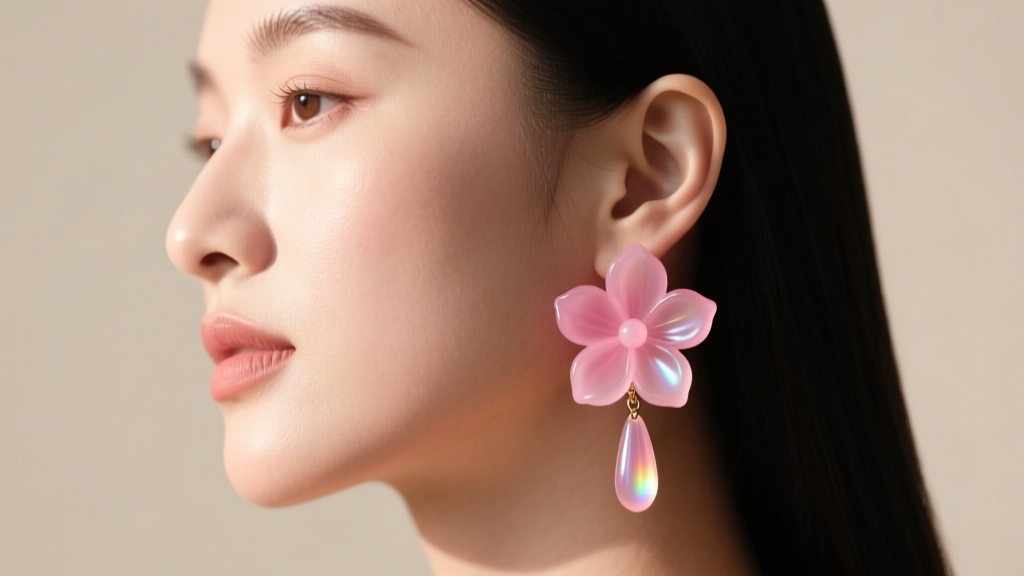
Understanding the market pricing for floral earrings prevents overpaying for inferior materials. In the current market, you can expect the following tiers:
Entry-Level ($25 - $75): Cold enamel (resin) over brass or sterling silver. Posts are often steel. Suitable for occasional wear, but expect tarnishing and resin scratching.
Mid-Range ($150 - $450): Vitreous enamel over solid 14k gold, or sterling silver set with lab-created pink sapphires. Hypoallergenic posts and secure locking backings are standard here.
Fine / Heirloom ($800 - $3,000+): Natural pink sapphires or high-grade morganites set in 18k gold or platinum. Features micro-pave diamond accents in the flower centers and custom-fitted, articulated petal hinges for movement.
Care and Maintenance for Delicate Petal Designs
Floral earrings, particularly those with intricate prong settings or recessed enamel, trap skin oils, lotions, and environmental dust. Clean vitreous enamel and gemstone florals weekly using a soft-bristled baby toothbrush and a solution of warm water with a single drop of mild, phosphate-free dish soap. Never use ultrasonic cleaners on enamel floral earrings; the high-frequency vibrations can cause the glass-to-metal bond to fracture, resulting in irreversible 'crazing' (spiderweb cracks) across the pink petals. Furthermore, always apply hairspray and perfume before putting on resin floral pieces, as the alcohol and aerosol propellants can degrade the epoxy finish over time.
Expert Storage Tip: Never store floral dangles in a soft pouch where the metal petals can bend under the weight of other jewelry. Always use a compartmentalized jewelry box with individual slots, or hang dangles on a dedicated velvet-lined earring tree to maintain the structural alignment of the drop mechanisms.


