Fine Plant Earrings: Metallurgy, Enamel & Ergonomic Design
Discover the technical design, metallurgy, and weight distribution behind fine plant earrings. Learn how to choose durable botanical jewelry.

The Intersection of Botany and Metallurgy
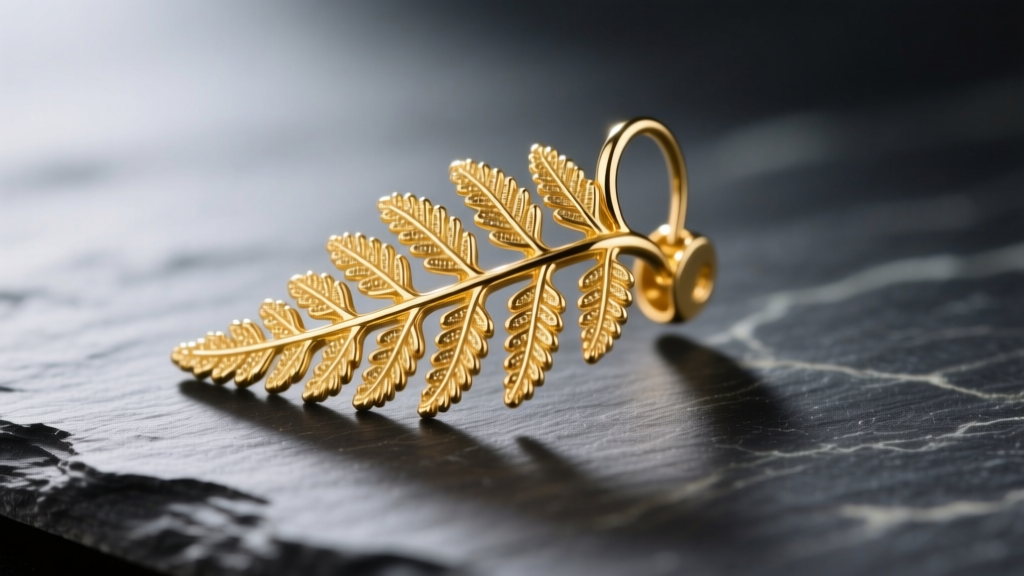
The surging popularity of nature-inspired jewelry has pushed designers to replicate the delicate, organic geometries of flora in rigid metals. However, creating high-quality plant earrings is not merely an exercise in aesthetic casting; it is a complex metallurgical and ergonomic challenge. Unlike simple geometric studs or uniform hoops, botanical silhouettes feature asymmetrical weight distribution, ultra-thin marginal edges (like leaf tips), and intricate surface topographies that trap debris and stress.
When evaluating fine botanical jewelry, consumers and collectors must look beyond the initial visual appeal. The longevity of a floral or foliar earring depends entirely on the alloy composition, the structural gauge of its stems, and the specific enameling techniques used to replicate nature's vibrant pigments. In this technical deep dive, we examine the engineering principles that separate heirloom-quality plant earrings from fragile, mass-produced costume pieces.
Metallurgical Challenges in Botanical Silhouettes
Replicating the razor-thin edge of a monstera leaf or the delicate frond of a fern requires a precise understanding of yield strength and work hardening. The edges of plant-inspired earrings are highly susceptible to plastic deformation (permanent bending) if the wrong karat of gold is used.
Karat Selection: 14k vs. 18k Gold
While 18k gold (75% pure gold) is prized for its rich, warm color and hypoallergenic properties, it is inherently softer than 14k gold (58.5% pure gold). For plant earrings featuring extended, unsupported leaf tips or slender vine motifs, 14k gold is often the superior engineering choice. The higher proportion of alloy metals—typically copper and silver—increases the tensile strength and hardness of the metal. According to jewelry fabrication standards outlined by Rio Grande's metallurgical guides, a work-hardened 14k gold wire can withstand significantly more lateral stress before bending than its 18k counterpart.
For ultra-fine details, jewelers often employ die striking or hydraulic pressing rather than traditional lost-wax casting. Cast metals are porous and brittle at thin margins, whereas die-struck 14k gold compresses the metal's grain structure, resulting in a denser, more resilient leaf edge that resists snapping when snagged on clothing.
Enamel and Resin Infill Techniques
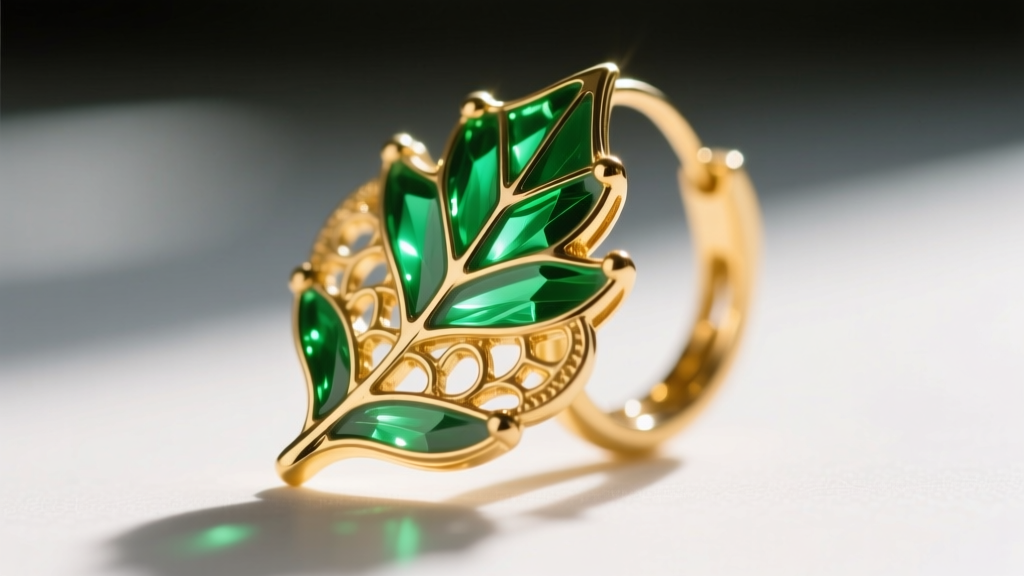
To capture the translucency and vibrant gradients of living plants, master jewelers turn to vitreous enamel. The application of glass powder to metal requires extreme thermal precision, especially on the uneven surfaces of botanical designs. Understanding the difference between enameling techniques is crucial for assessing the value and durability of plant earrings.
Plique-à-Jour vs. Champlevé
The two most prominent techniques used in high-end botanical jewelry are Plique-à-jour and Champlevé. As detailed in historical and technical enameling resources like Ganoksin's enameling archives, the choice of technique drastically alters the earring's light transmission and structural integrity.
| Feature | Plique-à-Jour (Stained Glass) | Champlevé (Carved Cells) |
|---|---|---|
| Backing | None (transparent) | Solid metal base |
| Light Transmission | High (backlit effect) | Low (opaque reflection) |
| Durability | Low (highly fragile to impact) | High (supported by metal) |
| Best Botanical Use | Delicate petals, thin fern fronds | Thick succulents, broad leaves |
| Price Premium | Very High (extreme labor/loss rate) | Moderate |
Plique-à-jour is the undisputed pinnacle of botanical enameling. Because the enamel is suspended in a metal framework with no backing, light passes directly through the earring, mimicking sunlight filtering through a real leaf. However, this technique is incredibly fragile. A dropped plique-à-jour earring will almost certainly shatter its glass infill. Champlevé, where enamel is packed into carved-out recesses of a solid metal base, is far more durable for everyday wear, though it lacks the ethereal translucency of its counterpart.
Ergonomics & Weight Distribution in Dangles
Botanical dangle earrings introduce complex physics to the earlobe. A long, vine-like drop earring acts as a pendulum. If the center of gravity is poorly calibrated, the earring will constantly pull forward, stretching the earlobe piercing and causing discomfort.
The Pendulum Effect and Gauge Sizing
The "stem" of a botanical dangle earring—the wire that connects the top stud or hook to the primary floral body—must be engineered to resist shear stress and bending. Many commercial manufacturers use 20-gauge (0.81mm) or 22-gauge (0.64mm) wire to save on gold weight. This is a critical failure point.
Expert Specification: For any botanical dangle earring exceeding 1.5 inches in length, the primary structural stem should be forged from 18-gauge (1.02mm) or 16-gauge (1.29mm) wire. An 18-gauge wire provides roughly 58% more cross-sectional area than a 20-gauge wire, exponentially increasing its resistance to the lateral forces generated by the pendulum effect during walking or head movement.
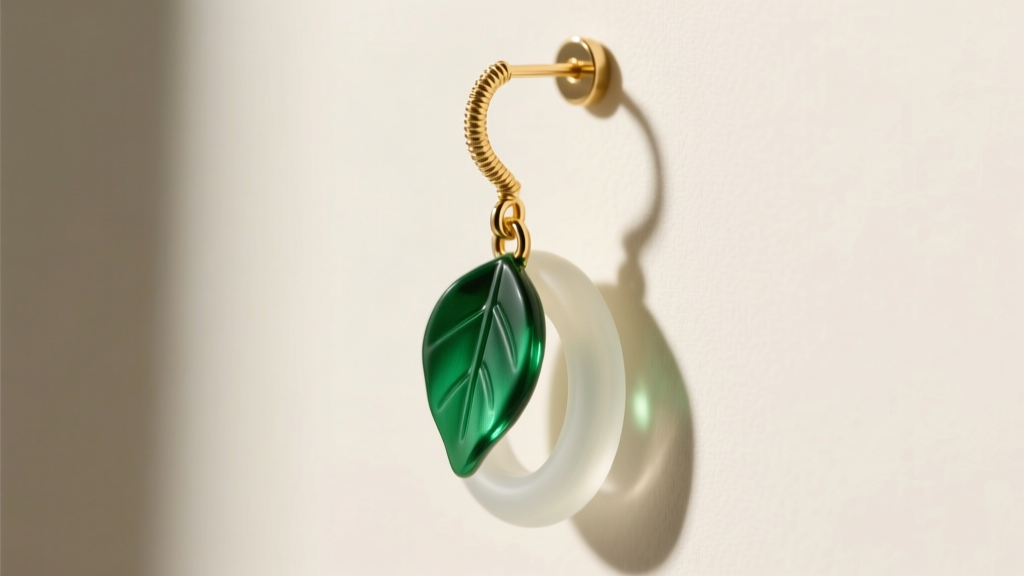
Furthermore, the earlobe piercing itself must be supported. High-end botanical dangles often utilize a reinforced "saddle" backing or a wide, flat silicone disc. This increases the surface area dispersing the earring's weight across the back of the earlobe, preventing the "cheese-cutter effect" where a thin wire slowly migrates downward through the piercing tissue.
Common Failure Modes and Maintenance
Even expertly crafted plant earrings are subject to unique environmental and mechanical stresses. Understanding these failure modes allows collectors to perform proactive maintenance and avoid catastrophic damage.
- Leaf-Tip Snagging: The pointed tips of botanical designs frequently catch on knitwear, lace, and hair. Over time, this micro-snagging work-hardens the tip until it becomes brittle and snaps. Solution: Look for designs where the leaf tips are slightly blunted or folded back (a technique called "burnishing") to eliminate sharp catch points.
- Post-Shear at the Solder Joint: For flat, broad-leaf stud earrings (like a ginkgo leaf), the post is usually soldered perpendicular to the flat plane. If the earring is dropped flat, the kinetic energy transfers directly to the solder joint, causing it to shear. Solution: Seek out pieces that utilize laser welding rather than traditional torch soldering for post attachment. Laser welding penetrates deeper into the metal without requiring excessive heat, which can also protect nearby heat-sensitive gemstones like opals or emeralds often used as botanical "dew drops."
- Crevices and Debris Traps: The intricate veining of a cast leaf is a magnet for skin oils, lotions, and environmental dust. This buildup dulls the metal and can degrade certain porous gemstones over time.
Cleaning Protocols for Botanical Jewelry
Never use ultrasonic cleaners on plant earrings featuring enamel, opals, or emeralds. The high-frequency vibrations will shatter vitreous enamel and fracture the internal inclusions (the "jardin") of emeralds. Instead, use a soft-bristled sable brush dipped in a mild, non-detergent soap solution to gently agitate debris from the leaf veining, followed by a rinse in distilled water and a careful pat-dry with a microfiber cloth.
Conclusion: Investing in Botanical Engineering
The finest plant earrings are a triumph of material science, balancing the delicate, ephemeral beauty of nature with the rigid, enduring properties of precious metals. By scrutinizing the karat selection for edge durability, demanding proper gauge thicknesses for structural stems, and understanding the fragility of advanced enameling techniques, you can curate a collection of botanical jewelry that is as resilient as it is beautiful. True luxury in nature-inspired jewelry lies not just in the visual imitation of a leaf or flower, but in the masterful engineering that allows it to be worn for a lifetime.


