Complete Care and Cleaning Guide for Plum Earrings
Discover expert cleaning and maintenance tips for plum earrings. Learn how to safely care for plum enamel, anodized titanium, and gemstone styles.

The Complexity of 'Plum' in Fine and Fashion Jewelry
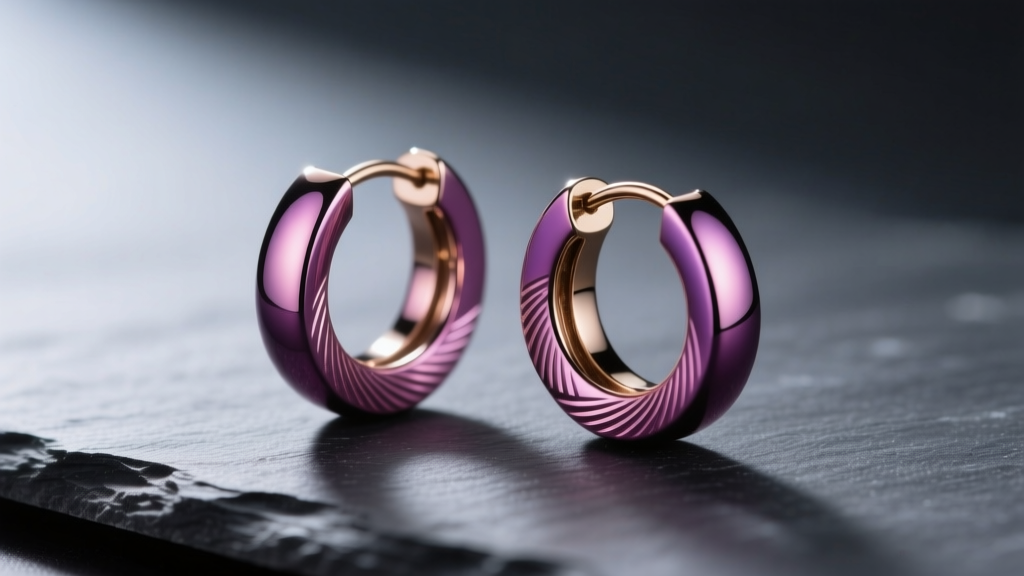
When you invest in a pair of plum earrings, you are likely drawn to the deep, rich, and sophisticated hue that bridges the gap between vibrant purple and moody burgundy. However, from a metallurgical and gemological perspective, 'plum' is not a single material. It is a visual outcome achieved through vastly different manufacturing processes. In 2026, jewelry makers utilize everything from voltage-altered titanium to fired vitreous enamel and rare sapphire inclusions to achieve this specific colorway.
The most common mistake consumers make is applying a universal cleaning method to all dark-colored jewelry. Using a harsh ultrasonic cleaner or an abrasive paste on a delicate plum finish can permanently strip the color, cloud the resin, or fracture the gemstone. To maintain the brilliance and structural integrity of your earrings, you must first identify the exact material composition of your plum jewelry and apply a targeted care protocol.
Material Identification: What Makes Your Earrings Plum?
Before reaching for a cleaning solution, examine your earrings under a bright, natural light source. The way the light interacts with the surface will tell you which of the three primary 'plum' categories your jewelry falls into.
1. Anodized Titanium (The Metallic Plum)
If your plum earrings have a metallic sheen but no paint or plating is visible, they are likely anodized titanium. The plum color is not a dye; it is a naturally occurring oxide layer created by passing an electrical current through the metal in an electrolyte bath. According to the Association of Professional Piercers (APP), the specific plum/purple hue is achieved at approximately 70 to 90 volts. Because the color is a structural property of the oxide layer, it can be scratched or chemically altered if exposed to chlorine or heavy abrasives.
2. Plum Enamel and Cold Resin (The Opaque Plum)
Opaque, glass-like plum finishes are typically achieved through vitreous enamel (fired glass fused to metal) or cold enamel (a two-part epoxy resin). Vitreous enamel is highly durable but susceptible to shattering upon impact. Cold resin, while shatterproof, is porous and highly reactive to alcohol-based cosmetics, perfumes, and prolonged UV exposure, which can cause the deep plum to yellow or become tacky over time.
3. Amethyst and Plum Sapphire (The Gemstone Plum)
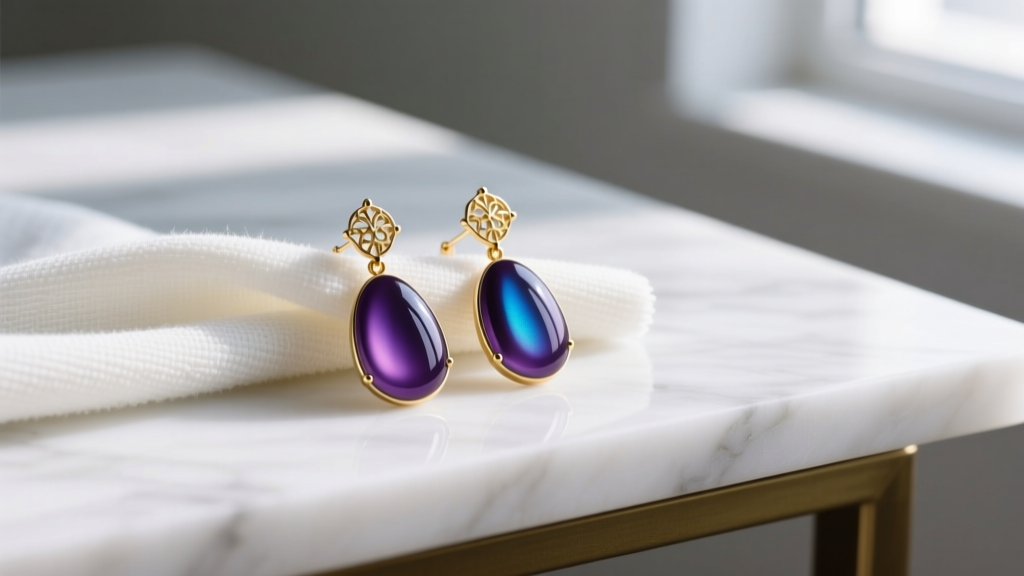
Natural gemstones offer the most depth of color. Deep purple amethyst (Mohs hardness of 7) is a popular choice for plum jewelry but is notorious for fading when exposed to prolonged direct sunlight. Plum sapphire (Mohs hardness of 9) is exceptionally durable and colorfast, but the sterling silver or gold settings holding these stones require entirely different cleaning considerations than the stones themselves.
Step-by-Step Cleaning Protocols by Material
Forget generic jewelry dips. The chemical composition of your cleaner must match the material. Below is a comprehensive framework for safely washing your plum earrings without degrading their finish or structural integrity.
| Material Type | Safe Cleaning Agents | Unsafe Agents (Avoid) | Recommended Tools | Ultrasonic Safe? |
|---|---|---|---|---|
| Anodized Titanium | pH-neutral dish soap, distilled water | Bleach, chlorine, baking soda, toothpaste | Extra-soft baby toothbrush (0.05mm bristles) | Yes (short cycles only) |
| Vitreous Enamel | Mild soap suds (use only the foam) | Ammonia, ultrasonic vibrations, hot water | Lint-free microfiber cloth | No (vibration causes micro-fractures) |
| Cold Resin | Damp cloth with plain water | Alcohol, acetone, essential oils, perfumes | Cotton swabs for crevices | No |
| Plum Sapphire | Warm water, mild degreasing soap | Hydrofluoric acid, harsh silver dips | Soft bristle brush | Yes |
| Amethyst | Lukewarm water, pH-neutral soap | Steam cleaners, boiling water, UV light | Microfiber cloth | Yes (but avoid heat settings) |
The Universal Safe Wash Method
For almost all plum earrings (excluding cold resin), the safest baseline cleaning method involves creating a lukewarm bath of distilled water and a few drops of pH-neutral dish soap. Distilled water is critical here; tap water contains calcium and magnesium that can leave hard water spots, which are incredibly difficult to buff off dark plum surfaces without causing micro-scratches. Let the earrings soak for no more than 5 to 10 minutes, gently agitate with a soft brush, rinse in clean distilled water, and immediately pat dry with a lint-free cloth to prevent water marks.
Maintenance and Storage Best Practices
Cleaning is only half the battle. How you store your plum earrings dictates their lifespan, particularly when dealing with light-sensitive gemstones and reactive resins.
Preventing Color Fading in Resin and Gemstones
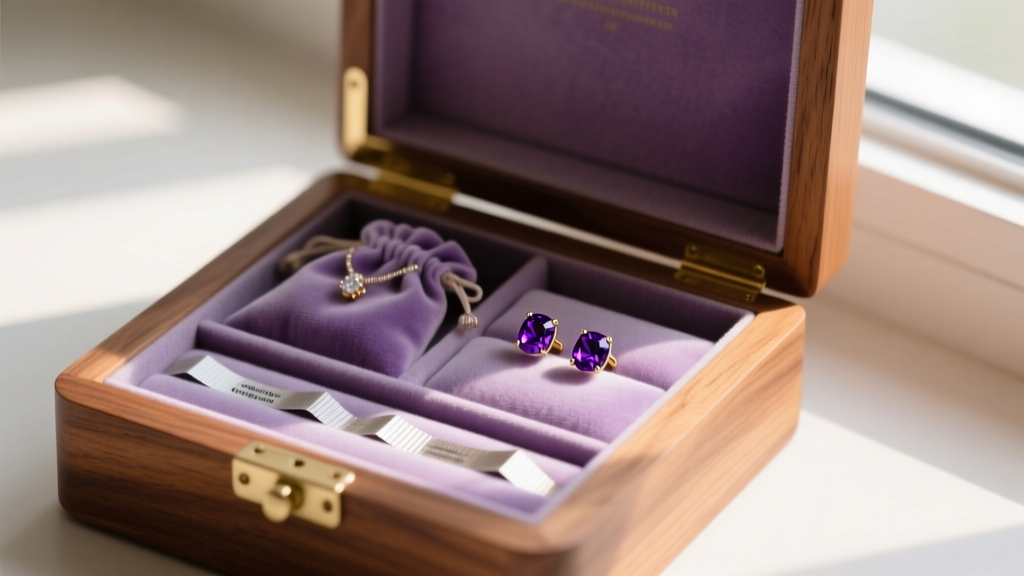
If your plum earrings feature amethyst or cold enamel resin, UV radiation is your primary enemy. The Gemological Institute of America (GIA) notes that prolonged exposure to strong light can cause the purple color centers in amethyst to degrade, turning a rich plum into a pale, washed-out lavender. Always store these pieces in a closed, opaque jewelry box or a dark velvet pouch. Never leave them on a sunlit vanity or dashboard.
Protecting Anodized Layers from Scratches
The anodized oxide layer on titanium is incredibly thin—often measured in nanometers. While titanium itself is a hard metal, the colored oxide layer can be scratched by harder materials. Never store anodized plum titanium earrings loose in a drawer where they can rub against diamond or sapphire jewelry (which rank higher on the Mohs scale). Store them individually in soft, anti-tarnish flannel bags.
Troubleshooting Common Plum Earring Issues
Even with meticulous care, issues can arise. Here is how to troubleshoot and rescue your plum earrings from common signs of wear.
Issue: Anodized Titanium is Turning Grey or Brown
The Cause: The oxide layer has been scratched away by friction, or it has been chemically stripped by exposure to chlorinated pool water or harsh lotions, revealing the raw titanium underneath.
The Fix: You cannot clean or polish the color back into existence. However, because anodizing is a surface-level electrical process, a professional piercer or jeweler with an anodizing power supply can easily re-anodize the piece back to a vibrant plum in minutes for a nominal fee.
Issue: Cold Enamel/Resin Feels Sticky or Tacky
The Cause: The resin has begun to chemically break down due to repeated exposure to the alcohol in perfumes, hand sanitizers, or the natural acidity of your skin oils.
The Fix: Gently wipe the surface with a cloth dampened with a tiny amount of mineral oil to rehydrate the top layer and remove the tackiness. Going forward, adopt a 'jewelry last' rule: apply all perfumes, hairsprays, and lotions, and wait 10 minutes before putting your resin earrings on.
Issue: Sterling Silver Settings are Tarnishing Against the Plum Stone
The Cause: Silver sulfide tarnish (the black film) is forming on the setting and transferring to the edges of the plum gemstone or enamel, making the entire piece look dirty.
The Fix: Do not use liquid silver dip, as it will seep under the stone setting and potentially degrade the adhesive or cloud the gemstone. Instead, use a treated silver polishing cloth (impregnated with micro-abrasives and anti-tarnish agents) and carefully buff only the metal, folding the cloth frequently to avoid rubbing the tarnish back onto the plum elements.
Conclusion
Maintaining the deep, luxurious aesthetic of plum earrings requires moving beyond generic jewelry care and understanding the specific material science behind your pieces. Whether you are protecting the delicate nanometer-thin oxide layer of anodized titanium, shielding light-sensitive amethysts from UV degradation, or keeping cold resin safe from alcohol-based cosmetics, targeted care ensures your earrings remain as striking as the day you acquired them. By implementing these material-specific cleaning protocols and storage habits, your plum jewelry will retain its rich color and structural integrity for years to come.


