Puffed Heart Earrings: 2026 Trend Analysis & Styling Guide
Discover the 2026 evolution of puffed heart earrings. Explore styling tips, metal grades, and how to wear this 3D Y2K trend for every face shape.

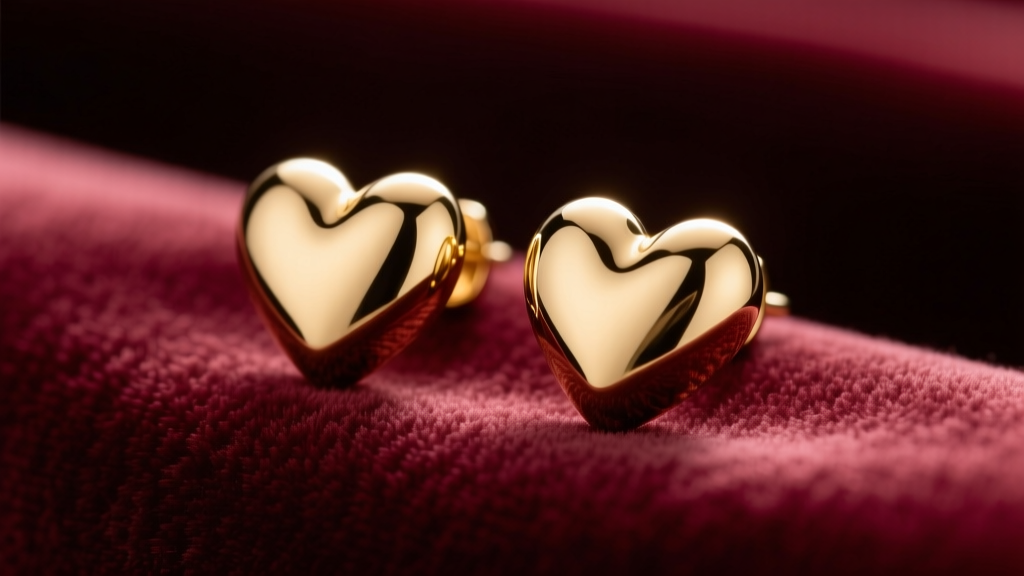
The jewelry landscape in 2026 continues to be heavily influenced by the Y2K revival, but with a refined, sculptural edge. At the forefront of this movement are puffed heart earrings—a 3D, inflated take on the classic romantic motif. Unlike the flat, stamped heart charms of the early 2000s, today's bubble heart designs rely on advanced casting techniques to create volume, light reflection, and a bold visual impact. However, the transition from a 2D silhouette to a 3D object introduces unique challenges regarding weight distribution, piercing compatibility, and material longevity. This comprehensive trend analysis breaks down everything you need to know about selecting, styling, and caring for puffed heart earrings this season.
The Anatomy of the Puffed Heart Motif in 2026
The 'puffed' or 'inflated' aesthetic is achieved through two primary manufacturing methods: lost-wax casting and electroforming. Understanding the difference is critical for buyers looking for specific sizes and weights.
Lost-Wax Casting vs. Electroforming
Most high-end solid gold puffed heart earrings are created via lost-wax casting, where a 3D-printed wax model is encased in plaster, melted out, and replaced with molten metal. This results in a solid, durable piece. However, a solid 14k gold puffed heart measuring 20mm across can weigh upwards of 5 to 7 grams per earring. While this provides a luxurious, premium feel, it can cause earlobe drooping or cartilage irritation over time.
To combat this, many contemporary jewelers are utilizing electroforming. This process builds up a layer of metal over a conductive resin or wax core, which is later dissolved or left intact. The result is a massive, voluminous 3D heart that is remarkably lightweight, allowing for oversized 30mm+ statement drops that won't stretch your piercing.
Material Breakdown: What to Look For
When investing in 3D bubble heart jewelry, the material dictates not only the price but the structural integrity of the piece. Thin metals on hollow designs are prone to denting. Here is a comparison of the most common materials used in 2026.
| Material | Durability & Weight | Price Range (Per Pair) | Best For |
|---|---|---|---|
| Solid 14k Gold | Highly durable, heavy if solid, hypoallergenic. | $350 - $900+ | Everyday wear, heirloom pieces, sensitive lobes. |
| Gold Vermeil | Sterling silver base with 2.5µm+ gold plating. Moderate weight. | $85 - $180 | Trend-focused buyers, occasional wear. |
| Sterling Silver (925) | Lightweight, prone to tarnish, easily polished. | $40 - $90 | Edgy streetwear looks, budget-conscious styling. |
| Implant-Grade Titanium | Ultra-lightweight, incredibly strong, biocompatible. | $60 - $140 | Healing piercings, cartilage placements, metal allergies. |
According to the Gemological Institute of America (GIA), when purchasing gold-plated or vermeil 3D jewelry, you must ensure the gold layer is at least 2.5 microns thick. The friction of putting on and taking on heavy puffed earrings can quickly wear away micro-thin flash plating, exposing the base metal beneath.
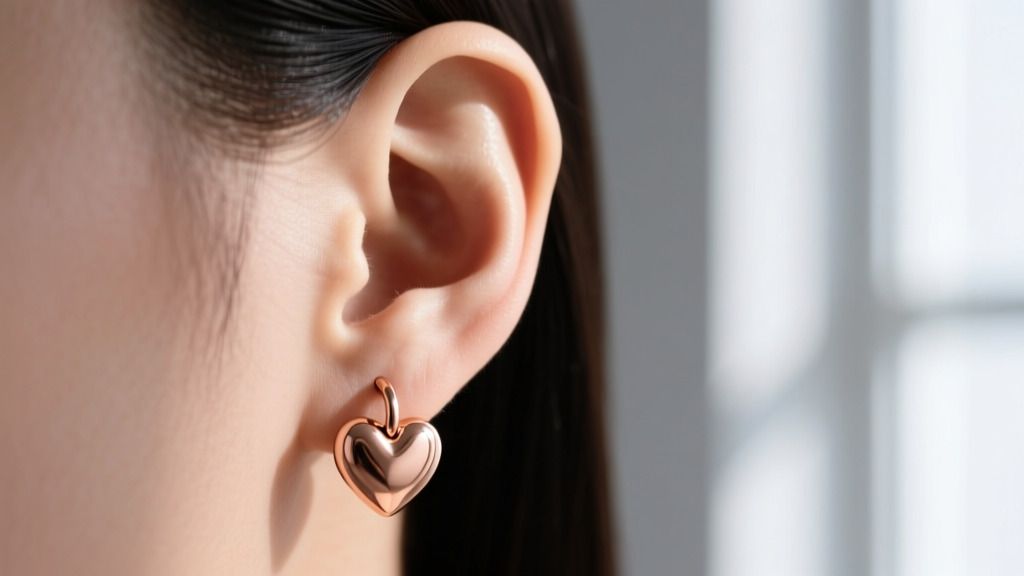
Gauge Sizes & Piercing Placements for 3D Hearts
The dimensional depth of puffed heart earrings creates a unique center of gravity. Unlike flat studs that sit flush against the skin, a 3D heart pulls outward. This 'forward tilt' requires specific hardware to keep the motif facing forward rather than drooping toward the floor.
Lobe Placements
Standard lobe piercings are typically 20-gauge (0.8mm) or 18-gauge (1.0mm). If you are wearing solid, heavy puffed heart studs, standard push-on butterfly backs are insufficient. The weight of the 3D heart will cause the post to slide down, making the earring look crooked. Opt for screw-on backs or secure the post with a silicone O-ring to maintain a horizontal profile.
Cartilage & Helix Placements
For upper ear placements, the Association of Professional Piercers (APP) recommends using flat-back labret studs rather than standard butterfly posts. A 16-gauge (1.2mm) flat back provides a wider surface area against the inside of the cartilage, distributing the outward pull of the puffed heart and preventing the 'forward tilt' effect. Ensure the post length is precisely fitted to your cartilage thickness (usually 6mm to 8mm) to avoid the heart sagging.
Face Shape & Proportion Matching
Because puffed heart earrings possess significant visual volume, scaling them to your face shape is crucial for a harmonious look.
- Round Faces: Avoid wide, oversized bubble studs that add horizontal width. Instead, choose elongated puffed heart drop earrings that hang below the jawline to create a lengthening illusion.
- Square Faces: The soft, bulbous curves of a 3D inflated heart perfectly counterbalance strong jawlines. Medium-sized (12mm-15mm) puffed heart studs or huggies are ideal.
- Oval Faces: Highly versatile. You can easily pull off the 2026 trend of oversized, shoulder-grazing puffed heart dangles without overwhelming your proportions.
- Heart-Shaped Faces: Balance a narrower chin with bottom-heavy designs. Look for puffed heart earrings that feature a wider base or a teardrop-like inflation at the bottom lobe.
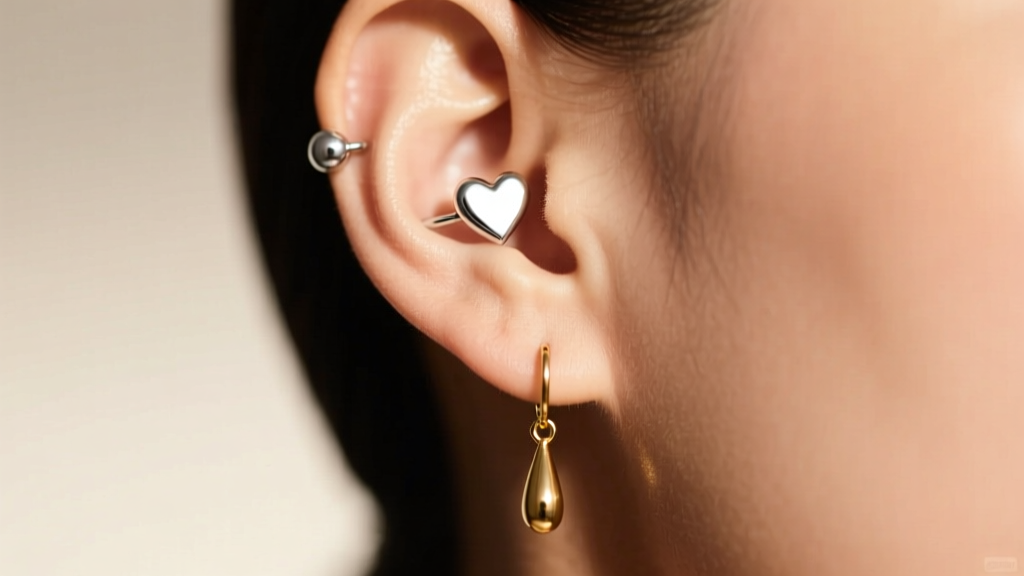
How to Style Puffed Heart Earrings This Season
The 2026 styling ethos moves away from perfectly matched sets and embraces intentional asymmetry and mixed textures. Here are three expert-approved ways to wear the trend:
The Bipolar Metal Stack: Mix a high-polish yellow gold puffed heart stud in your primary lobe piercing with a matte or brushed silver puffed heart huggie in your secondary lobe. The contrast between the warm and cool metals highlights the 3D texture of the inflation.
The Tragus Anchor: Because the tragus is a small, thick piece of cartilage, it can support surprisingly dense jewelry. A tiny (6mm) solid 14k gold puffed heart stud on the tragus acts as a brilliant focal point when paired with a larger, minimalist hoop in the standard lobe.
The Chain Connector: Many avant-garde designers are now linking two puffed hearts of varying sizes with a delicate 1.5mm cable chain, creating a 'threader' effect that drapes beautifully from the helix down to the lobe.
Care & Maintenance for Hollow Castings
Maintaining the mirror-like finish of a puffed heart requires specific care, especially if the piece is hollow or features pavé stones. Never use ultrasonic cleaners on hollow electroformed jewelry; the high-frequency vibrations can compromise the structural integrity of the thin metal shell or shake loose adhesive on gemstone-encrusted variations.
Instead, use a soft microfiber cloth and a mild, phosphate-free dish soap diluted in warm water. Gently rub the crevices of the heart's cleft with a soft-bristled baby toothbrush to remove trapped skin oils and cosmetics, which can dull the reflective surface of the 3D curves. Store your puffed heart earrings in a hard-shell jewelry box; tossing them into a soft pouch with heavier items is a guaranteed way to dent the inflated metal.


