Expert Guide to Purple Dangle Earrings: Metals & Gems
Discover the technical specifications of purple dangle earrings, from amethyst and tanzanite grading to weight distribution and hypoallergenic metals.

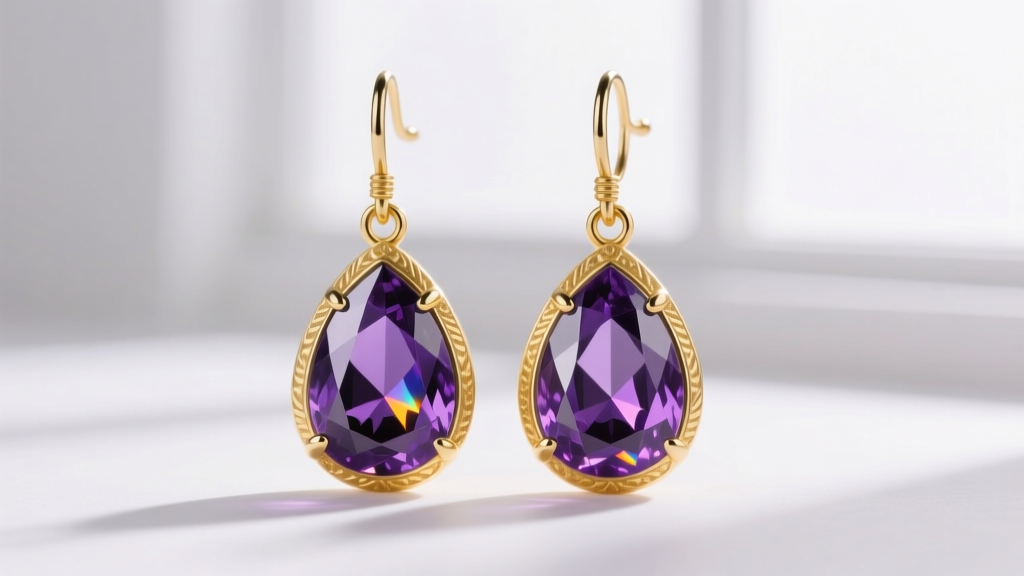
The Biomechanics of Kinetic Jewelry: Weight and Lobe Torque
When evaluating purple dangle earrings, most consumers focus exclusively on color saturation and metal finish. However, as a structural engineer of jewelry, the primary concern must be the biomechanical impact of kinetic movement on the earlobe. Unlike static studs, dangle earrings introduce variables of torque, pendulum momentum, and material fatigue. The standard earlobe piercing is executed at 18-gauge (1.02mm) or 20-gauge (0.81mm). When a dangle earring exceeds 7 grams per ear, the kinetic energy generated by normal head movement creates a pendulum effect that can lead to lobe migration, micro-tearing, and permanent elongation of the fistula.
To mitigate this, expert jewelers calculate the specific gravity of the chosen gemstones alongside the density of the metal alloy. For instance, utilizing a dense platinum alloy (21.45 g/cm³) for the entire articulation chain of a heavy purple sapphire dangle will almost guarantee lobe drag. Instead, the 2026 standard for high-end dangles involves a hybrid approach: utilizing lightweight 14k or 18k gold (12.9 to 15.6 g/cm³) for the lower kinetic chains, while reserving heavier metals strictly for the structural post.
Wire Gauge and Tensile Strength Requirements
- 20-Gauge (0.81mm): Suitable only for micro-dangles under 3 grams. Prone to bending if snagged.
- 18-Gauge (1.02mm): The industry standard for mid-weight dangles (3 to 8 grams). Offers optimal balance between fistula comfort and tensile strength.
- 16-Gauge (1.29mm): Required for statement chandelier dangles exceeding 10 grams. Often requires a leverback or specialized French wire hook to distribute weight across the cartilage ridge rather than just the lower lobe.
Gemological Deep Dive: Sourcing and Grading Purple Stones
The color purple in gemology is notoriously complex, often existing on a spectrum between red (magenta) and blue (violet). When selecting stones for dangle earrings, durability is just as critical as hue. Dangles are highly susceptible to impact against hard surfaces, doorframes, and even the wearer's shoulders. Therefore, understanding the Mohs hardness and cleavage planes of purple gemstones is non-negotiable.
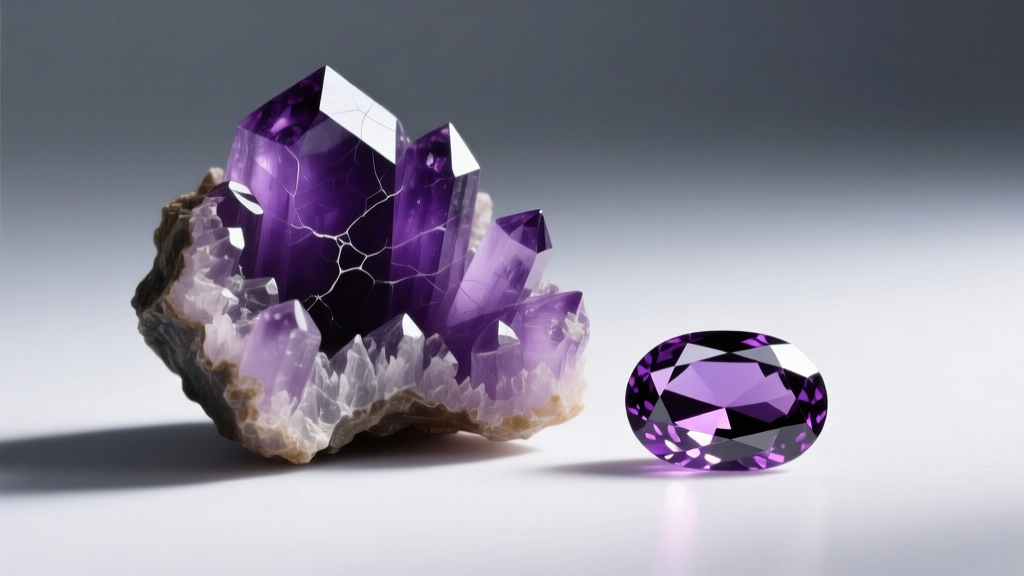
Comparative Gemstone Data Matrix (2026 Market)
| Gemstone | Mohs Hardness | Specific Gravity | Cleavage / Fracture | Avg. Price/Carat |
|---|---|---|---|---|
| Purple Sapphire | 9 | 4.00 | None / Conchoidal | $800 - $2,500 |
| Tanzanite | 6 - 7 | 3.35 | Perfect (1 direction) | $300 - $800 |
| Amethyst | 7 | 2.65 | None / Conchoidal | $15 - $50 |
| Sugilite | 6 - 6.5 | 2.74 | None | $50 - $150 |
According to the Gemological Institute of America (GIA), tanzanite exhibits strong trichroism, meaning it can display blue, violet, and burgundy depending on the crystal orientation. For dangle earrings, cutters must orient the table facet to maximize the violet-purple saturation, but the gem's perfect cleavage in one direction makes it highly vulnerable to chipping if the earring swings and strikes a surface. Conversely, amethyst lacks cleavage, making it significantly more resilient for daily kinetic wear, despite sharing a similar Mohs rating. For the ultimate intersection of deep purple saturation and impact resistance, purple sapphire remains the superior, albeit premium, choice.
Metallurgical Standards: Hypoallergenic Posts vs. Alloy Bodies
A frequent failure mode in commercial dangle earrings is the use of nickel-heavy white gold or brass alloys for the post that enters the ear. Because dangles shift constantly, the post creates micro-abrasions inside the fistula. If nickel ions are present, this friction accelerates contact dermatitis and allergic sensitization.
Expert Protocol: The post and the first point of contact (the hook or leverback) must always be crafted from ASTM F136 implant-grade titanium (Ti-6Al-4V ELI) or high-purity 18k yellow gold. The decorative dangle body can then utilize standard 14k alloys to reduce overall weight and material costs without compromising biocompatibility.
In 2026, advancements in PVD (Physical Vapor Deposition) coating allow manufacturers to coat titanium posts with a durable, purple-hued metallic finish that will not flake or react with sebum and cosmetic acids. This eliminates the need for rhodium plating, which traditionally wears off white gold posts within 6 to 12 months of kinetic friction.
Kinetic Engineering: Articulation and Jump Ring Integrity
The soul of a dangle earring lies in its articulation—how the segments connect and move. A poorly engineered dangle will tangle in hair, snap under lateral stress, or suffer from metal fatigue at the connection points. The traditional split jump ring is the weakest link in any dangle design. When a heavy purple gemstone swings, it exerts lateral torque on the split ring, slowly prying it open over months of wear.
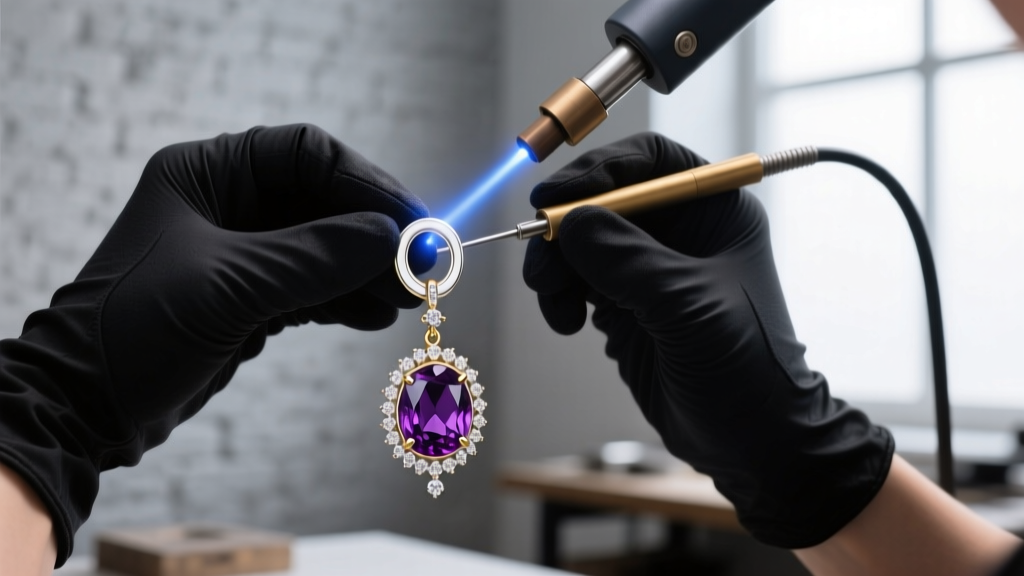
Advanced Articulation Solutions
To resolve this, master jewelers employ laser-welded jump rings or micro-hinge mechanisms. Laser welding fuses the metal seamlessly without the use of solder, which can introduce brittle alloys into the joint. For multi-tiered chandelier dangles featuring cascading amethyst briolettes, micro-hinges with riveted pins allow for unidirectional movement, preventing the earring from twisting into a tangled knot. Furthermore, utilizing silicone O-rings hidden inside metal bezels can provide shock absorption, protecting brittle stones like tanzanite from the concussive forces of the earring swinging against the neck.
Maintenance and Ultrasonic Cleaning Protocols
The maintenance of purple dangle earrings requires strict adherence to gemological limits. The crevices of articulated chains and prong settings easily accumulate sebum, dead skin cells, and cosmetic residues, which can dull the refractive index of the gemstones.
- Amethyst & Sapphire: Safe for ultrasonic cleaning (35-40 kHz) for up to 3 minutes in a mild alkaline solution. This effectively dislodges debris from the underside of the pavilion facets.
- Tanzanite & Sugilite: NEVER use ultrasonic cleaners. The high-frequency vibrations can exploit microscopic internal fractures (feathers) and cause the stone to shatter. These must be cleaned using a soft-bristled brush, lukewarm water, and a pH-neutral surfactant.
- Metal Polishing: Avoid aggressive dip polishes (like silver tarnish removers) on articulated pieces, as the chemicals can become trapped in the micro-hinges, leading to long-term corrosion and joint seizing.
Conclusion: Balancing Aesthetics and Engineering
Selecting the perfect pair of purple dangle earrings requires looking beyond the display case and evaluating the structural integrity of the piece. By prioritizing implant-grade posts, understanding the specific gravity and cleavage of your chosen purple gemstone, and insisting on laser-welded articulation points, you ensure that your jewelry remains both a stunning visual statement and a biomechanically sound accessory for decades to come.


