Real Earrings vs Fake: A Beginner's Guide to Spotting Precious Metals
Learn how to tell real earrings vs fake metals. Discover hallmark secrets, magnet tests, and material grades to avoid skin irritation and overpaying.


Walking into a jewelry boutique or scrolling through online shops can be overwhelming, especially when trying to determine the authenticity of the metals being sold. When comparing real earrings vs fake options, the distinction rarely comes down to the design itself. Instead, it is entirely about the metallurgical composition of the post, the wire, and the setting. For beginners, navigating the sea of gold-plated brass, nickel-laced alloys, and solid precious metals is the first step toward building a safe, long-lasting jewelry collection.
This guide breaks down the exact material grades, hallmark stamps, and at-home testing methods you need to confidently separate genuine precious metals from deceptive imitations.
The Hidden Costs of "Fake" Earrings
When jewelers use the term "fake" in the context of fine jewelry, they are usually referring to base metals—like brass, copper, or low-grade stainless steel—that have been thinly plated with gold or silver. While these might look identical to solid 14k gold on day one, the long-term reality is vastly different.
The most immediate consequence of wearing base-metal earrings is nickel contact dermatitis. According to the American Academy of Dermatology, nickel allergy is one of the most common causes of allergic contact dermatitis, affecting up to 18% of adults. Cheap earring posts frequently contain high nickel concentrations to increase hardness, leading to itchy, red, and weeping earlobes within hours of wear.
Furthermore, the dreaded "green ear" effect is a chemical reaction, not an infection. When copper or brass alloys mix with the natural acids and salts in your sweat, they oxidize and create copper chloride, which stains the skin. Solid gold (14k or higher) and platinum do not undergo this reaction.
Decoding Hallmarks: What the Stamps Actually Mean
The fastest way to differentiate real earrings vs fake metals is by inspecting the hallmark. By law in many countries, precious metals must be stamped with their purity. However, manufacturers of plated jewelry often use misleading stamps to confuse buyers.
| Stamp | Meaning | Verdict |
|---|---|---|
| 925 | 92.5% Pure Silver (Sterling) | Real Precious Metal |
| 14K / 585 | 58.5% Pure Gold | Real Precious Metal |
| 18K / 750 | 75.0% Pure Gold | Real Precious Metal |
| PLAT / 950 | 95.0% Pure Platinum | Real Precious Metal |
| GP / HGE | Gold Plated / Heavy Gold Electroplate | Fake (Base Metal Core) |
| GF | Gold Filled (Min. 5% gold by weight) | Semi-Authentic (Durable but not solid) |
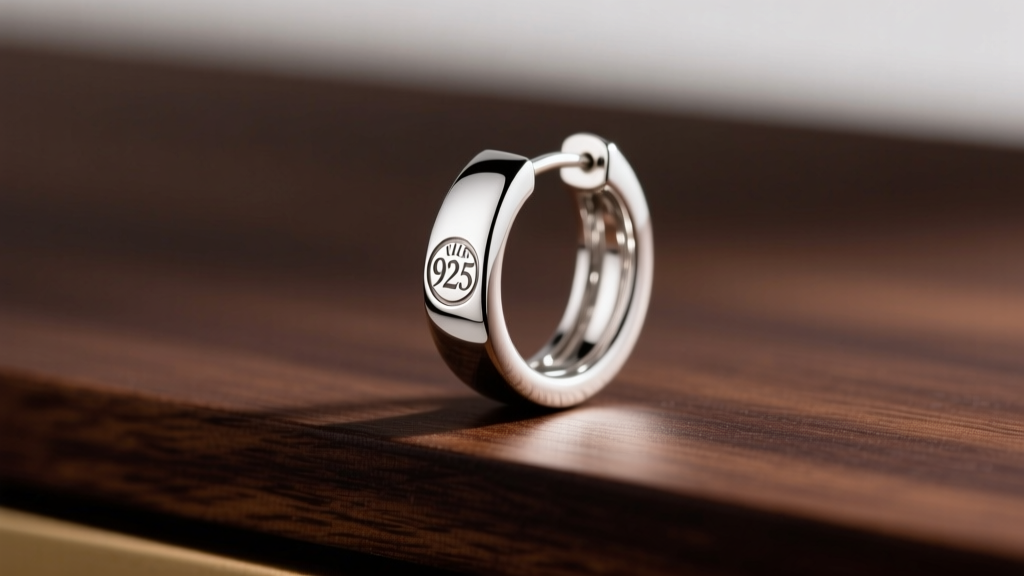
Pro Tip: Always check the earring post and the butterfly back. High-quality jewelers will stamp both components. If the back is stamped "925" but the post is unmarked and highly magnetic, you are likely looking at a mixed-material earring designed to pass a casual inspection.
4 At-Home Tests to Separate Real Earrings vs Fake
If you have inherited a jewelry box full of unmarked studs or bought a batch of vintage hoops at an estate sale, you can perform these non-destructive tests to verify their authenticity.
1. The Neodymium Magnet Test
Precious metals like gold, silver, and platinum are entirely non-magnetic. Take a strong neodymium magnet and hold it near the main body of the earring. If the earring snaps to the magnet, it contains iron, steel, or nickel and is definitively not solid precious metal. Caveat: The internal springs inside some butterfly clasps or omega-backs are made of steel for tension, so test the hoop or the stud head itself, not just the clasp.
2. The Ceramic Streak Test
This test is excellent for identifying "fool's gold" or heavily plated brass. Drag the earring post gently across an unglazed ceramic tile. Real gold will leave a faint golden or silvery streak. Fake gold or pyrite will leave a harsh, dark black or greenish streak. Be aware that this is a mildly destructive test and can scratch soft 24k or 18k gold, so use it only on the very tip of the post.
3. The Weight and Temperature Test
Gold and silver are incredibly dense metals. A pair of solid 14k gold 15mm hoop earrings will feel noticeably heavier than a brass or aluminum pair of the exact same dimensions. Furthermore, precious metals are highly thermally conductive. If you hold a real silver or gold earring between your fingers, it will absorb your body heat and warm up almost instantly. Fake metals and plastics act as insulators and will remain cool to the touch for much longer.
4. The Gauge Thickness Check
While not a chemical test, examining the wire gauge provides massive clues about quality. Standard earlobe piercings are 20-gauge (0.81mm) or 18-gauge (1.02mm). Cheap, mass-produced "fake" earrings often use flimsy 22-gauge or 24-gauge wire to save on material costs, which bends easily when inserting. Solid gold and platinum earrings are almost always crafted in sturdy 20g or 18g to ensure structural integrity.
Plated vs. Solid: The Pricing Reality Check
Understanding market pricing is a crucial defense against scams. If a retailer is offering a pair of chunky, 20mm solid gold hoop earrings for $25, you are undoubtedly looking at plated brass. According to the Gemological Institute of America (GIA), the intrinsic melt value of gold dictates a hard floor for jewelry pricing. Here is what you should realistically expect to pay in the current market:
- Gold-Plated Brass/Silver: $15 – $45 (The plating will wear off in 3 to 6 months with daily wear).
- Gold-Filled (14k GF): $40 – $90 (A thick layer of gold mechanically bonded to brass; lasts years but cannot be polished aggressively).
- Solid 14k Gold (Small Studs/Huggies): $85 – $250 (Lifetime durability, hypoallergenic, retains melt value).
- Solid 18k Gold (Statement Hoops): $300 – $1,200+ (Richer color, softer metal, premium pricing).
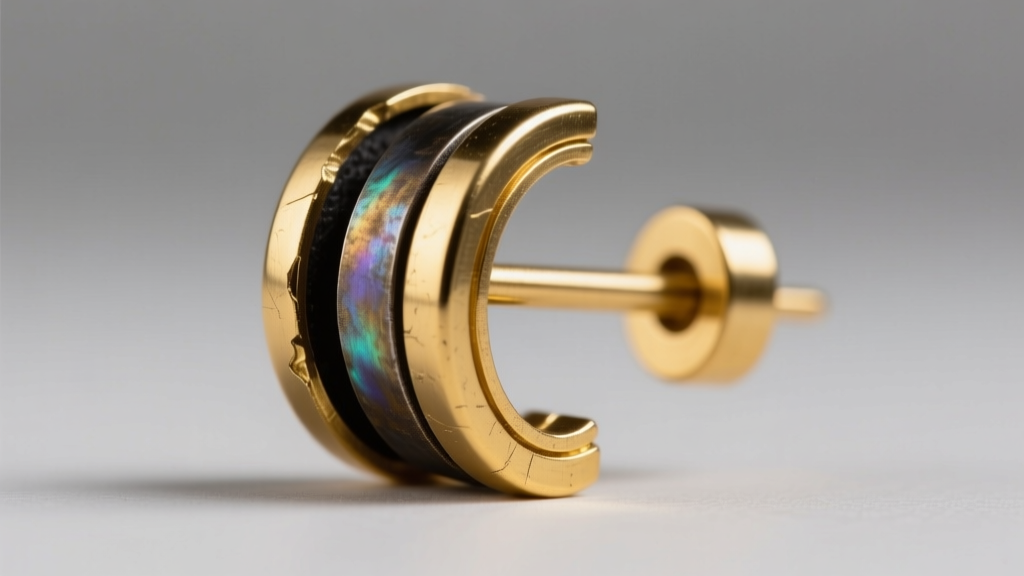
"The biggest mistake beginners make is assuming 'hypoallergenic' means 'real.' Many cheap brands label their nickel-silver alloys as hypoallergenic simply because they added a microscopic flash-plating of rhodium. Once that plating wears through in a week, the nickel allergy flare-ups begin." — Senior Bench Jeweler
When "Fake" Metals Are Actually Safe: The Titanium Exception
There is one major exception to the "precious metals only" rule. If you are comparing real earrings vs fake for the purpose of healing a fresh piercing, solid gold can sometimes be problematic if it contains nickel alloys or if the surface polish is too rough.
In these cases, Implant-Grade Titanium (ASTM F-136) is the gold standard. Titanium is technically a base metal, not a precious one, meaning it holds no intrinsic resale value. However, it is 100% nickel-free, biocompatible, and highly corrosion-resistant. The Association of Professional Piercers (APP) strongly recommends implant-grade titanium over standard "surgical steel," which is an unregulated term that often hides high nickel content. If you see a stamp that says "Ti" or "ASTM F-136," it is not a precious metal, but it is absolutely "real," safe, high-quality jewelry.
Final Verdict: Building a Safe, Authentic Collection
Learning to spot real earrings vs fake options protects both your health and your wallet. Always start by hunting for the 925, 14K, or 18K hallmarks on the thickest part of the metal. Use a magnet to quickly weed out steel and nickel-laced imposters, and remember that true precious metals carry a weight and thermal conductivity that cheap alloys simply cannot mimic. By prioritizing solid metals or verified implant-grade titanium, you ensure your ears remain comfortable, irritation-free, and beautifully adorned for a lifetime.


