Red Bow Earrings: A Technical Guide to Materials & Structure
Discover the technical details behind high-quality red bow earrings. We analyze enamel durability, gemstone options, and structural weight distribution.

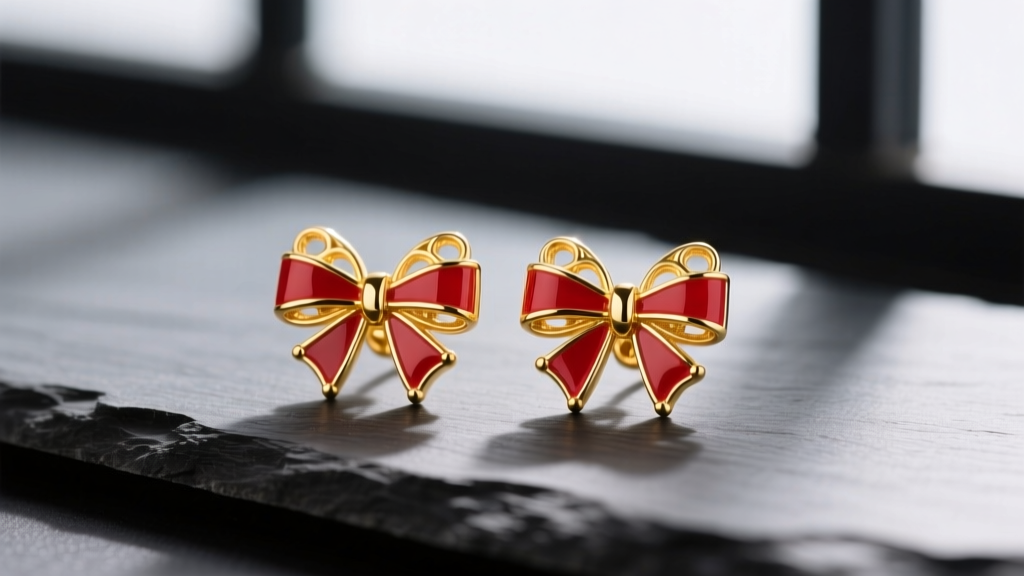
While the "coquette" and balletcore aesthetics popularized the red bow motif between 2024 and 2026, transitioning this trend from fast-fashion novelty to enduring fine jewelry requires rigorous material science and structural engineering. As a motif, the bow is deceptively complex. Its asymmetrical loops, central knot, and trailing ribbons create multiple stress concentration points that challenge traditional casting methods. For collectors and enthusiasts seeking high-quality red bow earrings, understanding the metallurgy, enamel chemistry, and hardware engineering is essential to differentiate between disposable trend pieces and heirloom-grade jewelry.
The Anatomy of a Bow Earring: Structural Integrity and Casting
The structural viability of a bow earring begins at the casting stage. Most mass-market bow earrings are produced via stamped sheet metal or hollow electroforming. While these methods keep costs and weight low, they result in pieces that crush easily under minor lateral pressure. Fine jewelry red bow earrings, conversely, utilize lost-wax investment casting in solid 14k or 18k gold, or platinum.
The most critical vulnerability in any bow design is the central "knot." In a solid cast piece, the knot acts as a structural bridge between the left and right loops. If the wax master is carved too thinly at this junction to save on gold weight, the resulting metal casting will suffer from metal fatigue and eventual shear failure. Expert jewelers reinforce the knot by adding a hidden internal strut or casting it 20% thicker than the loops, then using strategic high-polish bevels to maintain the optical illusion of a delicate fabric tie.
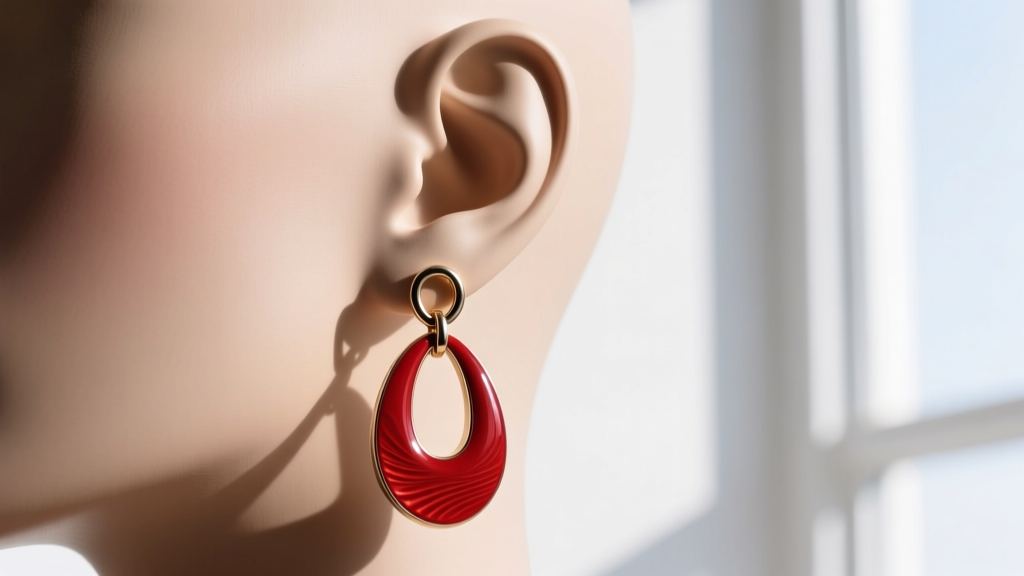
Furthermore, the "tails" of the bow present a cantilever weight problem in dangle or drop earring variations. If the tails extend more than 15mm below the primary axis of the ear wire without adequate counterbalancing, the earring will perpetually droop forward, placing uneven torque on the earlobe piercing.
Decoding the "Red" Spectrum: Enamel, Resin, and Gemstone Grades
The "red" in red bow earrings is rarely achieved through a single material. Jewelers must choose between surface treatments (enamels and resins) or structural gemstone inlays. The longevity and visual depth of the earring depend entirely on this choice.
Vitreous Enamel vs. Cold Epoxy Resin
High-end red bow earrings utilize guilloché vitreous enamel. This process involves fusing finely ground silica-based glass powder to a textured gold dial at temperatures exceeding 1450°F (788°C). The result is a translucent, UV-stable cherry or oxblood red that will never yellow or degrade. Conversely, demi-fine and fashion brands rely on cold enamel (tinted epoxy resin). While visually similar upon initial purchase, epoxy resin possesses a Mohs hardness of only 2.0 to 2.5, making it highly susceptible to micro-scratches, and it will inevitably yellow when exposed to UV radiation and cosmetic chemicals over a 2-to-3-year lifespan.
Gemstone Alternatives for the Red Bow
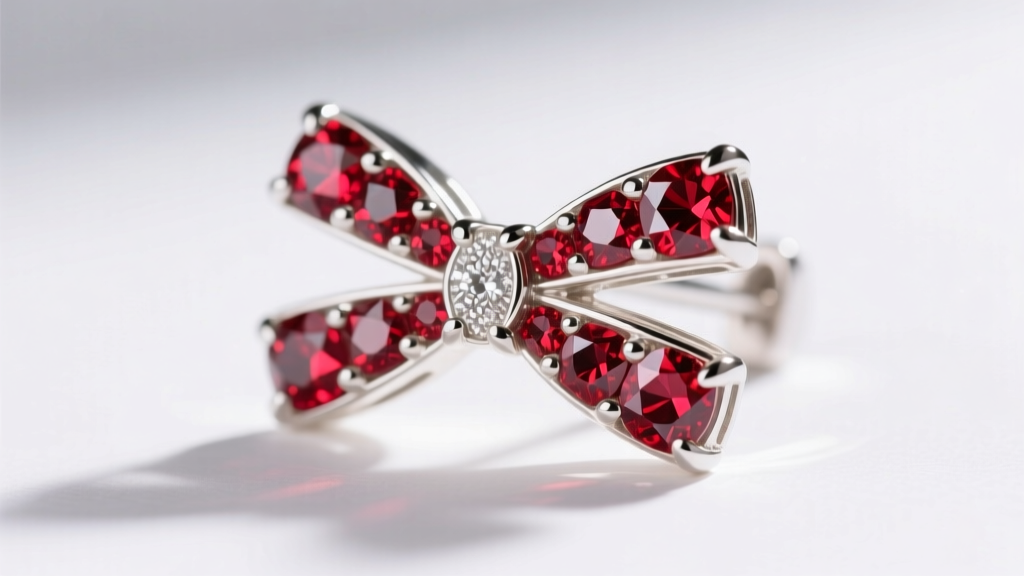
When the bow is rendered in gemstones rather than enamel, the choice of red stone dictates both the price point and the structural durability of the pavé setting.
| Material | Application | Mohs Hardness | Longevity & Wearability |
|---|---|---|---|
| Vitreous Enamel | Opaque or Guilloché Bows | 3.5 - 4.0 | Generations (Requires protection from hard impacts to prevent shattering) |
| Cold Epoxy Resin | Fashion / Demi-Fine Bows | 2.0 - 2.5 | 1-3 Years (Prone to UV yellowing and chemical degradation from perfumes) |
| Red Spinel | Premium Pavé or Center Stones | 8.0 | Lifetime (Exceptional brilliance, lacks cleavage planes, highly chip-resistant) |
| Rhodolite Garnet | Accent Stones & Deep Tones | 7.0 - 7.5 | Lifetime (Excellent purplish-red hue, but requires care against sharp blows) |
According to the Gemological Institute of America (GIA), red spinel is often the superior choice for intricate pavé bow designs. Unlike ruby, which frequently requires fracture-filling or heat treatment that can weaken the stone during the setting process, spinel is naturally durable and takes an exceptional polish, allowing the microscopic facets on a bow's "ribbon" to catch light dynamically. For deeper, more romantic burgundy tones, rhodolite garnet offers a cost-effective, untreated alternative with excellent optical clarity.
Post and Clasp Engineering for Statement Bows
The hardware supporting a red bow earring must counteract the motif's inherent weight distribution issues. A solid 18k gold bow stud measuring 15mm x 10mm can easily weigh between 3.5 and 5 grams. Standard butterfly friction backs, designed for lightweight 1-gram studs, will fail to support this mass, causing the bow to tilt downward and the post to stretch the piercing.
Gauge Thickness and the "Cheese-Cutter" Effect
Standard earlobe piercings are typically 20-gauge (0.81mm) or 18-gauge (1.02mm). For heavy bow drop earrings, an 18-gauge post is mandatory. Using a thin 22-gauge or 20-gauge post on a heavy, swinging bow drop creates a "cheese-cutter" effect, where the thin wire slowly migrates through the earlobe tissue due to the pendulum momentum of the bow tails, eventually tearing the piercing.
Clasp Mechanisms
For bow dangles and drops, expert jewelers abandon standard friction posts in favor of omega-back clasps or lever-backs with silicone O-ring stoppers. An omega-back provides a wide, curved surface area that grips the earlobe and distributes the 4+ gram weight of a solid gold bow evenly across the cartilage and lobe, preventing the earring from pivoting forward. For bow ear cuffs (which require no piercing), the tension of the C-clasp must be calibrated to exactly 1.2mm of give to secure the helix without inducing ischemia (restricted blood flow) in the cartilage.
Real-World Failure Modes and Troubleshooting
Even well-crafted red bow earrings can succumb to specific failure modes if not maintained correctly. Understanding these vulnerabilities allows collectors to inspect vintage and new pieces with a critical eye.
- Guilloché Enamel Shattering: Vitreous enamel is essentially glass fused to metal. If the gold base is bent even slightly (e.g., dropping the earring on a hard tile floor), the metal will flex, but the enamel will not, resulting in a spiderweb fracture. Troubleshooting: Always store enameled bow earrings in individual, hard-shell travel cases, never loose in a jewelry box.
- Pavé Prong Snagging: The tight curves of a bow shape require setting stones at compound angles. If the prongs on the outer edge of the bow's loop are not "flush-set" or "bezel-set," they will constantly snag on silk and knitwear, eventually lifting and losing the red spinels or garnets. Troubleshooting: Run a piece of silk chiffon over the earring; if it snags, the prongs need immediate professional re-tipping.
- Resin Delamination: In demi-fine cold enamel bows, the epoxy resin will eventually shrink microscopically as it cures and ages, pulling away from the gold bezel wall. This creates a microscopic gap where skin oils and lotion accumulate, turning the red bow cloudy and yellowish at the edges.
Investment Tiers and Pricing Framework
When evaluating red bow earrings in the current market, pricing is strictly segmented by material integrity and manufacturing origin.
Fashion Tier ($30 - $90): Brass or sterling silver bases plated in 14k gold, utilizing cold epoxy resin for the red coloration. Posts are often 22-gauge steel or silver. Expected lifespan: 1-2 years before plating wear and resin yellowing.
Demi-Fine Tier ($150 - $450): Solid 14k gold or heavy gold vermeil, featuring lab-created rubies, synthetic red spinel, or high-grade UV-stable resins. Hardware is upgraded to 18-gauge posts with custom butterfly backs. Expected lifespan: 5-10 years with careful wear.
Fine / Heirloom Tier ($1,200 - $5,000+): Solid 18k gold or platinum, featuring kiln-fired guilloché vitreous enamel or natural, untreated red spinel pavé. Engineered with reinforced knot casting and omega-back clasps. Expected lifespan: Generational.
Ultimately, the red bow earring is a masterclass in balancing whimsical aesthetics with unforgiving physics. By scrutinizing the enamel type, verifying the gemstone hardness, and demanding structurally sound hardware, you ensure that this romantic motif survives long after the trend cycle fades.


