How to Take Hoop Earrings Out: A Value & Durability Guide
Learn how to take hoop earrings out safely by clasp type. We assess the budget versus long-term value of hinge, clicker, and wire hoop mechanisms.

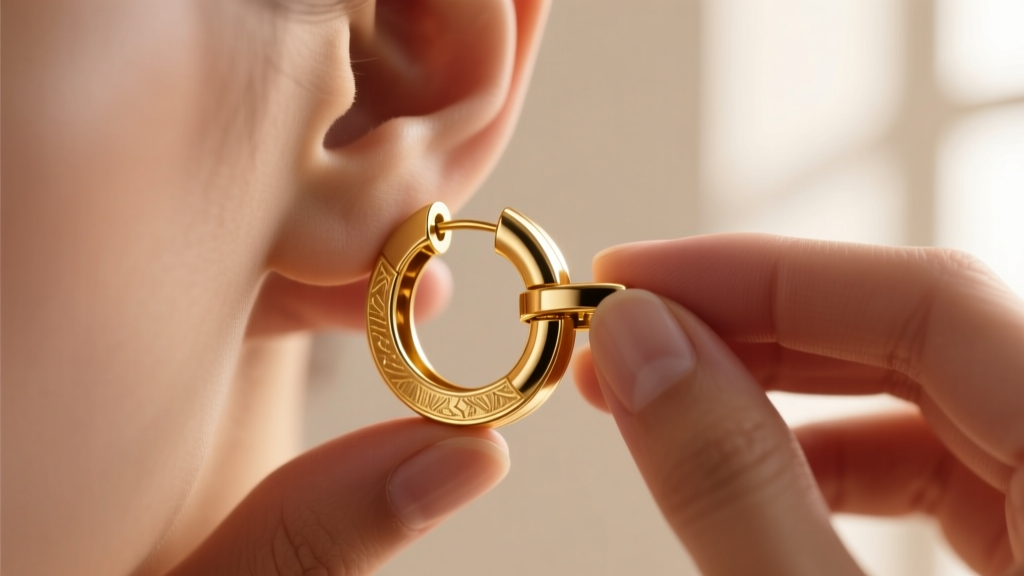
Learning how to take hoop earrings out should be a seamless, frustration-free process. Yet, for many jewelry wearers, removing a pair of hoops involves bending metal, struggling with microscopic clasps, or worse, snapping a delicate wire post. While the immediate concern is simply getting the jewelry out of your ear, the underlying issue is deeply tied to the budget and long-term value of the earrings you purchase. The mechanism that dictates how you remove your hoops is the exact same mechanism that determines whether your jewelry will last a lifetime or end up in the trash after three months.
In this comprehensive guide, we break down exactly how to take hoop earrings out based on their specific clasp designs. More importantly, we evaluate the true cost-to-value ratio of each mechanism, helping you make informed purchasing decisions that prioritize durability, material integrity, and long-term financial sense.
The Hidden Cost of Cheap Hoop Mechanisms
When shopping on a budget, it is tempting to purchase inexpensive hoop earrings priced between $15 and $30. These budget-friendly options almost universally rely on the classic wire-and-tube friction clasp. While the initial financial outlay is low, the long-term value assessment tells a different story. The repeated bending required to insert and remove these hoops causes metal fatigue. According to jewelry manufacturing standards detailed by the Ganoksin Jewelry Making Community, work-hardening base metals or low-karat gold alloys through repetitive bending eventually leads to structural failure.
If you replace a $20 pair of wire hoops every six months due to bent posts or lost earrings, your five-year cost is $200. Conversely, investing $120 in a pair of hinged clicker hoops crafted from implant-grade titanium or solid 14k gold yields a cost-per-wear that drops to pennies over the same period, while completely eliminating the frustration of difficult removal.
Step-by-Step: How to Take Hoop Earrings Out by Clasp Type
The method for removing your earrings depends entirely on the engineering of the clasp. Using the wrong technique is the fastest way to destroy the jewelry. Below is the definitive guide to removing the four most common hoop styles.
1. The Classic Wire-and-Tube (Friction) Clasp
This is the most common mechanism on budget and mid-tier hoop earrings. It features a thin wire post that pushes into a hollow metal tube on the opposite end of the hoop.
- How to remove: Hold the main body of the hoop steady with one hand. With your other hand, gently grip the wire post near its base. Pull the wire straight out of the tube. If it resists, apply a slight downward or upward twisting motion, but never bend the wire laterally.
- Value Assessment: Low. The wire is typically 20-gauge (0.81mm) or 18-gauge (1.02mm). It is highly prone to bending, which misaligns the post and makes future insertions painful and difficult.
2. The Hinged Snap-Back Clasp
Common in mid-range to fine jewelry, this design features a hinged post that snaps into a grooved catch on the opposite side of the hoop.
- How to remove: Locate the nearly invisible seam where the post meets the hoop. Place your thumbnail on the bottom curve of the hoop and your index finger on the hinged post. Gently pull the post downward away from the catch until you hear or feel a soft click.
- Value Assessment: Medium to High. The hinge pin is the point of failure. Stamped brass or silver hinges will wear down and lose their 'snap' within a few years. Machined hinges in solid 14k gold or platinum retain their tension for decades, offering excellent long-term value.
3. The Continuous (Endless) Hoop
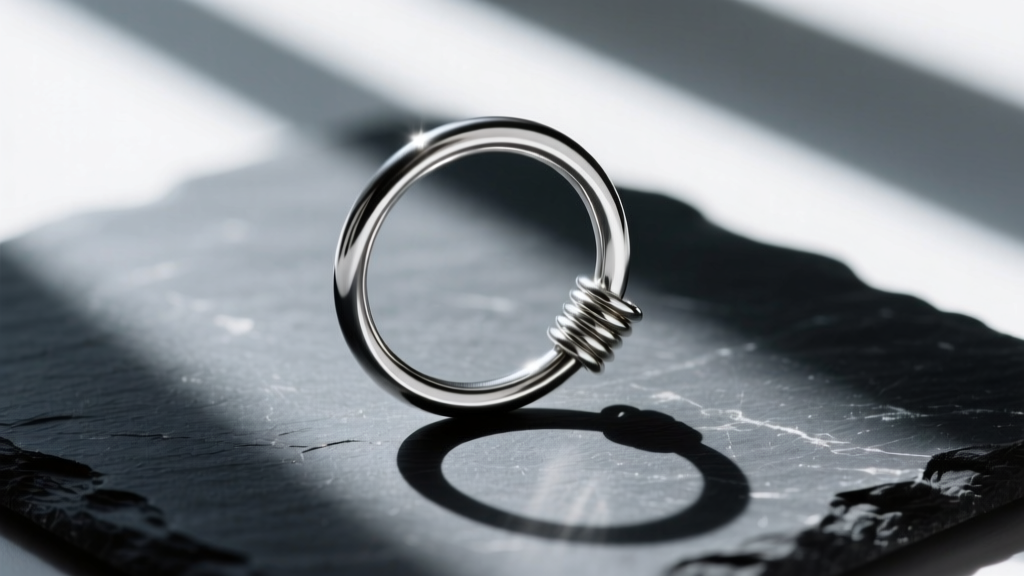
Often used for cartilage piercings, helixes, and septums, these hoops have no visible clasp. One end is slightly thinner and fits snugly inside the hollow opposite end via tension.
- How to remove: Never pull the ends straight apart, as this will warp the circular shape. Instead, grip both sides of the seam and twist them laterally in opposite directions (one towards you, one away from you). Slide the thin end out, and twist back to the original shape before setting down.
- Value Assessment: Medium. While they lack moving parts to break, continuous hoops are easily lost if dropped during the twisting removal process. They are best valued in heavier gauges (14g or 12g) where the metal is thick enough to resist accidental warping.
4. The Clicker (Hinged Segment) Ring
The gold standard for modern body jewelry and high-end cartilage hoops. The entire segment of the ring hinges open and clicks securely into a machined groove.
- How to remove: Find the tiny divot or lip on the segment opposite the hinge. Use your thumbnail to catch the lip and lift the segment upward. It will pop open with a satisfying click.
- Value Assessment: Very High. Clickers require precise CNC machining. While the upfront cost is higher ($60 to $300+), the secure locking mechanism means you will almost never lose the earring, and the hinge is protected from daily wear and tear.
Budget vs. Value Assessment: Which Hoop Clasp is Worth Your Money?
To visualize the financial and practical differences between these mechanisms, review the comparison chart below. This data synthesizes average market pricing with expected functional lifespans.
| Clasp Mechanism | Typical Gauge | Avg. Price Range | Expected Lifespan | Removal Difficulty |
|---|---|---|---|---|
| Wire-and-Tube | 20g - 18g | $15 - $45 | 6 - 18 Months | Moderate (Prone to sticking) |
| Hinged Snap-Back | 18g - 16g | $50 - $150 | 3 - 10 Years | Easy |
| Continuous Hoop | 16g - 12g | $25 - $80 | 5+ Years | High (Requires twisting) |
| Clicker Segment | 16g - 14g | $70 - $300+ | Lifetime | Very Easy |
As the Association of Professional Piercers (APP) notes, investing in higher-quality, internally threaded or hinge-based jewelry significantly reduces tissue trauma and jewelry loss. When you factor in the cost of replacing lost or broken budget hoops, the clicker and high-quality hinged snap-back mechanisms offer the highest return on investment.
Material Grades and Earring Removal Friction
The material of your hoop directly impacts how smoothly it slides out of your piercing. Budget earrings often use nickel-silver or low-karat gold alloys that are prone to micro-abrasions. These microscopic scratches act like sandpaper against your earlobe, creating friction that makes removal uncomfortable.
For the smoothest removal experience, prioritize the following materials:
- Implant-Grade Titanium (ASTM F-136): Highly polished, hypoallergenic, and incredibly smooth. Ideal for sensitive piercings where removal friction causes irritation.
- Niobium: Softer than titanium but naturally hypoallergenic and easily polished to a mirror finish.
- Solid 14k or 18k Gold (Nickel-Free): Provides a luxurious, low-friction surface, provided it is alloyed with palladium or silver rather than nickel, which can cause allergic contact dermatitis and swelling that traps the earring in the lobe.
Troubleshooting Stuck Hoop Earrings Without Damaging the Metal
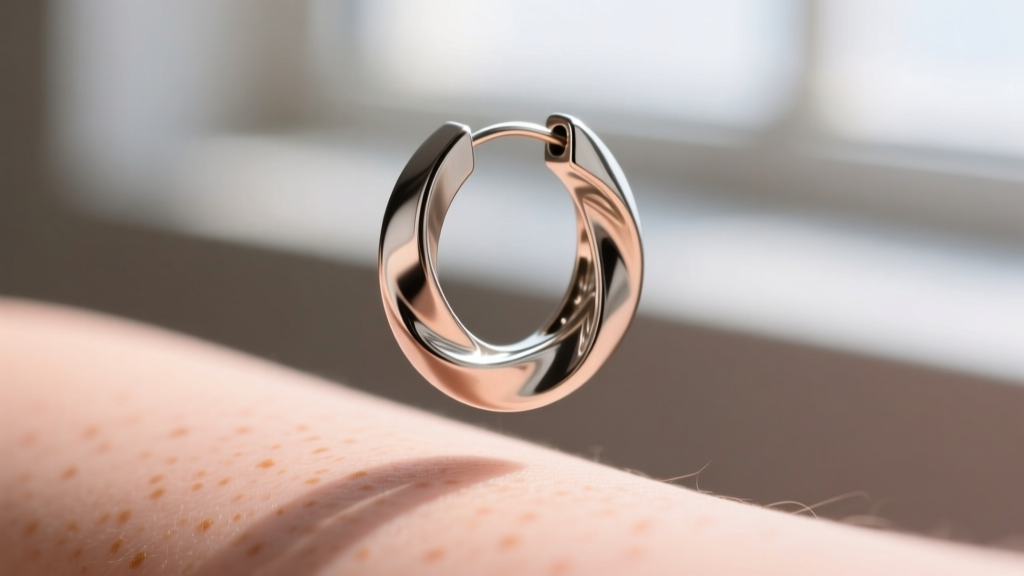
Occasionally, you may encounter a hoop earring that refuses to come out. This is most common with wire-and-tube clasps where the wire has bent, or with continuous hoops where debris has lodged in the tension joint. Forcing the jewelry will result in torn earlobes or snapped metal.
Expert Troubleshooting Tip: If a wire post is stuck inside a tube clasp, do not use pliers. Pliers will crush the hollow tube, ruining the earring and potentially pinching your skin. Instead, apply a warm compress to the earlobe to reduce any minor swelling. Then, use a sterilized 22-gauge needle to gently clear out any hardened sebum or soap residue trapped inside the tube. Once cleared, the wire should slide out with gentle lateral wiggling.
For hinged clickers that feel 'stuck' shut, the issue is usually a buildup of dead skin cells and lotion in the machined groove. A soft-bristled toothbrush dipped in warm water and mild antibacterial soap will clear the groove, allowing the segment to lift open easily without bending the hinge pin.
Final Verdict on Hoop Earring Investment
Understanding how to take hoop earrings out is ultimately an exercise in understanding jewelry engineering. While budget-friendly wire hoops serve a purpose for fast-fashion trends, they are a poor long-term financial investment due to their inherent structural fragility. By shifting your budget toward hinged snap-backs or CNC-machined clicker rings in durable materials like titanium or solid gold, you eliminate the daily frustration of removal, protect your piercings from unnecessary trauma, and acquire pieces that retain their functional and aesthetic value for a lifetime.


