How to Restore and Clean Your Red Agate Earrings Safely
Learn how to troubleshoot, clean, and restore faded red agate earrings. Expert tips on identifying dyed stones, fixing dullness, and safe storage.

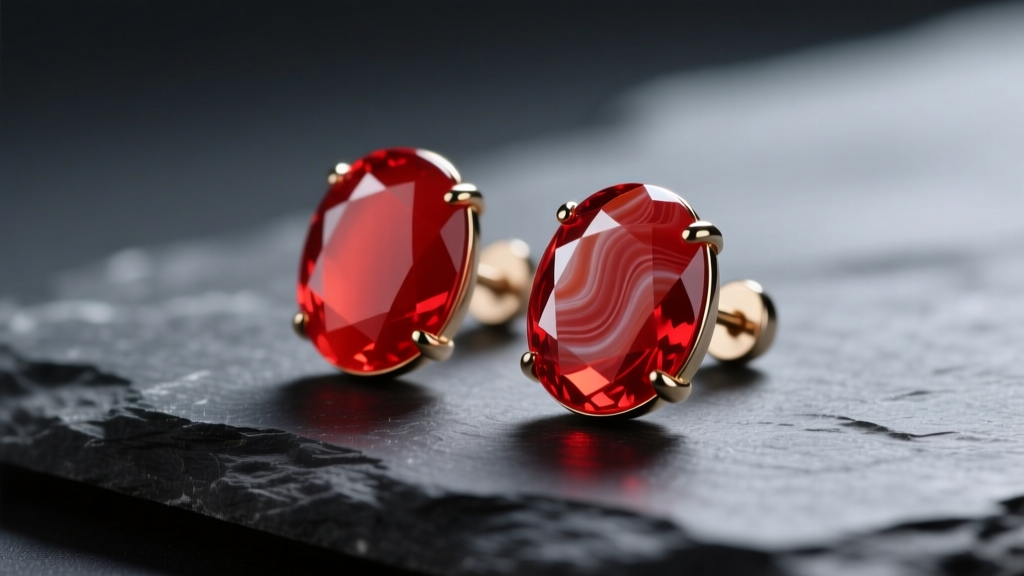
Red agate earrings are prized for their rich, fiery hues and banded translucency. However, many collectors and daily wearers eventually face a frustrating problem: their once-vibrant stones begin to look dull, cloudy, or faded. As a porous chalcedony variant, agate requires highly specific care. In this troubleshooting guide, we will diagnose why your red agate earrings are losing their luster, provide a safe, step-by-step restoration protocol, and address the hardware failures that often accompany dense gemstone jewelry.
The Chemistry of Red Agate: Why Fading Occurs
To troubleshoot fading, you must first understand the origin of your stone's color. According to the Gemological Institute of America (GIA), naturally occurring bright red agate is exceptionally rare. The vast majority of commercial red agate is actually gray or pale chalcedony that has been treated. The most common enhancement involves soaking the porous stone in an iron salt solution and subsequently heating it to oxidize the iron, resulting in a permanent red or orange-red hue (often sold as carnelian). However, some lower-tier manufacturers use organic surface dyes to achieve unnatural 'fire engine' reds.
If your earrings are fading, you likely own organically dyed agate. Organic dyes are highly susceptible to UV degradation. Prolonged exposure to direct sunlight breaks down the molecular bonds of the dye, causing the red to bleed into a muddy brown or pale pink. Furthermore, contact with acidic substances—including citrus juices, vinegar, and even the natural pH of human sweat (which typically ranges from 4.5 to 5.5)—can slowly strip surface dyes and degrade the stone's polished finish.
Troubleshooting Dullness: The Acetone Test
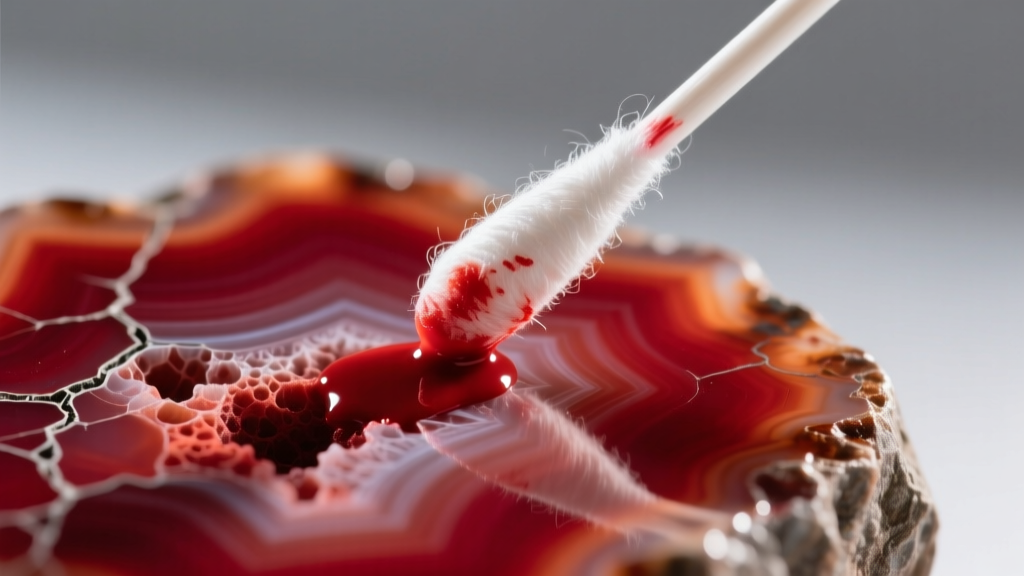
Before attempting any restoration, you must determine if your red agate earrings are dyed with unstable organic compounds. You can perform a non-destructive acetone test to diagnose the stone's treatment.
How to Perform the Test Safely
- Isolate the Stone: Ensure the earring setting is not made of porous materials like untreated silver or low-karat gold, which acetone can damage.
- Apply Acetone: Dip a cotton swab in pure, non-oily nail polish remover (acetone).
- Test an Inconspicuous Area: Gently rub the swab against the back or bottom edge of the agate cabochon for 10 seconds.
- Analyze the Result: If the swab picks up red pigment, your earrings are surface-dyed. If the swab remains clean, the color is either naturally occurring, heat-treated with iron salts, or deeply penetrated and stable.
If the swab reveals dye, you must avoid all chemical cleaners, ultrasonic baths, and alcohol-based solutions, as these will accelerate the fading process. Stick strictly to mechanical cleaning with distilled water.
Step-by-Step Restoration Protocol
For stable, heat-treated, or natural red agate, restoring the factory polish requires removing the microscopic layer of dead skin cells, sebum, and environmental dust that scatters light and causes cloudiness.
The Safe Cleaning Solution
Never use commercial jewelry dips. Many contain ammonia or thiourea, which can react with the iron inclusions in red agate, causing permanent dark spotting. Instead, create a pH-neutral bath:
- Mix 8 ounces of distilled water (tap water contains chlorine and hard minerals that leave microscopic scratches) with 3 drops of pH-neutral dish soap (such as Dawn Free & Clear).
- Submerge the earrings for exactly 3 to 5 minutes. Do not exceed this, as prolonged water exposure can weaken the adhesive in bezel or glue settings.
- Using an ultra-soft baby toothbrush (bristle diameter under 0.1mm), gently sweep the bristles across the surface of the agate and into the crevices of the setting.
- Rinse briefly under a slow stream of lukewarm distilled water.
- Pat dry with a lint-free microfiber cloth. Do not air dry, as water spots will form on the polished surface.
Hardware Strain: Managing Agate's Specific Gravity
A common, overlooked issue with agate earrings is lobe strain and hardware failure. According to the Mindat.org mineral database, agate has a specific gravity of 2.58 to 2.64. This makes it noticeably denser and heavier than quartz or glass. A pair of 30mm agate teardrops can easily weigh 15 to 20 grams, which is enough to permanently stretch a standard earlobe piercing over time.
Upgrading Your Hardware
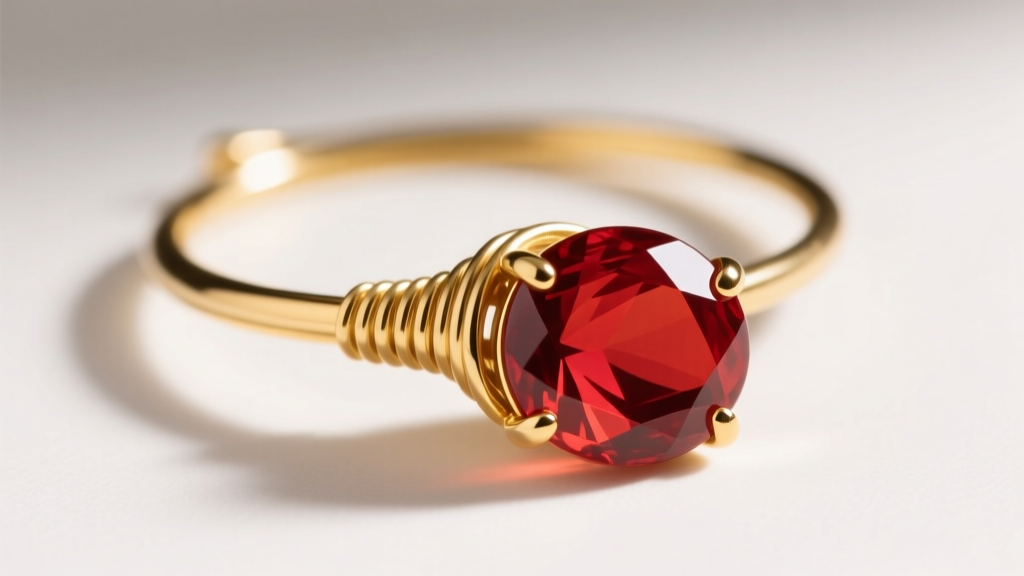
If your red agate earrings are pulling on your lobes or the ear wires are bending outward, the gauge of the wire is insufficient. Standard fashion earrings use 20-gauge (0.81mm) or 22-gauge (0.64mm) wire. For heavy agate drops, you must upgrade the hardware.
| Wire Gauge | Diameter (mm) | Weight Capacity | Best Use Case for Agate |
|---|---|---|---|
| 22-Gauge | 0.64mm | Under 4g | Small 6mm studs only |
| 20-Gauge | 0.81mm | Up to 8g | Standard 10mm cabochons |
| 18-Gauge | 1.02mm | Up to 15g | Medium drops and hoops |
| 16-Gauge | 1.29mm | Over 15g | Heavy briolettes and large dangles |
Troubleshooting Tip: If you cannot replace the wire, use silicone O-ring earring backs (3mm diameter) instead of standard metal butterfly backs. The silicone provides high-friction grip and distributes the weight of the heavy agate across a wider surface area of the earlobe, preventing the 'drooping' effect.
Preventative Storage and Maintenance
Because agate ranks at 6.5 to 7 on the Mohs hardness scale, it is highly resistant to scratching from everyday dust (which contains quartz, hardness 7). However, it is brittle and possesses a conchoidal fracture. Storing red agate earrings improperly can lead to chipping along the edges of the cabochon.
"Always store chalcedony jewelry in individual, soft-lined compartments. While agate is hard enough to resist scratches, its brittle nature makes it susceptible to edge chipping if dropped or knocked against harder gemstones like diamonds or sapphires."
To maintain the vibrancy of your red agate earrings long-term, store them in an anti-tarnish cloth pouch away from direct UV light. If you live in a high-humidity environment, include a small silica gel packet in your jewelry box to prevent moisture from degrading the metal settings, which can cause green copper oxidation to seep into the porous edges of unsealed agate stones. By understanding the unique mineralogy and treatment history of your earrings, you can keep them looking brilliant for decades.


