How to Restore and Style Tarnished Heart Silver Earrings
Learn how to safely clean, restore, and style heart silver earrings. Expert steps for removing tarnish and choosing the right fit for your piercings.

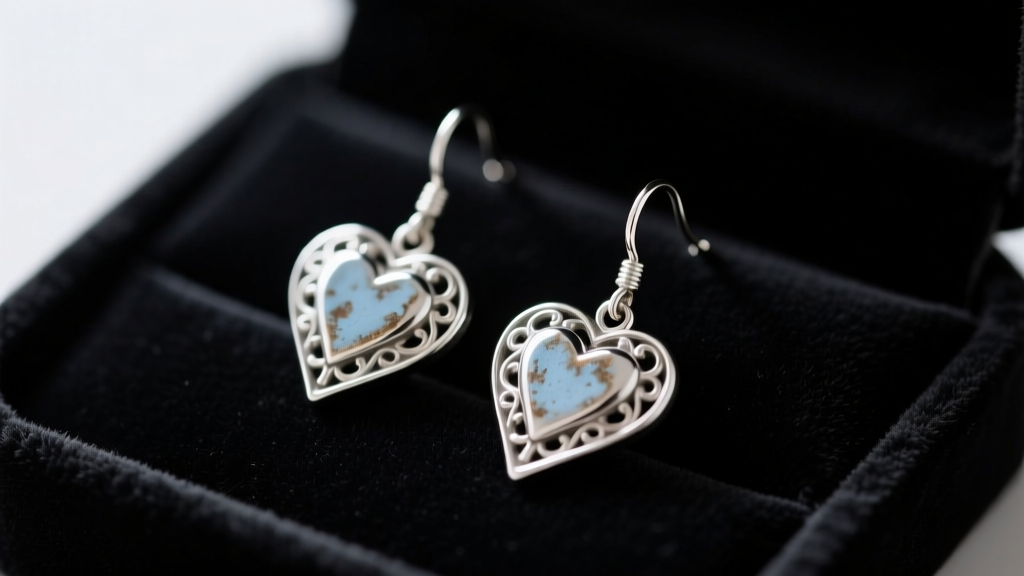
Heart silver earrings are a timeless staple in any jewelry collection, but their intricate crevices and high-copper alloy compositions make them magnets for tarnish. Whether you are rocking delicate heart studs, chunky hollow hoops, or cartilage-hugging heart clickers, maintaining their brilliant shine requires more than a quick wipe with a cloth. This comprehensive guide dives deep into the metallurgical science of silver tarnish, provides a step-by-step electrochemical restoration method, and offers expert styling advice to ensure your heart silver earrings fit your piercings and face shape perfectly.
The Chemistry of Tarnish: Why Your Hearts Turn Black
Pure silver is highly resistant to tarnish, but it is too soft for daily wear jewelry. To create durable heart silver earrings, jewelers alloy pure silver with other metals—most commonly copper. According to the Silver Institute, standard sterling silver contains 92.5% pure silver and 7.5% copper. When the copper in your earrings is exposed to moisture, oxygen, and sulfur compounds in the air (or in your sweat), a chemical reaction occurs, forming silver sulfide (Ag2S). This black or yellowish film is what we call tarnish.
Understanding Silver Alloys and Pricing Tiers
Before cleaning, you must identify what type of silver you own. Using harsh chemicals on plated jewelry will strip the finish entirely.
| Silver Type | Composition | Tarnish Resistance | Typical Price Range |
|---|---|---|---|
| Fine Silver (999) | 99.9% Silver | High (Very soft, rare for earrings) | $80 - $200+ |
| Sterling (925) | 92.5% Silver, 7.5% Copper | Moderate (Requires regular care) | $35 - $150 |
| Argentium Silver | 93.5% Silver, Germanium | Very High (Tarnish-resistant) | $60 - $180 |
| Silver Plated | Brass/Copper core, thin Ag coat | Low (Cannot be aggressively polished) | $12 - $35 |
How to Verify Authenticity Before Cleaning
Never submerge earrings in restorative solutions without verifying they are solid silver. Look for hallmark stamps on the earring posts or the back of the heart charms. Authentic pieces will be stamped with '925', 'STER', '999', or 'ARG'. If your heart earrings are magnetic, they are not silver; silver is paramagnetic and will not stick to a neodymium magnet. If you suspect your earrings are merely silver-plated brass, skip the chemical baths and use only a damp microfiber cloth to avoid stripping the microscopic silver layer.
Step-by-Step: The Electrochemical Restoration Method
For solid 925 heart silver earrings with heavy, blackened tarnish, polishing cloths are insufficient and can wear away the silver over time. Instead, use an electrochemical redox reaction. As noted by the Gemological Institute of America (GIA), this method reverses the tarnish without removing any base metal.
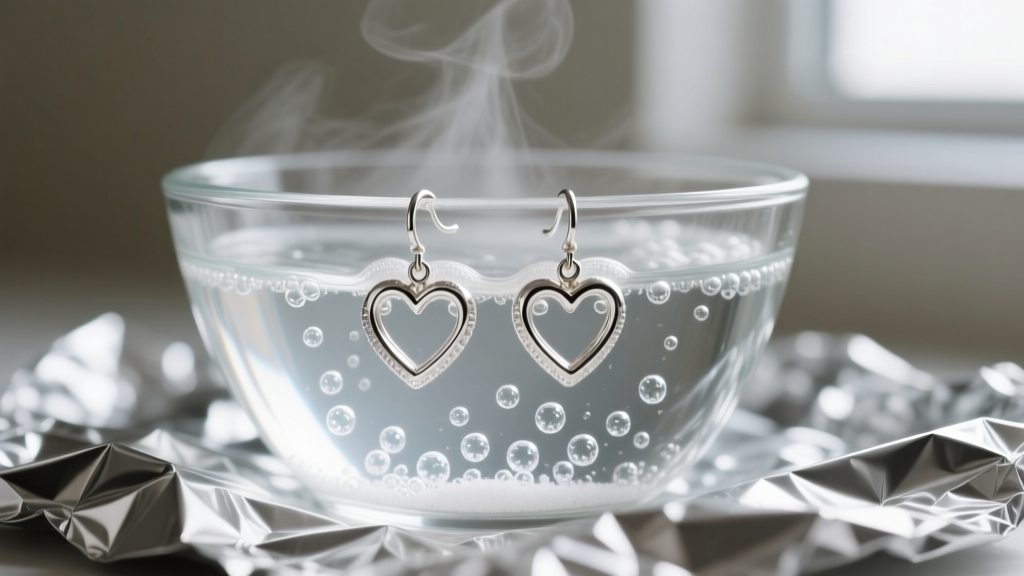
- Prepare the Bath: Line a glass or ceramic bowl with aluminum foil, shiny side facing up. Ensure the foil covers the entire interior.
- Add the Catalysts: Sprinkle 2 tablespoons of baking soda and 1 tablespoon of coarse sea salt over the foil.
- Activate with Heat: Pour boiling water into the bowl. You will see immediate bubbling as the alkaline solution activates.
- Submerge the Earrings: Using wooden tongs, place your heart silver earrings into the water. Critical: The silver must physically touch the aluminum foil to complete the galvanic circuit.
- Wait and Observe: Let them soak for 3 to 5 minutes. The aluminum has a lower ionization energy than silver, meaning it will sacrifice itself, pulling the sulfur atoms away from the silver sulfide and transferring them to the foil.
- Rinse and Dry: Remove the earrings, rinse them thoroughly under cool distilled water to halt the reaction, and buff them completely dry with a lint-free cloth.
Critical Warnings: Gemstones and Plating
The electrochemical method is strictly for plain metal silver earrings. If your heart earrings feature gemstones, you must alter your approach:
- Porous Stones (Pearls, Opals, Turquoise, Coral): Never submerge these in hot water or alkaline solutions. The heat will crack opals, and the baking soda will dissolve the nacre on pearls. Clean the silver parts carefully with a Q-tip dipped in a mild dish soap solution.
- Rhodium-Plated Silver: Many white-gold-looking silver earrings are plated with rhodium to prevent tarnish. If the plating is intact, do not use the aluminum foil method; simply wash with mild soap and water.
- Antiqued/Oxidized Silver: If your heart earrings feature deliberate black detailing in the crevices (oxidized silver), the foil bath will strip the intentional contrast, leaving the piece looking flat and overly bright.
How to Fit and Style Heart Silver Earrings
Beyond maintenance, achieving the perfect look requires understanding piercing gauges, earring diameters, and facial geometry. A beautifully restored earring will still look awkward if the scale is wrong for your anatomy.
Piercing Gauges and Huggie Diameters
Heart-shaped huggies and cartilage clickers are incredibly popular, but buying the wrong inner diameter (ID) leads to painful pinching or sloppy gaps.
- Standard Lobe Piercings: Typically healed at 20g (0.8mm) or 18g (1.0mm). For lobe huggies, look for an ID of 10mm to 12mm to allow the heart charm to dangle freely without pulling on the fistula.
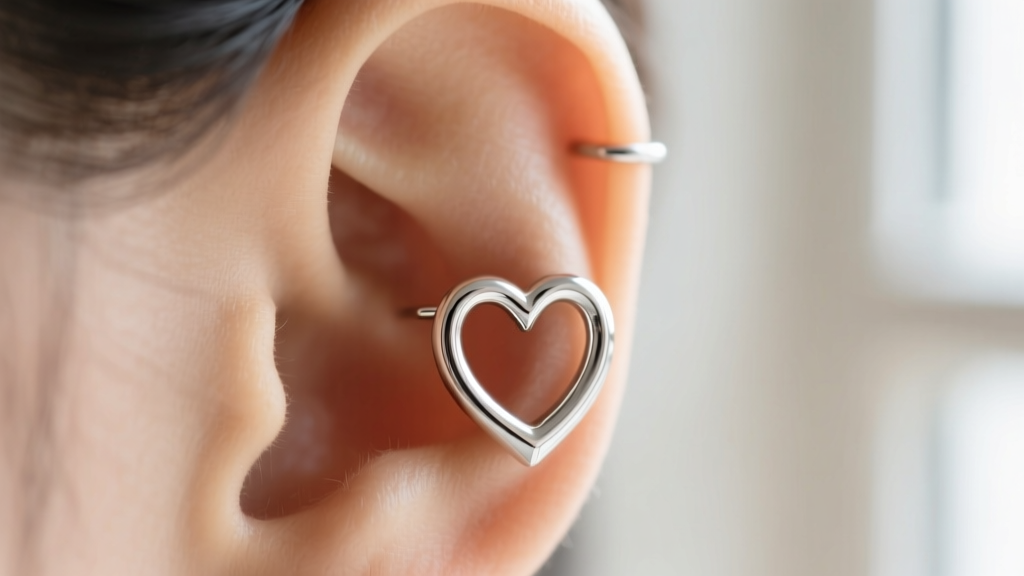
- Helix / Cartilage Piercings: Usually pierced at 16g (1.2mm) or 14g (1.6mm). Cartilage swells more easily, so opt for a slightly thicker post and a tighter ID (8mm to 9mm) so the heart sits flush against the ear ridge.
- Tragus Piercings: Because the tragus is thick, ensure the earring post is at least 6mm long, and choose a small, lightweight 6mm heart stud to avoid catching on hair or headphones.
Face Shape Pairing Guide
The silhouette of your heart silver earrings can balance or exaggerate your natural facial proportions.
- Round Faces: Avoid wide, chunky heart studs that add horizontal volume. Instead, opt for elongated heart drop earrings or linear dangles that draw the eye downward and create the illusion of a longer jawline.
- Heart-Shaped Faces: Your chin is naturally narrow, and your forehead is wider. Choose heart earrings that are wider at the bottom, such as teardrop-infused hearts or chandelier styles, to add visual weight to the lower half of your face.
- Square Faces: Soften strong jawlines with curved, rounded heart hoops or huggies. Avoid sharp, geometric, or angular heart designs that mimic the sharpness of the jaw.
- Oval Faces: You have the most versatility. From oversized hollow heart hoops to delicate diamond-accented heart studs, almost any proportion will complement your balanced features.
Long-Term Storage and Anti-Tarnish Hacks
Restoring your earrings is only half the battle; preventing the sulfur reaction from recurring is essential. Never store your silver jewelry in the bathroom, where high humidity and aerosolized chemicals accelerate oxidation. Furthermore, if you have sensitive skin or a known metal allergy, keeping your silver clean is a medical necessity, as tarnished alloys can trap bacteria and exacerbate contact dermatitis, a condition well-documented by the American Academy of Dermatology.
Pro-Tip: Place a piece of standard white chalk or a commercial 3M anti-tarnish strip inside your jewelry box or ziplock bag. The chalk absorbs ambient moisture, while the anti-tarnish strip actively neutralizes airborne sulfur gases, keeping your heart silver earrings brilliant for months.
By understanding the metallurgy of your jewelry and treating it with scientifically sound cleaning methods, your heart silver earrings will remain a radiant, perfectly fitted staple in your rotation for decades to come.


