How to Clean and Restore Tarnished Garnet Earrings Silver Settings
Learn how to safely clean and restore tarnished garnet earrings silver settings. Expert troubleshooting tips for 925 sterling silver and porous gems.

The Chemistry of Silver Tarnish and Garnet Vulnerability
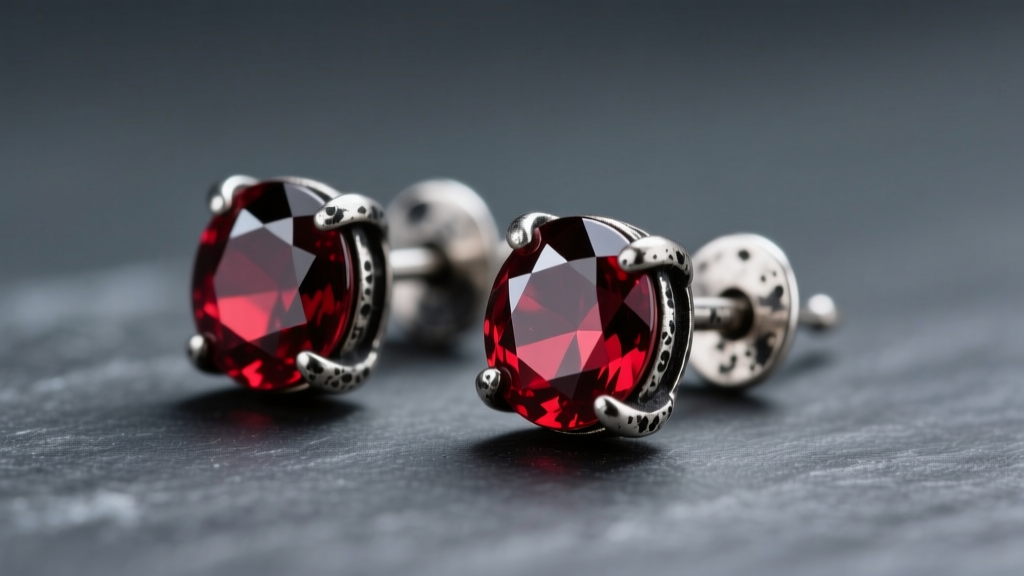
When your favorite garnet earrings silver settings begin to lose their luster, you are witnessing a predictable chemical reaction. Sterling silver, stamped as 925, consists of 92.5% pure silver and 7.5% alloy metals—usually copper. While pure silver is highly resistant to oxidation, the copper alloy is highly reactive to hydrogen sulfide (H2S) and sulfur dioxide in the atmosphere. This reaction forms silver sulfide (Ag2S), which manifests as a yellow, brown, or eventually black film on the surface of your earrings.
Troubleshooting this issue requires a dual approach: removing the sulfide layer from the metal without damaging the gemstone. According to the Gemological Institute of America (GIA), garnets are a diverse group of silicate minerals with varying physical properties. While they generally rank between 6.5 and 7.5 on the Mohs hardness scale, their internal inclusion structures make them highly susceptible to thermal shock and chemical damage if cleaned incorrectly alongside their silver settings.
Diagnosing Your Garnet Earrings Silver Damage
Before applying any cleaning solution, you must diagnose the severity of the tarnish and the specific type of garnet in your earrings. Misidentifying the gemstone variety is the most common cause of irreversible damage during home cleaning.
- Light Yellow/Brown Tarnish: Early-stage oxidation. Easily removed with mild surfactants and mechanical friction.
- Heavy Black Tarnish: Advanced silver sulfide buildup. Requires an electrochemical redox reaction to convert the sulfide back into elemental silver without stripping the metal.
- Prong Degradation: Sterling silver is relatively soft. Heavy tarnish often hides worn or bent prongs. Always inspect the setting with a 10x jeweler's loupe before submerging the piece in any liquid.
Garnet Varieties and Their Specific Cleaning Risks
Not all garnets are created equal. The specific mineralogical makeup of your gemstone dictates which cleaning methods are safe for your garnet earrings silver settings.
Almandine and Pyrope (Deep Red)
These are the most common and durable garnets (Mohs 7-7.5). They can withstand warm water, mild dish soap, and the aluminum foil redox method. However, they should never be placed in an ultrasonic cleaner, as the high-frequency cavitation can fracture the stones along their natural crystal planes.
Tsavorite (Vibrant Green Grossular)
Tsavorite is highly prized but notoriously sensitive to sudden temperature changes. Submerging a tsavorite garnet in boiling water—a common step in DIY silver cleaning—will likely cause thermal shock, resulting in internal fracturing and a permanent cloudy appearance.
Demantoid (Green Andradite)
Demantoid garnets are famous for their 'horsetail' inclusions (radiating asbestos fibers). These inclusions are structurally weak points. Harsh chemicals, acids, or ultrasonic vibrations will easily shatter a demantoid. Demantoid garnet earrings silver settings must only be cleaned with a damp, soft cloth and a dry silver polishing rag.
Step-by-Step Troubleshooting: Safe Cleaning Methods
Based on the diagnosis above, select the appropriate troubleshooting method. The Silver Institute recommends avoiding abrasive pastes, which can scratch both the silver and the gemstone's polish.
Method 1: The Mild Surfactant Wash (For Light Tarnish & Tsavorite/Demantoid)
- Mix three drops of phosphate-free, ammonia-free dish soap (like Dawn) into a bowl of lukewarm distilled water.
- Submerge the earrings for exactly 3 minutes. Do not use hot water.
- Use a baby-soft toothbrush to gently agitate the silver around the prongs and the back of the earring post.
- Rinse under a gentle stream of lukewarm distilled water and pat dry with a lint-free microfiber cloth.
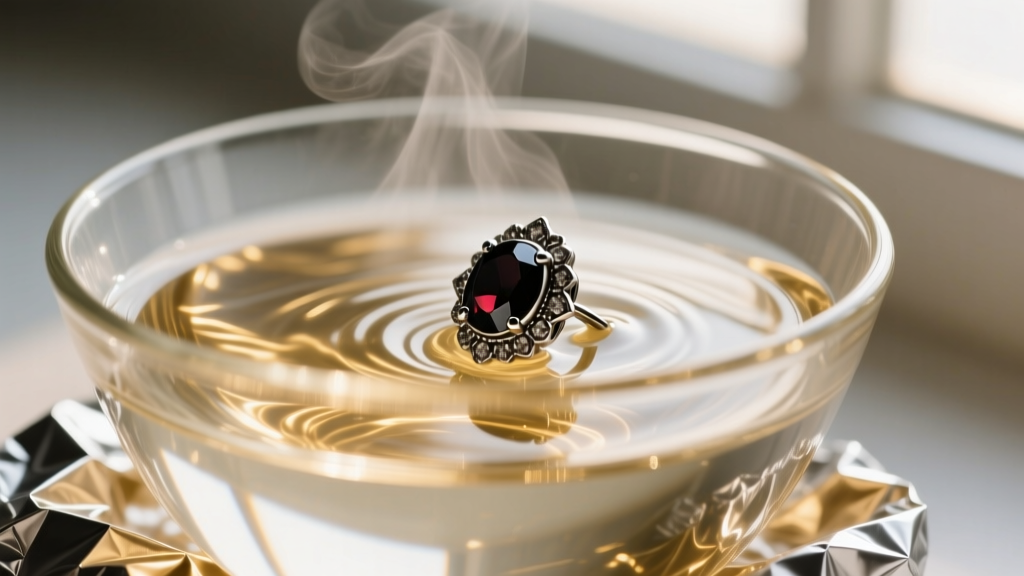
Method 2: The Aluminum Foil Redox Reaction (For Heavy Tarnish on Almandine/Pyrope)
This method uses electrochemistry to reverse the tarnishing process without removing any silver.
- Line a glass bowl with aluminum foil, shiny side up.
- Place your almandine or pyrope garnet earrings silver settings directly on the foil. The metal must touch the aluminum.
- Sprinkle 1 tablespoon of baking soda (sodium bicarbonate) and 1 teaspoon of non-iodized salt over the earrings.
- Pour 1 cup of boiling water into the bowl. The heat accelerates the redox reaction, while the baking soda acts as an electrolyte.
- Allow to soak for 3 to 5 minutes. You will smell sulfur (like rotten eggs) as the silver sulfide is converted back to pure silver and transfers to the aluminum foil.
- Remove with wooden tongs, rinse in cool distilled water, and buff with a jeweler's cloth.
CRITICAL WARNING: Never use the boiling water redox method on fracture-filled garnets, tsavorites, or demantoids. The thermal shock will destroy the gemstone. For these varieties, rely exclusively on Method 1 and a dry anti-tarnish polishing cloth for the metal.
Troubleshooting Chart: Cleaning Agents to Avoid
Many commercial jewelry cleaners contain chemicals that will permanently etch your gemstones or strip the rhodium plating often found on modern silver earrings.
| Cleaning Agent | Effect on 925 Silver | Effect on Garnet | Verdict |
|---|---|---|---|
| Chlorine Bleach | Causes irreversible pitting and blackening | Etches the surface, dulling the polish | NEVER USE |
| Toothpaste (Abrasive) | Removes tarnish but leaves micro-scratches | Scratches the facet junctions (Mohs 3 abrasives) | AVOID |
| Ammonia-based Cleaners | Effective on silver, but strips anti-tarnish coatings | Can degrade fracture-fillings and damage foil backings | USE WITH EXTREME CAUTION |
| Ultrasonic Cleaners | Excellent for removing dirt from intricate filigree | High risk of shattering inclusions and causing fractures | AVOID FOR GARNETS |
Long-Term Storage and Anti-Tarnish Prevention
Once you have successfully restored your garnet earrings silver settings, the focus must shift to prevention. Tarnish is an environmental reaction; controlling the environment is the most effective troubleshooting strategy for long-term maintenance.
Advanced Storage Solutions for 2026
Modern jewelry storage has evolved beyond simple plastic baggies, which can actually trap humidity and accelerate copper oxidation if not sealed perfectly. Implement these professional-grade storage protocols:
- Pacific Silvercloth: This specialized cotton fabric is embedded with microscopic silver particles. These particles act as a sacrificial anode, attracting and absorbing sulfur gases from the air before they can reach your earrings. Wrap your earrings in this cloth before placing them in a jewelry box.
- Silica Gel Desiccants: Moisture acts as a catalyst for the sulfur-silver reaction. Always include a rechargeable silica gel packet in your earring storage compartment to maintain a relative humidity below 40%.
- Chalk and Activated Charcoal: If you lack commercial desiccants, a small piece of plain blackboard chalk or a capsule of activated charcoal placed in an airtight container will absorb ambient moisture and volatile sulfur compounds.
- Anti-Tarnish Strips: These 3M-treated paper strips absorb airborne sulfides and halogens. They typically last for 6 to 12 months in a sealed environment and are a must-have for high-value tsavorite and demantoid pieces that cannot undergo frequent wet cleaning.
By understanding the specific metallurgical and gemological properties of your jewelry, you can safely troubleshoot tarnish and ensure your garnet earrings remain brilliant and structurally sound for decades. Always prioritize the safety of the gemstone over the convenience of a quick silver polish.


