How to Choose and Style the Perfect Ruby Earrings Drop
Master the art of selecting, styling, and caring for your ruby earrings drop. Learn expert tips on gem origins, hardware, and safe cleaning methods.

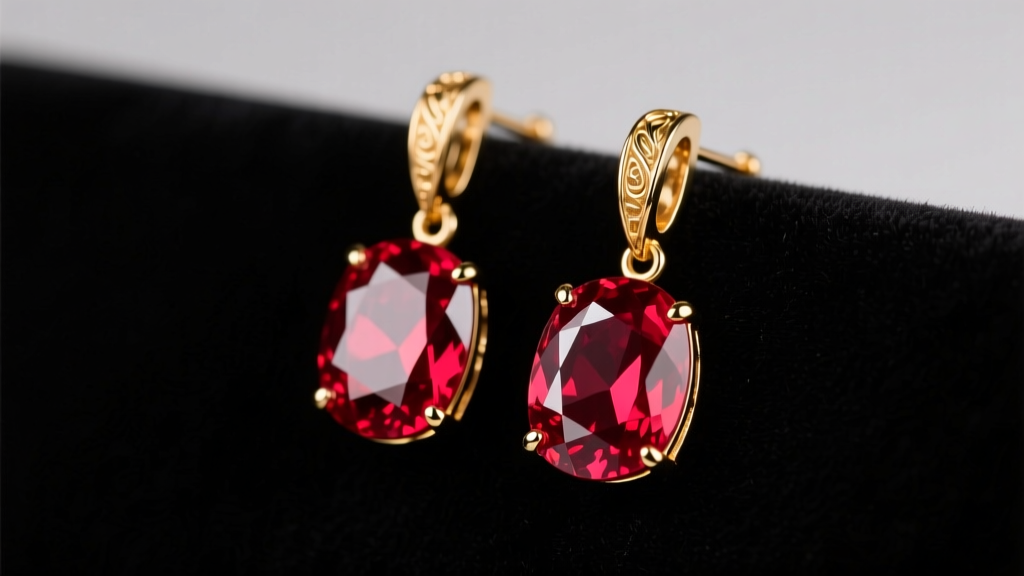
The classic ruby earrings drop silhouette occupies a unique space in fine jewelry. Unlike a static stud or a sprawling chandelier, a drop earring features a single focal point that dangles just below the earlobe, creating a subtle pendulum effect that draws the eye downward. When executed with high-quality corundum, this design offers unparalleled elegance. However, purchasing and maintaining a ruby drop requires a deep understanding of gemological treatments, structural hardware mechanics, and facial geometry. This step-by-step guide will walk you through the exact specifications needed to choose, style, and preserve your investment.
Step 1: Decoding Ruby Quality and Origin
The first step in acquiring a premium ruby drop is looking past the basic 4Cs (Color, Cut, Clarity, Carat) and examining the stone's origin and treatment history. Rubies score a 9 on the Mohs hardness scale, making them exceptionally durable for daily wear, but their internal characteristics dictate their long-term stability. According to the Gemological Institute of America (GIA), the most coveted color is 'pigeon blood'—a vivid, highly saturated red with a subtle purple secondary hue that causes the stone to fluoresce under UV light.
Understanding Treatments and Failure Modes
Not all rubies are created equal, and the treatment applied to the stone will drastically affect how it survives the minor impacts inherent to drop earrings. Heat treatment is standard, stable, and widely accepted. However, you must avoid lead-glass filled rubies. These stones are heavily fractured and infused with glass to improve clarity. Because drop earrings swing and occasionally bump against collars or phones, the glass filling can easily scratch, discolor, or fall out, leaving you with a pitted, ruined stone.
| Origin | Color Profile | Price Range (per ct) | Common Treatments |
|---|---|---|---|
| Myanmar (Burma) | Vivid Pigeon Blood, high fluorescence | $15,000 - $100,000+ | Traditional Heat |
| Mozambique | Deep purplish-red, high clarity | $2,000 - $15,000 | Heat, occasionally Flux Healing |
| Madagascar | Pinkish-red to vibrant red | $1,500 - $8,000 | Heat, Glass-Filling (Avoid) |
Step 2: Selecting the Right Hardware for Drop Earrings
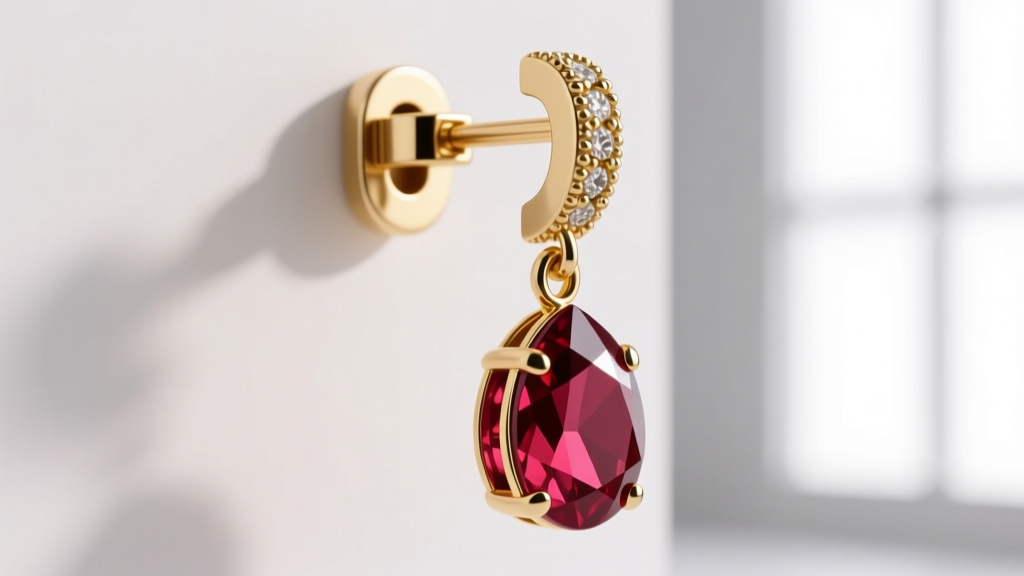
The most common failure point in drop earrings is not the gemstone, but the hardware. A ruby drop earring acts as a lever. If the stone and setting weigh 4 grams and drop 15mm below the piercing, they create continuous fulcrum stress on the earlobe. Over time, a thin wire will stretch the piercing, causing the earring to droop forward and display the backing instead of the gem.
Wire Gauge and Backing Mechanics
- Avoid 22-Gauge Wire: Standard French wires are often 22-gauge (0.64mm thick). This is far too thin to support a heavy ruby drop and will bend within months.
- Opt for 18 or 19-Gauge: Ensure the wire or post is at least 18-gauge (1.02mm) or 19-gauge for structural rigidity.
- The Leverback Advantage: For drops exceeding 2.5 carats, a cast 18k gold leverback is mandatory. The hinged clasp distributes the weight across the top of the ear cartilage rather than concentrating it on the soft lobe tissue.
- Silicone O-Rings: If you must use a post-and-butterfly backing, replace the standard metal clutch with a wide silicone O-ring to provide a broader surface area against the back of the earlobe.
Step 3: Styling Your Ruby Earrings Drop by Face Shape
"A drop earring should never mimic the exact geometry of your jawline; it should either contrast it to create balance or elongate it to create a sweeping silhouette." — Master Jewelry Stylist
Styling a ruby earrings drop design requires an understanding of visual weight and facial proportions. The deep crimson hue of a ruby naturally draws the eye, meaning the termination point of the drop will act as an anchor for whoever is looking at you.
Face Shape Pairings
- Round Faces: Choose elongated, linear drops (e.g., a baguette diamond surmount leading to a pear-cut ruby). This creates a vertical line that visually lengthens the face. Avoid circular or teardrop rubies that echo the roundness of the cheeks.
- Square Faces: Opt for oval or cushion-cut rubies set in soft, bezel settings. The curved edges of the gemstone will soften a strong, angular jawline. Keep the drop length just above the jawline to avoid widening the lower face.
- Heart-Shaped Faces: Chandelier-style drops or wider teardrop rubies are ideal. The added visual weight at the bottom of the earring balances a narrower chin and wider forehead.
- Oval Faces: You have the versatility to wear any style, but a classic round brilliant ruby drop resting exactly at the bottom of the earlobe offers timeless sophistication.
Neckline Synergies
When wearing a ruby drop, the neckline of your garment dictates the ideal length. For V-neck blouses or dresses, select a drop earring that terminates roughly one inch above the point of the V-neck. This creates a cascading visual triangle. For crew necks or high collars, keep the drop short (under 10mm) to prevent the jewelry from tangling with the fabric or looking cluttered against the neck.
Step 4: The 5-Minute Monthly Cleaning Protocol
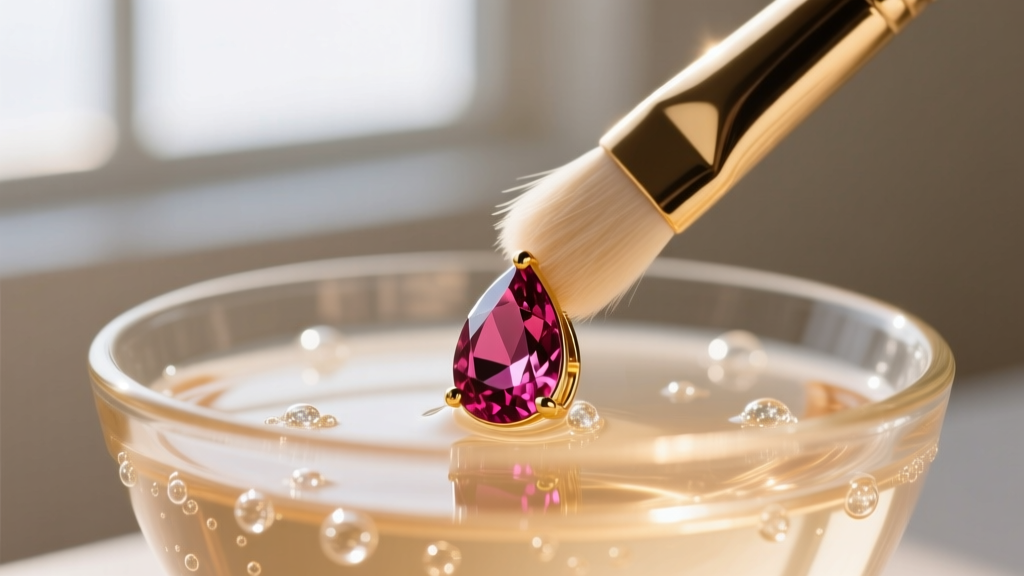
Because rubies are often treated with flux or oils to mask surface-reaching fractures, aggressive cleaning methods can cause catastrophic damage. The GIA's gemological guidelines explicitly warn against using ultrasonic cleaners or steamers on rubies, as the high-frequency vibrations can shatter stones with internal tension, and the heat can melt fracture fillings.
Safe Step-by-Step Cleaning Routine
- Prepare the Solution: Fill a small glass bowl with lukewarm water (never hot) and add three drops of mild, ammonia-free dish soap. Avoid harsh detergents that can strip the natural oils from the metal settings.
- Soak Briefly: Submerge the ruby drop earrings for exactly 3 to 5 minutes. This loosens sebum, dead skin cells, and cosmetic buildup trapped behind the gemstone's pavilion.
- Agitate Gently: Using a brand-new, ultra-soft baby toothbrush, gently sweep the bristles across the back of the ruby and the prongs. Do not scrub the table (top) of the stone aggressively, as dust contains quartz (Mohs 7), which can cause micro-scratches on the gold setting over time.
- Rinse and Dry: Rinse the earrings under a gentle stream of lukewarm water, ensuring the drain is securely plugged. Pat dry with a lint-free microfiber cloth. Allow the hardware and hinges to air-dry completely before storing to prevent water spots on the gold alloy.
Final Thoughts on Investment and Wearability
A well-chosen ruby drop earring is more than just an accessory; it is a tangible asset that bridges the gap between historical gemology and modern wearable art. By prioritizing untreated or traditionally heated stones, insisting on 18-gauge or leverback hardware to protect your piercings, and adhering to a strict, non-ultrasonic cleaning regimen, your ruby drops will maintain their structural integrity and fiery brilliance for generations. Always request a laboratory report from a reputable institution like the GIA or AGL before finalizing your purchase, ensuring your investment is as authentic as it is beautiful.


