Ruby Gold Earrings: Comparing Karats, Treatments & Durability
An expert metallurgical and gemological breakdown of ruby gold earrings, comparing karat durability, ruby treatments, and setting mechanics.

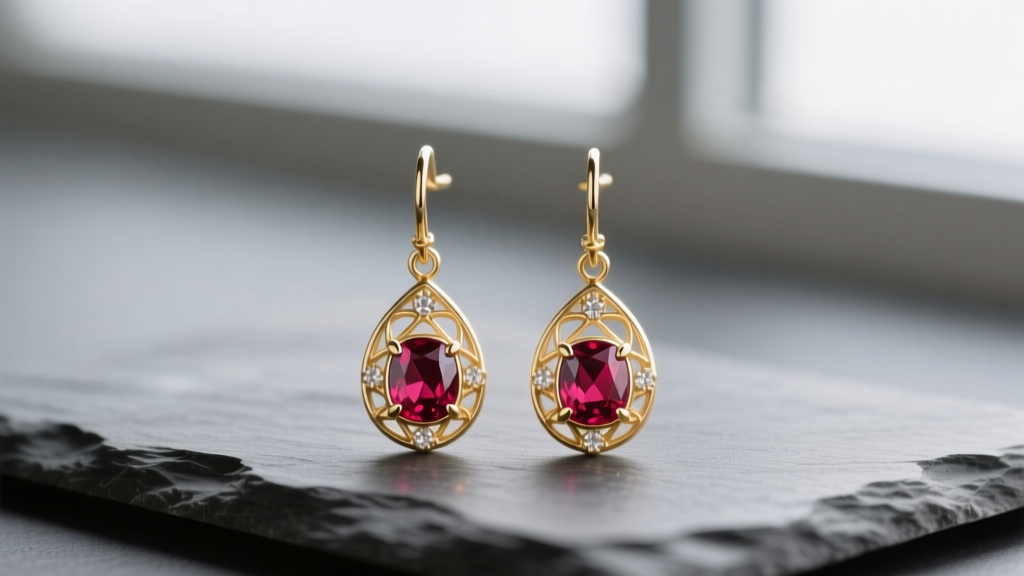
The pairing of corundum and precious metal is a cornerstone of fine jewelry, but not all ruby gold earrings are engineered for longevity. When selecting earrings, consumers often focus solely on carat weight and color saturation, overlooking the critical material science that dictates how a piece will survive daily wear. From the Vickers hardness of different gold alloys to the structural integrity of heat-treated versus fracture-filled gemstones, understanding these properties is essential for making an informed investment.
In this comprehensive guide, we dissect the metallurgical and gemological variables that define ruby earrings in 2026, providing actionable frameworks for evaluating durability, hypoallergenic properties, and long-term care.
The Metallurgy of Gold: 14K vs. 18K vs. 22K for Earrings
Gold in its pure 24K state is far too malleable for secure gemstone settings. To achieve the necessary structural integrity, gold is alloyed with metals like copper, silver, zinc, and occasionally nickel. The ratio of pure gold to alloy metals fundamentally alters the earring's hardness, color, and skin compatibility.
According to the Federal Trade Commission (FTC) Jewelry Guides, the karat system strictly dictates gold purity, but it is the alloy composition that determines the metal's Vickers Hardness (HV)—a critical metric for prong durability and scratch resistance.
| Karat | Gold Purity | Avg. Vickers Hardness | Best Earring Application | Allergy Risk |
|---|---|---|---|---|
| 14K | 58.5% | 140 - 160 HV | Heavy drops, active wear, intricate prongs | Moderate (if nickel-alloyed) |
| 18K | 75.0% | 120 - 130 HV | Studs, huggies, premium everyday hoops | Low (usually nickel-free) |
| 22K | 91.6% | 70 - 90 HV | Bezel-set studs, lightweight dangles | Very Low |
The Nickel Factor: White gold requires bleaching agents to achieve its silvery hue. Historically, nickel was the primary alloy, but it is a leading cause of contact dermatitis. For sensitive earlobes or cartilage piercings, always verify that white gold earrings are alloyed with palladium rather than nickel, or opt for 18K yellow or rose gold, which rely on copper and silver.
Ruby Gemology: Navigating Treatments and Origins
Ruby is the red variety of corundum, ranking 9 on the Mohs hardness scale. While exceptionally hard, the toughness and stability of a ruby are heavily influenced by its origin and post-mining treatments. The Gemological Institute of America (GIA) categorizes ruby treatments into several tiers of stability, which directly impact how the earrings must be maintained.
The Durability Trap: Fracture-Filled vs. Heat-Treated
Standard heat treatment is a universally accepted practice that dissolves rutile silk and enhances red saturation without compromising the stone's structural integrity. Heat-treated rubies are perfectly stable for ultrasonic cleaning and daily wear.
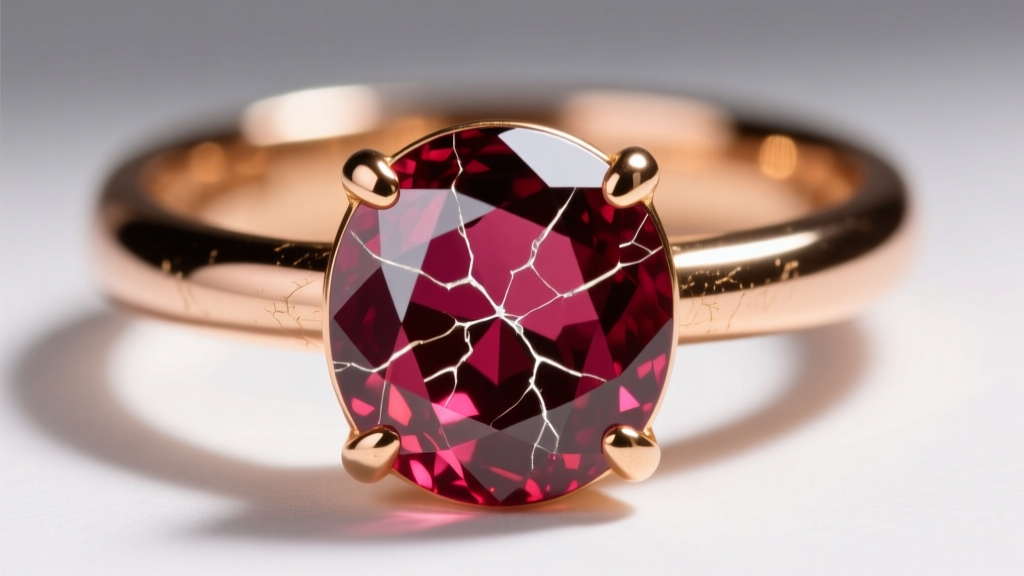
Conversely, fracture-filled rubies represent a significant failure risk for earrings. This process involves infusing surface-reaching fissures with lead-glass to improve apparent clarity. The glass filler has a Mohs hardness of only 5 to 6. If you wear fracture-filled ruby earrings, exposure to common household acids (like lemon juice) or routine ultrasonic cleaning will etch the glass, causing the stone to cloud, crack, or shatter entirely.
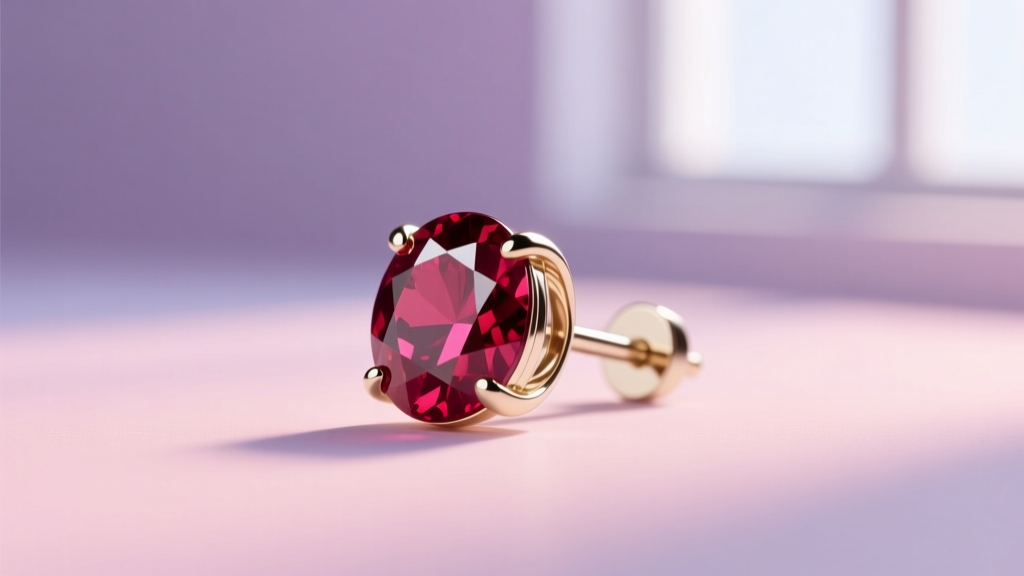
Lab-Created Corundum: Verneuil vs. Flux Growth
For buyers prioritizing flawless clarity and ethical sourcing, lab-created rubies offer identical chemical and optical properties to mined stones. However, the growth method affects the stone's internal strain and cutting potential:
- Verneuil (Flame Fusion): The most common and affordable method. These stones often exhibit curved striae and high internal strain, making them slightly more prone to chipping at the girdle if struck against a hard surface.
- Flux-Growth: A slower, more expensive process that mimics natural geological conditions. Flux-grown rubies have lower internal strain, superior toughness, and often contain platinum or flux inclusions that serve as fingerprints of their origin.
Setting Mechanics, Gauges, and Weight Distribution
The intersection of gold karat and ruby weight dictates the necessary setting style and post gauge. A frequent failure mode in fine jewelry is the 'cheese-cutter effect,' where a heavy earring suspended on a thin wire gradually slices through the earlobe tissue over time.
Prong vs. Bezel Settings
When setting rubies in 18K or 22K gold, the softer metal means prongs are susceptible to snagging on textiles and pulling away from the gemstone's girdle. For active lifestyles, a bezel setting is vastly superior. A bezel encases the ruby's perimeter in a continuous rim of gold, protecting the vulnerable girdle from lateral impacts and eliminating the need for periodic prong retipping.
Post and Wire Gauge Sizing
Selecting the correct wire thickness is non-negotiable for comfort and tissue health:
- 20-Gauge (0.81mm): The industry standard for lightweight studs and small hoops. Ideal for 14K gold due to its higher stiffness.
- 18-Gauge (1.02mm): Required for drop earrings exceeding 6 grams or featuring rubies over 2.0 carats total weight. Provides the necessary rigidity to prevent the earring from drooping forward.
- 16-Gauge (1.29mm): Essential for cartilage piercings (like the helix or tragus) or heavy statement drops. Note that 16G posts may require gradual stretching if your lobe piercings were done at standard 20G or 18G sizes.
Care Protocols and Failure Mode Prevention
Maintaining the brilliance of ruby gold earrings requires a protocol tailored to their specific material combination. Because gold alloys can accumulate sebum and environmental pollutants, and rubies can attract grease, regular cleaning is necessary—but the method must be chosen carefully.
For Natural, Heat-Treated, and Lab-Created Rubies in 14K/18K Gold:
- Soak the earrings in a solution of warm distilled water and a few drops of ammonia-free dish soap for 15 minutes.
- Gently agitate with a soft-bristled baby toothbrush, paying special attention to the back of the setting where skin oils accumulate.
- Rinse under lukewarm water and dry with a lint-free microfiber cloth.
- Ultrasonic cleaners are generally safe for these stones, provided there are no pre-existing fractures.
For Fracture-Filled or Beryllium-Diffused Rubies:
Never use ultrasonic or steam cleaners. The thermal shock and high-frequency vibrations will exacerbate fissures and shatter the glass filler. Clean only with a damp, soft cloth and avoid all contact with perfumes, hairsprays, and acidic skincare products, which can chemically degrade the stone's surface luster.
Final Verdict: Engineering Your Perfect Pair
When investing in ruby gold earrings, the most durable and heirloom-quality combination is an 18K yellow or rose gold bezel setting housing a heat-treated (or flux-grown lab) ruby, mounted on an 18-gauge post. This configuration balances the rich, hypoallergenic warmth of high-karat gold with the uncompromising structural protection required to keep your corundum secure for generations. Always demand a gemological report from a reputable laboratory like GIA or AGL to verify treatment disclosures before finalizing your purchase.


