Ryuk Earring Materials: Titanium vs Steel for Cartilage
Discover the best metals for your Ryuk earring. We compare implant-grade titanium, 316L steel, and niobium for heavy cartilage piercings.

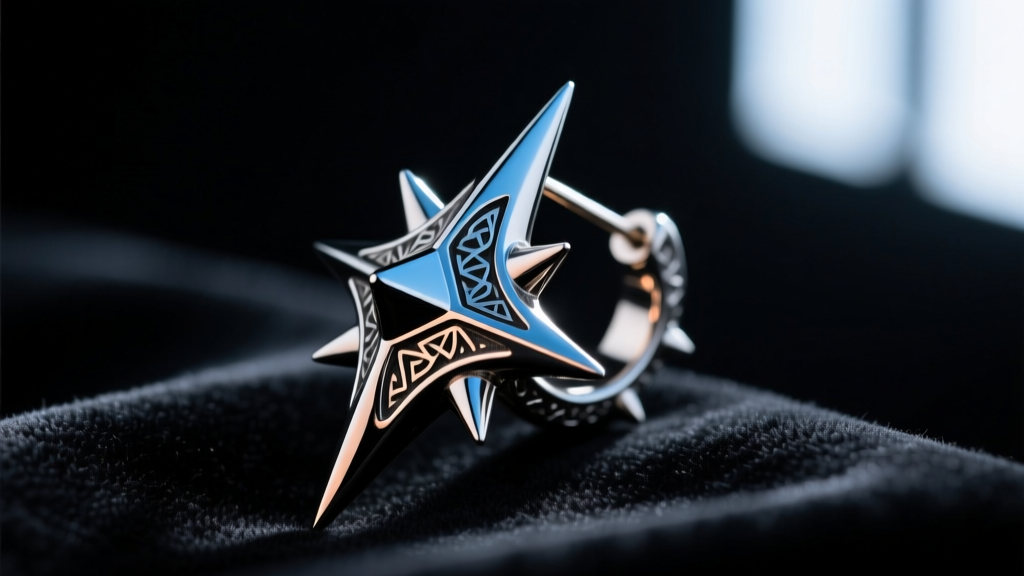
The Physics of the Ryuk Aesthetic: Why Metal Density Matters
The "Ryuk earring" aesthetic—characterized by heavy, avant-garde spikes, intricate chains, and dark, gothic motifs inspired by alternative subcultures and anime—presents a unique metallurgical challenge for both jewelers and piercers. Unlike standard lightweight studs or seamless hoops, a true Ryuk-style cartilage piece exerts significant downward force and rotational leverage on the fistula (the piercing channel). When you suspend a 15-gram spiked pendant or a complex chained ear cuff from a single cartilage piercing, the material's density, yield strength, and biocompatibility become critical factors in preventing tissue damage and migration.
In 2026, the body modification industry has largely moved away from one-size-fits-all metallurgy. Choosing the wrong alloy for a heavy Ryuk earring can lead to the "cheese cutter effect," where the jewelry slowly migrates through the cartilage due to sustained tension, or trigger severe contact dermatitis. To build or buy a Ryuk piece that lasts a lifetime without compromising your anatomy, we must examine the specific material grades used in high-end body jewelry.
Material Breakdown: Grading the Heavyweight Metals
Implant-Grade Titanium (ASTM F136 / Ti6Al4V ELI)
For heavy cartilage applications, Implant-Grade Titanium is the undisputed gold standard. Specifically, the alloy designated as ASTM F136 (Ti6Al4V ELI - Extra Low Interstitial) is the exact same material used in aerospace and medical joint replacements. With a density of approximately 4.43 g/cm³, titanium offers an exceptional strength-to-weight ratio. This means a large, imposing Ryuk spike can be CNC-machined to look massive and intimidating while remaining light enough to prevent downward migration in a 14-gauge or 12-gauge cartilage piercing.
Furthermore, titanium is entirely nickel-free and non-magnetic. It can also be anodized using electrolytic processes to achieve dark, gothic hues—such as deep purples, blues, and matte blacks—without the use of toxic surface coatings or paints that might chip off inside the piercing channel. According to the Association of Professional Piercers (APP), ASTM F136 titanium is the safest choice for both initial piercings and long-term wear of heavy novelty jewelry.
316L Surgical Stainless Steel
316L steel has been a staple in body jewelry for decades due to its low cost and high tensile strength. However, its density (roughly 8.0 g/cm³) makes it nearly twice as heavy as titanium. When crafting a multi-piece Ryuk ear cuff with interconnected chains, the cumulative weight of 316L steel can quickly exceed the load-bearing capacity of a standard helix or industrial piercing. Additionally, 316L contains 8% to 10.5% nickel. While the nickel release rate is generally low in polished, high-quality steel, the sustained friction caused by a heavy, swinging earring can compromise the skin barrier and trigger allergic reactions in sensitized individuals.
Niobium (Element 41)
Niobium is a highly biocompatible, nickel-free elemental metal that anodizes beautifully, making it a favorite for dark, moody jewelry designs. However, niobium is remarkably soft and dense (8.57 g/cm³). While it is excellent for lightweight, flexible ear cuffs that clip onto the outer ear without piercing, it is a poor choice for the structural barbell or post that actually passes through the cartilage. Under the leverage of a heavy Ryuk spike, a niobium post can bend or warp, making removal difficult and potentially damaging the fistula.
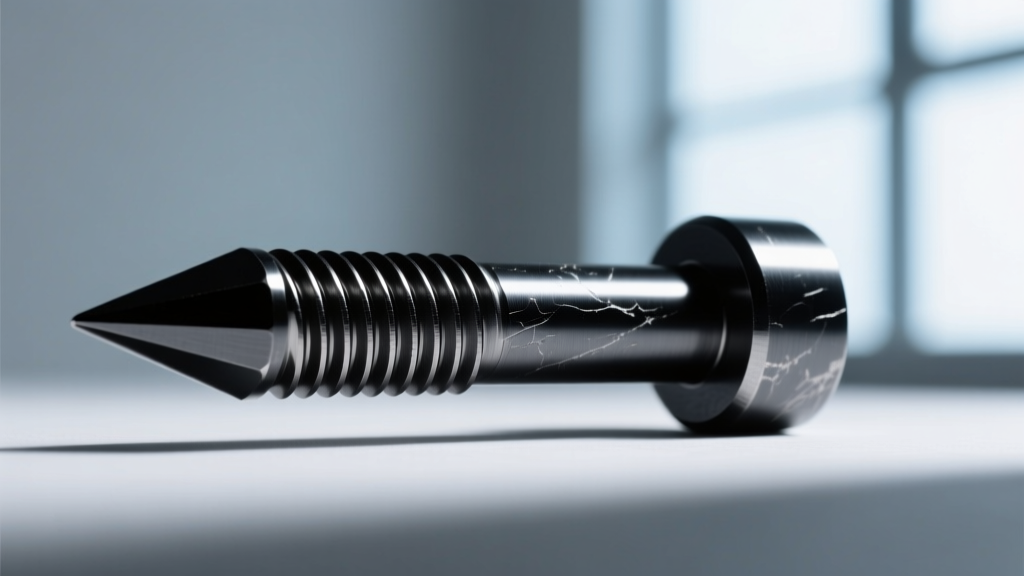
Comparative Data: Weight, Tensile Strength, and Pricing
To make an informed decision, it is essential to look at the raw data comparing these three metals when used for a standard 14-gauge (1.6mm) heavy spike earring. The table below outlines the practical differences you will encounter when sourcing premium body jewelry from manufacturers like Anatometal or Industrial Strength.
| Material Property | ASTM F136 Titanium | 316L Surgical Steel | Pure Niobium |
|---|---|---|---|
| Density (g/cm³) | 4.43 (Lightweight) | 8.00 (Heavy) | 8.57 (Very Heavy) |
| Nickel Content | 0% (Hypoallergenic) | 8 - 10.5% (Allergen Risk) | 0% (Hypoallergenic) |
| Yield Strength | High (Resists Bending) | Very High (Rigid) | Low (Bends Easily) |
| Anodization | Excellent (Dark Hues) | Not Possible (Requires PVD) | Excellent (Vibrant/Dark) |
| Avg. Price (14g Spike) | $65 - $120 | $20 - $45 | $50 - $90 |
Failure Modes: What Happens When You Choose the Wrong Metal?
When dealing with the extreme aesthetics of a Ryuk earring, the margin for error is razor-thin. Here are the specific failure modes associated with improper material selection:
- The Cheese Cutter Effect: If you use a heavy 316L steel spike in a delicate 16-gauge (1.2mm) piercing, the constant downward pull will cause the jewelry to slowly slice through the cartilage over several months. This results in permanent tissue scarring and rejection.
- Thread Stripping and Cross-Threading: Cheaper steel jewelry often features externally threaded ends (where the screw is on the spike itself). Forcing an externally threaded spike through a cartilage hole tears the tissue. Furthermore, cheap steel threads strip easily under the torque required to secure heavy ends.
- PVD Coating Delamination: Many budget "black steel" Ryuk earrings achieve their dark color through Physical Vapor Deposition (PVD) or cheap electroplating. In the moist, warm environment of a healing or irritated piercing, these coatings can flake off, introducing foreign particulates directly into the bloodstream and causing severe granulomas.
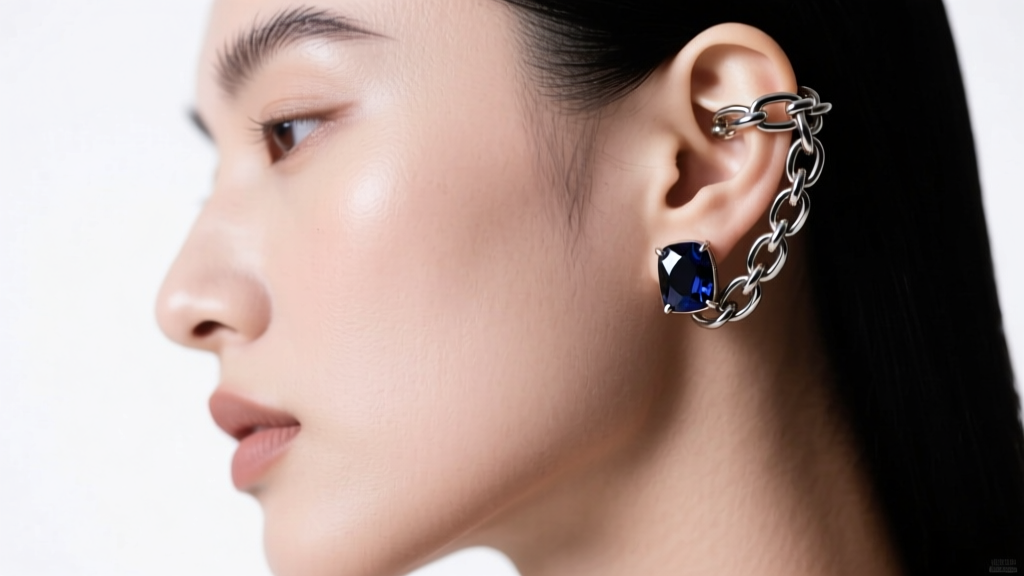
Gauge Sizing and Threading Standards for Heavy Spikes
The material is only half the battle; the structural engineering of the jewelry dictates its longevity. For any Ryuk earring that features spikes longer than 1/2 inch or incorporates hanging chains, you must adhere to strict sizing and threading protocols.
Mandatory Gauge Upgrades
Standard helix piercings are often done at 16-gauge (1.2mm) or 14-gauge (1.6mm). However, to safely support the leverage of a gothic spike, a 14-gauge post is the absolute minimum. For true industrial-style Ryuk pieces that span across the ear, upgrading to a 12-gauge (2.0mm) or even 10-gauge (2.4mm) titanium barbell is highly recommended. The thicker the post, the wider the surface area distributing the weight against the fistula, drastically reducing the risk of migration.
Internally Threaded and Threadless Systems
Never use externally threaded jewelry for heavy cartilage pieces. High-end titanium Ryuk earrings utilize either internal threading (where the screw is on the post, and the spike has a tapped hole) or threadless (press-fit) systems. Threadless systems, pioneered by brands like NeoMetal, use a tiny bend in the pin to create tension against the inside of the titanium shaft. This is often the superior choice for heavy spikes, as the pulling force of the heavy end only wedges the pin tighter into the shaft, making accidental loss nearly impossible.
Final Verdict: Sourcing Your Ryuk Piece
The Ryuk earring is a statement piece that demands respect for both the aesthetic and the anatomy it adorns. While 316L steel may tempt you with its lower price point and rigid strength, its excessive weight and nickel content make it a liability for long-term cartilage wear. Niobium is best reserved for the decorative, non-piercing chain elements of your ear curation.
For the structural anchor—the post, the barbell, and the primary spike—Implant-Grade Titanium (ASTM F136) is the only logical choice. It provides the necessary tensile strength to support avant-garde designs, the lightweight properties to protect your cartilage from migration, and the biocompatibility to ensure your piercing remains healthy for decades. When shopping, always demand to see the manufacturer's mill certificates or APP-compliant branding to ensure you are getting genuine Ti6Al4V ELI, not a cheap, heavy steel knockoff disguised in black paint.


