Sakura Cherry Blossom Earrings: 2026 Trend Analysis & Style Guide
Discover the 2026 trends for sakura cherry blossom earrings. Explore fine enamel, lab-grown sapphire styles, and expert styling tips for every face shape.

The 2026 Renaissance of Sakura Cherry Blossom Earrings
The floral motif is an eternal staple in jewelry design, but the sakura cherry blossom earrings category has undergone a radical metamorphosis entering 2026. Gone are the days of flat, stamped alloy flowers that tarnish after a single spring season. Today’s market demands architectural depth, advanced enameling techniques, and biomechanically sound piercing jewelry. As consumers shift away from fast-fashion accessories toward 'slow jewelry' and demi-fine heirlooms, the sakura motif has evolved from a seasonal novelty into a year-round symbol of elegance, resilience, and meticulous craftsmanship.
From high-end plique-à-jour enamel drops to implant-grade titanium cartilage huggies, the modern cherry blossom earring bridges the gap between organic Japonesque aesthetics and contemporary minimalist styling. This comprehensive guide breaks down the material science, anatomical considerations, and face-shape architectures defining the 2026 sakura earring landscape.
Material Evolution: From Fast Fashion to Heirloom Grade
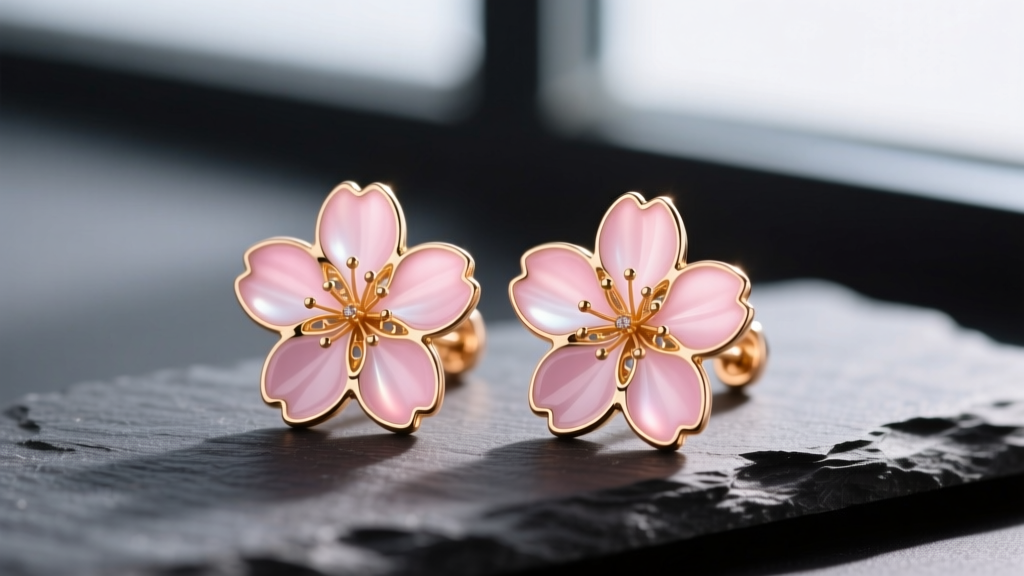
The most significant shift in 2026 is the rejection of gold-plated brass in favor of solid metallurgy and advanced glasswork. High-end jewelers are reviving plique-à-jour (letting in daylight), a notoriously difficult enameling technique where translucent enamel is suspended in a metal framework without a backing, creating a stained-glass effect. When applied to sakura petals, this technique yields a breathtaking, translucent pink gradient that catches the light dynamically.
2026 Material & Technique Matrix
| Material / Technique | Aesthetic Profile | Price Range (USD) | Durability & Care |
|---|---|---|---|
| Plique-à-jour Enamel (18k Gold) | Translucent, stained-glass petals with light-catching gradients. | $800 - $3,500+ | Fragile. Avoid ultrasonic cleaners; clean with mild soap only. |
| Lab-Grown Pink Sapphire (14k Gold) | High-refractive sparkle, precise laser-cut floral facets. | $350 - $1,200 | Excellent. Mohs hardness of 9 makes it highly scratch-resistant. |
| ASTM F-136 Titanium (Anodized) | Matte or metallic pink hues, lightweight, hypoallergenic. | $60 - $180 | Superior. Impervious to tarnish, ideal for fresh cartilage piercings. |
| Guilloché Enamel (Sterling Silver) | Opaque pastel pinks over machine-engraved geometric textures. | $120 - $400 | Moderate. Silver base requires occasional anti-tarnish polishing. |
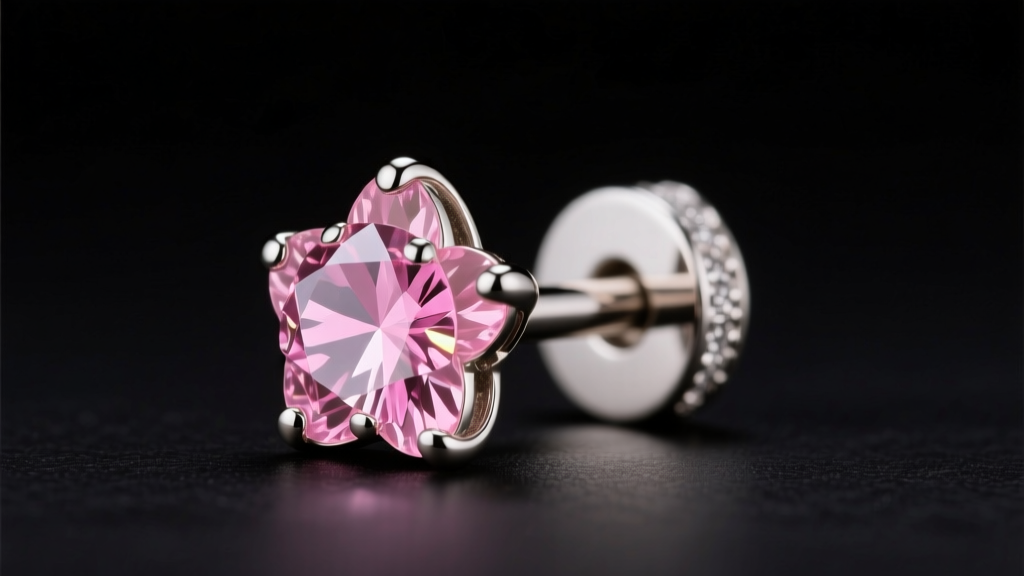
For gemstone-focused pieces, lab-grown pink sapphires have dominated the 2026 market. According to the Gemological Institute of America (GIA), sapphires possess a Mohs hardness of 9, making them exceptionally durable for everyday floral studs. Jewelers are increasingly utilizing precision laser-cutting to create sapphire clusters that mimic the five-petal anatomy of the cherry blossom without the fragility of carved organic gems like coral or pearl.
Piercing Anatomy & Gauge Specifications for Floral Motifs
A critical, often overlooked aspect of buying sakura cherry blossom earrings is understanding the biomechanics of the piercing. Floral motifs, particularly intricate drops and multi-petal clusters, carry disproportionate weight compared to simple geometric studs. This introduces the risk of the 'cheese-cutter effect'—a phenomenon where a thin ear wire slowly migrates through the earlobe tissue due to sustained downward tension.
The Lobe Gauge Dilemma
Standard commercial lobe earrings are typically strung on 20-gauge (0.81mm) or 22-gauge (0.64mm) wires. However, a solid 14k gold sakura drop earring featuring detailed stamen and petal texturing can easily weigh between 3.5 and 5 grams. Expert Rule of Thumb: If a floral drop earring exceeds 3 grams, the ear wire must be a minimum of 18-gauge (1.02mm) or, ideally, 16-gauge (1.29mm) to distribute the weight safely across the lobe fistula. Always check the wire thickness in the product specifications before purchasing heavy demi-fine floral drops.
Cartilage Placements: Helix and Flat Piercings
For upper ear curation, sakura motifs are trending heavily in helix and flat piercings. Because cartilage is highly prone to irritation bumps from nickel exposure or heavy jewelry, material purity is non-negotiable. The Association of Professional Piercers (APP) strictly recommends ASTM F-136 implant-grade titanium for any jewelry worn in healing or sensitive cartilage piercings. In 2026, top-tier body jewelry brands are utilizing anodization—a process that uses electrical currents to oxidize the titanium surface, creating vibrant, hypoallergenic pink and rose-gold hues without the use of toxic plating or nickel alloys.
Face Shape Architecture: Styling Sakura Silhouettes
The cherry blossom is inherently organic, featuring soft curves, asymmetrical petal overlaps, and rounded edges. To achieve a balanced aesthetic, you must contrast or complement your underlying facial bone structure. Here is the 2026 styling framework for pairing sakura silhouettes with specific face shapes:
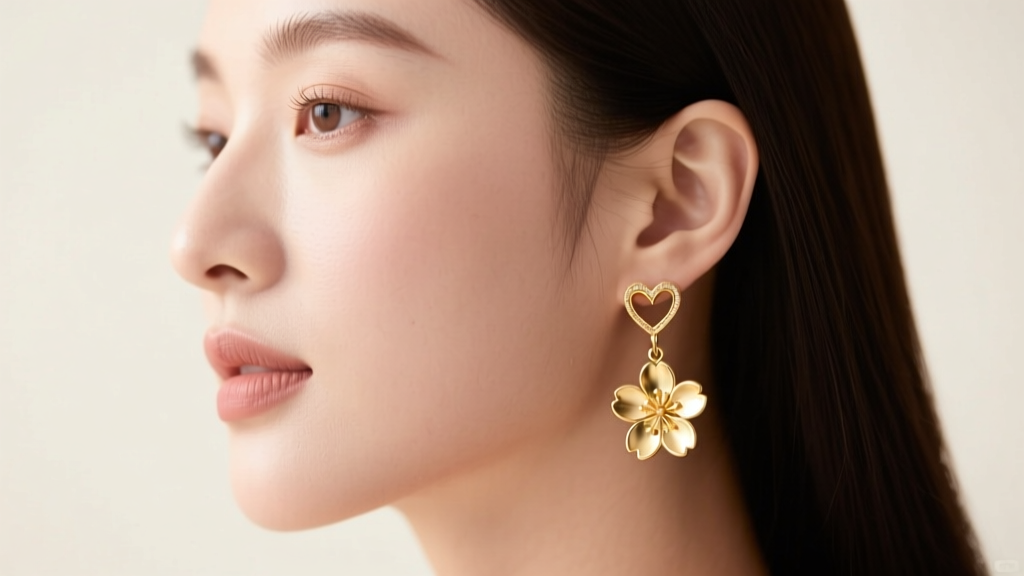
- Round Faces: Avoid wide, circular sakura studs or short huggies, which will exaggerate facial width. Instead, opt for elongated sakura drop earrings featuring a linear, geometric stem that transitions into a single, detailed blossom at the terminus. This creates a vertical line that visually elongates the jaw and neck.
- Square Faces: Angular jawlines benefit from the softening effect of floral motifs. Choose sakura cluster studs or curved cherry blossom huggies that wrap snugly around the earlobe. The organic, sweeping lines of the petals will contrast beautifully with sharp mandibular angles.
- Heart-Shaped Faces: With a broader forehead and a narrow, pointed chin, heart-shaped faces require visual weight at the lower half of the ear. Teardrop-shaped sakura chandeliers or inverted floral motifs that are wider at the bottom will balance the facial proportions perfectly.
- Oval Faces: The universal canvas. Oval faces can carry the maximum volume of the 2026 trends, including oversized, architectural plique-à-jour enamel sakura ear cuffs that span from the lobe to the mid-helix.
Color Theory: Rose Gold vs. Yellow Gold vs. Platinum
The metal canvas beneath the sakura motif drastically alters the jewelry's seasonal versatility. In 2026, 14k rose gold remains the undisputed champion for cherry blossom designs. The copper alloy inherent in rose gold provides a warm, blush undertone that harmonizes seamlessly with pink enamel and padparadscha sapphires. However, 18k rose gold, while richer in color, is softer and more prone to scratching on intricate petal edges.
Conversely, white gold and platinum are being utilized by avant-garde jewelers to create 'winter sakura' collections. By pairing stark white metals with icy, pale-pink or colorless diamond cherry blossoms, designers are detaching the motif from its strictly springtime associations, making it a viable option for formal winter events and bridal wear.
'The true mastery of a floral earring lies not in the replication of nature, but in the abstraction of its geometry. A 2026 sakura earring should suggest the blossom through light, shadow, and negative space, rather than literal, heavy-handed casting.' — Master Jeweler & Enamel Artisan
Care & Tarnish Prevention for Delicate Petal Details
The intricate crevices of a cherry blossom design are natural traps for cosmetic buildup, sebum, and environmental pollutants. Furthermore, the advanced materials used in 2026's heirloom-grade pieces require highly specific maintenance protocols.
The Ultrasonic Cleaner Warning
Never place plique-à-jour or guilloché enamel sakura earrings in an ultrasonic cleaner. The high-frequency sound waves create microscopic cavitation bubbles that can easily shatter the glass-like enamel suspended within the gold framework. Instead, prepare a lukewarm bath of distilled water and a single drop of pH-neutral dish soap. Submerge the earrings for three minutes, then gently agitate the petal crevices using a sterile, ultra-soft baby toothbrush. Rinse with distilled water to prevent hard water spotting, and dry immediately with a lint-free microfiber cloth.
Storing Enamel and Anodized Titanium
Enamel is essentially glass fused to metal; it is highly susceptible to thermal shock and impact fracturing. Store your sakura drops in individual, soft-lined compartments to prevent the metal stems from scratching the enamel petals of adjacent pieces. For anodized titanium cartilage studs, avoid prolonged exposure to chlorine or saltwater, which can dull the anodized pink finish over time, reverting it to its natural metallic grey.
Final Verdict: Investing in the 2026 Sakura Motif
The sakura cherry blossom earrings market in 2026 represents a triumph of material science meeting organic artistry. By prioritizing biomechanically sound gauge sizes, investing in durable lab-grown sapphires or master-crafted enamel, and selecting silhouettes that architecturally complement your face shape, you can secure a piece of jewelry that transcends seasonal trends. Whether you are curating a minimalist titanium helix stack or investing in a pair of heirloom-grade 18k gold enamel drops, the modern cherry blossom earring is a testament to enduring elegance and precision engineering.


