Screw Earrings: 2026 Trend Merging Vintage Security & Modern Style
Discover why screw earrings are dominating 2026 jewelry trends. Explore mechanical differences, gauge specs, styling tips, and secure luxury investments.

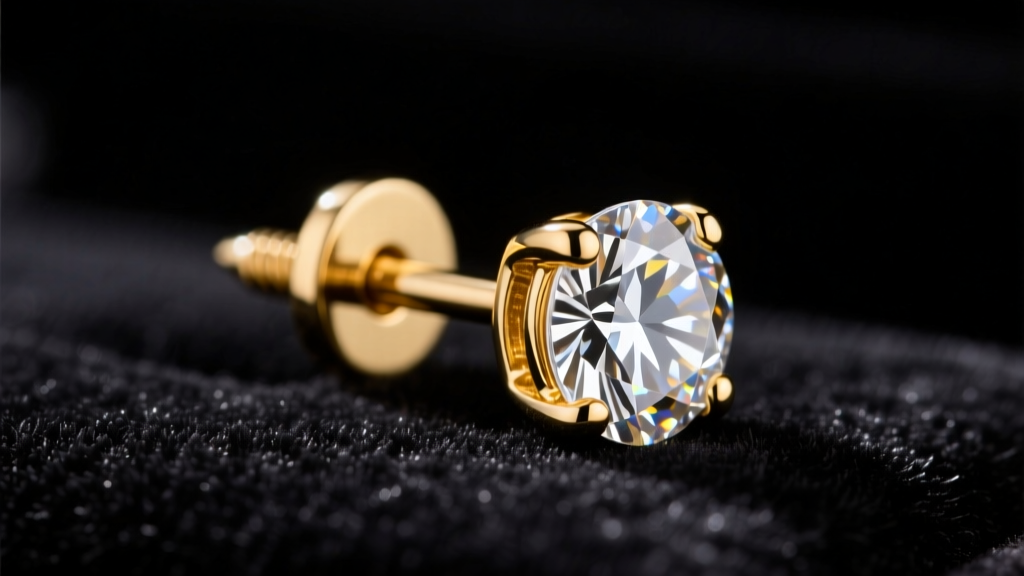
The Renaissance of the Screw-Back: Why 2026 Demands Secure Luxury
In the fast-paced cycle of jewelry trends, the focus for 2026 has decisively shifted from disposable fast fashion to enduring, investment-grade pieces. At the forefront of this movement is the resurgence of screw earrings. Once the undisputed standard of the Art Deco era in the 1920s and 1930s, screw-back mechanisms were largely eclipsed in the mid-20th century by the invention of the friction clutch (commonly known as the butterfly back). However, as collectors and everyday wearers alike invest in higher-carat diamonds and premium gemstones, the inherent flaws of friction backs have become impossible to ignore.
A $5,000 diamond solitaire should never be secured by a $2 piece of stamped metal that relies on degrading tension. Screw earrings offer a mechanical guarantee of security, marrying vintage peace of mind with modern, minimalist aesthetics. Today's iterations are lighter, more ergonomically designed, and crafted from hypoallergenic alloys that cater to the most sensitive earlobes and cartilage piercings.
Mechanical Breakdown: Friction, Screw, and Internal Threading
To understand why screw earrings are dominating the fine jewelry market, we must examine the physics of earring retention. Friction backs utilize a small metal sleeve with internal notches that grip a grooved post. Over time, the metal fatigues, the notches wear down, and the backing loosens—a leading cause of lost diamond studs.
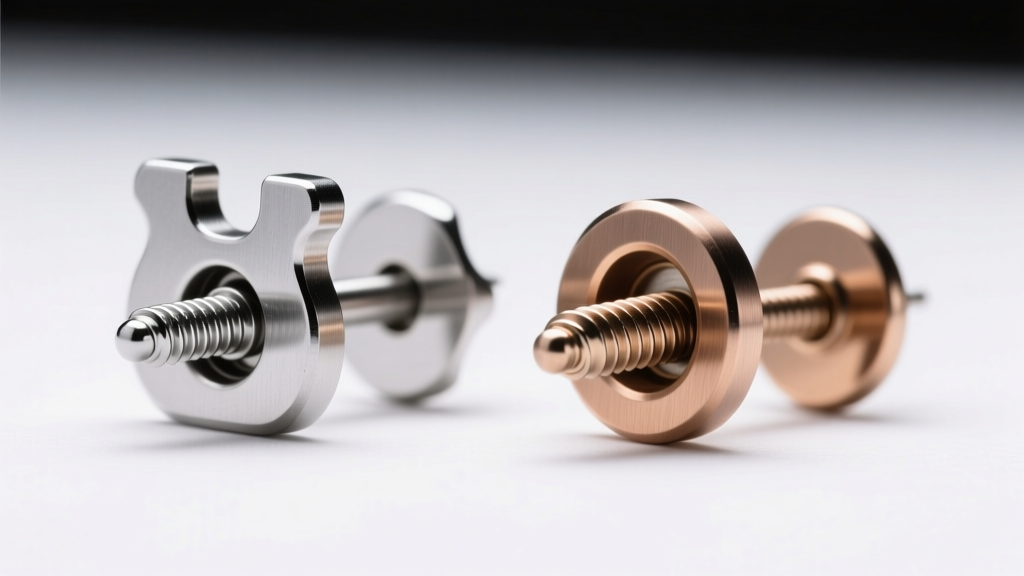
Screw earrings, conversely, utilize the inclined plane of a threaded post and a correspondingly threaded nut. This creates a continuous, locking mechanical bond that cannot vibrate or slide off without intentional rotational force. Below is a technical comparison of the three primary earring backing systems available in 2026.
| Feature | Friction (Butterfly) | Traditional Screw-Back | Threaded Flat-Back |
|---|---|---|---|
| Security Level | Low / Medium | High | Very High |
| Comfort Profile | Low (prongs poke neck) | Medium (bulky nut) | High (flush flat disc) |
| Standard Gauge | 20G - 18G | 20G - 18G | 18G - 14G |
| Hygiene Factor | Poor (traps sebum) | Good (easy to clean) | Excellent (no crevices) |
| Price Range | $ - $$ | $$ - $$$$ | $$ - $$$$ |
Gauge Sizes and Thread Pitch Specifics
When shopping for screw earrings, understanding gauge and thread pitch is critical for ensuring compatibility and comfort. The vast majority of fine jewelry lobe earrings utilize a 20-gauge (0.81mm) or 18-gauge (1.02mm) post. Thicker 18-gauge posts are highly recommended for screw earrings, as the threading process removes a microscopic layer of metal; an 18-gauge post retains more structural integrity than a 20-gauge post once threaded.
According to the Association of Professional Piercers (APP), thread pitch—the distance between the peaks of the threads—must be precisely machined. Fine jewelry brands typically use a fine thread pitch to prevent 'cross-threading' (where the nut binds diagonally against the post). Furthermore, modern cartilage curation has popularized internally threaded flat-back earrings, where the post itself is hollow and tapped, and the decorative front end features the screw. This prevents the sharp external threads from damaging the delicate fistula (piercing channel) during insertion.
Styling Screw Earrings: The 2026 Curation Guide
The aesthetic of 2026 favors 'quiet luxury'—pieces that are understated but impeccably crafted. Screw earrings fit perfectly into this paradigm, offering clean lines without the visual clutter of a bulky butterfly clutch.
The Boardroom Classic: Bezel-Set Diamond Studs
For professional environments, a bezel-set diamond stud with a secure screw back is the ultimate power accessory. The bezel setting protects the diamond's girdle from chipping, while the screw back ensures the earring remains perfectly upright. Because screw nuts have a slightly wider profile than friction clutches, opt for a 'jumbo' or 'flat-disc' screw back in 14k or 18k gold. This distributes the weight of a 1-carat or larger diamond evenly across the back of the earlobe, preventing the dreaded 'drooping stud' effect.
The Cartilage Stack: Threaded Flat-Back Ends
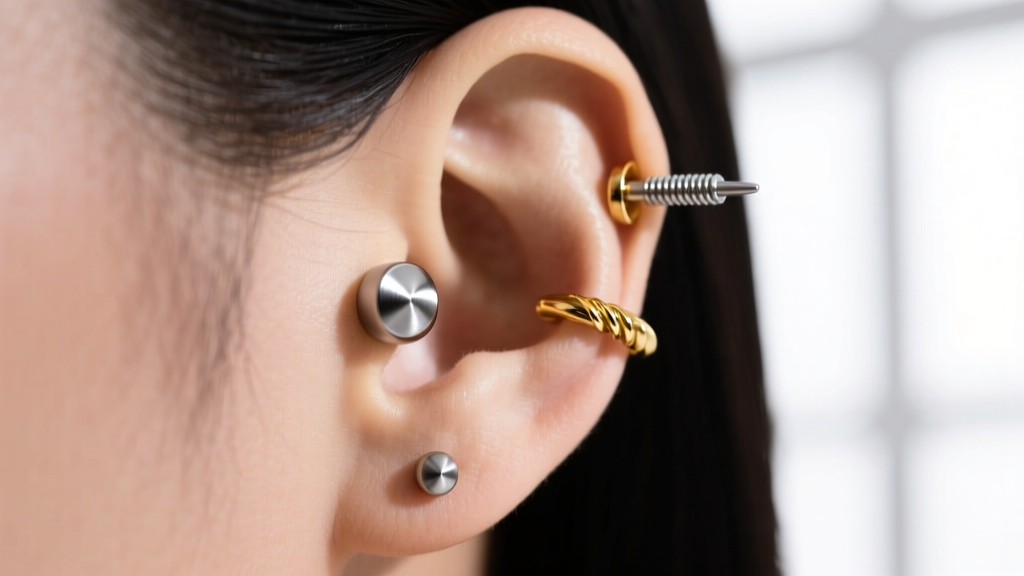
For helix, tragus, and conch piercings, traditional screw nuts are impractical. Instead, the 2026 trend relies on threaded flat-back labret posts. You insert the smooth, unthreaded post from the back of the ear, and screw the decorative gemstone end onto the front. This creates a seamless, snag-free profile that is incredibly comfortable for sleeping and wearing over-ear headphones. According to the Gemological Institute of America (GIA), securing high-value lab-grown or natural diamonds in threaded bezel settings for cartilage stacks is one of the fastest-growing categories in modern fine jewelry.
Material Grades and Investment Pricing
The material of your screw earrings dictates not only the price but the longevity of the threads. Soft metals can strip, while harder metals ensure a lifetime of secure fastening.
- 950 Platinum: The gold standard for heirloom screw earrings. Platinum is incredibly dense and durable, meaning its threads will rarely strip or wear down. Expect to pay between $400 and $900 just for the platinum settings, excluding gemstones. Its natural white color also enhances the brilliance of colorless diamonds.
- 14k Gold (Yellow, White, or Rose): Because 14k gold is alloyed with metals like copper, zinc, and silver, it is harder than 18k gold. This makes it an excellent, durable choice for the delicate threads of a screw-back post. Pricing for 14k gold screw settings typically ranges from $150 to $350.
- 18k Gold: Prized for its rich, buttery yellow hue and high gold content (75%), 18k gold is softer. While beautiful, the threads on an 18k gold screw earring require a gentler touch to avoid stripping over decades of use.
- ASTM F136 Implant-Grade Titanium: The undisputed king of hypoallergenic cartilage jewelry. Titanium threaded flat-backs are lightweight, entirely nickel-free, and highly resistant to corrosion. These are usually priced between $40 and $120 per piece.
Troubleshooting: Cross-Threading and Stripped Posts
Even the finest screw earrings can encounter mechanical issues if mishandled. The most common complaint is a backing that feels 'stuck' or won't screw on smoothly. This is almost always due to cross-threading or debris buildup.
How to Fix a Stuck Screw Back
Never use metal pliers to force a stuck screw earring backing. Pliers will easily gouge and mar soft precious metals like 14k and 18k gold. Instead, put on a pair of textured nitrile gloves. The rubber provides immense grip, allowing you to gently unscrew the backing using only your fingertips. If the backing is cross-threaded (forced on at an angle), do not keep twisting. Back it off completely, realign it perfectly straight with the post, and start the threading by turning it counter-clockwise until you feel a subtle 'click' as the threads align, then screw it on clockwise.
Maintenance and Cleaning
Sebum, dead skin cells, and lotion can easily pack into the threads of a screw earring, creating a cement-like barrier. Once a month, soak your screw earrings in a small ultrasonic cleaner with a few drops of mild dish soap, or scrub the threads gently with a soft-bristled baby toothbrush and 90% isopropyl alcohol. Keeping the threads pristine ensures the nut glides on smoothly and maintains its locking tension.
Final Thoughts on Secure Luxury
The return of screw earrings in 2026 is more than a nostalgic nod to the past; it is a practical evolution in how we wear and protect our most cherished jewelry. By prioritizing mechanical security, precise gauge specifications, and high-integrity materials, you ensure that your investment pieces remain exactly where they belong—brilliantly displayed on your ears, rather than lost to the cracks of a taxi cab or the floorboards of a hotel room. Whether you are upgrading your daily diamond studs or curating a threaded cartilage stack, embracing the screw-back mechanism is the smartest style decision you can make this year.


