Troubleshooting Vintage W Germany Earrings: Auth & Repair Guide
Learn how to authenticate, clean, and repair vintage W Germany earrings. Expert troubleshooting for clip-ons, rhinestones, and hallmarks.

The Unique Challenges of West German Vintage Jewelry
Collecting mid-century costume jewelry is a thrilling pursuit, but few categories present as many unique restoration and authentication challenges as W Germany earrings. Produced between 1949 and 1990 during the Cold War division of Germany, these pieces are highly sought after by collectors in 2026 for their exceptional craftsmanship, heavy tombac brass bases, and brilliant Aurora Borealis (AB) glass rhinestones. However, decades of wear, improper storage, and the inherent vulnerabilities of mid-century manufacturing techniques mean that finding a pair in pristine condition is rare.
Whether you are dealing with a seized screw-back mechanism, a desilvered chaton stone, or a questionable hallmark, troubleshooting vintage West German earrings requires a deep understanding of the materials and methods used in Pforzheim and Idar-Oberstein workshops. This guide provides actionable, expert-level solutions for authenticating, repairing, and preserving these historical wearable artifacts.
Decoding the Hallmark: Is Your W Germany Earring Authentic?
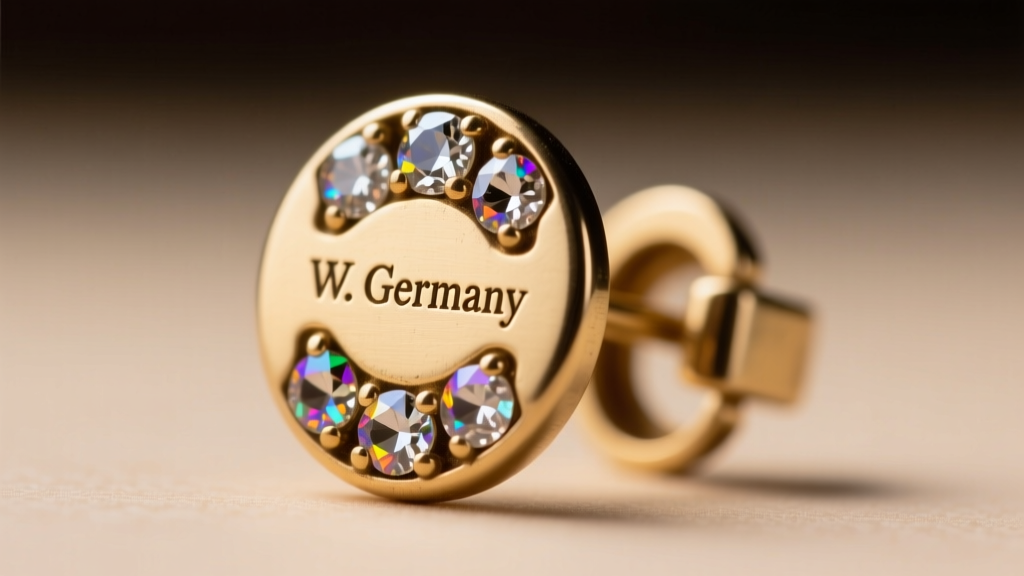
The most common issue collectors face is verifying authenticity. Forgeries and misattributions are rampant in the vintage market. The 'W. Germany' or 'West Germany' stamp was officially used on export jewelry from the formation of the Federal Republic in 1949 until reunification in 1990. After 1990, the mark reverted to simply 'Germany' or 'Made in Germany'.
Authentication Troubleshooting Checklist
- Stamp Depth and Font: Authentic mid-century stamps were typically applied via steel die presses. Look for clean, deeply impressed sans-serif or block lettering. Shallow, laser-etched, or perfectly uniform modern CNC-milled marks are immediate red flags for counterfeit pieces.
- Base Metal Verification: High-end W Germany earrings were frequently cast in tombac (a brass alloy containing roughly 85% copper and 15% zinc) or white pot metal, then heavily plated in rhodium or gold. Use a rare-earth magnet; if the earring exhibits strong magnetic pull, it is likely a modern reproduction using cheap steel alloys, not vintage tombac.
- Maker Marks vs. Country Marks: Many pieces feature both a maker's mark (like 'Artigiano' or 'Kramer') and the country of origin. According to the Lang Antiques University, the placement of these marks should be consistent with the era's manufacturing standards, usually stamped on the flat reverse of the clip-on paddle or the underside of the hinge.
Troubleshooting Clip-On and Screw-Back Tension Issues
Before ear piercing became universally mainstream in the late 1970s and 1980s, the vast majority of W Germany earrings were designed for unpierced lobes. Today, collectors frequently encounter hardware that is either painfully tight or completely loose, failing to grip the earlobe.
Adjusting Paddle-Back Clip-Ons
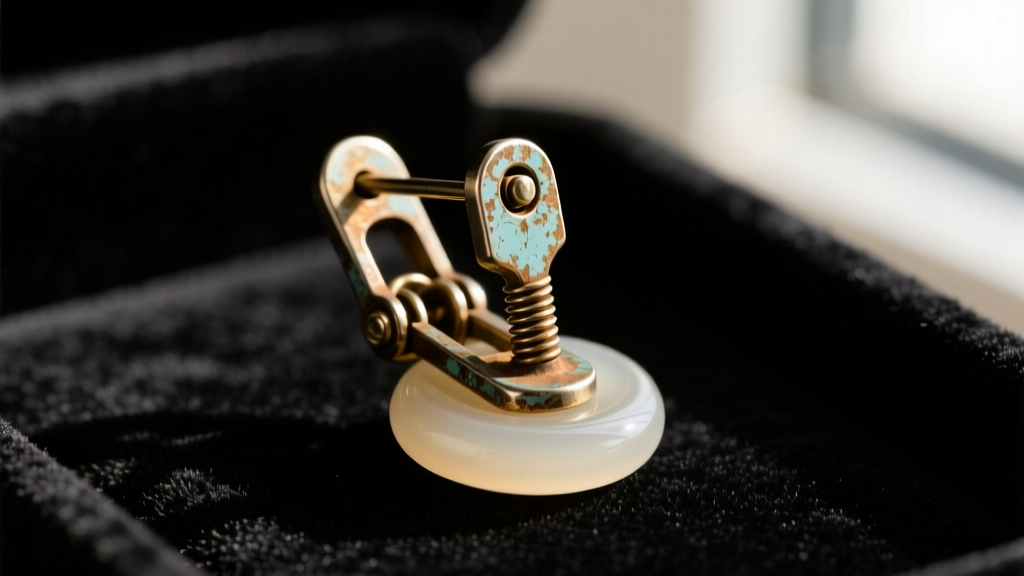
Paddle-back clip-ons rely on the tensile strength of the brass or pot metal hinge. Never use standard steel jewelry pliers to adjust these. Pot metal from the 1950s is notoriously brittle and will snap under uneven pressure. Instead, use nylon-jaw pliers to gently squeeze the arms of the clip inward to increase tension, or carefully pry them outward using a flat-head jeweler's screwdriver wrapped in microfiber cloth to decrease tension.
Restoring Screw-Back Mechanisms
Screw-back earrings from West Germany often feature celluloid or early plastic comfort pads that have shrunk, cracked, or fallen off entirely. If the threaded post is stripped, you cannot simply re-tap it due to the thin plating. The best troubleshooting workaround is to apply a microscopic drop of UV-curing jewelry resin to the threads to create a custom friction fit, or replace the entire finding using new-old-stock (NOS) 1960s screw-backs sourced from specialized vintage jewelry suppliers.
| Hardware Type | Common Failure Mode | Expert Repair Protocol |
|---|---|---|
| Paddle-Back Clip | Loss of spring tension / Metal fatigue | Adjust with nylon-jaw pliers; avoid bending past 15 degrees. |
| Screw-Back | Stripped threads / Missing comfort pad | Apply UV resin to threads; replace pad with NOS celluloid or modern silicone. |
| Pierced Post (Late 80s) | Bent 20-gauge wire / Broken friction back | Straighten using a wire jig; replace backs with 20-gauge La-Poussiere clutches. |
Rescuing Desilvered Aurora Borealis (AB) Rhinestones
West German jewelry makers were masters of glass cutting, frequently utilizing high-lead-content crystal sourced from neighboring Austria or local Bohemian glassworks. The signature 'Aurora Borealis' (AB) finish, achieved by vaporizing metal onto the underside of the glass, is prone to a specific failure mode: desilvering or 'foil rot'.
Diagnosing Foil Rot
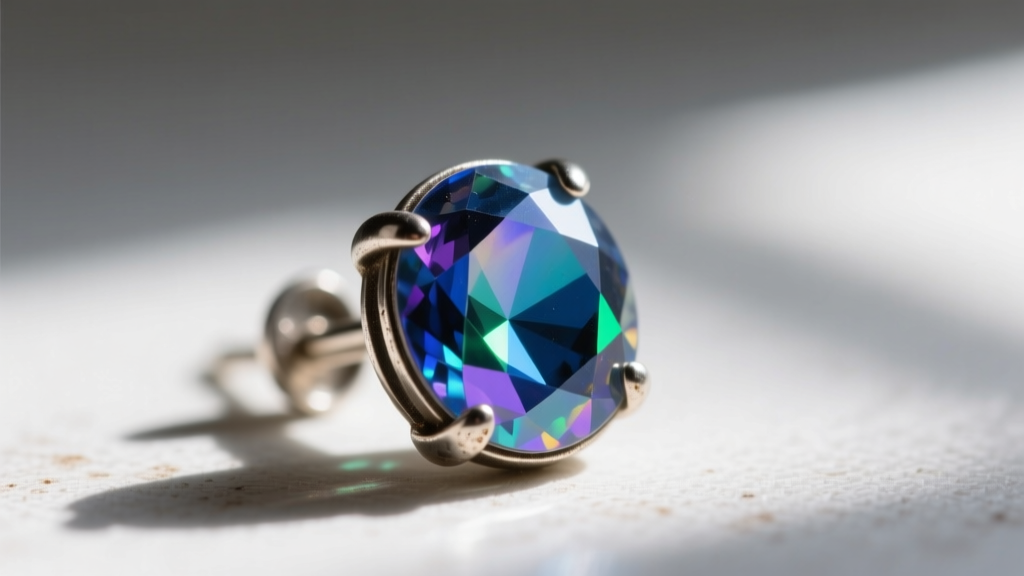
If your W Germany earrings look dull, gray, or lack their signature rainbow refraction, moisture has likely breached the prong setting and oxidized the metallic foil backing. According to resources at Costume Jewelry Collectors, attempting to clean desilvered stones with liquid solutions will only accelerate the degradation.
The Re-Foiling and Replacement Protocol
- Stone Removal: Carefully lift the pot metal prongs using a wax-tipped stylus or a modified sewing needle. Do not pry against the glass, as vintage leaded crystal is soft and chips easily.
- Assessment: If the stone itself is intact but the backing is black, you can attempt to re-foil it using specialized mirror-effect craft foil, securing it with a tiny dab of E6000 adhesive.
- Sourcing Replacements: If the stone is cracked, measure the diameter in millimeters. Vintage chatons often measure in non-standard sizes (e.g., 13mm or 17mm). Modern Swarovski or Preciosa equivalents usually come in 12mm or 14mm. You may need to carefully file the inside of the prong setting to accommodate a modern SS34 or SS48 flat-back or chaton alternative.
Dealing with Tombac and Plating Degradation
The heavy gold and rhodium plating used on 1960s and 1970s W Germany earrings was exceptionally thick compared to modern flash-plating. However, when the underlying tombac brass is exposed to sulfur or high humidity, it can develop a dark, crusty patina or verdigris (copper carbonate) that threatens the structural integrity of the piece.
What NOT To Do
Never place vintage costume earrings in an ultrasonic cleaner. The high-frequency vibrations will shatter glued-in navette stones and marquis-cut crystals. Furthermore, avoid commercial silver dips or ammonia-based cleaners, which will instantly strip the rhodium plating and leave the underlying pot metal looking dull and gray.
Safe Cleaning Methodology
For general grime, use a soft-bristled baby toothbrush dipped in a solution of distilled water and a single drop of pH-neutral dish soap. Gently agitate the surface, avoiding direct scrubbing on any foiled stone backs. Dry immediately with compressed air to prevent water from settling under the prongs. To seal the metal and prevent future oxidation, apply a micro-thin layer of Renaissance Micro-Crystalline Wax Polish using a lint-free swab, buffing gently once it dries to a haze.
Sourcing Replacement Parts in 2026
As the market for authentic Cold War-era European jewelry continues to surge in 2026, finding accurate replacement parts has become a specialized skill. Standard modern jewelry findings will not match the aesthetic or gauge of vintage West German pieces. For authentic paddle-backs, heavy-gauge 18k gold-plated trombone clasps (often used on matching necklace sets), and specific milgrain tooling, collectors must turn to specialized estate liquidators and NOS (New Old Stock) warehouses in Europe, particularly those operating out of the historic Pforzheim jewelry district. Maintaining a network of these specialized suppliers is the ultimate key to keeping the legacy of W Germany earrings alive and wearable for generations to come.


