Screw On Earring Backs: A Budget and Value Assessment Guide
Discover if screw on earring backs are worth the premium. We compare costs, security, and materials to help you protect your jewelry investment.

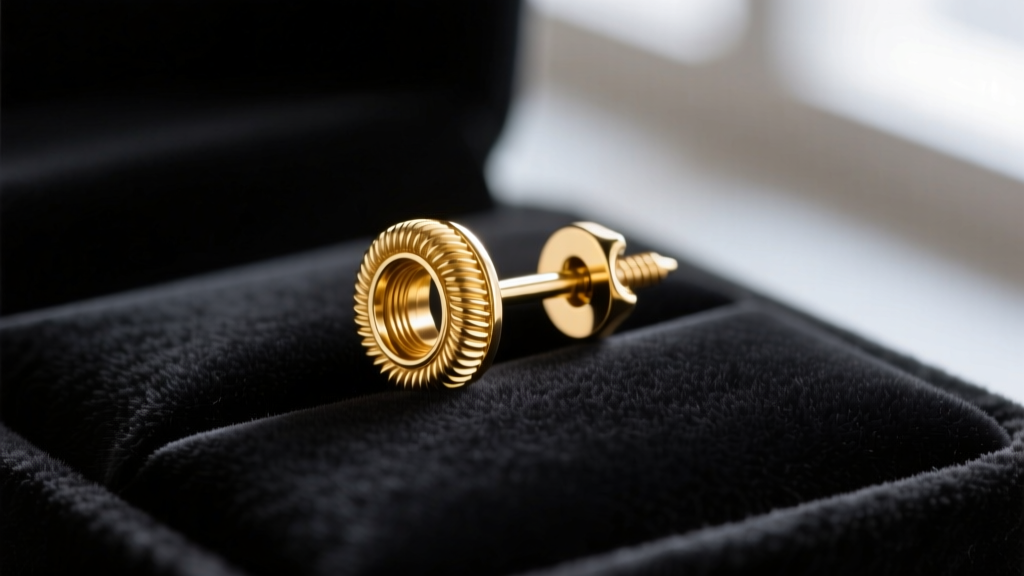
The True Cost of Losing an Earring: Why Backs Matter
When investing in fine jewelry, the focal point is almost always the gemstone or the precious metal setting. However, the unsung hero of any earring's longevity and security is the backing mechanism. For owners of high-value diamond studs, heirloom pearls, or active individuals who refuse to take their jewelry out for sports, standard friction backs (commonly known as butterfly backs) present a significant financial risk. A momentary snag on a sweater or a toss in bed can easily dislodge a standard back, resulting in the loss of a $500 to $5,000 earring. This brings us to a critical budget and value assessment: are screw on earring backs worth the upfront premium, or are they an unnecessary upsell by jewelers?
To answer this, we must look beyond the initial purchase price and evaluate the total cost of ownership, material biocompatibility, mechanical failure rates, and the specific threading engineering that separates cheap novelty backs from professional-grade security systems.
Screw On Earring Backs vs. Standard Friction Backs: A Price Breakdown
The most immediate deterrent for buyers considering screw on earring backs is the cost. A standard pair of stamped metal friction backs costs a jeweler pennies and is usually provided for free with a purchase. Screw mechanisms, requiring precision CNC machining or careful casting, carry a much higher manufacturing cost. Below is a comparative value assessment of the most common earring security mechanisms on the market in 2026.
| Backing Mechanism | Average Retail Cost (Per Pair) | Security Rating | Best Use Case |
|---|---|---|---|
| Standard Friction (Butterfly) | $0.50 - $5.00 | Low | Costume jewelry, low-value studs, temporary wear |
| Silicone O-Rings / Discs | $2.00 - $8.00 | Medium | Active wear, sports, children's earrings |
| Screw On Earring Backs | $15.00 - $120.00+ | High | High-value diamonds, heavy gemstones, 24/7 wear |
| Locking Backs (e.g., La Pousette) | $80.00 - $250.00+ | Very High | Ultra-high-value investments, heirloom pieces |
While the $15 to $120 price tag for screw backs may seem steep compared to free friction backs, the value proposition becomes clear when applied to a $2,000 pair of diamond solitaires. Spending $60 on solid 14k gold screw on earring backs represents a mere 3% insurance premium against total loss. From a pure risk-management perspective, the ROI is undeniable for any earring valued over $300.
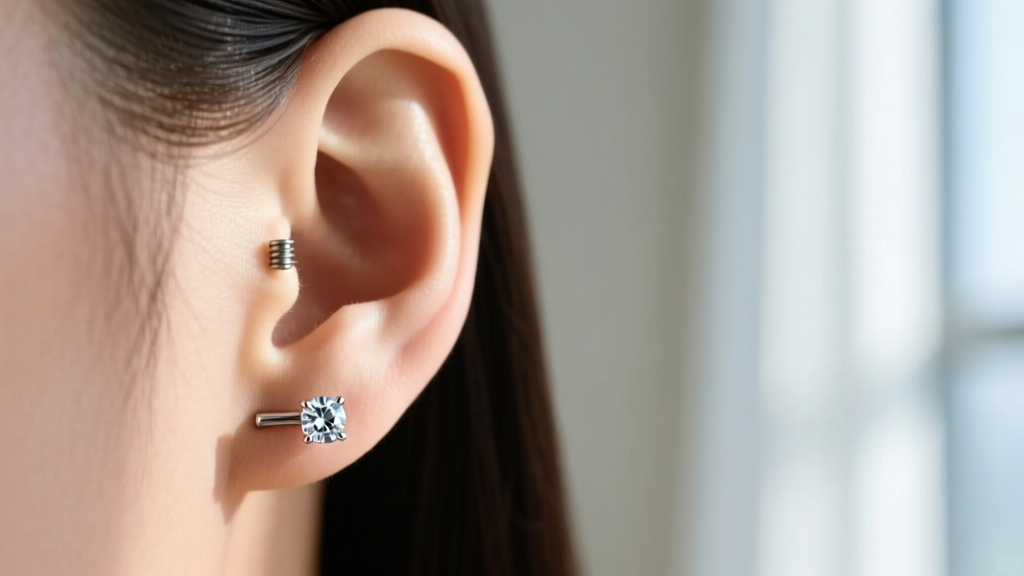
Material Grades and Pricing: What You Are Actually Paying For
Not all screw backs are created equal. The price variance between a $15 pair and a $120 pair is dictated entirely by metallurgy and biocompatibility. Because the post and the back remain in prolonged contact with the piercing fistula (the healed skin tunnel), material grade is non-negotiable for long-term ear health.
Implant-Grade Titanium vs. Surgical Steel
Budget-friendly screw backs are often made from 316L surgical stainless steel, retailing between $10 and $25. While 316L is generally safe for healed piercings, it contains up to 14% nickel. According to the American Academy of Dermatology, nickel is the leading cause of contact dermatitis. If you have sensitive skin or a history of metal allergies, steel screw backs are a poor value, as they will inevitably cause irritation, forcing you to replace them anyway.
The superior choice is Implant-Grade Titanium (ASTM F136). Brands like Blomdahl or specialized piercing studios charge between $25 and $45 for titanium screw backs. Titanium is completely nickel-free, lightweight, and will not degrade or tarnish from exposure to sweat, chlorine, or saline solutions. For daily wearers, the $20 premium for ASTM F136 titanium over 316L steel is a mandatory investment in dermatological health.
Solid Gold Options (14k vs. 18k)
If your earring posts are solid gold, you must pair them with solid gold screw backs to prevent galvanic corrosion and color mismatching. 14k gold screw backs typically range from $60 to $90, while 18k gold options can exceed $120. Beware of "gold-plated" or "gold-filled" screw backs marketed at the $20 price point; the friction of the threading will quickly wear away the microscopic gold layer, exposing the base metal underneath and leading to both skin irritation and mechanical stripping of the threads.
The Hidden Costs: Threading Mechanics and Failure Modes
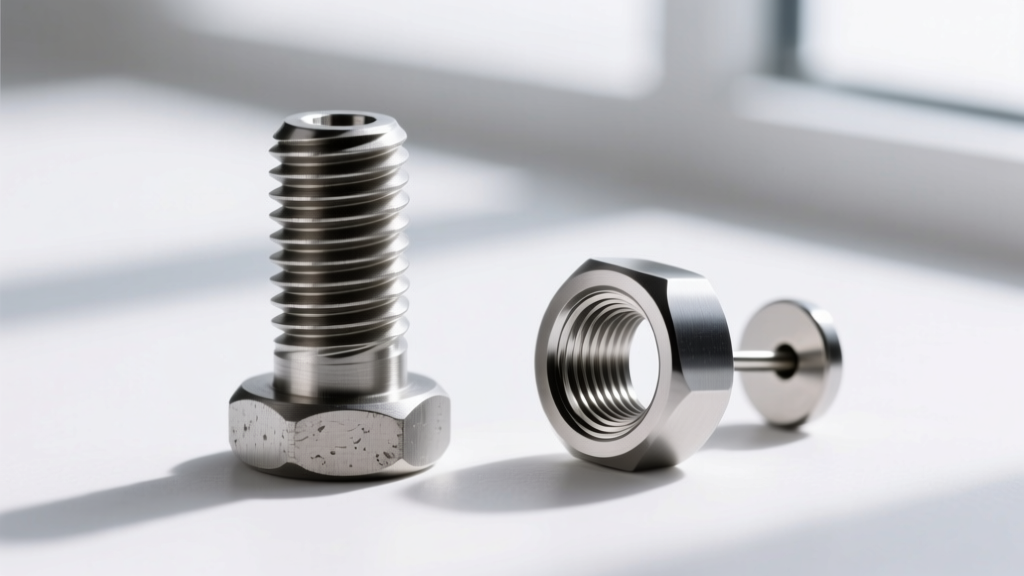
The most critical aspect of assessing the value of screw on earring backs is understanding the threading architecture. The Association of Professional Piercers (APP) heavily advocates for specific threading types to protect the integrity of the piercing channel. When budgeting for screw backs, you must verify which of the two threading styles you are purchasing:
- External Threading (The Budget Trap): The threads are cut directly into the earring post. While cheaper to manufacture, the sharp, jagged threads act like a micro-cheese grater every time you insert or remove the earring, causing micro-tears in the fistula. Over time, this leads to scar tissue buildup and irritation bumps. Furthermore, external threads are highly susceptible to cross-threading and stripping.
- Internal Threading (The Premium Standard): The threads are cut into the *inside* of the screw on earring back, while the post remains perfectly smooth. This allows the post to glide through the piercing channel without causing trauma. Internal threading requires vastly superior CNC machining, which is why these sets cost 30% to 50% more. However, they eliminate tissue damage and drastically reduce the risk of cross-threading.
Common Mechanical Failure Modes
Even high-quality screw on earring backs have specific failure modes that buyers should be aware of to maximize their investment:
- Cross-Threading: Forcing the back on at an angle will strip the delicate internal threads, rendering a $80 pair of gold backs useless. Always start threading in reverse (counter-clockwise) until you feel a subtle "click" indicating the threads have aligned, then tighten clockwise.
- Over-Tightening: Using tools or excessive finger strength can warp the backing plate or strip the post. Hand-tightening is sufficient; the friction of the metal-to-metal connection is engineered to hold against normal kinetic movement.
- Gauge Incompatibility: Screw backs are not universally interchangeable. A 20-gauge (0.8mm) post requires a specific 20g back. Attempting to force an 18-gauge (1.0mm) back onto a 20g post will destroy the threading immediately. Always verify your exact post gauge before purchasing replacement backs.
Final Verdict: When to Pay the Premium for Screw Backs
From a strict budget and value assessment perspective, screw on earring backs are not a universal necessity, but they are an essential upgrade for specific jewelry categories. You should absolutely allocate budget for internally threaded, implant-grade titanium or solid gold screw backs if:
- Your earrings contain diamonds or gemstones valued over $300.
- You wear your studs 24/7, including during sleep, showers, and exercise.
- You have a history of contact dermatitis or sensitive piercing channels.
- You are purchasing earrings for young children who frequently tug at their lobes or sleep on their sides.
Conversely, if you are buying lightweight, low-cost fashion jewelry that you only wear for a few hours at a time, standard friction backs or cheap silicone O-rings remain the most cost-effective solution. Ultimately, viewing screw on earring backs not as a mere accessory, but as a mechanical insurance policy for your fine jewelry, completely shifts the value equation in their favor. Protecting your investment starts at the back of the earlobe.


