The Sculptural Golden Earring Trending in 2026: A Style Analysis
Explore the 2026 sculptural golden earring trending styles. Discover material grades, gauge sizing, and expert ear curation frameworks for modern styling.

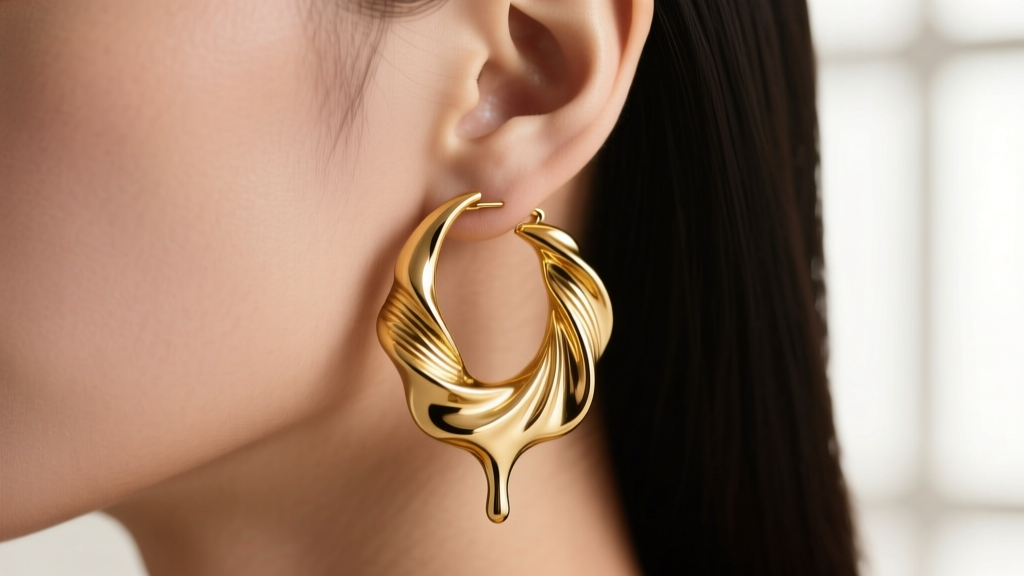
The Shift to Sculptural: Why the Golden Earring Trending Now Defies Minimalism
For the better part of a decade, the jewelry industry was dominated by the "quiet luxury" movement—characterized by ultra-thin gold wires, microscopic pavé diamonds, and barely-there huggies. However, as we navigate the style landscape of 2026, a massive pendulum swing has occurred. The current golden earring trending aesthetic is all about volume, texture, and organic imperfection. We are seeing a surge in "molten" or "liquid" gold designs, where the metal looks as though it was caught mid-drip. This isn't just a visual trend; it represents a fundamental shift in how consumers view ear curation as a form of wearable, sculptural art rather than mere accessory.
Designers are moving away from pristine, high-polish CAD (Computer-Aided Design) perfection. Instead, they are utilizing traditional lost-wax casting techniques, intentionally leaving tool marks, asymmetrical ridges, and raw, unpolished edges on the final pieces. This tactile approach to goldsmithing means that no two sculptural hoops are exactly alike. When you invest in a trending molten gold hoop today, you are buying a unique topography of metal that catches light in unpredictable, mesmerizing ways.
Material Science: Decoding the "Gold" in Your 2026 Ear Curation
As the demand for heavy, statement-making gold earrings skyrockets, the market has been flooded with varying material grades. Understanding the metallurgy behind your jewelry is critical, especially when dealing with the weight and friction inherent in sculptural designs. According to the Gemological Institute of America (GIA), the purity of gold drastically alters its structural integrity, which is a vital consideration for heavy hoops that put stress on the piercing fistula.
| Material Type | Base Metal | Gold Content / Layer | Hardness & Durability | 2026 Price Range (Per Hoop) |
|---|---|---|---|---|
| 14k Solid Gold | None (Alloyed) | 58.5% Pure Gold | High (Ideal for clickers & heavy hoops) | $250 - $600 |
| 18k Solid Gold | None (Alloyed) | 75% Pure Gold | Medium (Prone to scratching on hinges) | $400 - $950 |
| Gold Vermeil | Sterling Silver | Min 2.5µm Gold Plating | Low (Plating wears on friction points) | $60 - $140 |
| PVD Gold Coated | 316L Surgical Steel | Titanium Nitride (PVD) | Extremely High (Cannot be polished) | $40 - $90 |
For the molten gold trend, 14k solid gold remains the undisputed champion. The alloy mix (typically 58.5% gold, 25% silver, and 16.5% copper) provides the necessary tensile strength to support heavy, oversized sculptural shapes without bending out of shape when accidentally snagged on a sweater. Conversely, while PVD (Physical Vapor Deposition) coatings offer incredible scratch resistance due to their high Vickers hardness, they lack the authentic thermal warmth and acoustic "clink" of solid gold that true collectors seek.
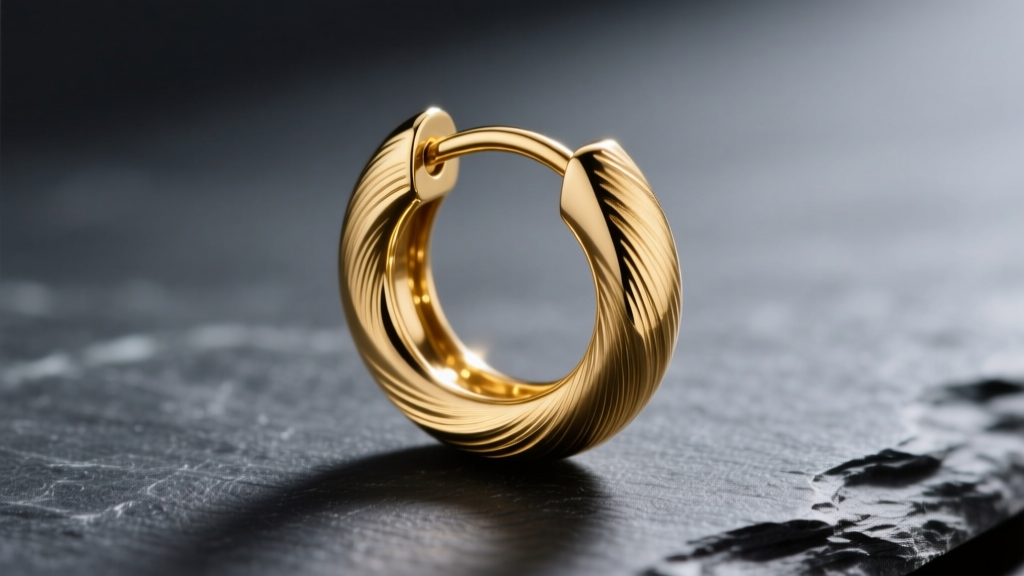
The Physics of Heavy Gold: Gauge Sizing and the Cheese-Cutter Effect
One of the most critical, yet frequently overlooked, aspects of the golden earring trending movement is the physics of weight distribution. Sculptural gold is dense. A standard 12mm thin gold hoop might weigh 1.5 grams, but a similarly sized molten, chunky gold hoop can easily weigh between 6 and 10 grams. This massive increase in weight introduces a severe biomechanical risk to your piercings known in the professional body modification community as the "cheese-cutter effect."
The Association of Professional Piercers (APP) warns against wearing heavy jewelry on thin wire gauges. If you hang an 8-gram sculptural hoop from a standard 20-gauge (0.81mm) or 18-gauge (1.02mm) wire, the downward force concentrates on a microscopic surface area. Over time, this wire will slowly slice through the bottom of your earlobe tissue, causing the piercing to migrate downward, thin out, and eventually tear completely.
The Solution: Upsizing Your Post and Wire
To safely wear the heavy gold trends of 2026, you must match the wire thickness to the weight of the jewelry.
- Under 3 grams: Safe for standard 20g or 18g lobe piercings.
- 3 to 6 grams: Requires a minimum of 16g (1.29mm) wire to distribute the load safely.
- Over 6 grams: Demands a 14g (1.63mm) or even 12g (2.05mm) wire. If your lobes were pierced with a standard piercing gun (which uses 20g or 22g needles), you will need to visit a professional piercer to safely stretch your lobes to a 14g before wearing heavy statement hoops.
For cartilage piercings like the helix or conch, the tissue is much less pliable and more prone to irritation bumps (hypertrophic scarring) if subjected to the swinging momentum of heavy dangles. Stick to sculptural huggies or flat-back studs in the cartilage, reserving the heavy molten hoops exclusively for the earlobes.
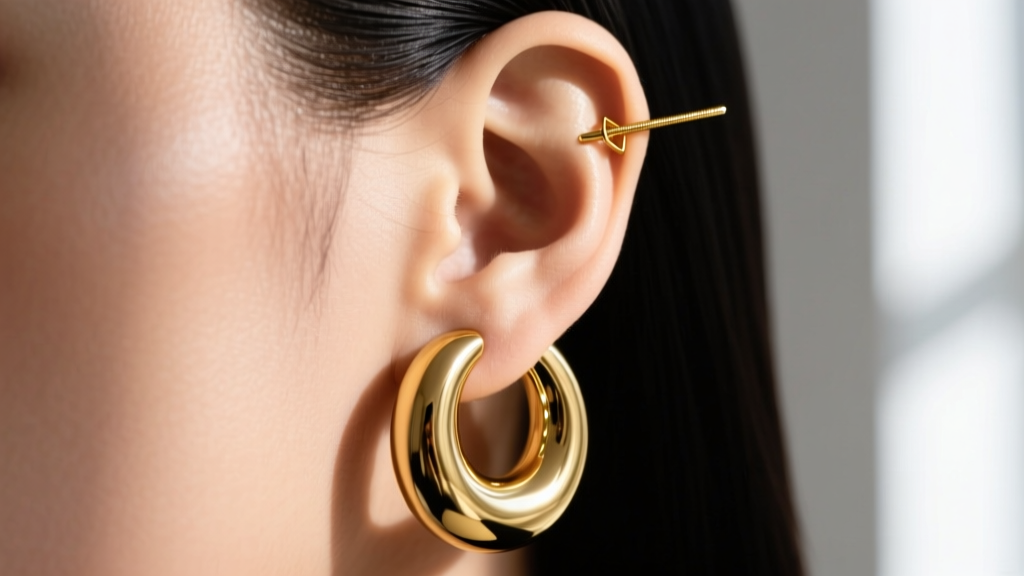
The Asymmetrical Curation Matrix: A 2026 Styling Framework
Styling sculptural gold requires a departure from the symmetrical "matchy-matchy" rules of the early 2010s. The modern ear curation is an exercise in balanced asymmetry, utilizing varying textures and weights to guide the eye across the face. Here is a practical framework for styling your trending golden earrings this year.
1. The Anchor (Lower Lobe)
Your primary lobe piercing should house the heaviest, most visually dominant piece. A 15mm to 20mm molten gold hoop with a raw, brushed texture serves as the foundation. Because this piece is heavy, ensure it features a secure clicker hinge or a flat-back labret stud with a sculptural front, rather than a flimsy butterfly back that will droop under the weight.
2. The Bridge (Mid-Helix or Flat Piercing)
To complement the heavy lobe piece without overwhelming the ear, the mid-section requires a transitional element. A textured gold huggie in a 16-gauge thickness works perfectly here. The huggie should have a diameter of no more than 8mm, ensuring it "hugs" the cartilage tightly. This prevents the jewelry from catching on hair or masks, which is a common failure mode for cartilage piercings that leads to prolonged healing and irritation.
3. The Accent (Upper Helix or Rook)
Finish the curation with a deliberate contrast in scale. If the lower pieces are heavy and opaque, the upper accent should be delicate or incorporate a different material. A minimalist 14k gold threader, a tiny bezel-set diamond stud, or even an oxidized silver ear cuff introduces a mixed-metal edge that prevents the all-gold look from feeling dated or overly monolithic.
"The secret to 2026 ear styling isn't just about buying expensive gold; it's about understanding negative space. Let the skin and the natural folds of your ear act as the canvas between your sculptural pieces." — Senior Jewelry Curator, JewelStyleRadar
Investment vs. Fast Fashion: When to Upgrade
Because the molten gold aesthetic relies heavily on surface texture, it is uniquely unforgiving when executed in cheap materials. Fast-fashion brands attempting to replicate this trend often use electroplated brass or zinc alloys. These base metals react with the acidity of human sweat, causing the thin gold flash-plating to oxidize, turn green, and flake off within weeks, ruining the intentional "raw" look and turning it into something that simply looks damaged.
If you are participating in the golden earring trending movement, treat it as an investment in your personal uniform. Save up for solid 14k gold pieces from independent casters or reputable fine jewelry brands. The upfront cost is higher, but solid gold can be ultrasonically cleaned, professionally polished (or intentionally left matte), and worn in the shower, the ocean, and the gym without fear of degradation. In an era of fleeting micro-trends, a beautifully cast, anatomically correct sculptural gold hoop is a permanent fixture in your style arsenal.


