How to Choose and Style Seastar Earrings: A Beginner Guide
Discover everything about seastar earrings in our beginner guide. Learn about materials, gauge sizes, coastal styling tips, and how to prevent tarnish.

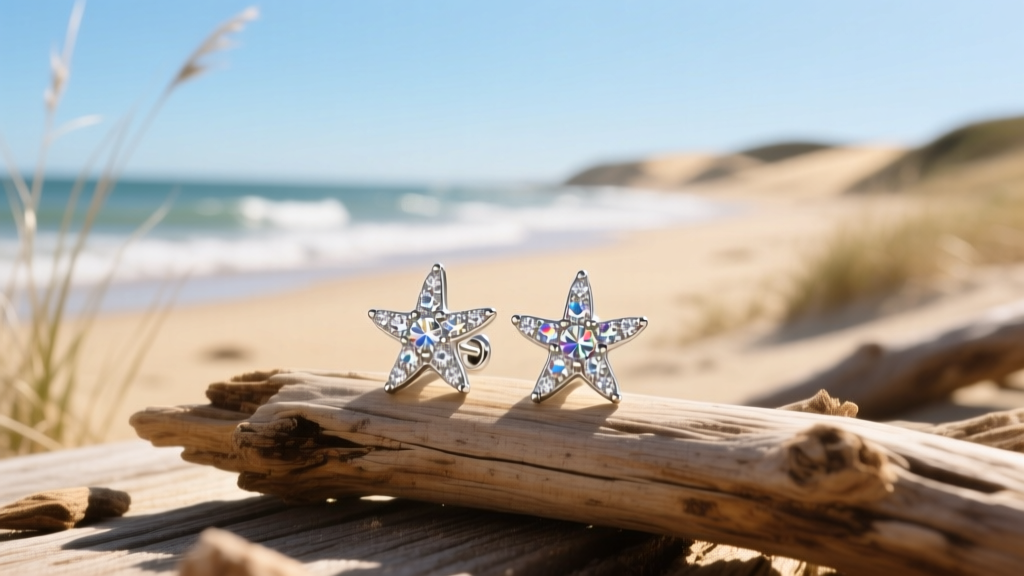
Whether you are drawn to the "coastal grandmother" aesthetic, the evolving mermaidcore trends of 2026, or simply love the organic geometry of marine life, seastar earrings are a staple in coastal-inspired jewelry. Often referred to interchangeably as starfish earrings, these pieces range from delicate minimalist studs to elaborate, gem-encrusted dangles. However, buying jewelry inspired by the ocean requires specific knowledge about material durability, especially if you plan to wear them near saltwater or humidity.
This beginner-friendly explainer will walk you through the technical specifications, material grades, and styling frameworks you need to confidently choose, wear, and care for seastar earrings.
What Defines a Seastar Earring?
The term "seastar" is the scientifically accurate name for starfish, and in the jewelry world, it denotes earrings that mimic the five-armed (or sometimes multi-armed) radial symmetry of these marine creatures. Artisan brands and fine jewelers alike use the seastar motif to evoke a sense of wanderlust and oceanic connection. In 2026, the trend has shifted away from overly literal, chunky resin starfish toward highly detailed, anatomically inspired textures crafted in fine metals, often incorporating asymmetric designs or single-arm "cuff" illusions.
Material Breakdown: What to Look For
When shopping for seastar earrings, the material dictates not only the price but also how the piece will react to environmental factors like saltwater, chlorine, and sunscreen. According to the Federal Trade Commission (FTC) Jewelry Guides, specific terms like "vermeil" have strict legal definitions that protect consumers from cheap plating.
| Material | Composition Standard | Best For | Durability & Tarnish Risk |
|---|---|---|---|
| Sterling Silver (925) | 92.5% pure silver, 7.5% copper alloy | Everyday wear, budget-conscious buyers | High tarnish risk near saltwater and sulfur. Requires frequent polishing. |
| Gold Vermeil | 925 silver base with minimum 2.5 microns of 10k+ gold plating | Special occasions, seasonal summer wear | Moderate. Will eventually wear down to silver if exposed to friction and chemicals. |
| Solid 14k Gold | 58.3% pure gold alloyed with zinc/copper | Swimming, beach wear, lifelong durability | Excellent. Highly resistant to saltwater corrosion and tarnish. |
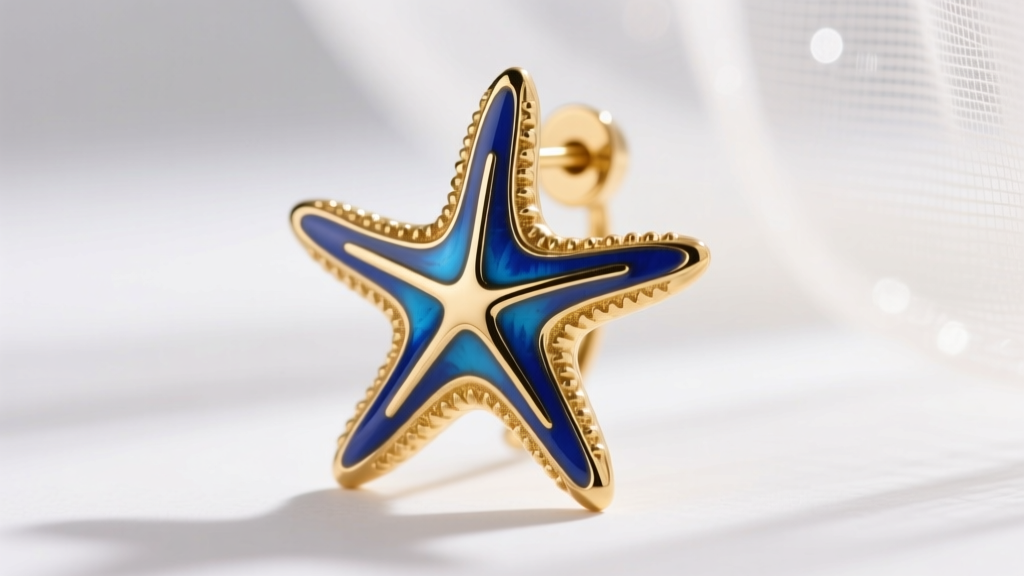
| Enameled Brass | Brass base coated in glass-fused or cold enamel | Fashion jewelry, vibrant color blocking | Poor. Brass will cause green skin if the plating chips; enamel can fracture on impact. |
Technical Specs: Gauge Sizes and Backings
A common mistake beginners make is ignoring the post thickness (gauge) and the backing mechanism. The Association of Professional Piercers (APP) provides standard guidelines for body jewelry gauges, which directly apply to commercial earrings.
Understanding Post Gauges
- 20-Gauge (0.81mm): The industry standard for lightweight seastar studs. It fits almost all standard lobe piercings comfortably.
- 18-Gauge (1.02mm): Recommended for heavier seastar drop earrings or dangles. The slightly thicker post provides structural integrity, preventing the earring from drooping forward and stretching the piercing over time.
- 16-Gauge (1.29mm): Rarely used for standard lobes, but you will frequently see this gauge if you are buying a seastar motif designed for cartilage piercings (like the helix or tragus).
Securing Your Earrings at the Beach
Losing an earring in the sand or surf is a heartbreaking experience. Standard "friction backs" (butterfly backs) are notorious for slipping off when hair gets caught on them or when pulling off a beach cover-up. If you are investing in fine seastar earrings, look for:
- Screw Backs: The post is threaded, and the backing screws on securely. Ideal for beach days.
- La Pousette (Locking) Backs: These feature a spring-loaded locking mechanism that clicks into a groove on the post, offering the highest level of security for active wear.

Styling Seastar Earrings for Your Face Shape
The radial, spiky geometry of a seastar can dramatically alter the visual balance of your face. Use this framework to choose the right silhouette:
Round Faces
The Goal: Add angles and elongate.
The Pick: Opt for elongated seastar dangles or asymmetric starfish drops. Avoid wide, chunky studs that sit flat against the lobe, as they will emphasize the roundness of your cheeks. A linear drop ending in a delicate seastar charm draws the eye downward, creating a slimming illusion.
Square Faces
The Goal: Soften a strong jawline.
The Pick: Medium-sized seastar studs with curved, organic edges or enamel inlays. The rounded, natural curves of a well-cast seastar motif will contrast beautifully with angular jawlines, softening your overall profile without adding harsh geometric lines.
Heart-Shaped Faces
The Goal: Balance a wider forehead and narrower chin.
The Pick: Wider seastar huggies or chandelier earrings that flare out at the bottom. The visual weight at the bottom of the earlobe helps to fill out the lower half of the face, creating harmonious symmetry.
Care and Maintenance: Fighting Salt and Sunscreen
Coastal environments are incredibly harsh on jewelry. Saltwater acts as an electrolyte, accelerating the oxidation (tarnishing) of the copper alloys found in sterling silver. Furthermore, chemical sunscreens and tanning oils can leave a cloudy film over gemstones and degrade porous materials like pearls or coral often paired with seastar designs.
"Always apply your sunscreen, hairspray, and perfumes at least 15 minutes before putting on your seastar earrings. This allows the chemicals to absorb into your skin rather than settling into the microscopic crevices of the metal casting."
For deep cleaning, the Gemological Institute of America (GIA) recommends a simple, non-abrasive approach for textured metals:
- Mix a few drops of mild, phosphate-free dish soap in warm distilled water.
- Use a baby toothbrush (which has ultra-soft bristles) to gently agitate the textured arms of the seastar.
- Rinse thoroughly under distilled water to avoid hard water spots.
- Dry completely with a microfiber cloth before storing in an anti-tarnish bag.
Where to Buy Authentic Seastar Earrings
When shopping, beware of "cast" jewelry sold as "handcrafted." True artisan seastar earrings are often cast using the lost-wax method from actual, ethically sourced sea stars, capturing the microscopic tube feet and dermal plating of the creature. Expect to pay between $45 and $120 for high-quality sterling silver artisan studs, while solid 14k gold versions with diamond or sapphire accents will typically range from $350 to $800+. Always verify the maker's hallmark and metal purity stamps before purchasing fine coastal jewelry.


