The Complete Care and Cleaning Guide for Silicone Earring Hooks
Learn how to properly clean, maintain, and extend the life of your silicone earring hooks with expert tips on safe solvents and sebum removal.

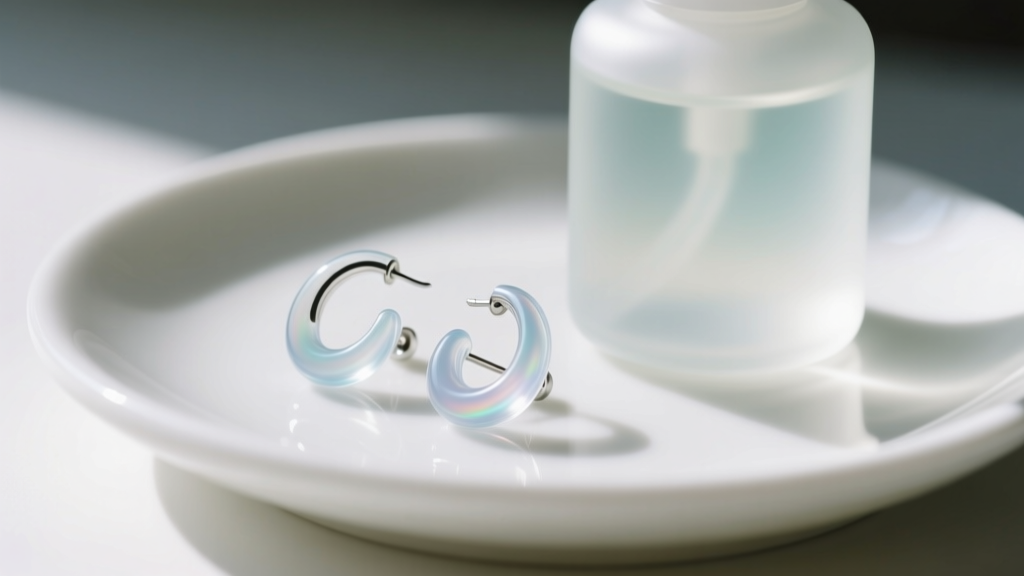
The Material Science of Silicone Earring Hooks
Silicone earring hooks have fundamentally changed how we wear heavy statement earrings and manage sensitive ear lobes. Unlike traditional metal hooks or rigid plastic backs, high-quality silicone hooks are crafted from platinum-cured, medical-grade silicone. This specific polymer is prized for its hypoallergenic properties, biocompatibility, and flexible Shore A hardness (typically rated between 30 and 40), which allows it to grip earring posts without causing pressure necrosis on the earlobe.
However, silicone is not invincible. It is a porous elastomer at the microscopic level, meaning it readily absorbs sebum, dead skin cells, and environmental pollutants. Furthermore, standard silicone hooks feature an inner canal diameter of 1.2mm to 1.5mm, perfectly accommodating 20-gauge (0.81mm) and 18-gauge (1.02mm) earring posts. If debris accumulates inside this canal, it increases friction, leading to micro-tears in the silicone when you insert or remove your earrings. Understanding the material science behind these hooks is the first step in establishing a proper maintenance routine.
Chemical Compatibility: What Destroys Silicone
The most common mistake jewelry enthusiasts make is treating silicone hooks like metal or hard gemstones. Submerging silicone in harsh chemical baths will rapidly degrade the polymer chains, causing the material to swell, become tacky, and eventually snap under the weight of an earring.
According to the Cole-Parmer Chemical Compatibility Database, silicone exhibits poor resistance to certain organic solvents. Below is a critical compatibility chart for cleaning agents commonly found in jewelry care kits:
| Cleaning Agent | Effect on Medical-Grade Silicone | Verdict |
|---|---|---|
| Acetone | Causes severe swelling, leaching of plasticizers, and structural failure. | Never Use |
| Isopropyl Alcohol (70%+) | Prolonged exposure dries out the elastomer, leading to micro-cracking. | Avoid / Spot Clean Only |
| Ultrasonic Cleaners | High-frequency cavitation can tear weakened silicone at the stress points. | Never Use |
| Mild Surfactant (Dish Soap) | Safely lifts lipids and sebum without altering the polymer structure. | Highly Recommended |
| Saline Solution | Safe for sanitization but ineffective at breaking down sebum buildup. | Safe but Inefficient |
The 5-Step Deep Cleaning Protocol
To maintain the structural integrity and hygiene of your silicone earring hooks, implement this deep cleaning protocol every two weeks, or immediately after wearing them in high-sweat environments.
- Pre-Soak: Fill a small glass bowl with lukewarm water (30°C to 35°C). Avoid boiling water, as extreme heat can accelerate polymer breakdown over time. Add two drops of a mild, fragrance-free surfactant like Dawn dish soap or a dedicated medical device cleaner.
- Agitate: Submerge the silicone hooks and let them soak for 5 to 7 minutes. This softens oxidized sebum and cosmetic residue trapped in the 1.5mm inner canals.
- Micro-Brushing: Use a soft-bristled infant toothbrush or a specialized jewelry cleaning brush to gently scrub the exterior curves. For the inner canal, use a wooden interdental pick or a blunt-tipped plastic flosser to push out compacted dead skin cells. Never use metal needles, as they will score the silicone.
- Rinse: Rinse thoroughly under a gentle stream of distilled or filtered water to prevent hard water mineral deposits from clinging to the tacky silicone surface.
- Dry: Pat dry with a lint-free microfiber cloth. Allow them to air dry completely on a paper towel for at least two hours before storage or re-use. Trapped moisture inside the canal can harbor bacterial growth.
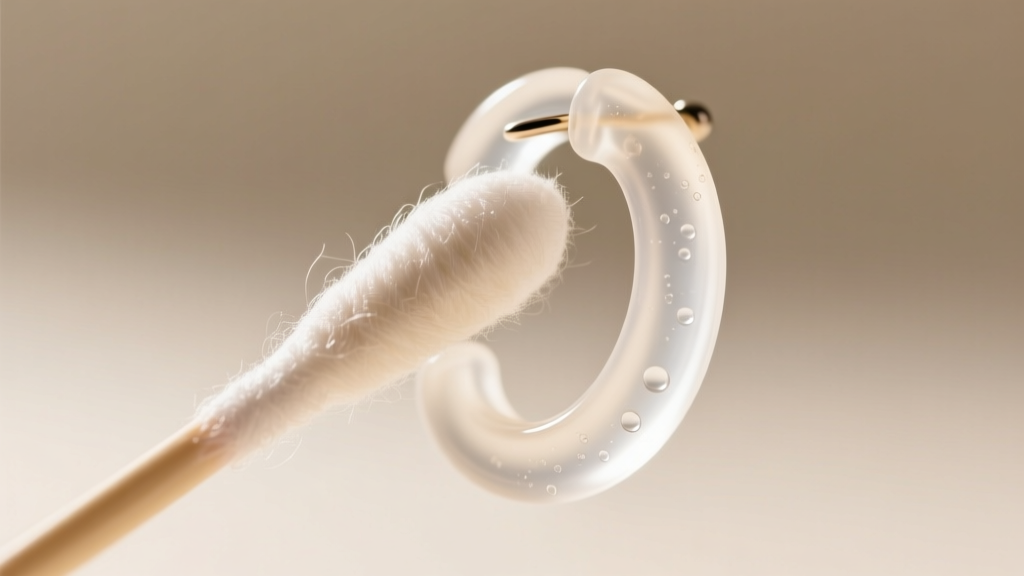
Managing Sebum, Odor, and Contact Dermatitis
Because silicone creates a semi-occlusive seal against the skin, it can trap sweat and sebum against the earlobe. When sebum oxidizes, it develops a distinct, unpleasant odor and can harbor Staphylococcus bacteria. For individuals prone to contact dermatitis, this trapped debris is a primary trigger for localized irritation and redness.
The American Academy of Dermatology notes that prolonged exposure to trapped allergens and irritants is a leading cause of localized contact dermatitis. To prevent this, always wipe down your silicone hooks with a damp cloth immediately after removing your earrings. If you experience persistent itching or redness behind the earlobe, switch to a hypoallergenic liquid soap for your cleaning routine and ensure your earrings are not pulling the silicone too tightly against the skin, which restricts airflow.
Structural Integrity: Preventing Creep Deformation
Silicone earring hooks are frequently used to support heavy drop earrings, gemstone clusters, and thick hoop styles. When subjected to constant mechanical stress, silicone experiences 'creep deformation'—a slow, permanent elongation of the material over time. A hook that once securely gripped an 18-gauge post may eventually stretch out, causing the earring to droop or slip out entirely.
To mitigate creep deformation:
- Rotate Your Hooks: Do not use the exact same pair of silicone hooks for heavy earrings every day. Rotate between three or four pairs to allow the elastomer to 'rest' and recover its original shape.
- Check the Grip: If you notice the earring post sliding through the hook with zero resistance, the inner canal has stretched beyond its elastic limit. It is time to replace the hook.
- Avoid Sharp Posts: Ensure your metal earring posts have smooth, rounded ends or secure butterfly backs before sliding them into the silicone. A sharp or burred post will slice the inner canal, creating a tear that will rapidly propagate under the weight of the earring.

Proper Storage and UV Protection
Ultraviolet (UV) light and ozone are the natural enemies of silicone polymers. Prolonged exposure to direct sunlight will cause the silicone to undergo oxidative yellowing and become brittle. While medical-grade platinum-cured silicone is more UV-resistant than cheap thermoplastic rubber (TPR) alternatives, it is not entirely immune to photodegradation.
Store your clean, completely dry silicone hooks in an opaque, airtight jewelry box or a sealed ziplock bag kept in a cool, dark drawer. Keep them away from direct heat sources like radiators or bathroom vanity lights, as sustained heat above 40°C can alter the material's durometer (hardness). High-quality platinum-cured silicone hooks typically range from $8 to $15 for a pack of 10; treating them as disposable, cheap plastics will cost you more in the long run.
When to Retire Your Silicone Hooks
Even with meticulous care, silicone earring hooks are ultimately a wearable consumable. You should immediately discard and replace your hooks if you observe any of the following failure modes:
- Surface Tackiness: If the silicone feels permanently sticky even after a thorough wash, the polymer chains are breaking down and leaching plasticizers.
- Discoloration: While slight yellowing is normal over a year of use, dark or cloudy spots indicate deep-set bacterial or fungal colonization that cannot be safely cleaned.
- Loss of Elasticity: If the hook feels stiff, rigid, or snaps when gently stretched, it has suffered severe oxidative degradation.
- Visible Micro-Tears: Inspect the inner canal under a bright light. Any visible fraying or tearing compromises the structural support needed for heavy earrings.
'Investing in high-grade, platinum-cured silicone hooks and maintaining a strict, chemical-free cleaning regimen ensures that your heavy statement earrings remain secure and your earlobes stay healthy and irritation-free.'


