Silver Diamond Hoop Earrings: Technical Guide & Specs
Master the specs of silver diamond hoop earrings. Explore sterling grades, diamond clarity, clasp mechanics, and gauge sizes for secure, lasting wear.

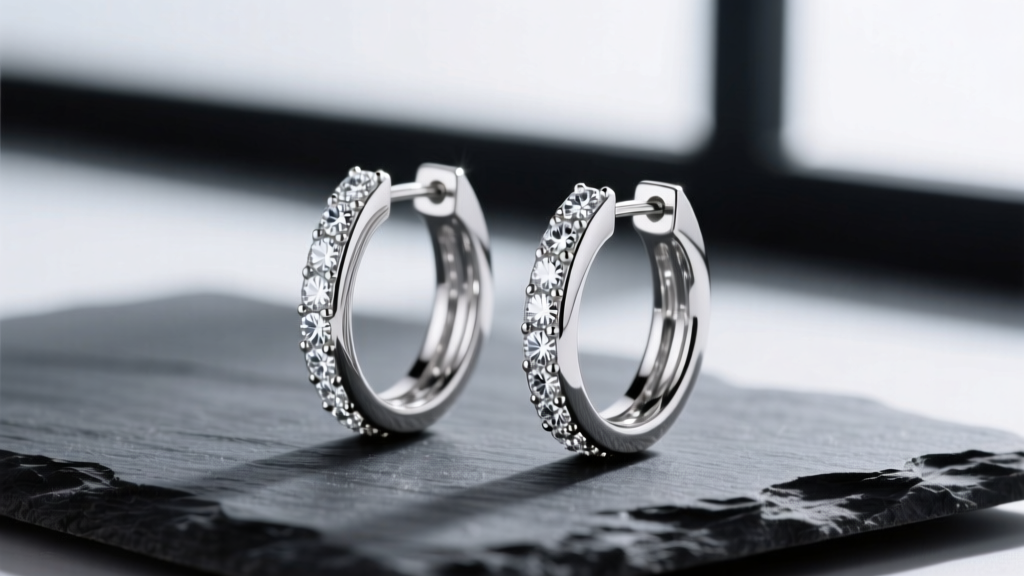
When evaluating fine jewelry, silver diamond hoop earrings represent a unique intersection of classic metallurgy and precision gemology. Unlike solid gold alternatives, sterling silver requires specific structural considerations to maintain its shape and luster over decades of daily wear. Furthermore, the integration of diamond pavé into a flexible, moving hoop introduces complex mechanical stress points that mass-market manufacturers often overlook. This technical deep dive dissects the material science, gemological standards, and mechanical engineering that separate heirloom-quality silver hoops from disposable fashion accessories.
The Metallurgy of Sterling Silver in Hoop Earrings
Pure silver (999 fine) is far too malleable for structural jewelry; a pure silver hoop would bend under the slight pressure of being inserted into an earlobe. To achieve the necessary tensile strength, jewelers alloy silver with other metals, most commonly copper. The industry standard is 925 sterling silver, comprising 92.5% silver and 7.5% copper. While copper provides the requisite Vickers hardness, it also introduces a significant vulnerability: oxidation. Copper reacts with sulfur in the atmosphere and human sweat to form silver sulfide, the black compound commonly known as tarnish.
950 Argentium and Rhodium Plating Thickness
To combat tarnish without sacrificing structural integrity, advanced metallurgists developed Argentium silver (typically 935 or 950 grades). Argentium replaces a portion of the copper with germanium, which migrates to the surface and forms a transparent, self-healing layer of germanium dioxide. This drastically slows the oxidation process, making Argentium an elite choice for silver diamond hoop earrings that are worn in humid climates or during physical activity.
For traditional 925 sterling silver, a rhodium plating barrier is mandatory. Rhodium, a platinum-group metal, provides a brilliant white finish and absolute tarnish resistance. However, the longevity of the earring depends entirely on the plating thickness. Standard commercial "flash" plating measures a mere 0.05 to 0.1 microns, which will wear through to the base silver within months of daily friction. High-end technical specifications demand a minimum of 0.3 to 0.5 microns of rhodium, often applied over a nickel or palladium strike layer to ensure molecular adhesion and prevent flaking.
Diamond Quality Metrics for Small-Accent Hoops
The diamonds used in hoop earrings are classified as "melee" (pronounced meh-lay), encompassing stones ranging from 0.001 to 0.18 carats. Because these stones are exceptionally small, their optical performance relies entirely on the precision of their faceting rather than their raw carat weight. According to the Gemological Institute of America (GIA), the cut quality of melee diamonds is the single most critical factor in determining the overall brilliance of a pavé setting.
Single-Cut vs. Full-Cut Faceting
Manufacturers generally utilize two faceting styles for melee diamonds:
- Single-Cut (17-18 facets): Features a table, eight crown facets, and eight pavilion facets. These are cheaper to produce but lack the complex light return required for dynamic jewelry.
- Full-Cut (57-58 facets): Mirrors the anatomy of a large brilliant-cut diamond. Full-cut melee diamonds capture and reflect ambient light from multiple angles, which is absolutely crucial for hoop earrings that constantly rotate and shift as the wearer moves.
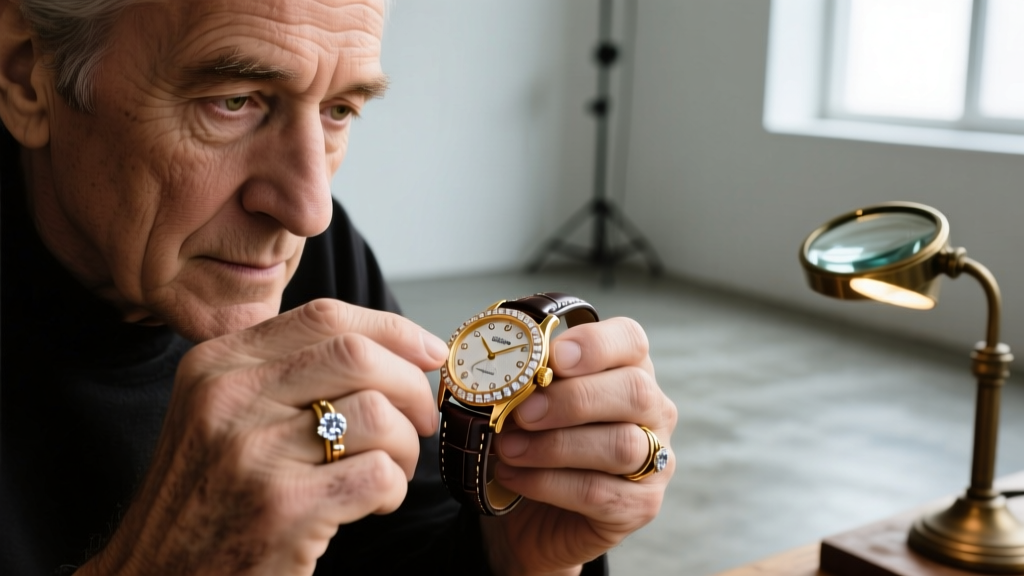
| Metric | Commercial Grade | Fine Jewelry Grade | Impact on Hoop Brilliance |
|---|---|---|---|
| Faceting | Single-Cut (17 facets) | Full-Cut (57 facets) | Full-cut provides 300% more scintillation during movement. |
| Color | I - J - K | G - H | G-H prevents yellow tinting against bright rhodium-plated silver. |
| Clarity | I1 - I2 (Included) | SI1 - SI2 (Slightly Included) | SI-grade ensures no visible carbon spots disrupt light paths. |
Structural Integrity: Gauges, Clasps, and Failure Points
The mechanical failure of silver diamond hoop earrings almost never occurs in the metal band itself; it occurs at the clasp mechanism and the wire gauge. The thickness of the wire, measured in gauges, must be perfectly calibrated to the weight of the diamond setting.
Wire Gauge Specifications
- 20-Gauge (0.81mm): Suitable only for lightweight, hollow-core hoops or minimalist designs with fewer than 0.10 total carat weight (tcw). Prone to warping if subjected to lateral pressure.
- 18-Gauge (1.02mm): The optimal standard for solid silver hoops featuring 0.25 to 0.75 tcw of diamond pavé. Provides enough rigidity to support the weight of the stones without compromising lobe comfort.
- 16-Gauge (1.29mm): Reserved for heavy, statement-sized hoops or continuous endless hoops where the wire itself must bear significant structural tension.
Hinge vs. Latch-Back Mechanics
The clasp is the primary point of structural failure. The Jewelers of America notes that clasp maintenance is the most common repair request for hoop earrings. The two dominant mechanisms present distinct engineering trade-offs:
Hinge and Snap Closure: This design utilizes a microscopic steel pin to allow the post to hinge downward, snapping into a V-shaped groove on the opposite side. Failure Mode: Over time, the silver groove can deform from repetitive snapping, leading to a loose closure. Additionally, if the steel hinge pin is exposed to moisture, it can rust and seize.
Latch-Back (Click-Top): A hinged wire loops up and over a curved catch. Failure Mode: The thin silver wire can bend backward if snagged on clothing or hair, permanently ruining the tension required to keep the catch closed.
Sizing and Proportions: Diameter vs. Band Width
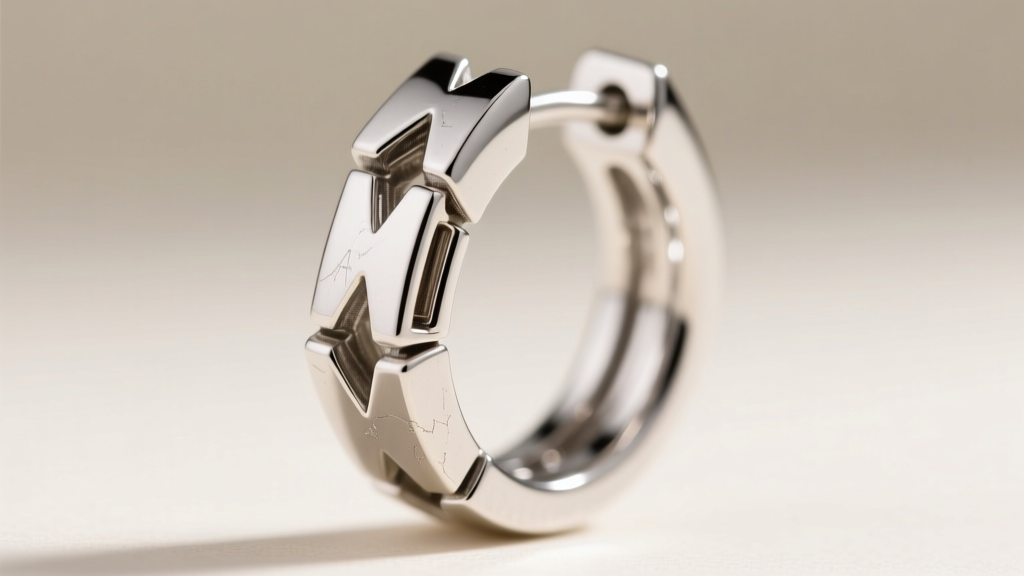
When selecting silver diamond hoop earrings, consumers often focus solely on the outside diameter (OD). However, the inside diameter (ID) and the band width are equally critical for both aesthetics and ergonomics. A hoop with a 30mm OD and a thin 1.5mm band will have an ID of 27mm, allowing it to swing freely and accommodate thicker earlobes. Conversely, a 30mm OD "huggie" style with a 5mm wide diamond-encrusted band will have an ID of only 20mm. This tight clearance will press firmly against the lobe, which can cause irritation if the ear piercing is not perfectly centered or if the silver edges are not meticulously beveled.
Furthermore, the distribution of diamond weight affects the center of gravity. A hoop that is heavily pavé-set only on the bottom half will naturally swing forward, causing the clasp to pull upward on the earlobe. Master jewelers counteract this by slightly thickening the silver at the top rear of the hoop, acting as a counterweight to keep the diamonds perfectly aligned with the wearer's jawline.
Maintenance and Ultrasonic Cleaning Protocols
Maintaining the optical brilliance of silver diamond hoop earrings requires a strict cleaning protocol. Because the diamonds are set closely together in pavé or channel settings, they trap microscopic debris, skin oils, and cosmetic residues. This buildup creates a film on the pavilion (bottom) of the diamonds, effectively blocking light return and making the stones appear cloudy and dead.
For routine maintenance, a specialized jewelry cleaning cloth impregnated with mild silver-polishing compounds should be used exclusively on the bare metal portions. The abrasive nature of these cloths can micro-scratch the rhodium plating and the diamond surfaces if rubbed aggressively. For deep cleaning, an ultrasonic cleaner operating at 40-45 kHz is highly effective at cavitating debris out from beneath the diamond girdles. However, ultrasonic cleaning must be strictly avoided if the melee diamonds have been fracture-filled or clarity-enhanced with glass-like resins, as the high-frequency vibrations and heat can shatter the filler and destroy the stone. Always verify that your silver diamond hoops feature untreated, natural melee diamonds before utilizing ultrasonic technology.
Conclusion
Evaluating silver diamond hoop earrings requires looking far beyond the surface sparkle. By scrutinizing the rhodium plating thickness, demanding full-cut melee diamonds, and understanding the mechanical limitations of hinge clasps and wire gauges, you can identify pieces that are engineered for lifelong durability. True luxury in jewelry is not just about the materials used, but the precision with which they are assembled to withstand the rigors of daily wear while maintaining their optical fire.


