Silver Flower Dangle Earrings: A Material & Durability Guide
Compare sterling, Argentium, and fine silver for floral dangles. Learn how metal grades impact weight, tarnish, and durability in flower earrings.

The Allure and Engineering of Floral Dangles
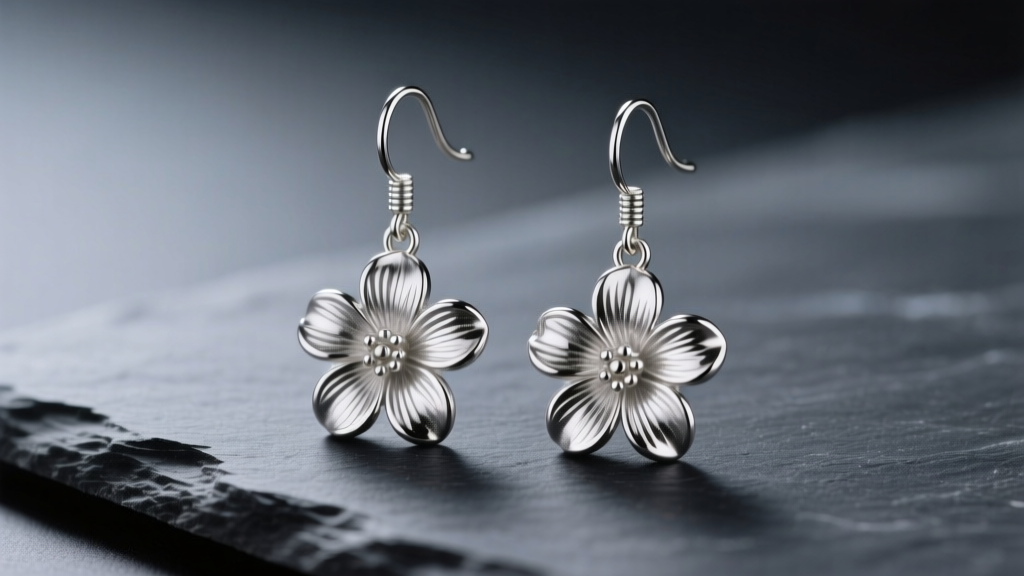
There is a distinct kinetic elegance to silver flower dangle earrings that static studs or rigid hoops simply cannot replicate. The way a meticulously cast petal catches the light with every turn of the head relies on a delicate balance of artistry and physics. However, the structural integrity, weight distribution, and long-term wearability of these intricate pieces are dictated entirely by the specific silver alloy used in their creation. When evaluating floral dangles, consumers often focus solely on the aesthetic design, overlooking the metallurgical properties that determine whether the earrings will last a season or a lifetime. Understanding the nuances of silver grades, wire gauges, and alloy compositions is essential for making an informed investment in fine jewelry.
Decoding Silver Alloys: What Your Earrings Are Actually Made Of
Pure silver is inherently too soft for functional jewelry, particularly for dangle earrings which endure constant pendulum-like motion and kinetic stress. To achieve the necessary tensile strength, silver is alloyed with other metals. The exact ratio and choice of these secondary metals drastically alter the behavior of the final piece.
| Silver Type | Purity | Primary Alloy Metals | Tarnish Resistance | Structural Viability for Dangles |
|---|---|---|---|---|
| Fine Silver (999) | 99.9% | None (Trace elements) | Excellent | Poor (Too soft for jump rings/wires) |
| Sterling Silver (925) | 92.5% | Copper (7.5%) | Moderate | Excellent (Industry standard) |
| Argentium Silver | 93.5% - 96% | Copper, Germanium | Superior | Exceptional (Fuses cleanly, highly durable) |
| Coin Silver | 90.0% | Copper (10%) | Low | Good (Stiff, but prone to heavy oxidation) |
| Silver-Plated | Surface only | Brass or Copper core | Low (Wears off) | Poor (Core exposure leads to skin reactions) |
Sterling Silver (925): The Reliable Standard
Sterling silver remains the undisputed workhorse of the jewelry industry. Comprising 92.5% pure silver and 7.5% copper, this alloy provides the ideal compromise between the brilliant luster of precious metal and the structural rigidity required for daily wear. According to The Silver Institute, the addition of copper dramatically increases the hardness of the metal, allowing it to hold the crisp, intricate details of lost-wax cast floral motifs. However, copper is highly reactive to sulfur and moisture in the air, meaning sterling silver flower dangle earrings will inevitably develop a patina or tarnish over time, requiring periodic polishing to maintain their brilliance.
Argentium Silver: The Tarnish-Resistant Innovator
For those seeking a lower-maintenance alternative, Argentium silver represents a significant metallurgical upgrade. By replacing a portion of the traditional copper content with germanium, Argentium achieves a remarkable resistance to tarnish while maintaining a brilliant, bright-white finish that closely mimics platinum. Furthermore, germanium allows the silver to be fused without the use of traditional solder. This is a critical advantage for dangle earrings, as the jump rings connecting the floral pendant to the ear wire can be seamlessly fused shut, eliminating the weak points where solder joints typically fail under kinetic stress.
Fine Silver (999): A Trap for Dangle Jewelry
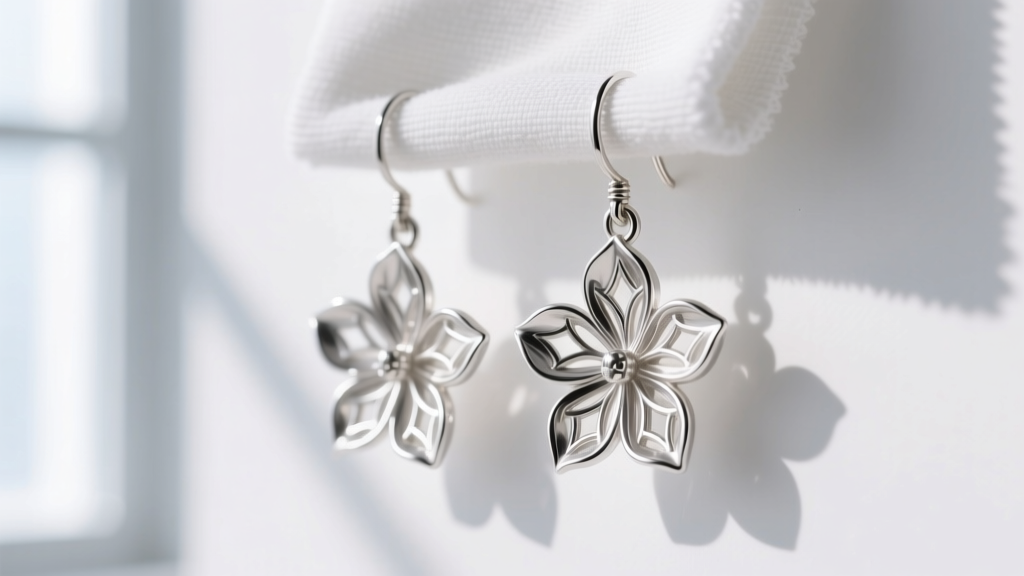
While fine silver boasts the highest purity and is virtually immune to tarnish, it is a structural liability for dangle earrings. Its extreme malleability means that the delicate ear wires and the tiny jump rings suspending the flower pendant will easily bend out of shape. If a heavy cast-silver flower is suspended from a fine silver jump ring, the natural swinging motion of the dangle will gradually pull the ring open, resulting in the loss of the pendant. Fine silver should be reserved for bezel settings or static components, never for the load-bearing mechanics of a dangle earring.
The Mechanics of Movement: Wire Gauges and Jump Rings
The failure point of most poorly constructed dangle earrings is not the floral pendant itself, but the hardware that connects it to the ear. The pendulum motion of a dangle earring generates continuous lateral friction and tensile stress on the connecting rings. To ensure longevity, specific wire gauges must be utilized.
- Ear Wires (French Hooks): A standard 20-gauge (0.81mm) wire is optimal for sterling silver ear hooks. It is thick enough to support the weight of a multi-petal silver flower without bending, yet thin enough to pass comfortably through a standard 18-gauge or 16-gauge lobe piercing without causing friction or stretching.
- Jump Rings: The ring connecting the flower to the hook must be a minimum of 18-gauge (1.02mm) or 19-gauge. Thinner rings (20-gauge or 22-gauge) will inevitably pull apart under the dynamic weight of a solid silver floral pendant. Furthermore, these jump rings should be work-hardened or soldered/fused shut to prevent catastrophic failure.
Beware of Deceptive Marketing: "Tibetan" and "Toned" Silver
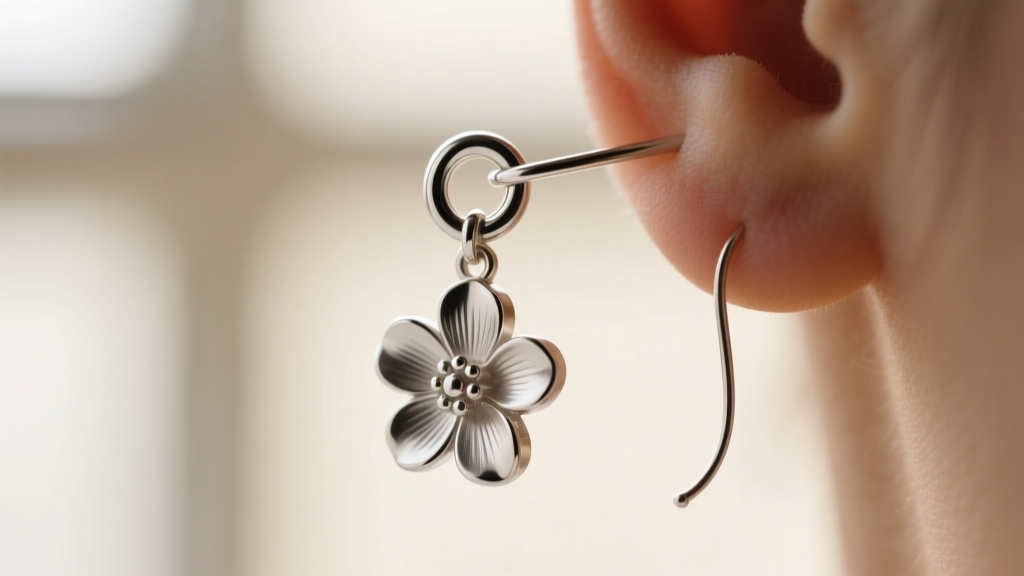
When shopping for budget-friendly silver flower dangle earrings, consumers frequently encounter terms like "Tibetan Silver," "Nepalese Silver," or "Silver-Toned Alloy." These are not silver at all. They are typically base metal alloys composed primarily of zinc, copper, nickel, and sometimes lead or cadmium. Not only do these materials lack the intrinsic value and hypoallergenic properties of genuine silver, but they also pose severe structural risks. The cast floral details on these alloy pieces are often brittle and prone to snapping at the stem or bail. Additionally, the high nickel content in many of these mystery alloys is a leading cause of severe contact dermatitis, making them entirely unsuitable for prolonged wear in sensitive ear piercings.
Long-Term Care for Intricate Floral Silver
The deep crevices and overlapping petals that make floral dangle earrings so visually striking also make them notorious traps for skin oils, lotions, and environmental pollutants. Proper maintenance is crucial to preserve both the metal and the mechanical joints. Jewelers of America recommends a disciplined approach to silver care to prevent deep oxidation.
- Targeted Polishing: Avoid aggressive liquid silver dips, which can strip the oxidized antiquing often used to highlight the veins and textures of floral designs. Instead, use a treated microfiber polishing cloth, gently working the fabric into the petal crevices with a soft-bristled baby toothbrush.
- Mechanical Lubrication: If the jump ring or ear wire begins to feel stiff or squeak during movement, a microscopic drop of mineral oil applied with a toothpick can restore smooth kinetic action without damaging the silver.
- Proper Storage: Store dangle earrings hanging or laid completely flat in an airtight anti-tarnish bag. Tossing them loosely into a jewelry box allows the floral pendants to tangle with the ear wires, leading to bent hooks and scratched petals.
Final Verdict: Selecting the Perfect Pair
When investing in silver flower dangle earrings, the material grade and structural engineering are just as important as the aesthetic design. Sterling silver (925) remains a highly reliable, cost-effective choice, provided you are willing to perform routine polishing and ensure the connecting jump rings are adequately thick. For a premium, heirloom-quality piece that requires minimal maintenance and features superior joint integrity, Argentium silver is the ultimate modern choice. By prioritizing proper wire gauges and authentic metallurgical compositions, you ensure that your floral dangles will move beautifully and endure gracefully for years to come.


