Beginner Guide to Buying and Styling Silver Heart Stud Earrings
Discover everything you need to know about silver heart stud earrings. Learn about metal grades, gauge sizes, styling tips, and tarnish prevention.


The Anatomy of the Perfect Silver Heart Stud
Silver heart stud earrings are a timeless jewelry box staple, bridging the gap between playful charm and everyday elegance. However, for beginners, the sheer volume of options online and in-store can be overwhelming. Not all silver is created equal, and the structural anatomy of a stud earring dictates both its comfort and its longevity. Before you add a pair to your cart, it is crucial to understand the metallurgy, gauge sizing, and backing mechanisms that separate high-quality jewelry from disposable fast fashion.
A standard stud earring consists of three main components: the motif (the heart), the post (the wire that passes through the piercing), and the backing (the clutch that secures it). In lower-quality manufacturing, the post is often soldered to the heart motif using a lead-based or nickel-heavy solder, which can cause severe contact dermatitis. High-end jewelers use laser welding or high-purity silver solder to ensure the joint is as hypoallergenic as the rest of the earring.
Decoding Silver Grades: 925 Sterling vs. Argentium vs. Plated
The term 'silver' is heavily abused in the jewelry industry. To avoid allergic reactions and rapid tarnishing, you must know exactly what you are buying. The Gemological Institute of America (GIA) emphasizes the importance of understanding metal hallmarks and alloy compositions when purchasing precious metals.
| Metal Grade | Composition | Tarnish Resistance | Price Range | Best For |
|---|---|---|---|---|
| 925 Sterling Silver | 92.5% Silver, 7.5% Copper | Moderate (Requires polishing) | $25 - $85 | Everyday wear, standard lobes |
| Argentium Silver | 93.5%+ Silver, Germanium | High (Tarnish-resistant) | $50 - $150 | Sensitive ears, low maintenance |
| Silver-Plated Brass | Brass core, thin silver coat | Low (Wears off quickly) | $5 - $20 | Occasional costume wear only |
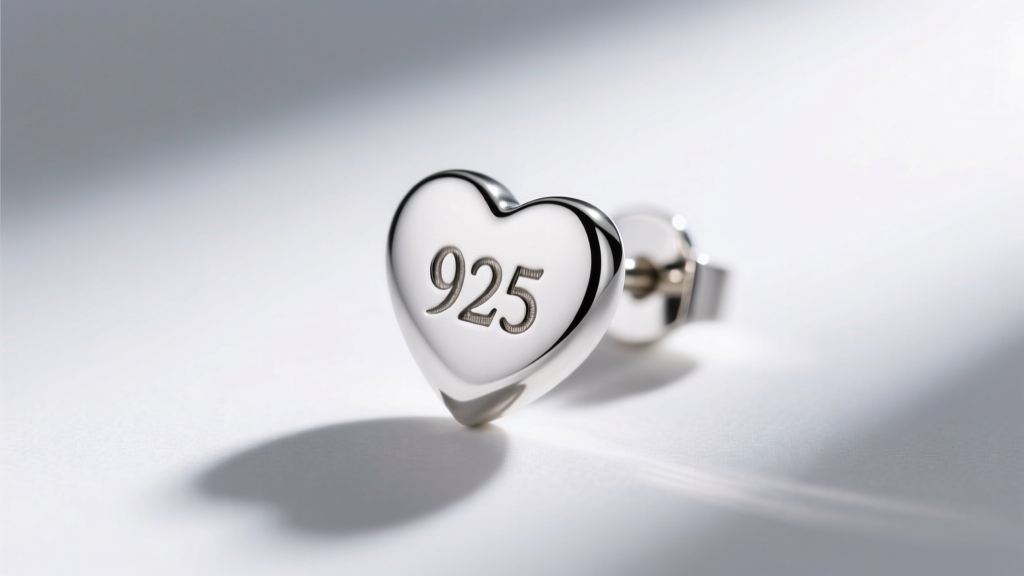
Expert Warning: Many beginners suffer from 'green ear syndrome' or itchy lobes because they unknowingly purchase silver-plated brass or nickel-alloyed silver. Always look for the '925' stamp. If you have a known nickel allergy, seek out brands that explicitly state their sterling silver is alloyed with copper, not nickel.
Sizing, Proportions, and Gauge Thickness
The visual impact of a heart stud depends entirely on its millimeter width relative to your ear anatomy. Furthermore, the thickness of the post (the gauge) determines whether the earring will fit comfortably through your piercing.
Choosing the Right Heart Width
- Petite (3mm - 5mm): Ideal for second or third lobe piercings, helix cartilage piercings, or those who prefer a minimalist, barely-there aesthetic.
- Standard (6mm - 9mm): The most versatile size for primary lobe piercings. It provides a clear heart shape without overwhelming the earlobe or catching on hair.
- Statement (10mm - 15mm+): Best for stretched lobes or as a bold, standalone piece. Avoid these for cartilage, as the weight will cause migration or tearing.
Understanding Post Gauge and Length
According to the Association of Professional Piercers (APP), standard lobe piercings are typically done at 20-gauge (0.81mm) or 18-gauge (1.02mm). Most commercial silver heart studs are manufactured with 20G posts to ensure they fit universally. However, 20G posts are thin and can bend easily if snagged on a towel or hairbrush. If you want a more durable post, look for 18G options, though you may need to gently work them through a tight 20G piercing hole.
Post length is equally critical. Standard posts are 6mm to 8mm long. If you have thicker earlobes, or if your piercing is slightly swollen, an 8mm or 10mm post is necessary to prevent the backing from pressing into your skin, which can lead to embedding and infection.
Backing Types: Security vs. Comfort
The backing mechanism is the unsung hero of earring comfort. Choosing the wrong backing can result in lost jewelry or irritated piercing channels.
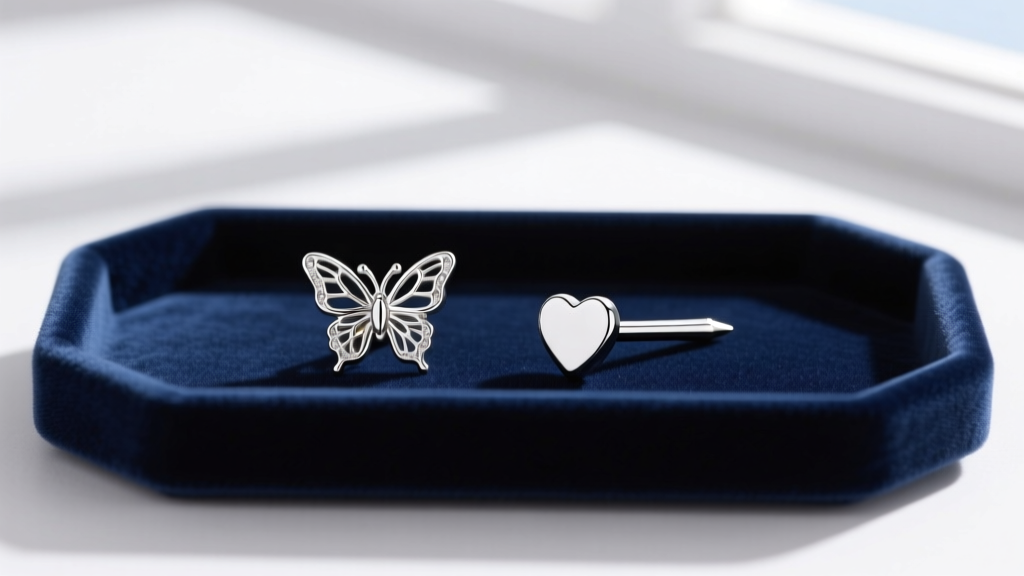
- Friction / Butterfly Backs: The most common and economical option. They grip the post via tension. Drawback: They can harbor bacteria in the crevices and often dig into the back of the ear when sleeping.
- Screw Backs: The post is threaded, and the backing screws on. Highly secure and excellent for active individuals or children. Drawback: Threading can strip over time if cross-threaded, and they take longer to put on.
- Flat Back / Labret Posts: The post is a single solid piece with a flat disc on the back, secured by a threaded front or internal thread. Benefit: The ultimate choice for 24/7 wear and sleeping. The flat disc eliminates pressure points and is recommended by dermatologists for healing or sensitive piercings.
Care, Maintenance, and Troubleshooting
Sterling silver is prone to oxidation when exposed to sulfur, moisture, and certain cosmetics. Proper care will keep your heart studs brilliant for decades.
Pro-Tip: Store your silver heart studs in an airtight ziplock bag with an anti-tarnish silica strip or a piece of standard chalk. This absorbs ambient moisture and sulfur, preventing the black oxidation layer from forming.
How to Clean Tarnished Silver Studs
Avoid harsh chemical dips, which can strip the rhodium plating (if present) and damage the porous structure of the silver. Instead, use a dedicated silver polishing cloth (like a Sunshine cloth) to gently buff the heart motif. For the post, wipe it down with a cotton swab dipped in rubbing alcohol to remove dead skin cells and sebum buildup, which can cause the earring to smell metallic or sour.
Troubleshooting Common Issues
Issue: My earlobe is turning green/black.
Solution: This is a chemical reaction between the copper alloy in the 925 silver and the acidity/sweat of your skin. It is harmless but unsightly. Coat the post in a micro-layer of clear nail polish or switch to Argentium silver, which uses germanium instead of copper.
Issue: My ears itch intensely after a few hours.
Solution: You likely have a nickel allergy. The American Academy of Dermatology notes that nickel is the leading cause of contact dermatitis. Discard the earrings and purchase from a reputable jeweler who guarantees nickel-free sterling silver or upgrade to implant-grade titanium studs with a silver-colored PVD coating.
Issue: The heart stud spins constantly.
Solution: This happens when the post is too thin for your piercing channel, or the backing lacks tension. Switch to a silicone O-ring backing or a flat-back labret post with a threaded heart front to lock the motif in a permanent upright position.
Final Thoughts on Building Your Collection
Silver heart stud earrings are more than just a cute accessory; they are an investment in your personal style and piercing health. By prioritizing verified 925 or Argentium silver, selecting the correct gauge and post length for your unique anatomy, and opting for ergonomic backings, you ensure that your jewelry remains comfortable and beautiful. Start with a classic 6mm 925 sterling pair with a friction back for daily wear, and gradually expand into flat-back cartilage hearts and oversized statement lobes as your collection grows.


