Single Earring Meaning & Care Guide for Asymmetrical Ear Styles
Explore the historical single earring meaning and learn expert cleaning, lobe care, and storage tips for heavy asymmetrical statement styles.

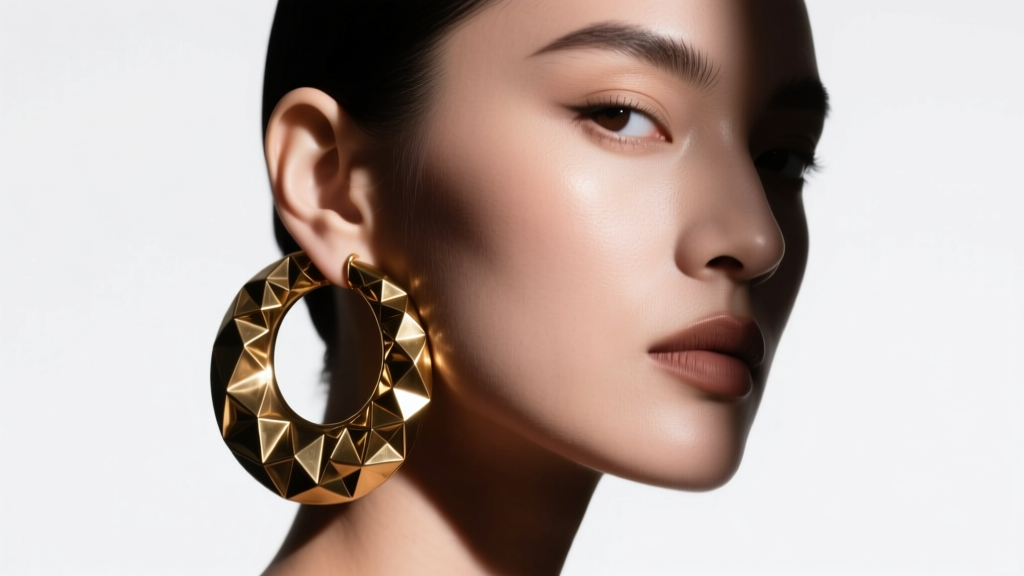
The modern ear curation movement has fully embraced asymmetry, moving away from perfectly matched pairs to bold, solo statement pieces. But beyond the high-fashion runways of Paris and Milan, the single earring meaning carries centuries of cultural, historical, and subcultural weight. Today, wearing a single earring is a deliberate style choice that demands specialized care. Heavy, sculptural solo pieces—ranging from oversized raw brass hoops to 14k gold shoulder-dusters—place unique biomechanical stress on the earlobe and require targeted maintenance protocols to preserve both the jewelry and the piercing fistula.
The Evolution of the Single Earring Meaning
To understand the gravity of the solo earring, we must look at its historical lineage. The single earring meaning has shifted dramatically across different eras and demographics. In the 16th and 17th centuries, sailors and pirates wore a single gold hoop in one ear. According to maritime folklore, this served a dual purpose: the gold was meant to pay for a proper Christian burial if their body washed ashore, and it was believed to stimulate an acupuncture point on the earlobe that improved long-distance eyesight. You can explore more about historical maritime jewelry traditions through the extensive archives at the Victoria and Albert Museum.
Fast forward to the 1980s and 1990s, and the single earring meaning morphed into a coded language regarding sexual orientation, with the infamous 'left is right, right is wrong' playground rhyme dictating which ear men should pierce. Today, that restrictive coding has been entirely dismantled. In 2026, the single earring is a hallmark of gender-fluid fashion and avant-garde styling. Designers frequently send models down the runway with one massive, ear-cuff-to-lobe sculptural piece on one side, leaving the other ear completely bare. This asymmetrical approach shifts the focus entirely to the architecture of the single piece, making its maintenance and cleanliness paramount.
The Biomechanics of the Solo Earring: Lobe Stress & Care
When you wear a single statement earring, it is often significantly heavier than a standard stud. A typical 20-gauge (0.81mm) or 18-gauge (1.02mm) lobe piercing is designed to hold lightweight jewelry (under 5 grams). However, a sculptural brass single hoop or a heavy 14k palladium white gold drop can easily weigh between 30 and 60 grams.
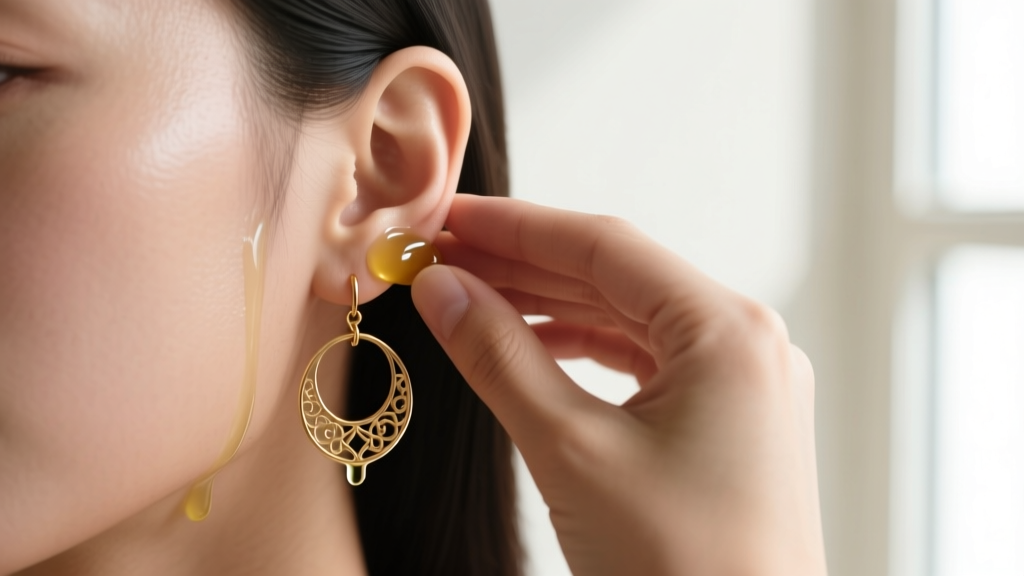
Preventing the 'Cheese-Cutter' Effect
The sustained downward pull of a heavy single earring can cause the piercing fistula (the tube of scar tissue lining the hole) to elongate, a phenomenon jewelers and dermatologists refer to as the 'cheese-cutter effect.' To mitigate this lobe stress, implement the following care protocols:
- Nightly Tissue Massage: After removing a heavy solo piece, massage the lobe with 100% organic, cold-pressed jojoba oil. Jojoba closely mimics human sebum and helps maintain the elasticity of the scar tissue, preventing micro-tears.
- Event-Day Support Patches: For galas or long events where you plan to wear a 40g+ single earring, apply invisible silicone ear support patches (such as those by Blomdahl or LobeWonder) to the back of the earlobe. These patches distribute the weight across a wider surface area, relieving pressure on the fistula.
- Post Gauge Upgrades: If you frequently wear heavy single pieces, consult a bench jeweler to have the post upgraded from a standard 20G to a thicker 16G (1.2mm) or 14G (1.6mm) post, provided your piercing can accommodate the wider wire.
Material-Specific Cleaning for Heavy Statement Pieces
Solo earrings accumulate environmental pollutants, sebum, and cosmetic residue at a faster rate than smaller studs simply due to their larger surface area and the fact that they are frequently handled when putting them on. Furthermore, statement pieces often utilize mixed media and raw metals that require highly specific chemical care. The Gemological Institute of America (GIA) emphasizes that improper cleaning solutions can permanently strip patinas or fracture porous settings.
The Asymmetrical Cleaning Matrix
| Material Grade | Cleaning Agent | Application Tool | Frequency | Critical Warning |
|---|---|---|---|---|
| Raw Brass / Bronze | pH-neutral Castile soap + drop of lemon juice | Soft horsehair brush | Monthly | Avoid ammonia-based cleaners; they will cause rapid, uneven oxidation. |
| Oxidized .925 Sterling Silver | Distilled water & mild dish soap | Untreated microfiber cloth | Bi-weekly | Never use thiourea-based silver dips; they will strip the intentional black sulfide patina. |
| Enamel over Copper Base | Warm water & baby shampoo | Cotton swab (Q-tip) | As needed | Never place in an ultrasonic cleaner; the 40kHz vibrations will cause micro-fractures in the glass enamel. |
| 14k Solid Gold with Diamonds | Isopropyl alcohol (90%+) | Lint-free swab | Weekly | Ensure no porous stones (like emeralds or opals) are present, as alcohol will dry them out and cause crazing. |
The 'Odd Earring' Storage Protocol
Traditional jewelry boxes are engineered for pairs, featuring symmetrical slots that leave single, oversized statement pieces awkwardly jutting out or crammed into spaces meant for delicate studs. Improper storage of a heavy single earring can lead to bent posts, tangled chains, and severe tarnishing.
Creating a Solo Earring Vault
Expert Insight: Never store raw brass or oxidized silver in PVC plastic bags. PVC off-gasses chemical plasticizers that accelerate tarnishing and can permanently cloud resin or enamel accents.
To properly store your asymmetrical collection, adopt the 'Solo Vault' method:
- Polyethylene Bagging: Store each single earring in its own individual, food-grade polyethylene zip bag. Polyethylene is chemically inert and will not react with metal alloys.
- Anti-Tarnish Strips: Drop a 3M Anti-Tarnish strip or a piece of Pacific Silvercloth into the bag. These materials absorb airborne sulfur and hydrogen sulfide, the primary culprits behind silver and copper oxidation.
- Flat or Hanging Storage: Heavy single earrings should never be tossed into a drawer where the post can be bent by shifting weight. Store them perfectly flat in a shallow tray, or hang them from a velvet-lined display bar to keep the post and wire components completely straight.
Troubleshooting Common Single Earring Issues
Even with meticulous care, the physics of wearing a single, heavy earring can lead to mechanical issues. Here is how to troubleshoot the most common problems:
- Issue: The friction back (butterfly clutch) keeps sliding off.
Solution: The weight of the earring is pulling the post downward, causing the clutch to slide. Ditch standard metal clutches and use medical-grade silicone O-ring backs. The high-friction grip of the silicone will hold a 50g earring securely in place without damaging the post. - Issue: The earring post has bent at a 15-degree angle.
Solution: Do not attempt to bend a 14k white gold or platinum post back into shape with pliers; these alloys are brittle and can snap under cold-working stress. Take it to a professional bench jeweler who will anneal the metal (heat it to relieve internal stress) before carefully realigning the post.
Embracing the single earring meaning in your personal style is an exercise in bold, intentional curation. By understanding the historical weight of the asymmetrical trend and applying rigorous, material-specific maintenance protocols, you ensure that your solo statement pieces remain as striking and structurally sound as the day you acquired them.


